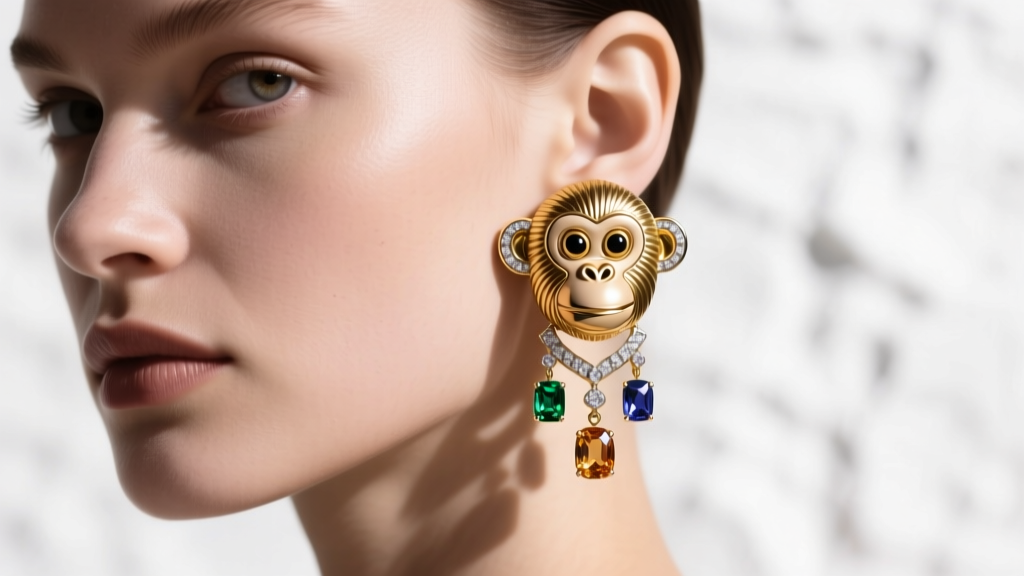
The Anatomy of Rose Hoop Earrings: Alloys, Gauges & Closures
An expert technical breakdown of rose hoop earrings, covering rose gold metallurgy, gauge tolerances, closure mechanics, and enamel motifs.

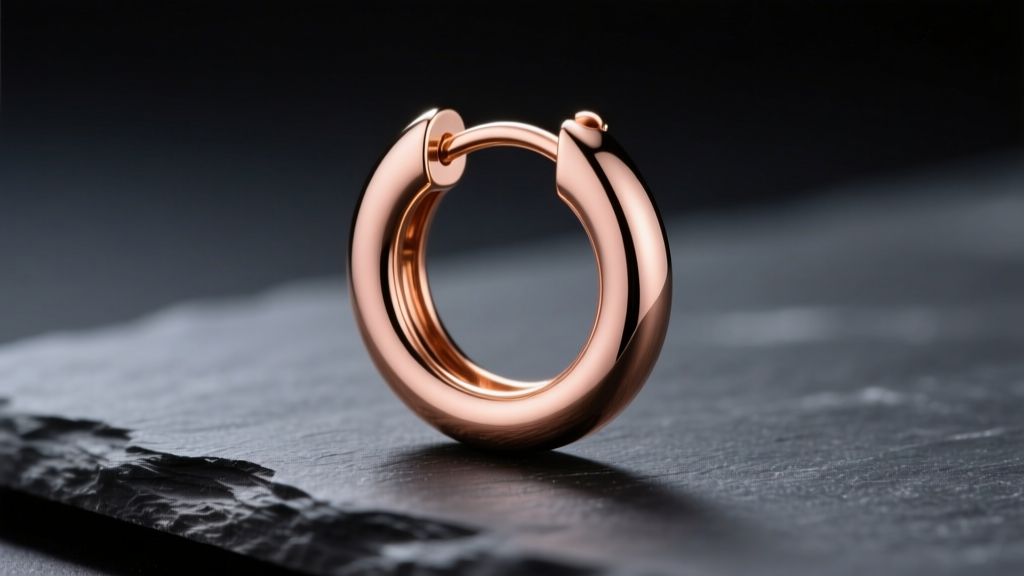
The Metallurgy of Rose Gold: Why Karat Weight Dictates Durability
When evaluating rose hoop earrings from a metallurgical perspective, the term 'rose gold' refers to a specific alloy family where copper is the primary secondary metal, replacing the silver and zinc typically found in yellow or white gold. The distinct pink-to-red hue is entirely dependent on the copper-to-gold ratio. However, this aesthetic choice fundamentally alters the structural integrity of the hoop.
According to the Gemological Institute of America (GIA), standard 18k rose gold consists of approximately 75% pure gold, 22.25% copper, and 2.75% silver. While 18k offers a richer, deeper pink tone and superior hypoallergenic properties, it sits lower on the Vickers Hardness scale (typically around 110-120 HV). For a hoop earring—which relies on a thin wire or hollow tube that must withstand the lateral torque of being repeatedly opened, closed, and pulled through a piercing—18k rose gold is highly susceptible to warping and tension loss.
Conversely, 14k rose gold (58.5% gold, ~37.5% copper, ~4% silver) exhibits a Vickers Hardness of roughly 135-145 HV. This increased copper content not only shifts the color to a more pronounced salmon-pink but also significantly enhances the tensile strength of the alloy. For structural components like the male post of a clicker closure or the continuous wire of an endless hoop, 14k rose gold is the industry standard for longevity. Furthermore, the manufacturing process often involves work-hardening the wire during the drawing phase, aligning the crystalline structure of the metal to resist bending under everyday stress.
Gauge Thickness and Hoop Diameter: A Structural Framework
The American Wire Gauge (AWG) system is inversely proportional to thickness; a lower gauge number indicates a thicker wire. Selecting the correct gauge for rose hoop earrings is not merely a matter of aesthetic proportion, but of biomechanical safety. Wearing a hoop that is too thin in a cartilage piercing can trigger the 'cheese cutter effect,' where the high pressure per square inch causes the jewelry to slowly migrate through the tissue.
| Gauge (AWG) | Thickness (mm) | Ideal Placement | Structural Considerations |
|---|---|---|---|
| 20G | 0.81 mm | Standard Lobe (Healed) | Prone to bending if the hoop diameter exceeds 15mm. Best reserved for lightweight huggies. |
| 18G | 1.02 mm | Lobe, Upper Lobe | The standard for most commercial clicker hoops. Offers a balance of delicate aesthetics and moderate rigidity. |
| 16G | 1.29 mm | Helix, Tragus, Conch | Minimum recommended gauge for cartilage to prevent migration. Requires robust hinge engineering for closures. |
| 14G | 1.63 mm | Daith, Rook, Thick Helix | Highly rigid. Continuous hoops in 14G require specialized pliers to open and close without warping the circle. |
As noted by Rio Grande Jewelry Supply, the internal diameter (ID) of the hoop must also be calibrated to the specific piercing's swelling profile. A standard helix piercing requires an ID of at least 8mm to 10mm to accommodate the natural curvature of the ear without putting lateral pressure on the fistula.
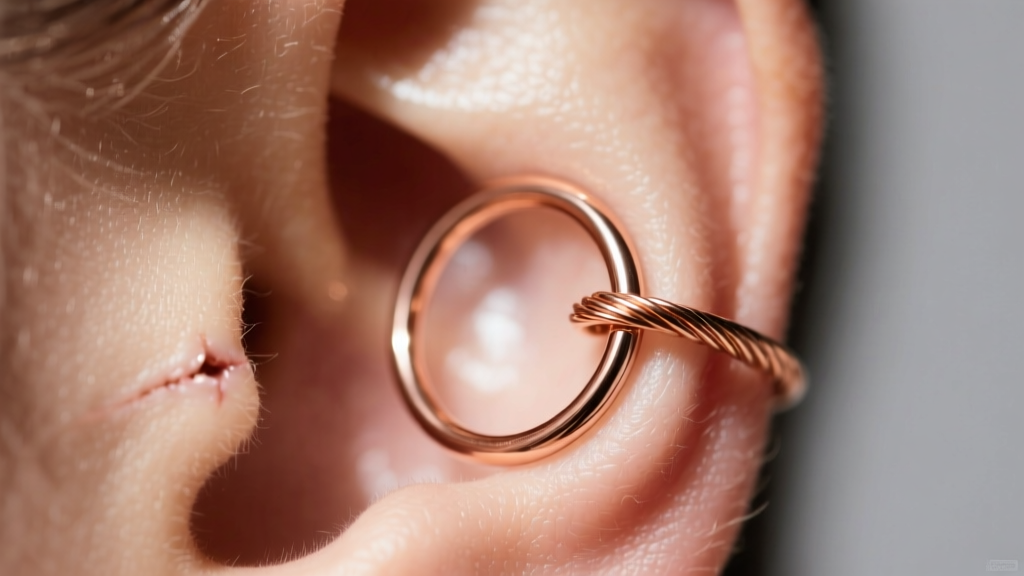
Closure Mechanisms and Mechanical Failure Points
The closure is the most critical point of failure in any hoop earring. In rose gold hoops, the alloy's specific ductility and hardness directly impact how these mechanisms perform over time.
The Clicker (Hinged Segment Ring)
The clicker features a male post with a precision-machined groove that snaps into a female tension slot. The satisfying 'click' is the result of the tension slot briefly expanding and contracting around the groove. Failure Mode: Over years of use, or if the earring is forced open laterally rather than hinged properly, the tension slot suffers from metal fatigue and widens. Once the tolerance is lost, the earring will pop open during sleep, leading to loss.
The Latch-Back (Saddle Hinge)
Common in larger, traditional hoops, the latch-back uses a V-shaped wire that snaps over a catch. Failure Mode: The V-wire can flatten over time, reducing the friction fit. Additionally, the hinge pin (often made of steel or a harder alloy to prevent shearing) can wear down the softer rose gold hinge knuckles, resulting in a wobbly closure that catches on hair.
The Continuous (Endless) Hoop
This design relies on a thin wire that slides into a hollow receiving tube. The tension of the wire itself holds it in place. Failure Mode: If the user pulls the wire out at an incorrect angle, the wire bends. Because 14k rose gold work-hardens, repeatedly bending it back into a perfect circle will eventually cause a microscopic fracture at the stress point, snapping the wire entirely.
'A well-engineered clicker hoop in 14k rose gold should withstand a minimum of 10,000 open-close cycles before the tension slot requires professional servicing by a bench jeweler.' — Bench Manufacturing Standards, Jewelers of America
The 'Rose' Motif: Enamel and Gemstone Carving Techniques
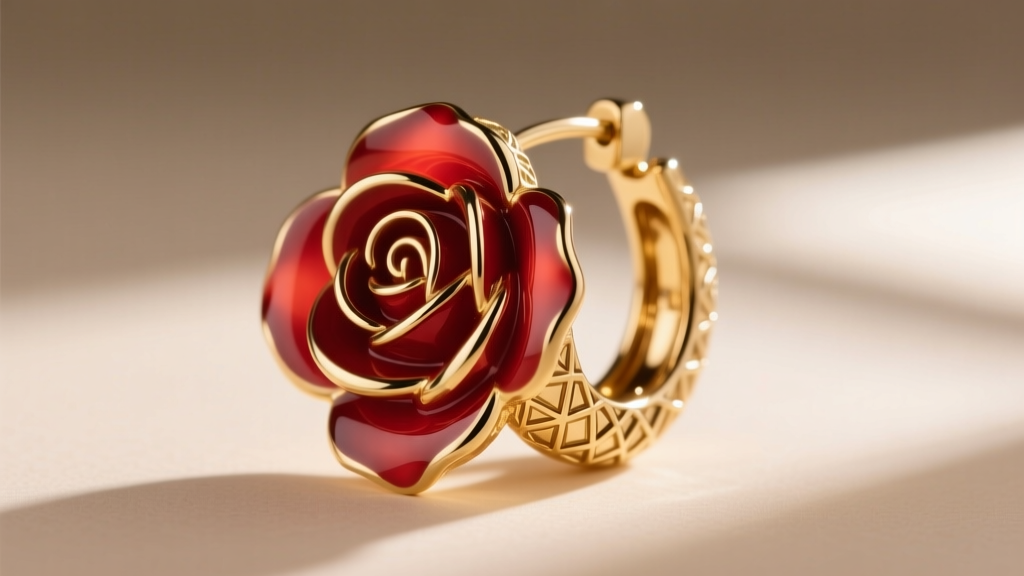
Beyond the alloy itself, 'rose hoop earrings' frequently refers to hoops featuring literal rose motifs. When evaluating these, the distinction between vitreous enamel and cold enamel is paramount for long-term wearability.
- Vitreous (Hot) Enamel: Finely ground glass fused to the rose gold substrate at temperatures exceeding 800°C. In techniques like champlevé, troughs are carved into the metal and filled with enamel. This creates a permanent, UV-resistant, and scratch-resistant surface. It is the only enamel type recommended for everyday hoop earrings.
- Cold Enamel (Epoxy Resin):strong> A two-part polymer resin tinted with pigments. While it allows for intricate, multi-colored rose petals at a fraction of the cost, cold enamel is highly susceptible to degradation from UV exposure, chlorine, and the acidic pH of human sweat. It will inevitably yellow, chip, or delaminate from the rose gold base within 12 to 18 months of daily wear.
- Gemstone Carving: High-end rose hoops may feature miniature roses carved from pink opal, rose quartz, or coral. These are typically bezel-set into the hoop's face. The primary technical concern here is the bezel wall thickness; if the rose gold bezel is pushed too thin during setting, it will fail to protect the brittle gemstone from impact fractures.
Care, Oxidation, and Patina Management
Unlike sterling silver, which reacts with sulfur to form black silver sulfide, the copper in rose gold reacts differently to environmental stressors. Pure rose gold does not 'tarnish' in the traditional sense, but the high copper content makes it vulnerable to specific chemical attacks.
Exposure to chlorinated water (swimming pools, hot tubs) or harsh household bleach can cause the copper in the alloy to oxidize rapidly, resulting in a dull, brownish surface film known as copper chloride. This is not a permanent patina; it can be polished away by a professional, but repeated chemical stripping will eventually alter the surface texture of the hoop.
Furthermore, ultrasonic cleaners should be used with extreme caution. While ultrasonic waves are excellent for removing sebum and dead skin cells from the crevices of a clicker hinge, they can easily shatter vitreous enamel rose motifs or fracture internally flawed gemstones like rose quartz. For routine maintenance of rose hoop earrings, a simple soak in warm water with a few drops of pH-neutral dish soap, followed by a gentle scrub with a soft-bristled infant toothbrush, remains the safest and most effective protocol to maintain both the alloy's luster and the mechanical integrity of the closure.