How to Style Chandelier Hoop Earrings for Any Face Shape
Master the art of wearing chandelier hoop earrings. Learn step-by-step styling, weight distribution tips, and face-shape matching in our expert guide.

The Anatomy of Chandelier Hoop Earrings: Weight and Gauge
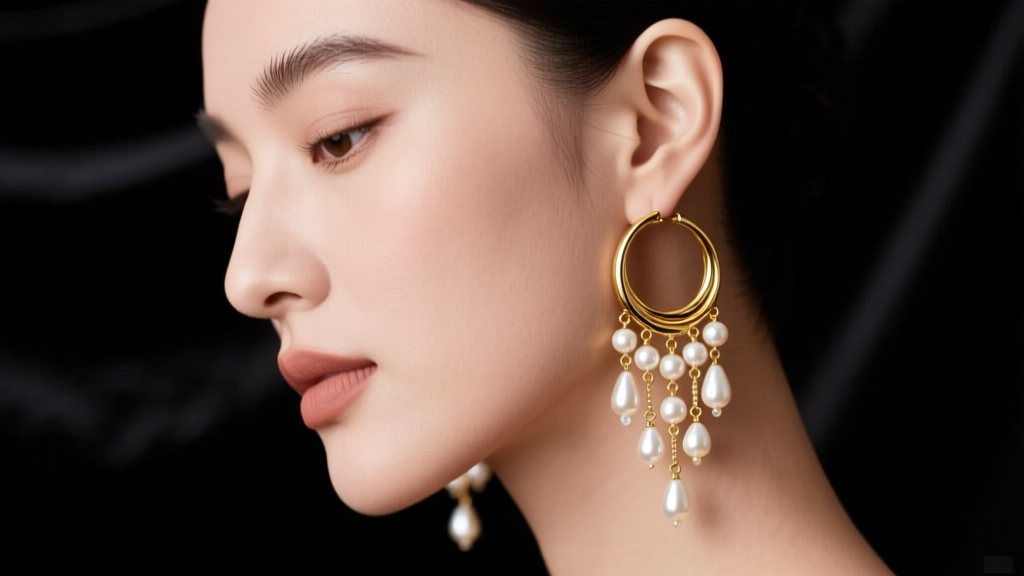
Chandelier hoop earrings represent a masterclass in jewelry engineering, merging the structural, continuous curve of a classic hoop with the vertical, kinetic drama of a chandelier drop. Unlike standard hoops, where weight is distributed somewhat evenly around the earlobe, the addition of suspended chandelier elements shifts the center of gravity downward. This creates a stunning pendulum effect that catches the light with every movement, but it also introduces unique mechanical stresses on your piercing.
Understanding the physics of your jewelry is the first step to wearing these statement pieces comfortably. According to the Association of Professional Piercers (APP), standard earlobe piercings are typically performed at 20-gauge (0.81mm) or 18-gauge (1.02mm). However, when dealing with the heavy, bottom-weighted nature of chandelier hoops, an 18-gauge wire is the absolute minimum requirement. If a chandelier hoop exceeds 8 grams in total weight, stepping up to a 16-gauge (1.29mm) base wire is highly recommended to prevent the dreaded "cheese-cutter" effect, where thin wire slowly slices through the earlobe tissue over time.
When shopping for high-quality pieces, look for base hoops crafted from ASTM F-136 implant-grade titanium or solid 14k/18k gold. These materials offer the necessary tensile strength to support the intricate, often gem-laden chandelier drops without warping or bending under their own weight.
Step-by-Step: Matching Chandelier Hoops to Your Face Shape
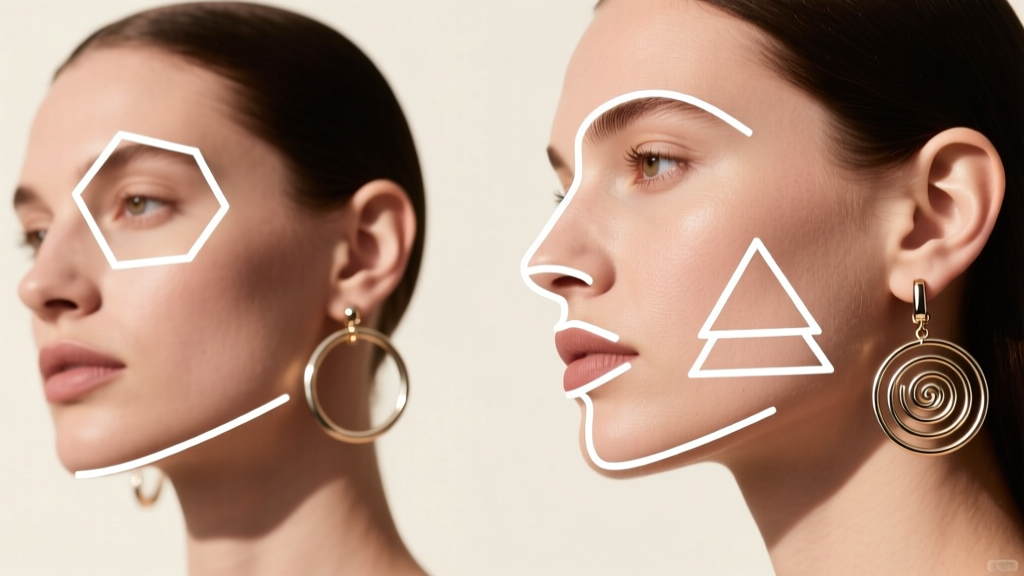
The visual impact of chandelier hoop earrings is heavily dictated by how their geometric lines interact with your natural facial structure. The general rule of thumb in jewelry styling is to seek contrast: use angular jewelry to soften round features, and use curved jewelry to balance sharp angles. Here is your step-by-step framework for finding the perfect silhouette.
Round and Square Faces
If you have a round face (where the width and length are roughly equal with soft curves) or a square face (characterized by a strong, angular jawline), your goal is to create the illusion of length and draw the eye vertically. Opt for chandelier hoops that feature elongated, rectangular, or sharp diamond-shaped drops. Avoid circular or wide, fan-shaped chandelier elements, as these will only emphasize the width of your face. A hoop measuring 1.5 inches in diameter with a 2-inch vertical rectangular drop provides the perfect elongating effect.
Oval and Heart Faces
Oval faces are universally proportioned, meaning you can pull off almost any chandelier hoop style. However, to maintain your natural balance, mid-length hoops (around 2 to 2.5 inches in total drop) with teardrop or oval chandelier elements look exceptionally elegant. For heart-shaped faces—defined by a wider forehead and a narrow, pointed chin—you want to add visual weight to the lower half of your face. Choose bottom-heavy chandelier hoops with wide, triangular, or clustered gemstone drops that sit right at the jawline, effectively balancing your narrower chin.
The Hardware Checklist: Preventing Lobe Tear and Sagging
The backing mechanism of a chandelier hoop is just as critical as its aesthetic design. Because these earrings are front-heavy, the clasp must secure the earring while distributing the downward pull across a wider surface area of the earlobe. Below is a comparison of the most common backing types used for heavy statement hoops.
| Backing Type | Weight Capacity | Security Level | Best For |
|---|---|---|---|
| Leverback | Up to 15g | High | Heavy, multi-tiered chandelier drops |
| French Wire (Fishhook) | Up to 6g | Low-Medium | Lightweight, delicate wire-wrapped hoops |
| Clicker / Hinged Snap | Up to 12g | Very High | Thick, continuous hoops with bottom charms |
| Omega Back | Up to 20g+ | Extremely High | Massive, solid metal statement hoops |
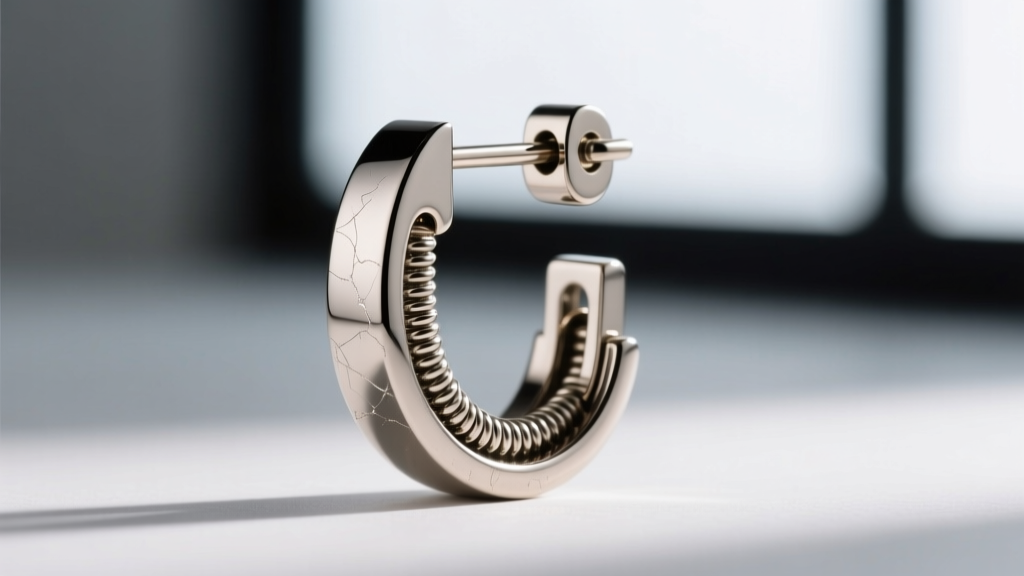
For most chandelier hoop designs, the leverback is the gold standard. The hinged wire snaps securely into a notched catch, preventing the earring from slipping out if the heavy chandelier element catches on a sweater or hair. If you are wearing French wire hoops, always use a high-quality silicone earring back or a specialized locking clutch to prevent accidental loss.
Step-by-Step Styling: Balancing Necklines and Hair
Chandelier hoops demand attention, and styling them requires a careful balancing act with your wardrobe and hair to avoid visual clutter.
- The Neckline Rule: Pair long chandelier hoops (over 3 inches total drop) with strapless, off-the-shoulder, or deep V-neck tops. These necklines expose the collarbone and neck, providing a blank canvas that allows the earrings to serve as the focal point. Avoid high-necked tops, turtlenecks, or intricate ruffled collars, which will tangle with the chandelier drops and create a chaotic silhouette.
- Hair Placement: For maximum impact, wear your hair in an updo, such as a sleek chignon or a messy French twist. If you prefer wearing your hair down, tuck one side behind your ear to reveal the earring, breaking the symmetry in a deliberate, editorial way.
- Necklace Pairing: In 90% of cases, chandelier hoop earrings should be worn without a necklace. If you must wear one, opt for a delicate, barely-there chain with a microscopic pendant that sits high on the collarbone, ensuring it doesn't compete with the vertical drop of the earrings.
Troubleshooting Common Fit Issues
Even the most beautifully crafted chandelier hoops can present physical challenges. Here is how to troubleshoot the most common complaints:
Issue: The earring constantly spins forward, facing your cheek.
Solution: This happens when the center of gravity of the chandelier drop is too far forward, or the base hoop is too thin for your earlobe thickness. Try using a small silicone earring support patch (like BlingDots or Orogold) on the back of your lobe. This adds structural rigidity and forces the earring to hang perfectly straight.
Issue: The earlobe creases or folds under the weight.
Solution: Your lobe is experiencing fatigue. Limit wear time to 4-6 hours. For long events, switch to a hollow-tube hoop design, which offers the visual thickness of a heavy hoop but weighs a fraction of the amount.
Maintenance and Storage Protocols
The intricate wirework and multiple connection points of chandelier elements make these earrings prone to tangling and tarnishing. Proper maintenance is non-negotiable. According to the Gemological Institute of America (GIA), the cleaning method you use must be tailored to the specific gemstones integrated into the chandelier drops.
While ultrasonic cleaners are excellent for plain gold or diamond-set hoops, they will shatter porous stones like turquoise, opals, and emeralds, and will strip the nacre from pearls. For mixed-material chandelier hoops, use a soft-bristled baby toothbrush dipped in a mild solution of warm water and phosphate-free dish soap. Gently brush the crevices where the chandelier drops connect to the base hoop, as this is where skin oils and cosmetics accumulate. Always dry the piece completely with a microfiber cloth before storing it flat in a lined jewelry box, ensuring the chandelier elements are laid out straight to prevent the wire from permanently bending.


