Earring Guide: Styling Your Royal Blue Necklace and Earring Set
Master your royal blue necklace and earring set with our beginner guide. Learn earring gauge sizes, gemstone care, and face-shape styling tips.

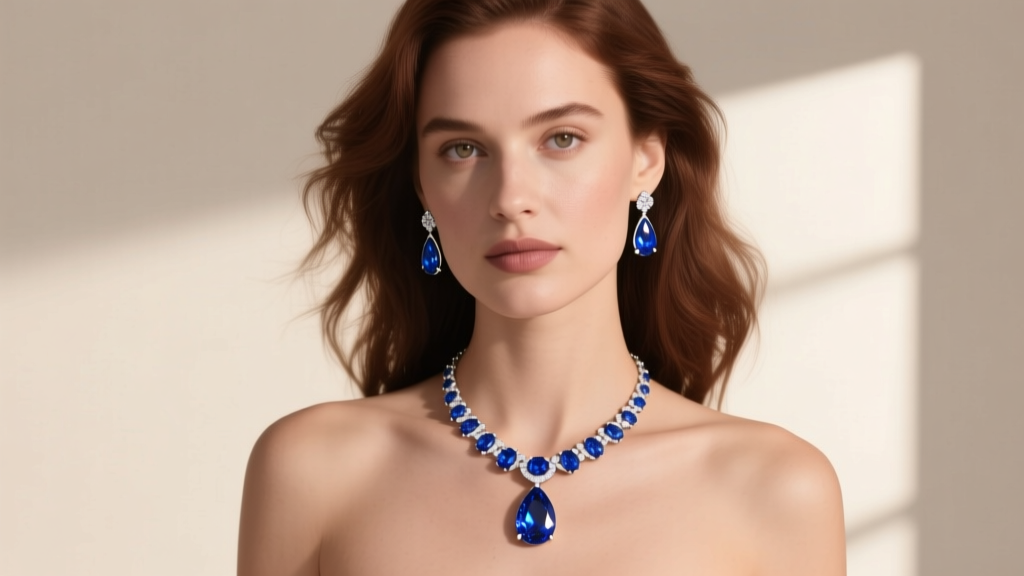
When you invest in a striking jewelry collection, the necklace often commands the most attention. However, as any seasoned stylist will tell you, the earrings are what truly frame your face and dictate the overall comfort of your look. If you have recently acquired a royal blue necklace and earring set, you might be wondering how to balance the bold color, manage the weight of the stones, and ensure the metal pairings flatter your skin tone. This beginner-friendly explainer dives deep into the mechanics, gemology, and styling frameworks of royal blue earring sets.
Decoding the Gemstones: What is Your Royal Blue?
The term 'royal blue' in jewelry is a color descriptor, not a specific mineral. Before you can properly care for or style your earrings, you must identify the exact gemstone. The physical properties of the stone dictate everything from how the earring post is set to how you must clean it. The three most common royal blue gemstones used in matching sets are London Blue Topaz, Blue Sapphire, and Lapis Lazuli.
| Gemstone | Mohs Hardness | Common Treatments | Ultrasonic Cleaner Safe? |
|---|---|---|---|
| London Blue Topaz | 8.0 | Irradiation & Heat | Yes (with caution) |
| Blue Sapphire | 9.0 | Heat, Lattice Diffusion | Yes (usually) |
| Lapis Lazuli | 5.0 - 6.0 | Dye, Wax/Resin Impregnation | No (Never) |
According to the Gemological Institute of America (GIA), porous stones like Lapis Lazuli can absorb the harsh chemicals in ultrasonic cleaners, leading to severe discoloration or structural cracking. Always verify your stone type before attempting deep cleaning.
Earring Mechanics: Gauge Sizes and Weight Distribution
A common failure mode for beginners wearing heavy gemstone sets is lobe fatigue and bent earring posts. Royal blue stones, particularly when cut into large teardrop or cushion shapes, carry significant physical weight. This brings us to a critical, often overlooked specification: wire gauge.
- 20-Gauge (0.81mm): The industry standard for lightweight studs and small hoops. If your royal blue drop earrings use a 20G post, they are highly susceptible to bending if bumped.
- 18-Gauge (1.02mm): The ideal thickness for medium-to-heavy drop earrings. It provides enough rigidity to support a 3-carat topaz or sapphire without warping.
- 16-Gauge (1.29mm): Typically reserved for heavy chandelier styles or cartilage piercings, though some high-end designers use it for lobe drops to guarantee zero bending.
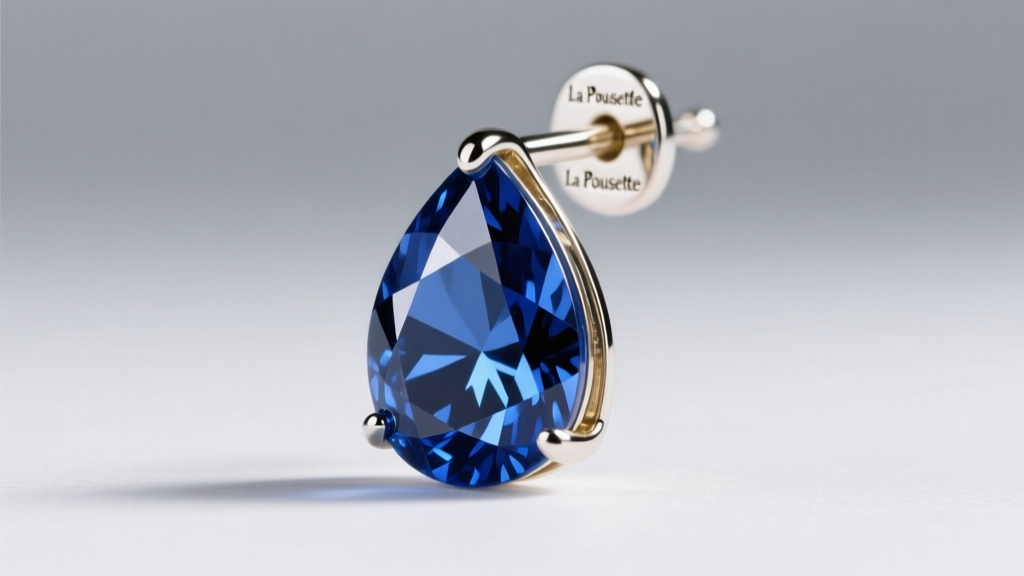
If your set features heavy drops, inspect the earring backs. Standard 'butterfly' or 'push' backs rely on friction and will eventually slip down the post due to the pendulum effect of a walking wearer. Upgrade to La Pousette backs (which feature a mechanical locking trigger) or use high-quality silicone O-ring friction backs to distribute the weight across a wider surface area of the earlobe.
Face Shape and Drop Length Matrix
The earrings in your royal blue set will interact directly with your jawline and the neckline of your clothing. Here is a practical decision framework for styling the earring component based on facial geometry:
Round and Square Faces
Avoid wide, clustered stud earrings or short, wide hoops, as they emphasize horizontal width. Instead, utilize the drop earrings from your set. Elongated teardrop or marquise-shaped royal blue stones draw the eye vertically, creating a slimming, lengthening illusion. Pair these with a V-neck top to extend the vertical line created by the necklace pendant.
Oval and Heart Faces
You have the versatility to wear the stud versions of your set or wider chandelier styles. If the necklace in your set is a bold, multi-strand choker, opt for the simpler royal blue studs to avoid visual clutter around the collarbone and jawline. If the necklace is a long, delicate lariat, the larger drop earrings will beautifully balance the proportions.
Metal Color Theory: Framing the Blue
The metal holding your royal blue stones dramatically shifts the color's temperature and impact. While the necklace rests against your clothing and skin, the earrings sit directly against your face and hair, making the metal choice highly visible.
- White Gold & Platinum: Creates a high-contrast, icy aesthetic. The cool undertones of white metals amplify the crispness of London Blue Topaz and Sapphire, making the blue appear deeper and more vibrant. Ideal for cool skin undertones.
- Yellow Gold: Offers a regal, vintage contrast. Yellow gold warms up the royal blue, creating a complementary color dynamic (blue and orange/yellow are opposites on the color wheel). This pairing is exceptionally striking on warm or olive skin tones.
- Rose Gold: A modern, romantic choice. The subtle pink hue of rose gold softens the intensity of royal blue, making the set feel more approachable for daytime or office wear.
For more on how metal hallmarks and alloys affect jewelry color and durability, refer to the educational resources provided by Jewelers of America.
Beginner Mistakes to Avoid
Wearing a matched set does not mean you must wear every piece simultaneously at maximum volume. The most common beginner mistake is allowing the necklace and earrings to compete for dominance.
The Rule of Focal Points: If your royal blue necklace features a massive, intricate centerpiece (like a multi-stone bib or a heavy pendant), let it be the star. Wear the smaller stud earrings from the set, or skip the earrings entirely in favor of a delicate diamond or pearl stud. Conversely, if you are wearing a simple royal blue tennis necklace or a delicate chain, showcase the large royal blue drop earrings to frame your face.
Routine Care and Maintenance
Royal blue gemstones, especially treated topaz and porous lapis, require specific maintenance to retain their saturation. Skin oils, hairspray, and lotions can create a cloudy film over the stones, dulling the brilliant blue hue and making the set look cheap or aged.
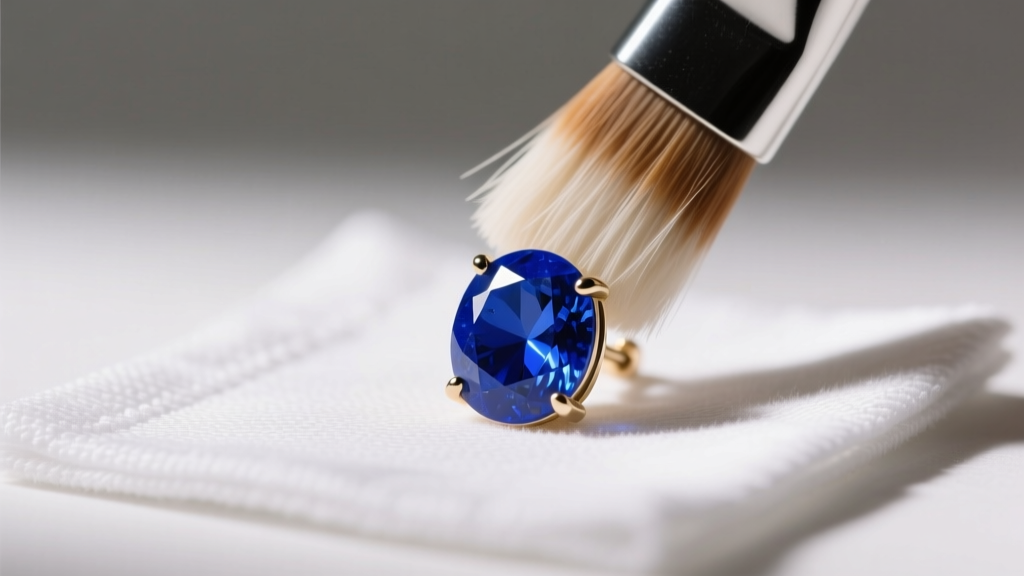
- Daily Wipe Down: After wearing, gently wipe the earrings and necklace with a clean, lint-free microfiber cloth to remove surface oils.
- Deep Cleaning (Topaz/Sapphire): Mix a few drops of mild dish soap in lukewarm water. Use a soft-bristled baby toothbrush to gently scrub the back of the gemstones (the pavilion), where dirt accumulates and blocks light refraction.
- Deep Cleaning (Lapis/Turquoise): Never submerge these stones. Use a barely damp cloth to wipe the surface, and avoid getting the metal settings too wet to prevent water from seeping into the stone's porous matrix.
- Storage: Store the set in a fabric-lined box with individual compartments. Sapphire (Mohs 9) can easily scratch the metal settings of the necklace and any softer stones if tossed together in a communal jewelry dish.
By understanding the specific mechanics, gemology, and styling principles behind your royal blue necklace and earring set, you elevate it from a simple accessory to a masterfully curated extension of your personal style.


