Ruby Dangle Earrings: Natural vs Lab-Grown & Metal Pairings
Compare natural and lab-grown ruby dangle earrings. Explore Mohs hardness, metal pairings, pricing, and how to choose the perfect gemstone drop.

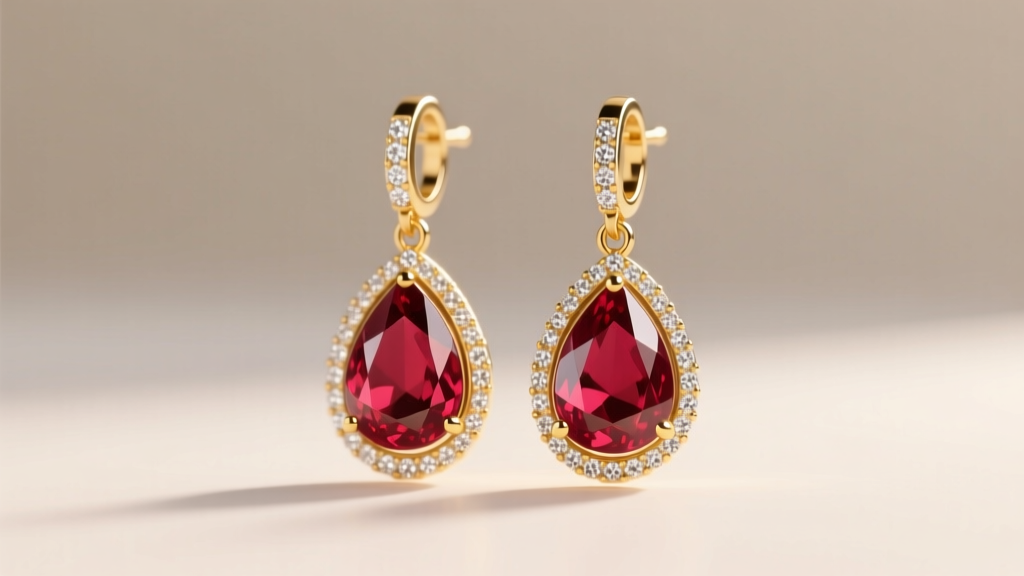
The Physics and Allure of Ruby Dangle Earrings
When selecting statement jewelry, the kinetic movement of drop styles offers a unique visual appeal that static studs simply cannot match. Ruby dangle earrings capture light dynamically, creating flashes of crimson and pink with every turn of the head. However, designing and purchasing these pieces requires a deep understanding of material properties, specifically how the weight and hardness of corundum interact with precious metal settings. As we navigate the jewelry market in 2026, the choice between natural and lab-grown stones has become more nuanced than ever, driven by advancements in crystal growth technology and shifting consumer preferences toward traceable sourcing.
Ruby is the red variety of the mineral corundum (aluminum oxide). With a Mohs hardness of 9, it is the second hardest natural gemstone after diamond, making it exceptionally resistant to scratching. This durability is critical for dangle earrings, which are prone to accidental impacts against hair, clothing, and hard surfaces. Furthermore, ruby possesses a specific gravity of 4.00, meaning it is noticeably heavier than quartz or beryl. This density requires specialized earring findings and robust metal alloys to support the stone's weight without warping the setting or causing earlobe fatigue.
Natural vs. Lab-Grown Rubies: A Material Deep Dive
The fundamental chemical composition of both natural and lab-grown rubies is identical: Al2O3 with trace amounts of chromium (typically 0.1% to 3%) responsible for the coveted red fluorescence. However, their formation environments dictate their inclusion profiles, optical characteristics, and ultimately, their market value.
Natural Rubies: Inclusions and Origins
Natural rubies are prized for their unique internal landscapes. According to the Gemological Institute of America (GIA), fine rutile needles (often referred to as 'silk') can actually enhance a ruby's appearance by scattering light and softening its color. Burmese rubies from the Mogok valley are famous for their strong red fluorescence and low iron content, resulting in the highly sought-after 'pigeon blood' hue. Conversely, Mozambican rubies, which dominate the current natural market, often contain higher iron levels, yielding slightly purplish or darker red tones with different inclusion signatures, such as hexagonal crystal growth zoning.
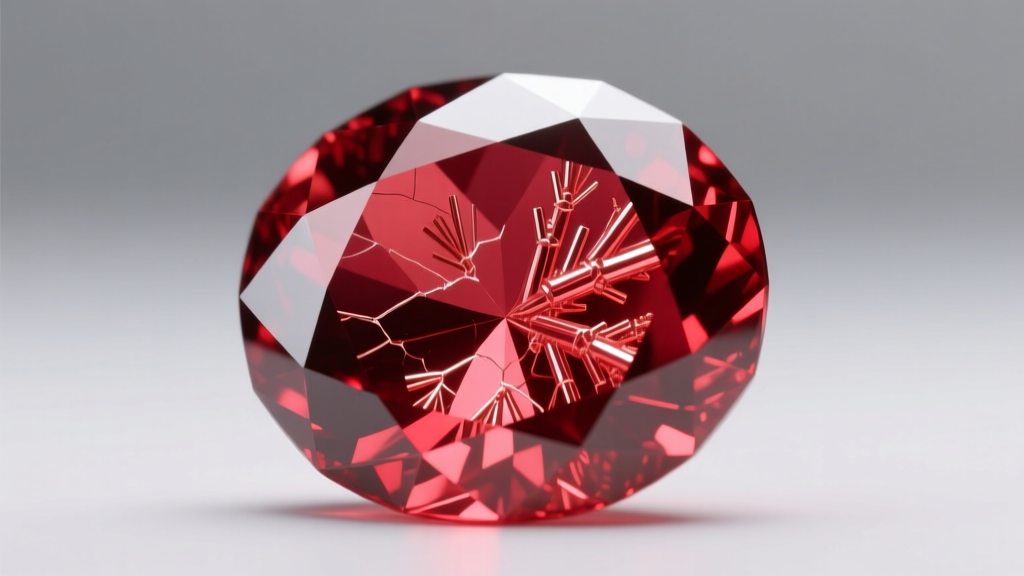
Lab-Grown Rubies: Flux vs. Flame Fusion
In 2026, the lab-grown ruby market is bifurcated into two primary manufacturing methods. Flame fusion (the Verneuil process) produces rubies quickly and cheaply, but they often exhibit curved striae and gas bubbles, making them easily identifiable under magnification. These are typically used in fashion jewelry. For fine ruby dangle earrings, flux-grown rubies (such as those produced by Chatham) are the industry standard. Flux growth mimics the slow cooling of natural magma, resulting in stones with platinum or flux inclusions that closely resemble natural fingerprints. Flux-grown rubies offer identical optical brilliance and physical hardness to natural stones but at a fraction of the cost, making larger carat weights for dangle designs highly accessible.
Metal Pairings: Setting the Stage for Red
The choice of metal profoundly impacts the visual temperature of the ruby and the structural integrity of the dangle mechanism. Because ruby dangle earrings exert continuous leverage on the earring post or wire, the tensile strength of the metal is paramount.
| Metal Alloy | Hardness & Durability | Visual Pairing with Ruby | Best For |
|---|---|---|---|
| 950 Platinum | Extremely high tensile strength; heavy | Cool white contrast enhances deep red hues | Heavy, high-carat natural ruby drops |
| 18k Yellow Gold | Moderate hardness; rich luster | Warm harmony; classic vintage aesthetic | Traditional designs, Mozambican rubies |
| 14k Rose Gold | High durability due to copper content | Pinkish undertones amplify ruby's fluorescence | Modern, romantic dangle styles |
| Sterling Silver | Soft; prone to tarnish and warping | High contrast, but requires rhodium plating | Lightweight, budget-friendly lab-grown drops |
For dangles exceeding 4 grams per earring, 18k gold or platinum is mandatory. Sterling silver and 10k gold lack the necessary memory and tensile strength to hold heavy corundum securely over years of kinetic movement, increasing the risk of prong failure.
Findings and Mechanics: Securing the Drop
The connection point between the ear and the dangling ruby is the most critical failure point in the jewelry's anatomy. Standard friction posts and butterfly backs are entirely inadequate for heavy ruby drops, as the weight will cause the earring to droop, placing stress on the earlobe piercing and increasing the risk of loss.
- Leverback Closures: The gold standard for ruby dangle earrings. A hinged wire snaps securely into a catch, completely enclosing the ear piercing. This distributes the weight of the 4.00 specific gravity ruby evenly and prevents accidental unhooking.
- French Wire (Shepherd's Hook): Elegant and classic, but inherently insecure for heavy stones. If using French wires, silicone ear backs or specialized locking mechanisms must be employed to prevent the earring from sliding off during movement.
- Omega Clips with Posts: Ideal for large, chandelier-style ruby dangles. The hinged Omega clip grips the earlobe firmly, supporting the weight of the ruby while the post provides alignment.
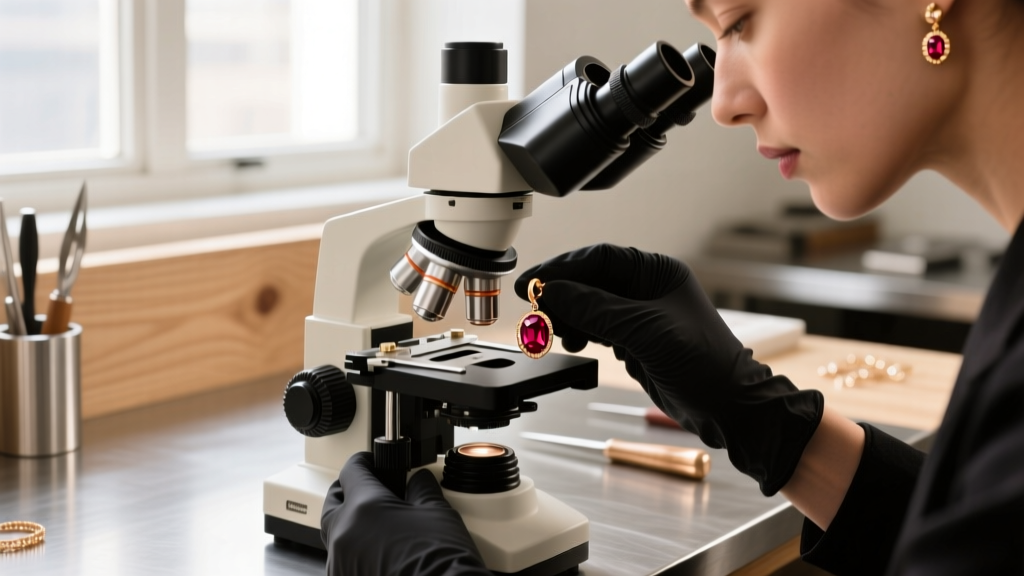
Faceting Styles for Kinetic Brilliance
Because dangle earrings are constantly in motion, the faceting pattern of the ruby dictates how it interacts with ambient light. Standard oval brilliant cuts are popular, but the Portuguese cut has gained massive traction for drop earrings. Featuring multiple tiers of crown facets, the Portuguese cut creates a highly complex scintillation pattern that sparkles intensely even in low-light environments. For elongated dangles, the briolette cut—a fully faceted, teardrop-shaped stone with no table or pavilion—offers 360-degree light return, making it the ultimate choice for free-swinging ruby drops.
Pricing Tiers and Market Value
Understanding the pricing matrix is essential for buyers navigating the 2026 market. Prices vary wildly based on origin, treatment, and manufacturing method.
- Flame Fusion Lab-Grown: $50 - $150 per pair. Excellent for everyday wear, but lacks the depth of color found in higher-end stones.
- Flux-Grown Lab-Grown: $300 - $800 per pair. Offers top-tier color and clarity (equivalent to natural AAA grades) with excellent durability.
- Heated Natural (Mozambique): $1,200 - $4,500 per pair (1-2 carats total weight). Heat treatment is standard and accepted by the Federal Trade Commission (FTC), provided it is disclosed.
- Unheated Natural (Burmese): $10,000 - $50,000+ per pair. Reserved for investment-grade, collector-level jewelry.
Warning: Avoid 'glass-filled' or 'fracture-filled' rubies for dangle earrings. These stones are infused with lead-glass to mask severe fractures. The glass has a Mohs hardness of only 5-6, making it highly susceptible to scratching, and it will dissolve if exposed to common household acids like lemon juice or harsh jewelry cleaners.
Care and Maintenance for Corundum Drops
While ruby is exceptionally hard, the metal settings holding the dangles require careful maintenance. For unheated, heated, and flux-grown lab rubies, ultrasonic cleaners are generally safe. However, if your natural ruby has been fracture-filled, ultrasonic vibrations can shatter the stone. The safest cleaning method for all ruby dangle earrings is a soak in warm water with a mild, phosphate-free dish soap, followed by gentle agitation with a soft-bristled baby toothbrush. Always dry the earring findings thoroughly to prevent moisture buildup in the hinge mechanisms of leverback closures.
Final Verdict: Choosing Your Ruby Drops
Selecting the perfect ruby dangle earrings requires balancing aesthetic desires with material realities. If your priority is maximum size, flawless clarity, and ethical traceability, flux-grown lab rubies set in 14k rose gold leverbacks offer the best value proposition in 2026. For collectors and purists, a pair of heated Mozambican rubies in a Portuguese cut, secured in 950 platinum bezels, provides a timeless, heirloom-quality investment that will withstand decades of kinetic elegance.


