Earrings Huggie Hoops Value Guide: Budget vs Fine Jewelry 2026
Discover if fine jewelry or budget-friendly options offer the best value for earrings huggie hoops. We compare materials, pricing, and durability.

The True Cost of Earrings Huggie Hoops: Beyond the Price Tag
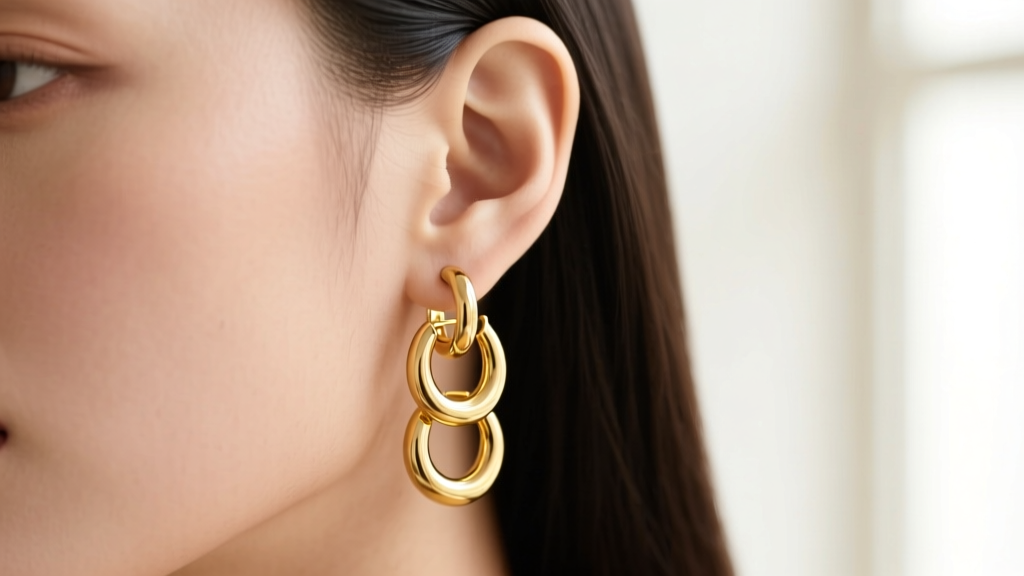
In the evolving landscape of 2026 ear curation, earrings huggie hoops have transitioned from a fleeting trend to a foundational wardrobe staple. Unlike traditional hoop earrings that dangle and catch on clothing, huggies are engineered to "hug" the earlobe closely, relying on precise mechanical hinges and snap closures. However, as their popularity has surged, the market has become saturated with options ranging from $15 fast-fashion alloys to $800 solid 18-karat gold designs. For the discerning buyer, the challenge is no longer just finding a style you like; it is determining which price point offers genuine long-term value.
Assessing the value of earrings huggie hoops requires looking far beyond the initial retail price. We must evaluate material degradation, mechanical failure rates, and the biological response of your earlobes to different metal alloys. A $40 pair of huggies that breaks at the hinge in three months has a terrible return on investment compared to a $250 pair of solid gold huggies that lasts a lifetime. This guide deconstructs the budget versus fine jewelry debate, providing you with a definitive framework to allocate your jewelry budget intelligently.
Material Breakdown: Vermeil, Gold-Filled, and Solid Karats
The primary driver of cost in huggie hoops is the raw material. Understanding the legal and structural definitions of gold jewelry is critical to avoiding deceptive marketing. According to the Federal Trade Commission Jewelry Guides, terms like "gold vermeil" and "gold-filled" have strict legal thresholds that separate them from cheap flash plating.
Gold vermeil (pronounced ver-may) requires a sterling silver base metal plated with at least 2.5 microns of gold. While superior to brass-based flash plating, the friction of a huggie's snap closure will inevitably wear through this microscopic layer over time. Gold-filled jewelry, conversely, involves mechanically bonding a much thicker layer of gold (at least 5% of the total weight) to a base metal core. Solid gold, typically 14k (58.5% pure gold) or 18k (75% pure gold), offers uniform composition throughout, meaning scratches and wear will never reveal a different metal underneath.
| Material Grade | Base Metal | Gold Layer / Purity | Avg. Price Range (2026) | Estimated Lifespan |
|---|---|---|---|---|
| Flash Plated | Brass / Nickel | < 0.5 microns | $15 - $35 | 1 - 6 Months |
| Gold Vermeil | Sterling Silver | ≥ 2.5 microns | $45 - $95 | 1 - 3 Years |
| Gold-Filled | Jeweler's Brass | ≥ 5% by weight | $35 - $75 | 3 - 10 Years |
| Solid 14k Gold | N/A (Alloyed) | 58.5% Pure Gold | $150 - $350 | Lifetime |
| Solid 18k Gold | N/A (Alloyed) | 75.0% Pure Gold | $300 - $800+ | Lifetime |
Mechanical Failure Points: Where Cheap Huggies Break
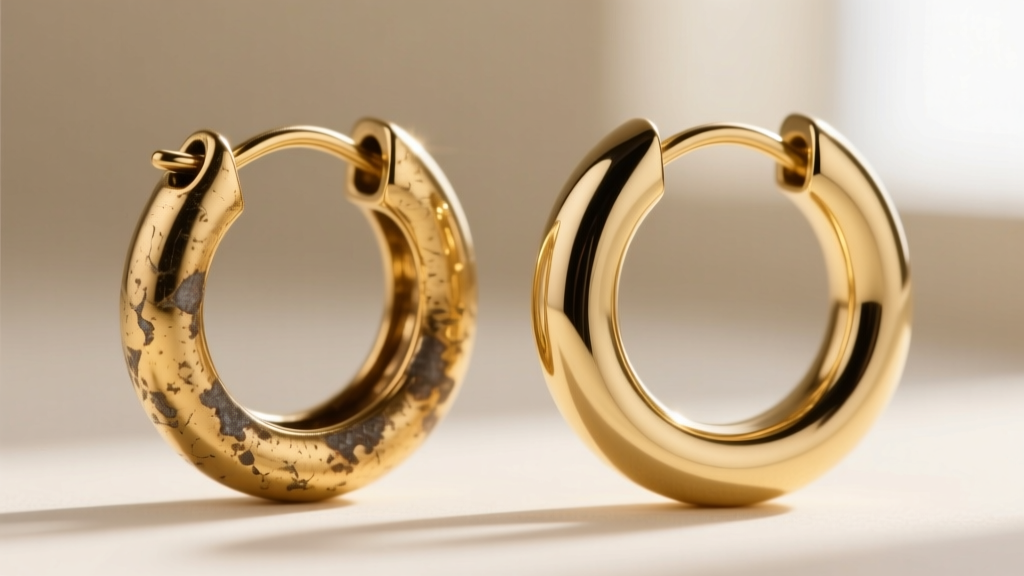
Because earrings huggie hoops rely on a hinged mechanism to open and close, they are inherently more complex than standard post-and-butterfly stud earrings. This complexity introduces specific mechanical failure points that disproportionately affect budget-friendly options.
The most common failure in sub-$50 huggies is hinge fatigue. Mass-market brands often use cast hinges rather than CNC-machined or laser-welded joints. Cast metal is porous and brittle at a microscopic level. After 50 to 100 open-close cycles, the micro-fractures in a cast hinge propagate, causing the hoop to snap cleanly off the post. Fine jewelry brands invest in precision-machined hinges with internal steel or titanium tension pins, ensuring the hinge outlasts the gold itself.
The second failure point is the snap closure tension. The "click" sound a high-quality huggie makes is the result of a precisely calibrated tension fit between the post and the receiving tube. In budget huggies, the receiving tube is often stamped from thin sheet metal. Over time, the tube stretches, and the post no longer clicks securely into place, leading to lost earrings. When evaluating value, always test the closure mechanism; a crisp, audible snap indicates superior manufacturing tolerances.
The Gauge Dilemma: 18G vs 20G vs 16G
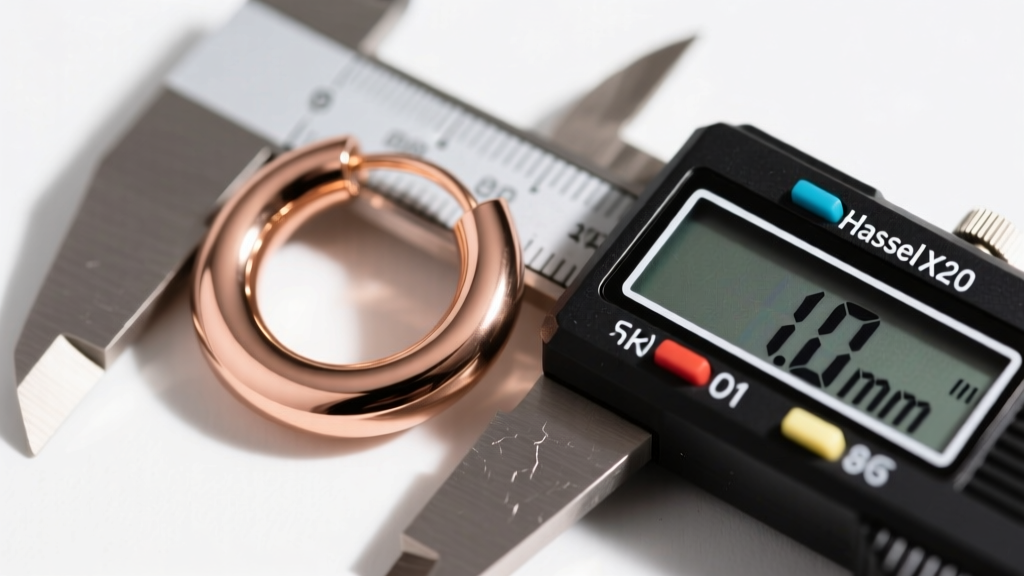
Wire thickness, measured in gauges, is a frequently overlooked aspect of huggie hoop value. Standard earlobe piercings are typically done at 20-gauge (0.81mm) or 18-gauge (1.02mm). However, huggie hoops carry their weight differently than dangling earrings. The Association of Professional Piercers warns against the "cheese-cutter effect," where a thin wire bearing heavy weight slowly migrates through the earlobe tissue.
If you are purchasing huggie hoops adorned with pave diamonds or chunky charm attachments, a 20-gauge wire is a structural liability. The downward force will cause the thin wire to slice through the bottom of your piercing hole. For weighted huggies, investing in 18-gauge (1.02mm) or 16-gauge (1.29mm) options is non-negotiable. While 16-gauge solid gold requires more raw material (driving up the initial cost), it preserves the structural integrity of your earlobe, saving you from costly piercing repairs down the line.
Brand Value Matrix: Who Offers the Best ROI?
To contextualize these material and mechanical facts, let us evaluate the current market leaders through a strict value-assessment lens. We categorize brands not just by price, but by their transparency regarding metal sourcing and manufacturing tolerances.
- The Direct-to-Consumer Sweet Spot (e.g., Mejuri, Gorjana): These brands dominate the $60 to $150 range. They offer excellent value in solid 14k gold for basic, unadorned huggies. However, their gold vermeil options suffer from the same clasp-wear issues inherent to the material. Verdict: Buy their solid 14k pieces; skip their vermeil.
- The Artisan Fine Jewelers (e.g., Catbird, Local Bench Jewelers): Priced between $200 and $500, these makers use recycled solid 14k and 18k gold with hand-finished hinges. The Gemological Institute of America (GIA) notes that artisan alloy mixing often results in more durable, scratch-resistant gold compared to mass-market casting grains. Verdict: The highest long-term ROI for heirloom-quality daily wearers.
- Fast Fashion & Marketplace Alloys (e.g., Amazon, Shein): Priced under $20. These are almost exclusively brass or zinc alloys with flash plating. They pose a high risk of contact dermatitis due to hidden nickel content and feature stamped hinges that fail within weeks. Verdict: Zero long-term value; strictly for temporary costume use.
Calculating Cost-Per-Wear (CPW): The Ultimate Metric
The most effective way to assess the value of earrings huggie hoops is to calculate the Cost-Per-Wear (CPW). The formula is simple: Total Cost / Number of Wears = CPW.
Consider a $65 pair of gold vermeil huggies. If the plating wears off at the clasp after 6 months of daily wear (approx. 180 wears), your CPW is $0.36 per wear, and the earrings are now unwearable due to base-metal skin irritation. Now consider a $280 pair of solid 14k gold huggies with a machined hinge. If you wear them daily for five years (1,825 wears), your CPW drops to $0.15 per wear. Furthermore, the solid gold pair retains intrinsic scrap value and can be polished indefinitely. The "expensive" option is mathematically cheaper over a standard timeline.
Expert Insight: Never compromise on the metal grade for jewelry that stays in your body 24/7. Huggie hoops are designed for continuous wear, meaning they are exposed to sweat, shower water, and friction. Budget alloys will degrade rapidly in this environment, making solid 14k gold the absolute minimum standard for true value.
Final Verdict: How to Allocate Your Huggie Hoop Budget
When building your ear curation, treat your primary, everyday huggies as an investment in fine jewelry. Allocate the bulk of your budget ($150–$350) toward a pair of solid 14k or 18k gold huggies with a verified 18-gauge or 16-gauge thickness and a precision-machined hinge. These will serve as your indestructible foundation.
Conversely, if you want to experiment with trendy textures, enamel colors, or oversized charm attachments that you may only wear for a single season, budget-friendly gold vermeil or gold-filled options ($40–$80) are perfectly acceptable. By applying this tiered value assessment, you ensure that your earrings huggie hoops collection is both economically rational and structurally enduring for years to come.


