The Ultimate Buying Guide for Authentic Vintage Silver Earrings
Discover how to authenticate, price, and choose vintage silver earrings. Learn to read hallmarks, identify eras, and spot fakes in our expert guide.

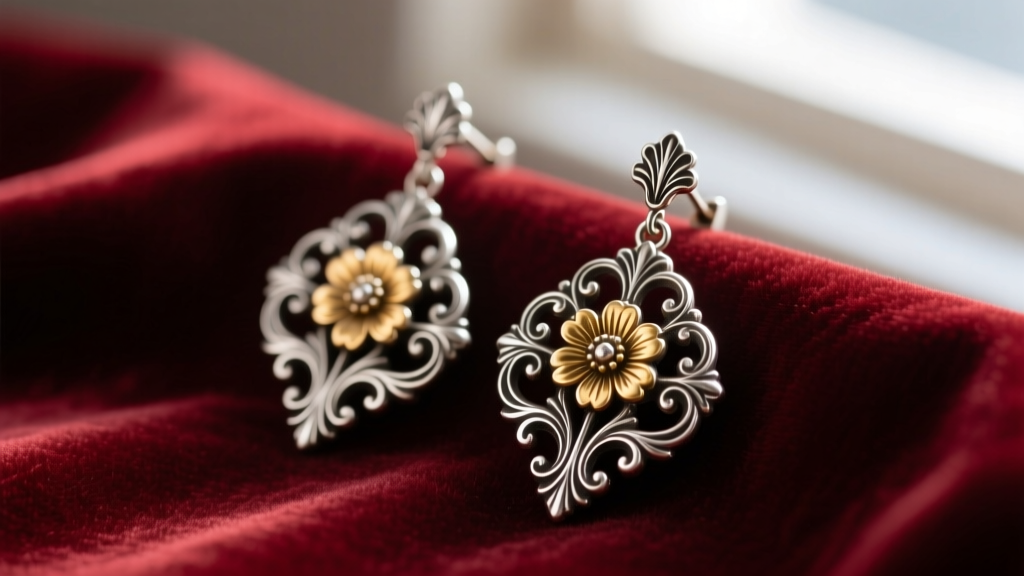
The Allure and Complexity of Vintage Silver Earrings
Collecting vintage silver earrings is a pursuit that bridges metallurgical science, historical fashion, and keen detective work. Unlike modern mass-produced jewelry, vintage pieces—typically defined as being between 20 and 99 years old—carry the distinct fingerprints of their eras. However, the secondary market is currently saturated with artificially aged reproductions, misidentified silver-plated items, and 'frankenstein' pieces that have been heavily altered. Whether you are hunting for intricate Art Deco filigree drops or chunky Mid-Century clip-ons, understanding the nuances of silver purity, historical clasp mechanisms, and authentic patina formation is essential. This comprehensive buying guide will equip you with the technical frameworks needed to evaluate, authenticate, and price vintage silver earrings with absolute confidence.
Decoding Silver Hallmarks and Purity Grades
The foundation of any vintage silver purchase begins with verifying the metal's purity. Pure silver (99.9%) is too malleable for jewelry, so it is alloyed with other metals, usually copper, to add structural integrity. According to the Silver Institute, global standards for silver purity vary significantly by region and era, which directly impacts the value and durability of the earrings you are evaluating.
| Silver Grade | Purity Level | Common Era / Region | Identifying Marks & Traits |
|---|---|---|---|
| Sterling Silver | 92.5% Silver | Global Standard (Post-19th Century) | '925', 'Sterling', or the UK Lion Passant hallmark. |
| Coin Silver | 90.0% Silver | Early American (Pre-1870s) | 'Coin', 'Dollar', or maker's mark only. Slightly harder than sterling. |
| 800 Silver | 80.0% Silver | Continental Europe (Victorian to Art Deco) | '800', boar's head (France), or crescent moon (Germany). Highly durable. |
| Britannia Silver | 95.8% Silver | UK (1697–1720, occasional later use) | Figure of Britannia hallmark. Softer, prone to deep scratching. |
When inspecting European vintage silver earrings, familiarity with the UK Assay Office hallmarking system is invaluable. A true British sterling piece will feature a maker's mark, a standard mark (Lion Passant), an assay office mark (e.g., an anchor for Birmingham), and a date letter. If an earring lacks these stamps, it does not automatically mean it is fake; early American coin silver and many Continental pieces relied solely on the silversmith's maker's mark. However, the absence of any mark warrants rigorous secondary testing.
Identifying Eras: From Victorian to Mid-Century
The design motifs and construction techniques of vintage silver earrings are deeply tied to their historical context. Experts at Lang Antiques University emphasize that matching the design aesthetic to the correct historical era is a primary method for spotting modern reproductions.
Victorian (1837–1901)
Victorian silver earrings are characterized by romantic, nature-inspired motifs, intricate repoussé work (hammering from the reverse side to create raised relief), and mourning jewelry featuring black enamel or jet inlays. Because ear piercing fell out of favor among upper-class women during the mid-to-late Victorian era, many original pieces were actually brooches or pendants that were later converted into earrings. If you find a pair of Victorian drops with perfectly matched, modern-looking friction posts and butterfly backs, you are likely looking at a conversion or a modern reproduction.
Art Deco (1920s–1930s)
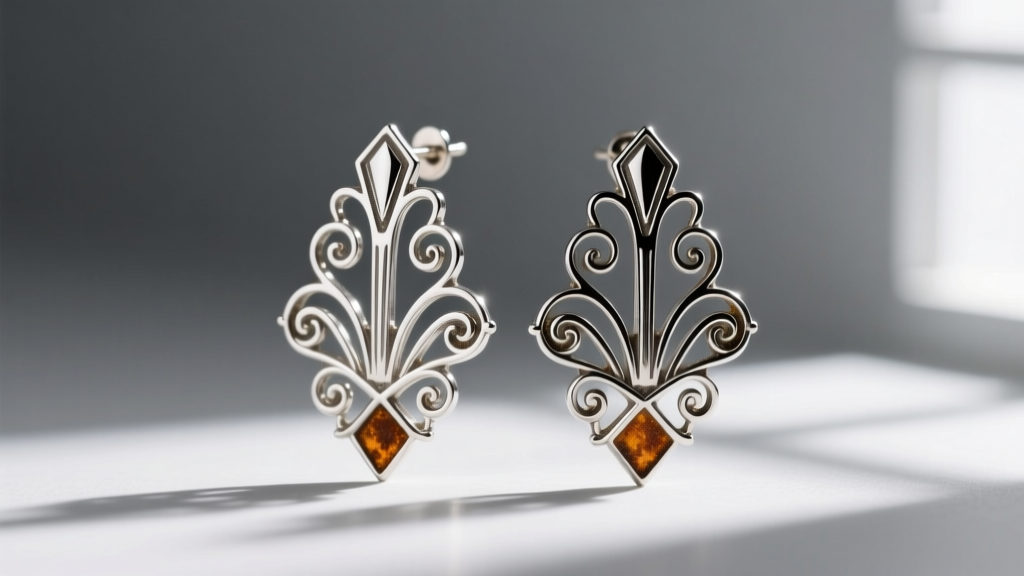
The Art Deco era introduced sharp geometric lines, symmetrical patterns, and the extensive use of marcasite (polished pyrite) and onyx inlays set in sterling silver. Filigree work became incredibly precise, often resembling lace. These earrings were designed to complement the short, bobbed hairstyles of the flapper era, leading to the rise of long, swinging dangles and the widespread adoption of the screw-back clasp.
Retro and Mid-Century (1940s–1960s)
World War II metal rationing influenced the chunky, bold, and three-dimensional designs of the Retro period. Post-war Mid-Century vintage silver earrings often feature large, textured silver surfaces, aurora borealis rhinestones, and starburst motifs. This era is the golden age of the clip-on earring, designed for women who did not have pierced ears.
Hardware and Clasp Mechanics: The Authenticity Test
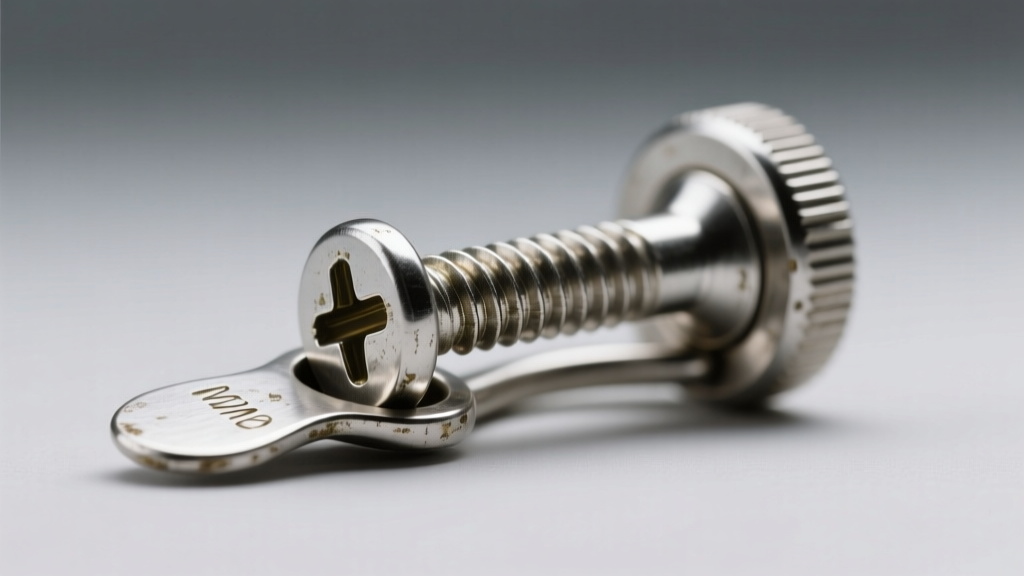
The hardware attached to a vintage earring is often the most reliable indicator of its true age. Clasp technology evolved rapidly throughout the 20th century, and anachronistic hardware is the most common red flag in mislabeled vintage jewelry.
- Shepherd Hooks and Kidney Wires: The standard for 19th-century and early 20th-century dangle earrings. Original wires were often hand-drawn, meaning they may have slight variations in thickness and lack the perfectly uniform machine-cut ends seen in modern findings.
- Screw-Backs: Patented in 1894 by W.C. Codding, screw-backs did not become the dominant earring style until the 1920s. They consist of a threaded post and a paddle-shaped nut that tightens against the earlobe. If a seller claims a pair of screw-back earrings is from the 1880s, they are either misinformed or selling a later conversion.
- Clip-Ons: The modern hinged clip-on earring was invented in 1934 by the Resemco company. Early clip-ons (1930s-1940s) featured simple, tight-hinge mechanisms that often caused discomfort. Later Mid-Century designs introduced adjustable tension screws and padded ear cushions. Any 'Victorian' or 'Edwardian' earring featuring a hinged clip-on back is definitively a fake or a heavily altered piece.
- Friction Posts and Butterfly Backs: While post earrings existed in the 19th century, the modern friction post with a metal 'butterfly' or 'scroll' backing did not become ubiquitous until the mid-to-late 20th century. Finding modern butterfly backs on purported Art Deco earrings usually indicates a recent conversion from screw-backs or clip-ons.
Evaluating Patina, Wear, and Structural Integrity
Patina is the natural oxidation layer that forms on silver when the copper alloy reacts with sulfur compounds in the atmosphere, creating silver sulfide. Authentic vintage patina is a crucial E-E-A-T indicator that separates genuine artifacts from chemically treated fakes.
Real patina develops organically over decades. It typically presents as a spectrum ranging from a warm golden-yellow to deep gunmetal grey and black. Crucially, natural patina accumulates in the recesses, crevices, and under the settings of gemstones, while the high-contact areas (like the edges of a clip-on paddle or the outer curves of a hoop) remain relatively polished from decades of handling and wear. Conversely, artificial 'antiquing'—often achieved by dipping modern silver in liver of sulfur—tends to look uniformly dark, flat, and matte, lacking the nuanced depth and color variations of age-accelerated oxidation.
Structural integrity is equally important. Inspect the solder joints where the earring post or clip mechanism meets the main body. Vintage solder was often a lower-temperature lead-tin or silver alloy that may appear slightly grainy or discolored compared to the surrounding metal. Check for stress fractures, particularly in delicate Art Deco filigree wires, and ensure that any gemstone settings (like marcasite beads) are securely bezel-set or pronged, as the adhesive used in vintage jewelry often degrades over time.
Pricing Framework: What Should You Pay?
The market for vintage silver earrings in 2026 remains robust, but pricing varies wildly based on provenance, maker, and condition. Below is a general pricing framework for authentic, wearable pieces in good structural condition:
- Victorian Repoussé Drops & Mourning Pieces: $150 – $600. Pieces with verified maker's marks, intricate hand-chased details, or original black enamel command the highest premiums.
- Art Deco Filigree & Marcasite Dangles: $80 – $350. Geometric symmetry and the presence of original, un-replaced marcasite stones are key value drivers.
- Retro / Mid-Century Chunky Clip-Ons: $45 – $150. Highly wearable and currently trending, though generally less valuable than earlier periods unless designed by a notable maker like Taxco silversmiths (e.g., William Spratling or Hector Aguilar), which can push prices well over $1,000.
- Unsigned / Generic Vintage Studs and Hoops: $25 – $60. Valued primarily for their silver weight and basic aesthetic appeal.
Sourcing and Red Flags to Avoid
When sourcing vintage silver earrings from estate sales, antique malls, or online auction platforms, maintain a high degree of skepticism. Avoid listings that use vague terminology like 'Tibetan Silver', 'Vintage Silver Tone', or 'Antique Silver Plated'. 'Tibetan Silver' is a commercial misnomer for a zinc-copper-nickel alloy that contains zero actual silver and can cause severe contact dermatitis due to nickel content.
The Magnet and Ice Tests: Carry a small neodymium magnet when shopping in person. Silver is paramagnetic; it should not stick to a magnet. If a 'silver' earring clings to the magnet, it has a ferrous base metal core. Additionally, silver possesses the highest thermal conductivity of any metal. If you place a small ice cube on a thick vintage silver earring, the ice should begin melting almost instantaneously, far faster than it would on stainless steel or glass.
Ultimately, buying vintage silver earrings is an exercise in historical appreciation and material verification. By scrutinizing the hallmarks, understanding the timeline of clasp patents, and learning to read the subtle language of natural patina, you can build a collection that is not only visually stunning but historically authentic and structurally sound.


