Expert Care & Cleaning Tips for Hoop White Earrings
Discover expert care, cleaning, and maintenance tips for hoop white earrings. Learn how to protect white gold, enamel, and resin finishes.

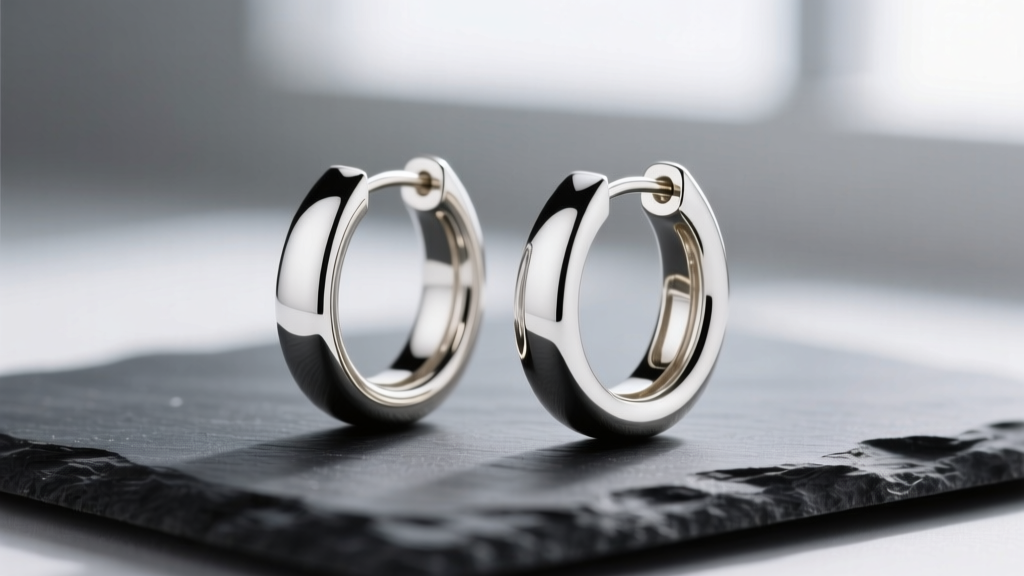
White hoop earrings are a cornerstone of modern jewelry styling, offering a crisp, reflective aesthetic that pairs seamlessly with both minimalist and maximalist wardrobes. However, the very brilliance that makes hoop white earrings so desirable also makes them uniquely susceptible to visible wear, cosmetic buildup, and material degradation. Whether your collection features rhodium-plated white gold, vitreous enamel, or contemporary white resin, maintaining their pristine appearance requires a nuanced understanding of material science and structural mechanics.
In this comprehensive guide, we break down the exact cleaning protocols, structural maintenance routines, and storage solutions required to keep your white hoops looking factory-new. According to the Gemological Institute of America (GIA), improper cleaning techniques are the leading cause of premature wear in plated and enameled jewelry. Let us explore how to avoid these pitfalls.
Why Hoop White Earrings Require Specialized Care
The color white in jewelry is rarely a single, uniform material. It is typically achieved through surface treatments (like rhodium plating or enamel firing) or through inherently light-colored materials (like platinum, ceramic, or acrylic). Because white surfaces reflect the maximum amount of visible light, they also highlight the highest amount of contrast. Micro-scratches, sebum accumulation, and tarnish are immediately visible on white hoops, whereas they might go unnoticed on yellow gold or oxidized silver.
Furthermore, the continuous circular geometry of a hoop means the jewelry constantly rotates through the ear piercing. This rotation draws skin oils, dead epidermal cells, and haircare products directly into the closure mechanism and along the inner wire, creating a breeding ground for bacteria and a catalyst for metal oxidation.
Material Breakdown & Vulnerability Matrix
Before applying any cleaning solution, you must identify the exact material of your hoop white earrings. Using the wrong chemical agent can permanently ruin the finish. Below is a vulnerability matrix to guide your maintenance strategy.
| Material | Base Composition | Primary Vulnerability | Recommended Cleaner | Agents to Avoid |
|---|---|---|---|---|
| White Gold | Gold alloyed with nickel/palladium, plated with rhodium (0.75-1.0 microns) | Rhodium wear-through, micro-scratching | Mild dish soap, distilled water | Ultrasonic cleaners, toothpaste, bleach |
| Platinum | 95% Platinum, 5% Ruthenium/Iridium | Patina development, surface scuffing | Ammonia-based jewelry cleaner | Chlorine, harsh abrasives |
| White Enamel | Fused powdered glass over a metal substrate | Thermal shock, chipping, chemical etching | Damp microfiber cloth | Ultrasonic cleaners, boiling water, acids |
| White Ceramic | Zirconium dioxide or titanium carbide | Shattering upon high-impact drops | Isopropyl alcohol, mild soap | Hydrofluoric acid, extreme pressure |
| White Resin/Acrylic | Cast polymethyl methacrylate (PMMA) or epoxy | UV yellowing, chemical clouding | Non-alcoholic wipes, mild soap | Isopropyl alcohol, acetone, perfumes |
Step-by-Step Cleaning Protocols by Material
Rhodium-Plated White Gold & Platinum Hoops
White gold is not naturally white; it is a yellowish alloy plated with rhodium, a rare platinum-group metal. This plating is typically only 0.75 to 1.0 microns thick. Aggressive polishing or ultrasonic cleaning can strip this layer, exposing the pale yellow alloy beneath. According to guidelines from Jewelers Mutual, gentle hand-washing is the safest method for plated jewelry.
- Mix three drops of ammonia-free, phosphate-free dish soap (such as Dawn) into eight ounces of lukewarm distilled water. Tap water contains minerals that can leave micro-deposits.
- Submerge the hoops for exactly three to five minutes to loosen sebum and cosmetic buildup.
- Using a brand-new, extra-soft baby toothbrush, gently sweep the bristles along the inner curve of the hoop and the hinge mechanism. Do not scrub the outer face aggressively.
- Rinse under a slow stream of distilled water and pat dry with a lint-free microfiber cloth. Air-drying will leave water spots.
White Ceramic & Vitreous Enamel Hoops
Vitreous enamel is essentially fused glass. While it is highly resistant to chemical tarnish, it is incredibly vulnerable to thermal shock. Never run hot water over enamel hoops and then immediately expose them to cold air or cold water; the rapid contraction will cause the glass to craze (develop a network of microscopic cracks) or chip away from the metal substrate. Clean these exclusively with a damp, room-temperature microfiber cloth. For stubborn makeup buildup on ceramic hoops, a 70% isopropyl alcohol wipe is safe and will evaporate without leaving streaks.
White Resin & Cast Acrylic Hoops
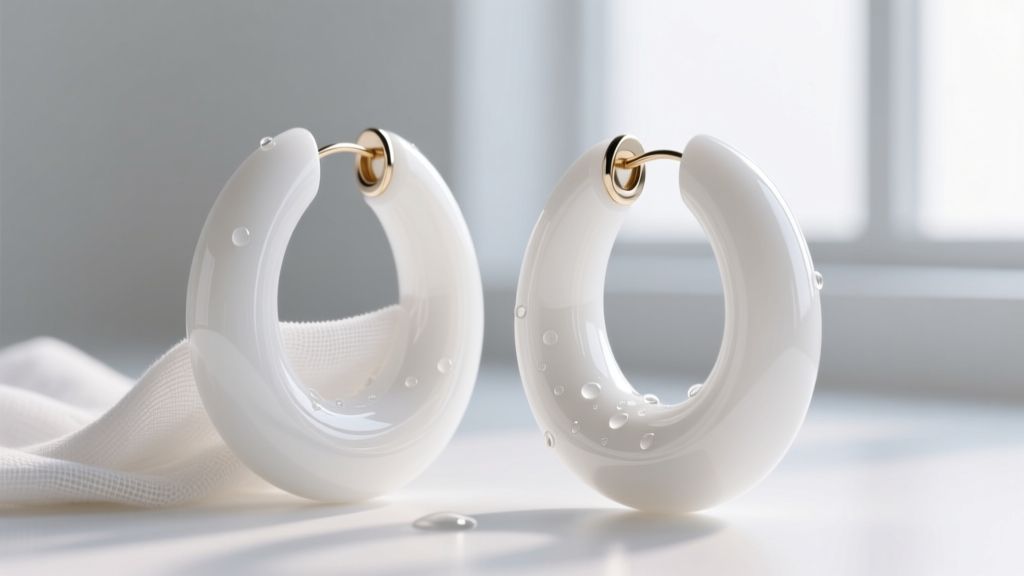
Contemporary fashion jewelry frequently utilizes white acrylic or resin for bold, lightweight hoops. These polymers are highly porous at a microscopic level and react poorly to solvents. Never use alcohol, acetone, or commercial jewelry dips on resin hoops. Alcohol causes micro-crazing, turning the once-opaque white plastic cloudy and brittle over time. Instead, wipe them down with a water-dampened cloth and a tiny drop of glycerin-based soap. To prevent UV-induced yellowing, store acrylic hoops away from direct sunlight when not in use.
Structural Maintenance: Hinges, Closures, and Gauge Integrity
The structural integrity of a hoop is just as critical as its surface finish. Hoops rely on tension and precision-machined hinges to stay secure in the ear.
Understanding Gauge Sizes and Wire Tension
Standard lobe hoops are typically crafted in 20-gauge (0.81mm) or 18-gauge (1.02mm) wire, while cartilage hoops usually require a thicker 16-gauge (1.29mm) or 14-gauge (1.63mm) wire for stability. Thinner 20-gauge white gold hoops are prone to bending if caught on a towel or hairbrush. If your hoop bends, do not repeatedly bend it back into shape. Metals undergo "work hardening," where repeated bending alters the crystalline structure, making the metal brittle and prone to snapping. Take bent hoops to a professional jeweler for annealing and reshaping.
Hinge and Clicker Lubrication
If your hinged snap-back or clicker hoop becomes stiff or emits a faint clicking sound when opening, the hinge pin is likely clogged with microscopic debris or lacks lubrication. Do not use WD-40 or household oils, which will gum up and attract dust. Instead, use a 0.5mm needle oiler to apply a microscopic drop of synthetic watch oil (such as Moebius 9010) directly to the hinge seam. Cycle the hinge open and closed ten times to distribute the oil, then wipe away any excess with a dry cotton swab.
Storage Solutions to Prevent Micro-Scratches and Tarnish
Improper storage is the fastest way to degrade the finish of your hoop white earrings. Tossing multiple hoops into a single compartment guarantees micro-scratches, as the harder metal of one hoop will abrade the rhodium or enamel of another.
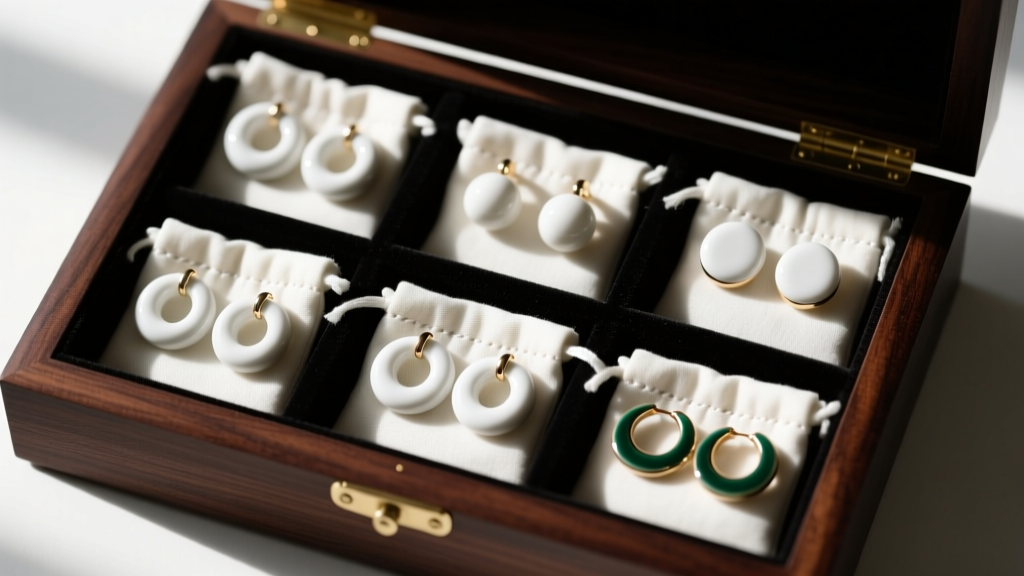
- Individual Pouches: Store each pair of hoops in its own anti-tarnish flannel or velvet pouch. The tight weave of flannel prevents dust accumulation while buffering against impacts.
- Humidity Control: Moisture accelerates the oxidation of the base alloys beneath rhodium plating. Place silica gel desiccant packets in your jewelry box drawers to maintain a relative humidity below 40%.
- Anti-Tarnish Strips: For white gold and silver-hued hoops, incorporate 3M anti-tarnish strips into your storage boxes. These strips absorb airborne sulfur compounds that cause discoloration, and they remain effective for up to six months in an enclosed space.
Troubleshooting Common Issues
Even with meticulous care, white hoops may encounter specific issues over time. Here is how to address the most common failure modes:
- Yellowing White Gold: If your white gold hoops begin to look yellowish or "champagne" colored, the rhodium plating has worn through. This is not a defect but a natural consequence of wear. The solution is to take them to a jeweler for a professional polish and re-rhodium plating, a process that typically costs between $35 and $60 and restores the mirror-white finish.
- Chipped Enamel: If a white enamel hoop chips, do not attempt to fill it with white nail polish or epoxy, as these will yellow and fail to match the vitreous gloss. An experienced lapidary or enamel artist can sometimes re-fire the piece, though the cost may exceed the value of fashion jewelry.
- Stuck Hinges: If a hinge is completely seized, soak the hoop in a small cup of warm distilled water for ten minutes to dissolve hardened sebum. Dry thoroughly and apply synthetic watch oil as described above. Never force a stuck hinge with pliers, as you will shear the microscopic pin.
By understanding the specific material properties and structural vulnerabilities of your jewelry, you can ensure your hoop white earrings remain a brilliant, hygienic, and structurally sound staple in your collection for years to come.


