Ruby Heart Earrings Buying Guide: What to Look For in 2026
Discover how to choose the perfect ruby heart earrings in 2026. Learn about gemstone treatments, metal settings, pricing, and quality grades.

The Enduring Allure of the Ruby Heart Cut
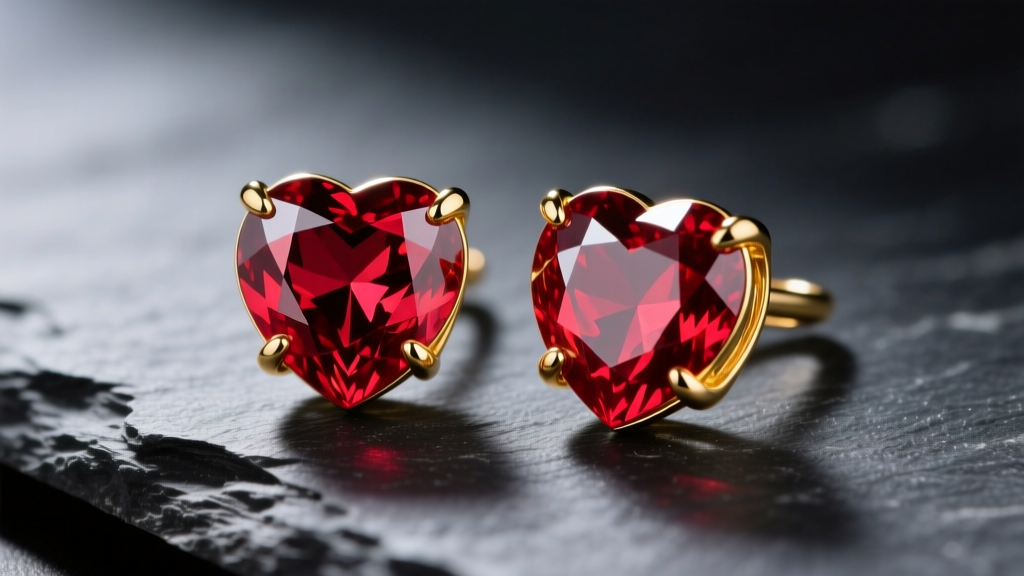
Ruby heart earrings represent a collision of profound romantic symbolism and serious gemological investment. As we navigate the jewelry market in 2026, the demand for heart-shaped corundum has surged, driven by a renewed appreciation for vintage-inspired silhouettes and bespoke bridal jewelry. However, the heart cut is notoriously unforgiving. Unlike round brilliants that hide imperfections through sheer optical symmetry, a heart-shaped ruby puts every inclusion, color zone, and asymmetrical facet on full display. Whether you are hunting for a pair of delicate 0.50-carat studs or dramatic 2.00-carat drop earrings, understanding the precise mechanics of this fancy cut is non-negotiable. This comprehensive buying guide will walk you through the exact specifications, treatment disclosures, and setting requirements you need to evaluate before making a purchase.
The Anatomy of a Perfect Ruby Heart Cut
The heart shape is essentially a modified brilliant cut, typically featuring 59 facets. When evaluating ruby heart earrings, the overall silhouette is dictated by three critical anatomical features: the cleft, the lobes, and the point.
Symmetry and Proportions
The ideal length-to-width ratio for a heart-shaped ruby falls strictly between 0.90 and 1.10. A ratio below 0.90 results in a squat, wide heart that lacks elegance, while a ratio above 1.10 yields a stretched, elongated shape that compromises the stone's internal light return. Furthermore, the cleft—the dip at the top of the heart—must be deep enough to clearly define the two lobes but not so deep that it creates a structural weak point or a 'dead zone' where light escapes. The lobes themselves must be perfectly mirrored; even a 2% variance in lobe curvature is immediately visible to the naked eye and drastically reduces the gem's market value.
Evaluating Ruby Quality: The 4Cs for Corundum
According to the Gemological Institute of America (GIA), evaluating rubies requires a different hierarchy of the 4Cs compared to diamonds. Color is the undisputed king of ruby valuation, followed closely by clarity and treatments.
Color: The Pigeon Blood Standard vs. Pinkish Tones
In 2026, the most coveted color grade remains 'Pigeon Blood'—a vivid, highly saturated red with a very slight purplish secondary hue and medium-dark tone. However, be wary of commercial grading reports that use this term loosely. Always look for GIA or GRS (GemResearch Swisslab) reports that specifically note 'vivid red' with the 'pigeon blood' trade term in the comments. Rubies with heavy orange or pink modifiers are technically classified as fancy sapphires or lower-tier rubies and should be priced significantly lower.
Clarity and Treatments: Heat vs. Glass Filling
Rubies are Type II gemstones, meaning they naturally form with inclusions. 'Silk' (rutile needles) is actually desirable in small amounts, as it scatters light and gives the ruby a velvety glow. The critical factor is how the stone has been treated:
- Unheated: The holy grail. Commands a massive premium (often 300% to 500% over heated equivalents).
- Traditional Heat Treatment: The industry standard. Acceptable and stable, provided it is fully disclosed.
- Flux Healing: Uses borax to heal surface-reaching fractures during heating. Acceptable if priced accordingly, but reduces durability slightly.
- Lead-Glass Filling: A hard pass. These stones are infused with high-lead glass to mask massive fractures. They are incredibly fragile, damaged by mild acids (like lemon juice), and hold virtually no resale value.
Metal Settings for Heart-Shaped Rubies
The metal you choose for your ruby heart earrings not only impacts the aesthetic but also the structural integrity of the piece. Because rubies are a 9 on the Mohs hardness scale, they are highly durable, but the metal prongs holding them are not.
| Metal Type | Durability & Prong Security | Aesthetic Pairing | 2026 Price Premium |
|---|---|---|---|
| 14k Yellow Gold | Good durability; requires prong checks every 2 years. | Enhances warm, purplish-red rubies beautifully. | Baseline |
| 18k Yellow Gold | Softer than 14k; prongs wear down faster. | Rich, buttery tone; ideal for vintage-style studs. | +25% |
| Platinum (950) | Exceptional; prongs bend rather than break, securing the stone. | Neutral white metal that makes vivid reds pop. | +60% |
| 14k White Gold | Rhodium plating wears off, revealing yellowish alloy. | Modern look, but requires re-plating maintenance. | +15% |
For everyday wear, especially for dangle or drop ruby heart earrings that are prone to snagging on clothing, Platinum is the superior choice. The American Gem Society (AGS) frequently recommends platinum for high-value gemstone settings due to its tensile strength and long-term wear resistance.
Pricing Tiers: What to Expect in the Current Market
Pricing for ruby heart earrings varies wildly based on origin, treatment, and whether the stones are natural or lab-grown. Here is a realistic breakdown for a matched pair totaling 1.00 carat (0.50ct each) in 2026:
Natural Rubies
- Heated, Commercial Grade (Opaque/Included): $150 - $400
- Heated, Gem Quality (Eye-clean, Vivid Red): $1,200 - $3,500
- Unheated Burmese/Mozambique (Top Color): $5,000 - $15,000+
Lab-Grown Rubies
The lab-grown market has matured significantly. Avoid cheap 'flame fusion' lab rubies, which often have curved striae and look artificially perfect. Instead, seek out Flux-Grown lab rubies. These take months to grow, mimicking the natural crystallization process, and can be cut into precise heart shapes with excellent light performance. Expect to pay between $200 and $600 for a high-quality 1.00ct total weight pair of flux-grown ruby heart earrings set in solid gold.
Prong Placement and Durability
The heart cut has two inherent structural vulnerabilities: the cleft at the top and the culet (point) at the bottom. Improper prong placement will guarantee a chipped stone within months of wear.
Protecting the Cleft and the Point
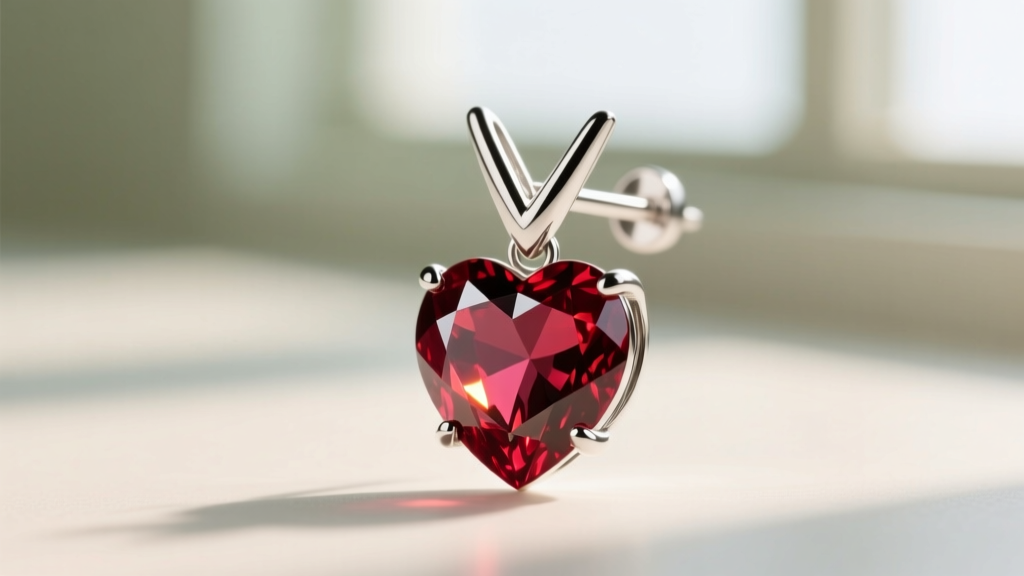
The bottom point of the ruby must always be secured with a V-prong. A standard rounded prong placed over the point will leave the extreme tip exposed, and a single tap against a granite countertop will snap the culet off. The cleft at the top requires careful consideration; many jewelers use a single V-prong in the cleft, but this can sometimes cause the stone to rock if not seated perfectly. A 5-prong setting (two on each lobe, one V-prong at the bottom) or a 4-prong setting (one on each lobe, one V-prong at the bottom, and a specialized V-prong in the cleft) offers the best security for drop earrings.
Expert Insight: When buying ruby heart studs, ensure the setting includes a 'basket' or gallery wire beneath the stone. This prevents the sharp bottom point of the ruby from pressing directly into your earlobe, which can cause discomfort and eventually wear down the metal prong from the inside out.
Final Checklist Before You Buy
Before you finalize your purchase of ruby heart earrings, run through this essential checklist to ensure you are getting exactly what you pay for:
- Verify the Report: Ensure the gemstone comes with a report from a tier-one lab (GIA, GRS, AGL, or Gübelin). Never rely solely on in-house appraisals for natural rubies over $1,000.
- Check for Beryllium Diffusion: Some rubies are treated with beryllium to artificially induce red color. This must be disclosed and heavily discounts the stone's value.
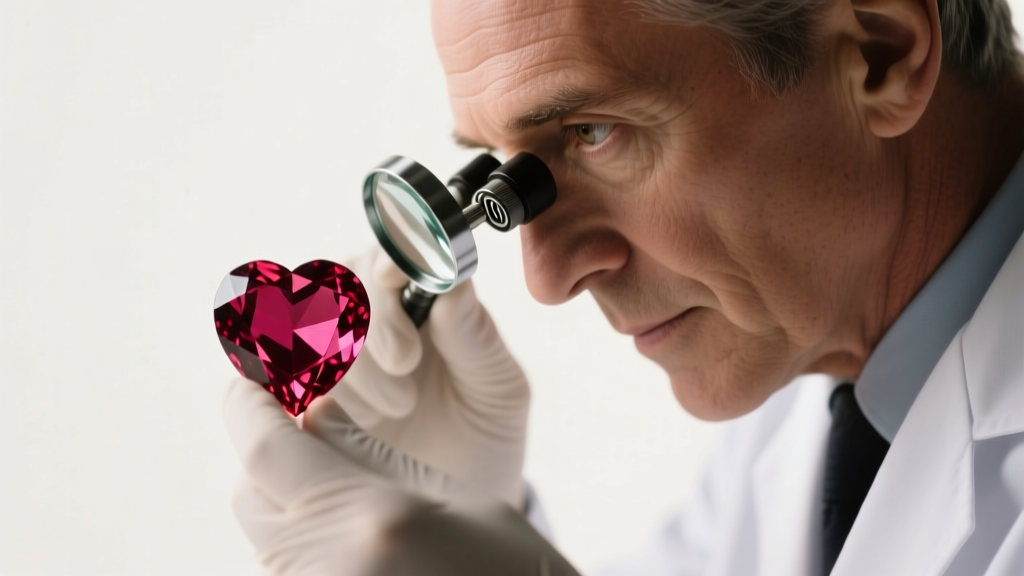
- Inspect the Culet: Use a 10x loupe or request a high-resolution macro video to ensure the bottom point is not already chipped or abraded.
- Confirm Metal Hallmarks: Look for the 'PT950', '14K', or '18K' stamp inside the earring post or on the clutch to verify the metal purity.
- Evaluate the Match: If buying a pair of drops or dangles, ensure the two hearts have identical length-to-width ratios and matching color saturation under both daylight and incandescent lighting.
By prioritizing precise cut proportions, demanding full treatment transparency, and insisting on secure V-prong settings, you can confidently invest in a pair of ruby heart earrings that will remain structurally sound and visually breathtaking for generations.


