Should You Sleep With Earrings In? The Ultimate Sleeper Buying Guide
Discover if you should sleep with earrings in. Our buying guide covers safe materials, flat-back anatomy, and cartilage vs. lobe rules.

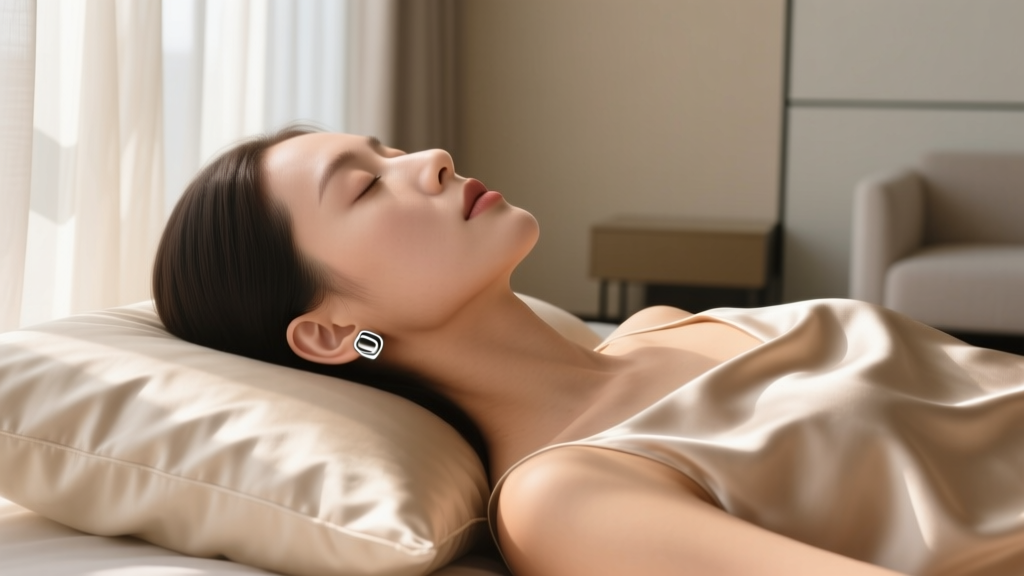
The Short Answer: When It’s Safe (and When It’s Not)
The question of whether you should sleep with earrings in is one of the most debated topics in body modification and jewelry care. The short answer is highly dependent on the age of your piercing, the anatomy of the piercing site, and the specific mechanics of the jewelry you are wearing. For fresh piercings (under 6 to 12 months old), removing your jewelry overnight is strictly prohibited; the fistula (the tissue tube forming the piercing channel) will shrink or close entirely within hours. However, for fully healed piercings, sleeping in earrings is generally safe—provided you are wearing purpose-built "sleepers."
Wearing the wrong jewelry overnight, such as standard butterfly-back studs or large dangling hoops, introduces severe risks ranging from contact dermatitis and localized infection to pressure necrosis and mechanical tearing. This comprehensive buying guide will break down exactly what to look for when purchasing overnight earrings, ensuring your ears remain healthy, comfortable, and irritation-free.
The Anatomy of a True Sleeper Earring
Not all earrings are created equal, and the term "sleeper" is frequently misused by fast-fashion retailers to describe any small hoop or basic stud. A true sleeper earring is engineered specifically to eliminate pressure points, reduce bacterial harborage, and prevent snagging on textiles. When shopping for overnight wear, you must evaluate three critical structural components: the backing mechanism, the post thickness, and the threading style.
Why Butterfly Backs Are the Enemy of Sleep
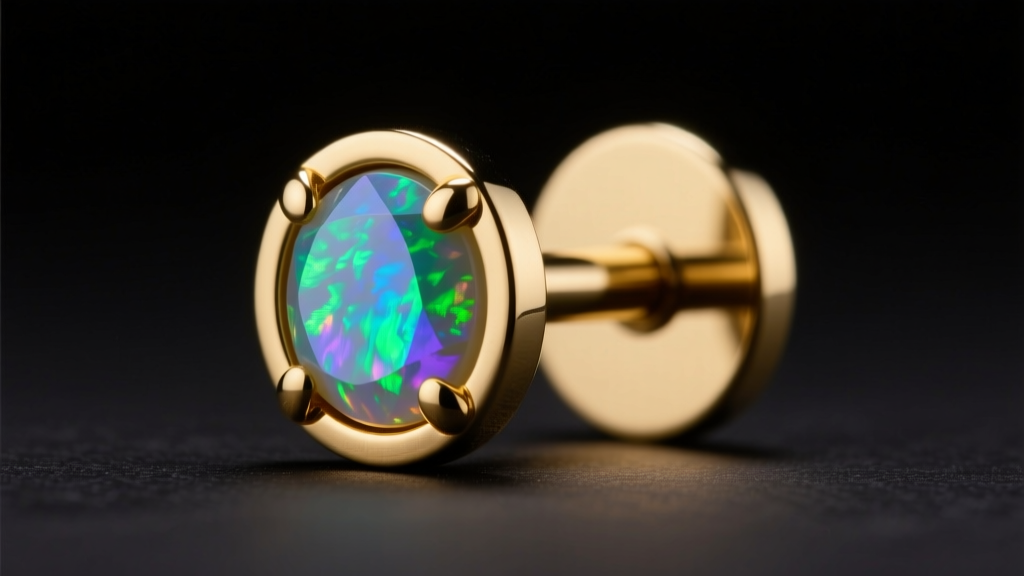
Standard push-back or "butterfly" clutches are fundamentally unsuited for overnight wear. The narrow, pointed prongs of a butterfly back concentrate the weight of the earring into a tiny surface area, effectively acting as a blunt needle against the sensitive skin behind your ear or neck. Furthermore, the crevices in a butterfly back trap dead skin cells, sebum, and bacteria, creating a breeding ground for localized infections. True sleepers utilize flat-back labret posts. A flat disc distributes pressure evenly across a wider surface area, eliminating the risk of the post embedding into your skin while you toss and turn.
The Mechanics of Threadless vs. Internally Threaded
When evaluating high-quality sleepers, you will encounter two primary attachment methods. Internally threaded jewelry features the screw mechanism on the inside of the post, meaning the decorative end has a smooth pin that glides through the tissue without tearing it. Threadless (push-pin) jewelry relies on tension; a slightly bent pin is inserted into a hollow post, creating a secure, custom friction fit. Both are vastly superior to externally threaded jewelry, which acts like a microscopic file, scraping and damaging the fistula every time it is inserted or removed.
Material Matrix: What to Buy for Overnight Wear
Your skin's temperature rises slightly during sleep, and prolonged contact with reactive metals can trigger allergic contact dermatitis. According to the American Academy of Dermatology, nickel is the most common culprit for jewelry-related skin reactions. When investing in sleepers, you must prioritize biocompatible, low-porosity materials.
| Material Grade | Biocompatibility | Nickel Risk | Avg. Price Range | Verdict for Sleep |
|---|---|---|---|---|
| ASTM F-136 Titanium | Implant-Grade | Zero | $35 - $80+ | Excellent (Gold Standard) |
| Niobium | Highly Biocompatible | Zero | $30 - $60 | Excellent (Great Alternative) |
| 14k / 18k Solid Gold | High (if alloyed properly) | Low (if nickel-free) | $80 - $250+ | Very Good (Ensure nickel-free) |
| 316L Surgical Steel | Moderate | Moderate to High | $10 - $30 | Poor (Avoid for sensitive ears) |
| Sterling Silver (925) | Low (tarnishes/oxidizes) | Variable | $15 - $45 | Poor (Causes argyria/tarnish) |
The Association of Professional Piercers (APP) strictly recommends implant-grade titanium (ASTM F-136) for any jewelry worn during the healing process or for prolonged, uninterrupted contact with the skin. Unlike "surgical steel," which is a vague marketing term that often contains up to 10% nickel, F-136 titanium is entirely nickel-free and highly resistant to corrosion from bodily fluids and sweat.
Cartilage vs. Lobe: Different Rules for Different Zones
The anatomical location of your piercing dictates the exact gauge and profile of the sleeper you should purchase. Cartilage tissue is avascular (lacking direct blood supply) and highly susceptible to pressure-induced complications.
Lobe Piercings: Preventing the Cheese-Cutter Effect
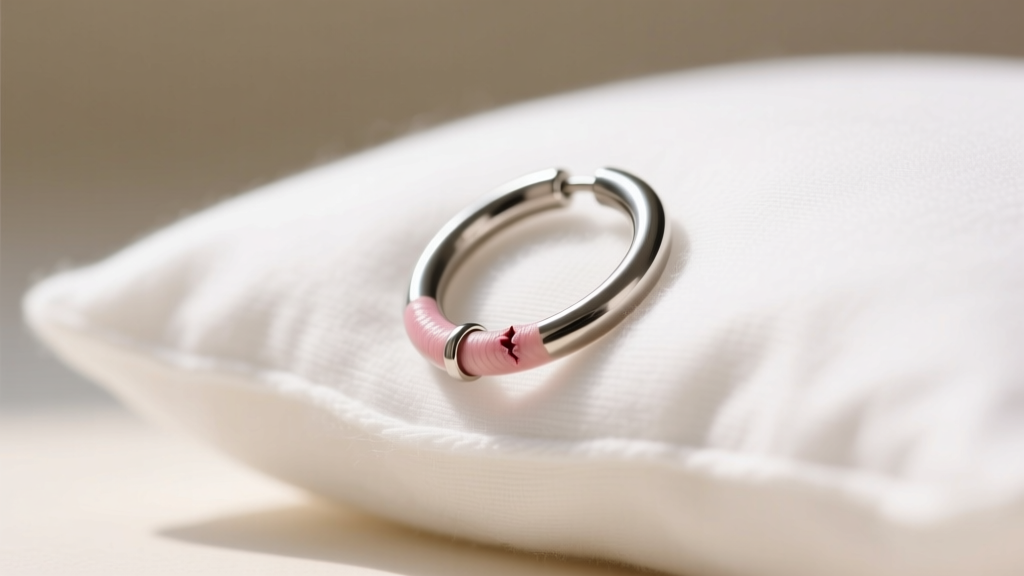
Standard lobe piercings are typically done at 20G or 18G. However, sleeping in thin 20G wire can lead to the "cheese-cutter effect," where the thin metal slowly migrates downward through the tissue due to the weight of the earring and the friction of your pillow. For overnight lobe wear, purchase sleepers in 16G or 14G. The thicker post provides structural stability and distributes weight more safely across the fistula.
Cartilage Piercings: Helix, Tragus, and Conch
Cartilage piercings require absolute mechanical stability. Sleeping on a helix or tragus piercing wearing a hoop or a long post will create uneven pressure, leading to irritation bumps (hypertrophic scarring) or even warping of the cartilage angle. For cartilage sleepers, you must buy flat-back labrets with a post length that perfectly matches your tissue thickness—usually 5mm or 6mm for a healed ear. Any excess post length will act as a lever, amplifying pressure on the piercing channel when your head rests on a pillow.
Top Features to Look For When Shopping
When browsing jewelry retailers for overnight pieces, use this checklist to ensure the product meets the rigorous demands of 8 hours of continuous wear:
- Snag-Free Profiles: Look for bezel-set gemstones or smooth, polished metal domes. Prong-set stones will inevitably catch on pillowcases and hair, causing micro-trauma to the piercing channel.
- Proper Downsizing Options: Reputable brands sell labret posts in specific lengths (e.g., 4mm, 5mm, 6mm, 8mm). If you are buying for a healed piercing, measure your tissue depth and buy the exact match to prevent embedding.
- Mirror Finishes: High-quality titanium or gold sleepers should have a mirror-polish finish. Matte or textured finishes harbor microscopic bacteria and can cause friction against the healing or sensitive fistula.
- Secure Locking Mechanisms: If you prefer threadless push-pins, ensure the brand uses high-tension machining. A loose pin will result in losing your expensive gemstone in your bedsheets.
Troubleshooting: Morning Ear Pain and Irritation Bumps
Even with the right jewelry, sleep habits can impact ear health. If you wake up with sore, throbbing, or bleeding ears, you are likely experiencing one of three common failure modes:
"Irritation bumps on cartilage piercings are rarely true keloids; they are almost always hypertrophic scars caused by mechanical pressure, such as sleeping directly on a long labret post or a tight hoop. The primary treatment is removing the pressure source and switching to a properly fitted, flat-back titanium sleeper."
1. Embedding: If your flat-back disc is sinking into the skin, the post is too short, or you are experiencing localized swelling. You must immediately upsize the post length by 1mm or 2mm to allow the tissue to breathe and drain lymphatic fluid.
2. Contact Dermatitis: Characterized by itchy, flaky, or red skin around the piercing site. This usually indicates a nickel allergy triggered by low-grade metals. Switch immediately to ASTM F-136 titanium.
3. Angle Migration: If your piercing hole looks stretched or sits at an odd angle, you are consistently sleeping on the wrong jewelry style, forcing the fistula to adapt to the pressure. Switch to a flush-fitting threadless end to halt further migration.
Ultimately, deciding whether you should sleep with earrings in comes down to investing in precision-machined, biocompatible jewelry. By abandoning butterfly backs and cheap alloys in favor of flat-back titanium and threadless mechanics, you can enjoy the convenience of 24/7 wear without compromising the long-term health and aesthetics of your piercings.


