Why Are My Earrings Hanging Crooked? Fixes for Drooping Lobes
Discover why your earrings hang crooked or droop. Expert troubleshooting for heavy dangles, lobe stretching, piercing angle fixes, and support hacks.

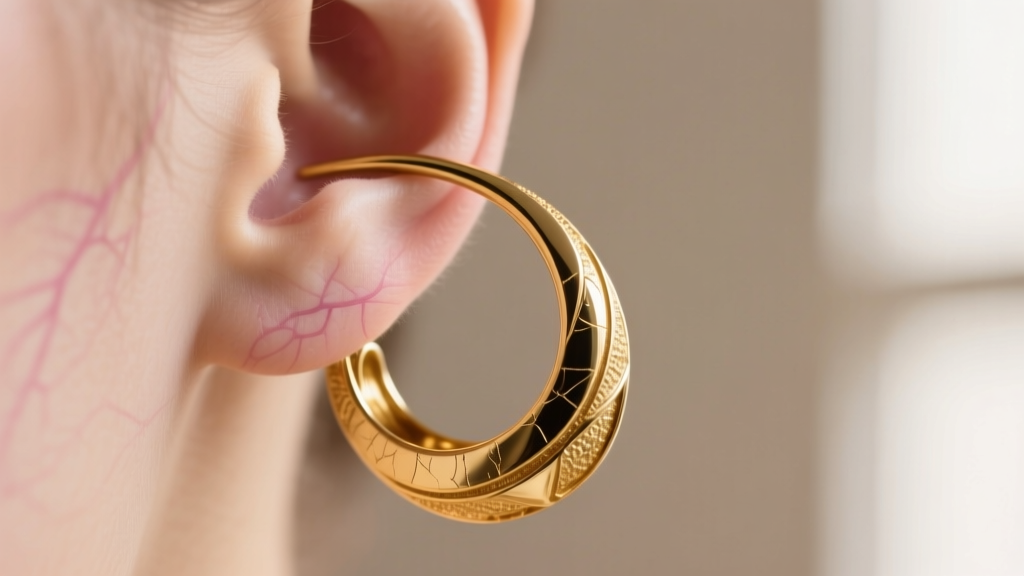
The Physics of the Droop: Why Earrings Hang Crooked
There is nothing more frustrating than investing in a stunning pair of diamond drops or artisan gold dangles, only to find them pointing at the floor or sticking out horizontally from your head. When you notice your earrings hanging at an awkward, crooked angle, the issue is rarely the jewelry itself. Instead, it is a breakdown in the structural relationship between the earring post, the backing, and the biological tissue of your earlobe.
To solve the problem of drooping earrings, we must look at the physics of leverage. An earring acts as a lever arm. The pivot point is your piercing hole. If the center of gravity of the earring sits too far below or in front of the pivot point, and the tissue lacks the rigidity to hold the post flush against the skin, gravity wins. The post tilts downward inside the fistula (the piercing channel), causing the decorative element to thrust forward or sag awkwardly. Below, we break down the exact mechanical failures causing this and provide actionable, professional-grade solutions.
Diagnosing the Sag: 3 Common Culprits
1. Piercing Angle and Placement Depth
The most common structural reason for earrings hanging poorly is the original angle of the piercing. According to guidelines from the Association of Professional Piercers (APP), a standard lobe piercing should be performed at a slight upward tilt—typically between 10 to 15 degrees relative to the floor. If your lobes were pierced in a mall kiosk using a piercing gun, the angle is often perfectly horizontal or even tilted downward. When a heavy earring is inserted into a downward-tilted channel, the weight of the drop naturally pulls the post along the path of least resistance, resulting in a forward-facing droop.
2. Gauge Mismatch and the 'Cheese-Cutter' Effect
Most commercial fashion earrings are manufactured with 20-gauge (0.81mm) or 22-gauge (0.64mm) posts. However, over time, the weight of heavy earrings can cause micro-tears in the earlobe tissue, leading to gradual stretching. As noted in Healthline's guide on stretched earlobes, even a slight stretch to 16-gauge (1.29mm) or 14-gauge (1.63mm) creates a dangerous gap. If you insert a 20-gauge post into a 14-gauge hole, you have nearly a full millimeter of 'slop' or empty space inside the fistula. This gap gives the earring post the room it needs to pivot downward under the weight of the dangle.
3. Inadequate Backing Support
Standard friction 'butterfly' backs are designed for lightweight studs weighing less than 2 grams. They secure the earring by gripping a tiny notch on a thin post. When subjected to the pendulum motion of a 7-gram chandelier earring, butterfly backs fail to provide a wide enough base of support against the back of the earlobe. The narrow backing simply digs into the soft tissue, allowing the front of the earring to tilt forward.
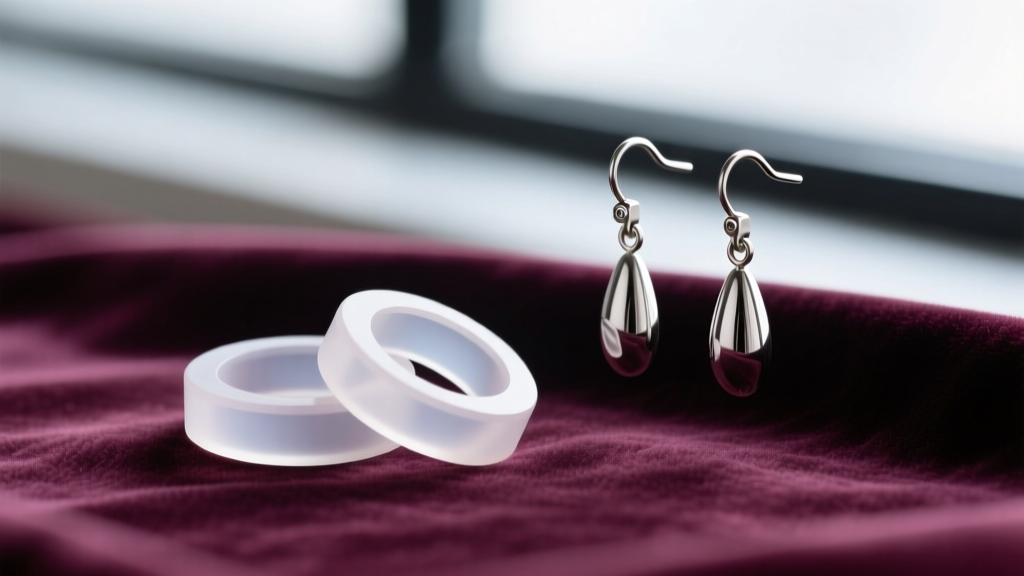
The Troubleshooting Matrix: Matching the Fix to the Flaw
Before buying new jewelry, use this diagnostic table to identify your specific failure mode and apply the correct hardware or support fix.
| Visual Symptom | Primary Cause | Hardware Fix | Support Fix | Estimated Cost |
|---|---|---|---|---|
| Earring points straight down at the floor | Downward piercing angle or stretched hole | Upgrade to 16g or 14g straight posts | Adhesive silicone lobe patches | $10 - $45 |
| Earring sticks out horizontally (90 degrees) | Top-heavy design or post too long | Switch to French wire or leverback | Oversized silicone friction discs | $8 - $30 |
| Earring spins and won't stay centered | Round post in a stretched, oval-shaped hole | Use square or flat-back labret posts | Friction-lock silicone stoppers | $15 - $50 |
Pro Fixes: Upgrading Your Hardware and Support
Implementing Silicone Lobe Supports
For immediate relief without altering your jewelry collection, adhesive silicone lobe supports (such as LobeWonder or BlingWraps) are the industry standard for red-carpet styling. These are peel-and-stick, medical-grade silicone patches that adhere to the back of the earlobe. They feature a reinforced center hole for the earring post. By distributing the weight of a 10-gram drop earring across a 15mm surface area of the lobe rather than a single 1mm puncture point, the silicone patch acts as a rigid splint. This forces the post to remain perpendicular to the ground, ensuring your earrings hang perfectly flush against the face.
Sizing Up: Moving from 20g to 18g or 16g
If your piercing channel has stretched, you must fill the void to eliminate the pivot point. Visit a bench jeweler or a professional piercer to have your favorite drop earrings modified. Swapping a flimsy 20-gauge (0.81mm) wire for an 18-gauge (1.02mm) or 16-gauge (1.29mm) wire dramatically increases the structural rigidity of the post. Thicker wire resists bending and fills the fistula completely, locking the earring into a forward-facing position. For leverback styles, ensure the closing mechanism has enough clearance to accommodate the thicker gauge wire.

When to See a Professional: Re-Piercing and Lobe Repairs
If your earlobes have suffered severe stretching, thinning, or 'cheese-cutter' migration (where the piercing hole slowly tears downward toward the edge of the lobe), temporary fixes will no longer suffice. The tissue has lost its structural integrity.
Expert Insight: Never attempt to 'stuff' the back of a stretched piercing with tissue or cotton to make a thin post fit tighter. This traps moisture, breeds bacteria, and accelerates tissue degradation. Always use sterile, appropriately gauged jewelry or dedicated silicone supports.
In cases of severe drooping, consult a board-certified dermatologic surgeon or plastic surgeon for a lobuloplasty (earlobe repair). This minor in-office procedure involves excising the stretched, epithelialized tract and suturing the healthy tissue back together. After a standard 8-to-12-week healing period, you can have your lobes re-pierced by an APP-certified professional who will ensure the new fistula is angled at the optimal 15-degree upward tilt, guaranteeing that your future dangles hang flawlessly.
Final Thoughts on Perfect Drape
Achieving the perfect drape is about matching the engineering of your jewelry to the biology of your ear. By diagnosing whether your issue stems from a gauge mismatch, a poor piercing angle, or inadequate backing support, you can apply the precise mechanical fix required. Whether you opt for invisible silicone patches, upgrade your posts to 16-gauge titanium, or seek professional re-piercing, you can reclaim the elegant, forward-facing silhouette your fine jewelry deserves.


