Ultimate Care Guide for Screw Back Earrings & Thread Maintenance
Learn how to safely clean, maintain, and fix stripped threads on screw back earrings. Expert tips for diamond studs and secure jewelry.

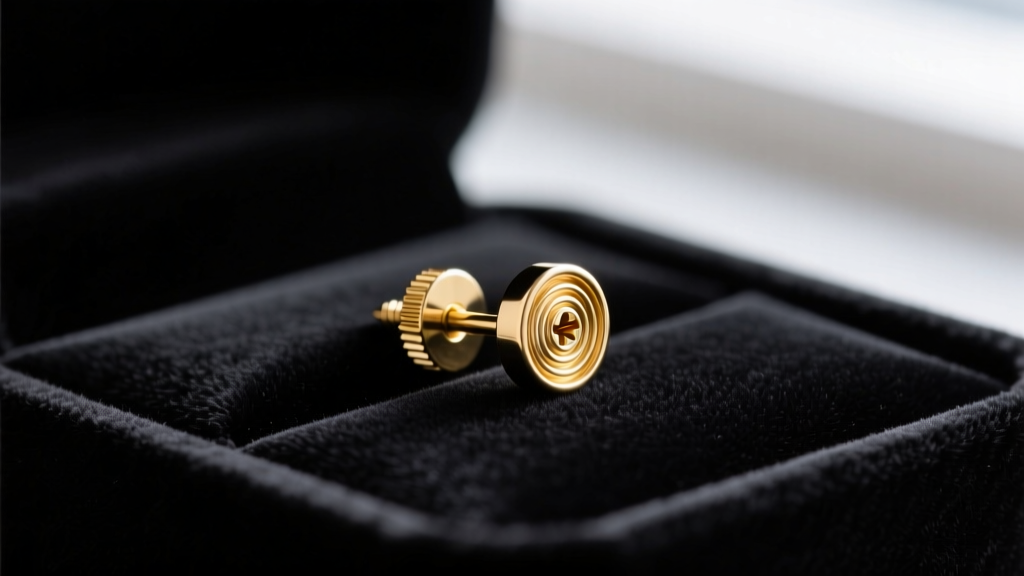
Screw back earrings are the undisputed gold standard for jewelry security. Whether you are securing high-value diamond studs, protecting a child's first piercing, or ensuring your active lifestyle doesn't cost you a precious gemstone, the mechanical grip of a threaded post and nut is unmatched. However, this secure locking mechanism comes with a unique maintenance burden. The microscopic valleys of the threading trap sebum, dead skin cells, soap scum, and environmental debris. Over time, this buildup not only creates a breeding ground for bacteria but also leads to the most common failure mode of secure jewelry: cross-threading and stripped grooves.
In this comprehensive guide, we break down the exact protocols for cleaning, maintaining, and troubleshooting screw back earrings, ensuring your precious metals and gemstones remain secure and hygienic for decades.
The Anatomy of Threaded Earring Posts
Before applying any cleaning solution or attempting a repair, it is critical to understand the engineering of your jewelry. Traditional screw back earrings feature external threading, meaning the post itself is grooved, and the backing (the nut) has a smooth internal bore that catches the threads. Standard gauges for these earrings are typically 20-gauge (0.8mm) or 18-gauge (1.0mm), with a standard thread pitch of 0.8mm to 1.0mm.
Conversely, modern high-end body jewelry and flat-back cartilage studs often utilize internal threading. In this design, the post is smooth, and the backing features a tiny threaded pin that screws into the hollow post. According to the Association of Professional Piercers (APP), internal threading is vastly superior for fresh piercings as it prevents the sharp external threads from tearing the fistula (the piercing channel) during insertion. Knowing which type you own dictates how aggressively you can clean the internal bore without damaging the delicate tap.
Step-by-Step Cleaning Protocol for Threaded Posts
Cleaning screw back earrings requires a balance between dissolving organic oils and protecting the structural integrity of the metal and any set gemstones. Avoid ultrasonic cleaners if your earrings feature fracture-filled diamonds, emeralds, or opals, as the high-frequency vibrations can shatter treated stones or loosen the glue in the settings. The Gemological Institute of America (GIA) recommends gentle, manual cleaning for most fine jewelry.
Phase 1: The Degreasing Soak
- The Solution: Mix 1 cup of warm (not hot) distilled water with three drops of a mild, lotion-free dish soap (such as original blue Dawn). Avoid antibacterial soaps, which leave a filmy residue that can clog threads.
- The Soak: Submerge the separated posts and backings for 15 to 20 minutes. This softens the hardened sebum and keratin trapped deep within the 0.8mm thread grooves.
Phase 2: Mechanical Agitation
Chemical soaking alone will not dislodge compacted debris from the helix of the thread. Using a brand-new, ultra-soft baby toothbrush, gently brush the post in a circular motion that follows the angle of the threading. Do not brush vertically across the threads, as stiff bristles can bend the microscopic peaks of softer metals like 18k gold. For the internal bore of the backing, use a wooden toothpick or a soft interdental brush to gently scoop out softened debris. Never use metal needles or safety pins, which will scratch the internal catch mechanism.
Phase 3: Sanitization and Drying
Rinse thoroughly under warm running water. To ensure the threads are completely free of moisture (which can cause oxidation in lower-karat golds or steel alloys), dip a cotton swab in 91% isopropyl alcohol and run it over the threads. The alcohol will displace the water and evaporate instantly, leaving the metal bone-dry and sanitized.
Troubleshooting Common Threading Failures
Even with meticulous care, mechanical components experience wear. Below is a diagnostic framework for the most frequent issues encountered with screw back earrings.
| Failure Mode | Root Cause | Expert Solution |
|---|---|---|
| Stuck Backing | Sebum and soap scum have calcified in the threads, acting like a biological glue. | Soak in warm soapy water for 30 minutes. Wear a textured nitrile glove to gain mechanical grip and twist counter-clockwise. Never use pliers, which will crush the post. |
| Cross-Threading | The backing was forced at an angle rather than aligned perfectly straight with the post. | Stop immediately. Back the nut off completely, realign it perfectly perpendicular to the post, and start the thread by hand. If the metal is gouged, the post must be replaced. |
| Stripped Grooves | Repeated cross-threading or overtightening has worn down the soft metal peaks (common in 14k/18k gold). | The threading is permanently compromised. Take the earring to a bench jeweler to have the post snipped and a new threaded post laser-welded to the setting. |
| Loose Fit (Spins) | The internal bore of the backing has stretched or worn smooth over years of friction. | Replace the backing. Screw back nuts are considered consumable components and should be replaced every 3–5 years for high-value items. |
"The most common mistake I see with high-value diamond studs is owners forcing a misaligned 14k gold screw back. Gold is a relatively soft metal; once the delicate thread pitch is cross-threaded and forced, the structural integrity of the post is permanently ruined." — Master Bench Jeweler
Material-Specific Maintenance Guidelines
The longevity of your screw back threads is directly tied to the metallurgy of the jewelry. Different alloys react differently to friction, torque, and cleaning chemicals.
14k and 18k Gold
Gold alloys (Mohs hardness of 2.5 to 3) are highly malleable. While they resist tarnish, their threads are incredibly susceptible to stripping if overtightened. Rule of thumb: Tighten gold screw backs only until you feel the first sign of resistance, then give it one-quarter turn more. Never use tools for leverage.
Platinum
Platinum is exceptionally dense and durable, making it the premier choice for heavy diamond screw back studs. It holds threads brilliantly and rarely strips. However, its density makes it heavy; ensure the backing is adequately sized to support the weight of the platinum post without drooping on the earlobe.
Implant-Grade Titanium (ASTM F-136)
Titanium is the ultimate material for threaded jewelry. It boasts an exceptional strength-to-weight ratio, is entirely hypoallergenic, and its threads are machined with aerospace-level precision. Titanium threads will easily outlast the gemstone settings they hold. Clean titanium with standard soap and water; it is impervious to alcohol and mild chemical disinfectants.
Preventative Care and Storage Best Practices
How you store your screw back earrings when they are not in your ears dictates their lifespan. Tossing loose studs into a communal jewelry box is a recipe for disaster. The heavy gold or platinum settings will bounce against each other, denting the delicate threading of the posts and scratching the gemstones.
- The 'Two-Turn' Storage Method: When storing, screw the backing onto the post, but leave it exactly two full rotations loose. This prevents the backing from getting permanently stuck due to temperature changes or accidental impacts in the drawer, while ensuring the nut doesn't fall off and get lost.
- Use Compartmentalized Storage: Store each pair in its own soft velvet pouch or a dedicated slot in a leather jewelry roll.
- Travel Capsules: For travel, use a hard-shell earring case with a silicone insert. Push the post through the silicone and secure the back. This locks the earring in place, preventing the backing from vibrating loose during transit.
When to Replace Your Screw Back Components
Jewelry owners often view earrings as permanent, monolithic objects, but screw back earrings are actually precision mechanical assemblies. The backing (the nut) is a wear item. If you notice that the backing requires more turns than usual to feel secure, or if it exhibits 'wobble' when fully tightened, the internal threads are worn out. Replacing a worn 14k gold screw back nut typically costs between $35 and $85 at a reputable bench jeweler, depending on the gauge and metal weight. Considering the thousands of dollars a lost diamond can cost, routinely replacing the mechanical locking mechanism is the most cost-effective insurance policy in fine jewelry maintenance. Always ensure your jeweler uses a thread gauge to match the exact pitch of your original post to guarantee a flawless, secure fit.


