Wind Chime Earrings Buying Guide: Metals, Weight & Fit
Discover how to choose the perfect wind chime earrings. Our buying guide covers metal grades, weight limits, acoustic profiles, and lobe support tips.

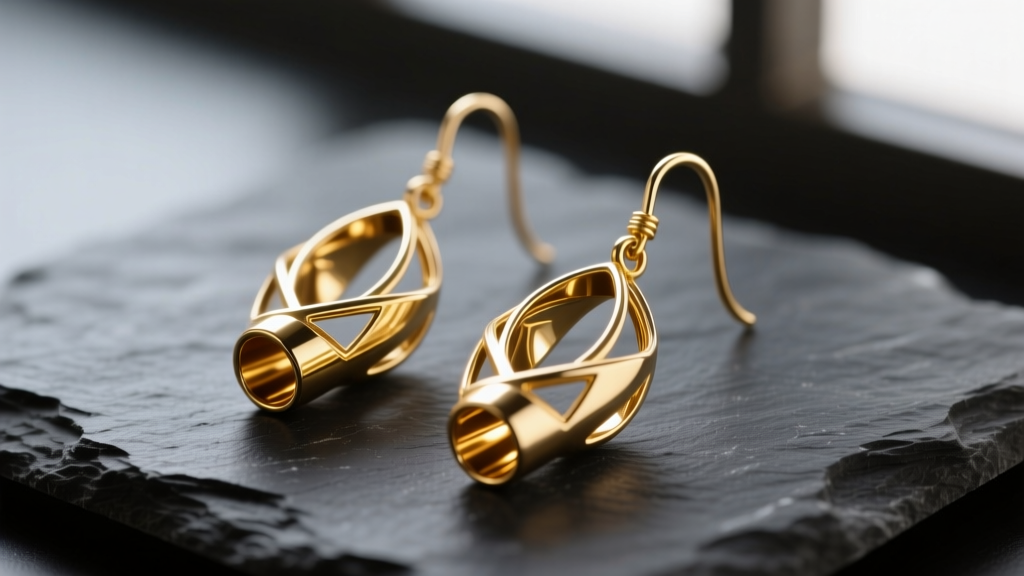
As kinetic and auditory jewelry trends dominate the 2026 accessory landscape, wind chime earrings have emerged as a standout category. Unlike standard dangles or drop earrings, these multi-strand, acoustic pieces are engineered to move, catch the light, and produce subtle resonant sounds. However, their complex architecture introduces unique structural challenges. Buying the wrong pair can lead to tangled wires, earlobe fatigue, or allergic contact dermatitis. This comprehensive buying guide breaks down the exact metallurgical specs, weight tolerances, and acoustic profiles you need to evaluate before investing in high-quality wind chime earrings.
The Anatomy of Wind Chime Earrings
To evaluate quality, you must first understand the mechanics of a true wind chime earring. Mass-market costume jewelry often fakes the look by simply soldering random tubes to a flat backing plate. Genuine, high-end kinetic chimes feature distinct structural components:
- The Saddle (Top Cap): The anchor point that connects the ear wire to the suspension system. It must distribute weight evenly to prevent the earring from tilting forward.
- Suspension Linkages: The delicate jump rings or micro-chains that allow the chime tubes to swing freely. These require precise tolerances to prevent friction and metal fatigue.
- The Chimes (Tubes/Rods/Discs): The acoustic elements. Their length, diameter, and material dictate the pitch and resonance of the sound.
- The Striker (Clapper): In larger, multi-tiered designs, a central weighted bead or disc that strikes the inner tubes to amplify the chiming effect during movement.
Material Density & Wire Gauge Specifications
The most critical point of failure in wind chime earrings is the wire gauge used for the linkages. Because these earrings feature multiple moving parts, the cumulative weight can easily snap thin, poorly work-hardened wires. According to guidelines referenced by the Association of Professional Piercers (APP), standard ear wires should never be thinner than 20-gauge for heavy dangles.
Below is the engineering standard for high-quality wind chime earrings:
| Component | Ideal Gauge | Recommended Material | Failure Risk if Ignored |
|---|---|---|---|
| Main Ear Wire (Hook) | 20g (0.8mm) | ASTM F136 Titanium or 14k Gold | Wire bending, lobe tearing, severe sagging |
| Suspension Jump Rings | 22g to 24g (0.5mm) | 14/20 Gold-Filled or Niobium | Snapping under kinetic swing stress |
| Chime Tubes | 1mm - 2mm wall | Solid Brass or Anodized Aluminum | Denting, flat acoustic resonance |
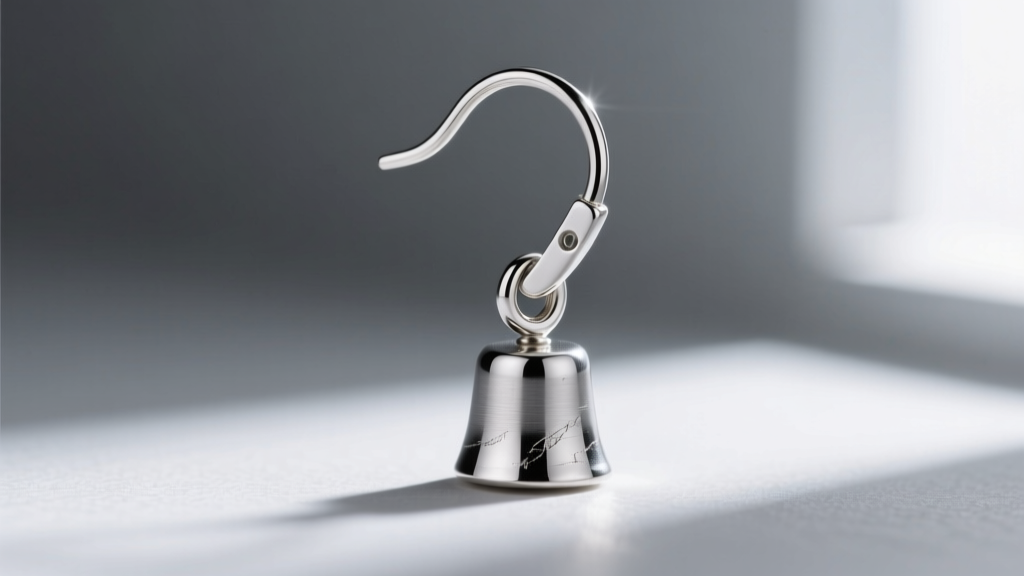
When shopping, scrutinize the product descriptions for specific metal grades. Avoid generic 'alloy' or 'brass-plated' labels, as the friction between moving chime parts will quickly wear away microscopic plating, exposing base metals that cause green skin and allergic reactions. For sensitive ears, the American Academy of Dermatology strongly recommends avoiding nickel-containing base metals, making solid titanium or high-karat gold the safest bets for the primary ear wire.
Weight Tolerance & Earlobe Health
Wind chime earrings are inherently heavier than standard studs or hoops due to their multi-strand construction. A standard lobe piercing can comfortably support 7 to 10 grams for an extended period. However, a five-tube solid brass wind chime earring can easily weigh between 18 and 28 grams per ear.
How to Wear Heavy Kinetic Earrings Safely
If you are drawn to substantial, dramatic chime designs, you must implement lobe support strategies to prevent irreversible stretching or migration of the piercing fistula:
- Earring Support Patches: Adhesive patches (like Lobe Wonder) worn on the back of the earlobe distribute the downward pull of the earring across a wider surface area of skin, relieving pressure on the piercing hole.
- Silicone Friction Backs: For leverback or post-style wind chimes, use thick, medical-grade silicone O-rings instead of standard metal butterfly backs to grip the ear wire securely without pinching.
- The 'Two-Hour' Rule: Reserve heavy, multi-tiered brass or copper chimes for events. If you plan to wear them to the office, opt for hollow aluminum or ultra-thin titanium tubes, which offer the visual volume of a large chime at a fraction of the density.
Acoustic Profiles: Tuning Your Earrings
Do wind chime earrings actually make noise? Yes, but the acoustic profile varies drastically based on the geometry of the drops. If auditory feedback is a priority for your purchase, use this tuning guide:
- Hollow Tubular Chimes: Produce a resonant, lingering 'ding' similar to traditional porch wind chimes. The longer the tube, the lower the pitch. Best for dramatic, shoulder-grazing dangles.
- Solid Rod Chimes: Create a sharper, higher-pitched 'clink' with less sustain. These are typically made of solid brass or stainless steel and offer a more subtle, sophisticated sound profile.
- Flat Disc Chimes: Generate a soft, cascading rustle rather than a distinct musical note. Discs catch the wind more easily, making them highly kinetic, but they lack the acoustic projection of tubes.
'The magic of a kinetic earring lies in its suspension. If the jump rings are too tight, the metal binds and the sound is deadened. A master jeweler leaves exactly 0.2mm of breathing room in every linkage to let the metal sing.' — Master Jeweler & Kinetic Sculptor, Elena Rostova.
Face Shape Pairing for Kinetic Dangles

Because wind chime earrings create constant lateral movement, they draw the eye horizontally as well as vertically. Matching the silhouette of the chimes to your face shape is crucial for balance:
- Round & Oval Faces: Opt for elongated, linear tubular chimes that hang straight down. The vertical lines and downward kinetic pull help elongate the face and draw attention to the collarbone.
- Square & Angular Jawlines: Choose multi-tiered, circular, or curved disc chimes. The rounded geometry and swirling movement soften sharp jawlines and add a bohemian fluidity to your profile.
- Heart-Shaped Faces: Look for 'inverted triangle' chime arrangements, where the suspension cap is narrow and the chimes flare outward at the bottom. This adds visual weight to the lower half of the face, balancing a narrower chin.
Troubleshooting Common Wear Failures
Even high-end wind chime earrings require specific maintenance due to their moving parts. Here is how to troubleshoot and prevent the most common issues reported by collectors of kinetic jewelry:
1. The Tangling Nightmare
The Problem: Multi-strand chimes easily wrap around each other when stored loosely in a jewelry box, bending the delicate suspension wires. The Fix: Always store wind chime earrings hanging vertically on a jewelry tree or pinned to a felt board. Never drop them into a drawer. If they tangle, use two pairs of smooth-jawed nylon pliers to gently tease the jump rings apart; never pull the tubes themselves, as this will warp the metal.
2. Verdigris and Friction Tarnish
The Problem: Brass and copper chimes develop green verdigris, particularly at the friction points where the jump rings rub against the top caps. The Fix: Clean the linkage points monthly with a microfiber cloth dampened with a specialized brass polish or a mild paste of baking soda and lemon juice. Avoid ultrasonic cleaners, as the high-frequency vibrations can loosen the micro-soldered joints on the suspension caps.
3. Acoustic Deadening
The Problem: Over time, the earring stops chiming and just makes a dull 'thud'. The Fix: This is usually caused by a buildup of skin oils, hairspray, or lotion on the striker or the inner walls of the tubes. Wipe the chimes down with an isopropyl alcohol pad to strip the invisible acoustic-dampening residue, restoring the bright, metallic resonance.
By prioritizing precise wire gauges, hypoallergenic anchor metals, and proper weight distribution, you can confidently invest in wind chime earrings that are not only visually captivating but structurally sound for years of kinetic wear.


