Seed Beaded Earrings: A Technical Guide to Bead Sizing & Tension
Explore the technical mechanics of seed beaded earrings. Learn about bead sizing, thread tension, wire gauges, and structural durability for lasting wear.

The Structural Engineering of Micro-Jewelry
When evaluating seed beaded earrings, most consumers and casual artisans focus purely on the color palette, pattern complexity, and overall aesthetic. However, as a structural micro-textile, the longevity and drape of seed beaded earrings rely entirely on the precise interplay between bead manufacturing tolerances, thread tensile strength, and finding integration. A beautiful pair of peyote-stitch dangles will quickly warp, snap, or degrade if the underlying physics of the materials are ignored. As of 2026, advancements in UV-resistant gel-spun threads and eco-friendly metallic galvanization processes have significantly extended the lifespan of high-end beaded jewelry, but they have also introduced new variables in surface friction and thread abrasion. This deep dive explores the exact specifications, material grades, and engineering principles required to craft or evaluate seed beaded earrings that endure daily wear without structural failure.
Bead Sizing Standards: Miyuki vs. Toho Tolerances
The foundation of any seed beaded earring is the bead itself. While the industry standardizes sizes using the aught system (e.g., 11/0, 15/0, 8/0), the actual millimeter dimensions vary drastically between the two dominant Japanese manufacturers: Miyuki and Toho. Understanding these microscopic variances is critical, especially when executing tension-dependent stitches like tubular peyote or herringbone.
According to manufacturing specifications from Miyuki Beads, an 11/0 Miyuki Delica (cylinder bead) measures exactly 1.6mm in diameter and 1.3mm in height, with a 0.8mm hole. In contrast, an 11/0 Toho round seed bead measures 1.6mm in diameter but 1.5mm in height, with a slightly larger 0.85mm hole. This 0.2mm height difference might seem negligible, but in a tubular peyote stitch earring that requires 40 stacked rows, mixing these brands will result in a cumulative 8mm discrepancy. This forces the beadwork into a spiraling warp, creating uneven tension that stresses the thread and distorts the earring's silhouette.
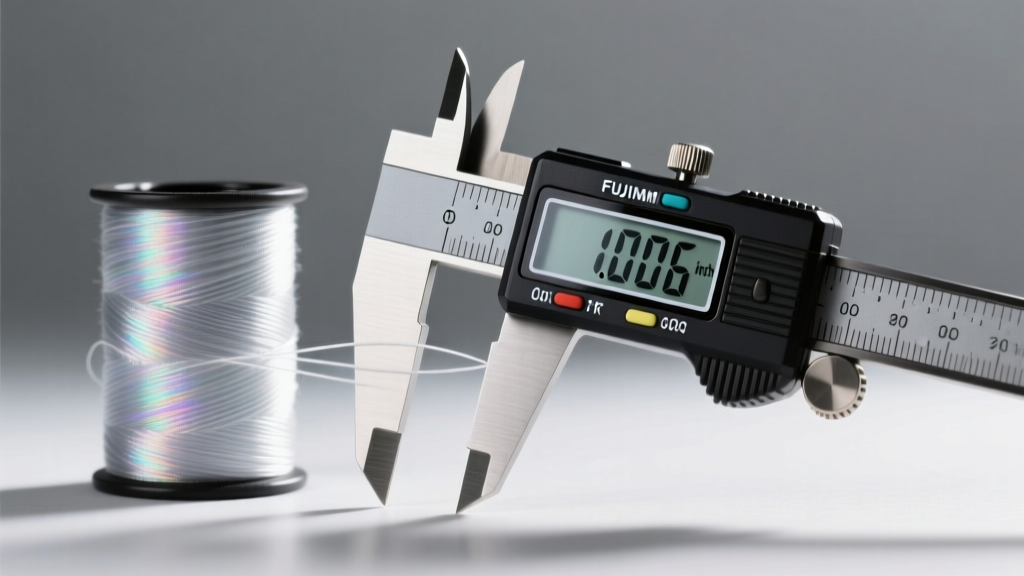
Furthermore, the hole size dictates the maximum number of thread passes. An 11/0 Delica's 0.8mm hole can comfortably accommodate three passes of 0.006-inch Fireline thread. If an artisan attempts a fourth pass to reinforce a structural hinge, the friction will fray the thread, creating a microscopic weak point that will inevitably snap under the dynamic load of the earring swinging during movement.
Thread Mechanics: Tension, Material, and Failure Points
The thread is the skeletal system of seed beaded earrings. The choice between nylon and gel-spun polyethylene dictates the drape, rigidity, and lifespan of the piece. Nylon threads, such as Nymo, offer a soft, fabric-like drape ideal for loom-woven earrings or fringing. However, nylon is highly susceptible to UV degradation and abrasion. Gel-spun polyethylene, popularized by Berkley Fireline, offers immense tensile strength and zero stretch, making it mandatory for structural components like tubular cuffs, rigid geometric dangles, and beadwork that utilizes sharp-edged metallic finishes.
| Thread Type | Material Composition | Diameter | Tensile Strength | Best Application in Earrings |
|---|---|---|---|---|
| Berkley Fireline (6lb) | Gel-Spun Polyethylene | 0.006 in (0.15mm) | 6 lbs | Sharp metallics, rigid geometric dangles, fringe core |
| Nymo Size D | Nylon (Monofilament) | 0.30 mm | ~2.5 lbs | Loom work, soft drape peyote, lightweight tassels |
| Wildfire (6lb) | Thermally Fused Poly | 0.008 in (0.20mm) | 6 lbs | Tubular structures, heavy multi-tiered chandeliers |
A critical failure mode in seed beaded earrings occurs when artisans use nylon thread with galvanized metallic beads. The tumbling process used to coat glass beads with metallic finishes often leaves microscopic, razor-sharp burrs around the bead holes. Over weeks of wear, the dynamic friction of the earring swinging will cause these burrs to slice through nylon threads. As noted by experts at Interweave Beading, gel-spun threads like Fireline are virtually impervious to this shearing effect, making them the non-negotiable standard for any metallic seed bead integration.
Fringing Mechanics and Weight Distribution
Fringing is a hallmark of bohemian and statement seed beaded earrings, but it introduces severe gravitational stress to the base beadwork. The primary rule of fringing is load distribution. A single thread loop bearing the weight of a 3-inch bead fringe will eventually snap or pull through the glass bead hole. To counteract this, expert artisans utilize picot edging or multi-strand branching techniques. By anchoring the fringe thread through three adjacent base beads rather than one, the gravitational load is distributed across a wider surface area, reducing the point-tension by up to 66%. Additionally, when executing long fringe drops, the thread tension must be deliberately loosened by a fraction of a millimeter per stitch to allow for natural kinetic movement; pulling fringe thread too taut results in stiff, brittle tassels that snap when bent.
Ear Wire Integration: Gauge and Metallurgy
The intersection where the seed bead textile meets the metal ear wire is the most common point of catastrophic failure. The mechanical stress of inserting and removing an ear wire places immense lateral pressure on the top row of beads and the thread loop.
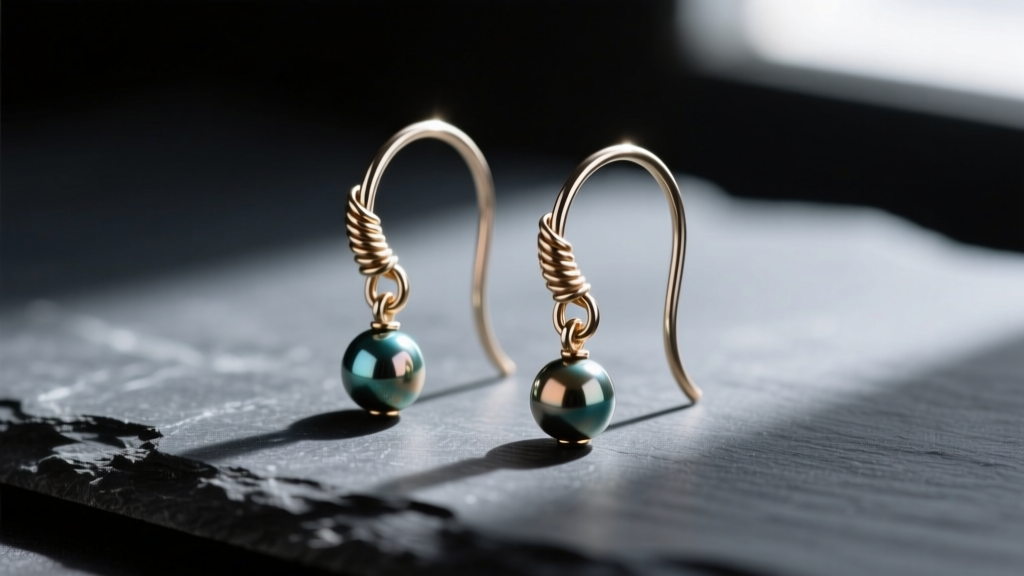
For standard lobe piercings, 20-gauge (0.81mm) wire is the optimal standard, providing enough rigidity to hold its shape without stretching. For cartilage or helix piercings, where the tissue is denser and the gauge of the piercing itself is often smaller, 22-gauge (0.64mm) wire is required. According to metallurgical guidelines from jewelry supply authority Rio Grande, niobium and Grade 23 titanium are the premier choices for ear wires due to their high yield strength and hypoallergenic properties. Sterling silver, while popular, is too soft for 22-gauge ear wires and will easily deform under the weight of heavy seed beaded chandelier earrings.
When attaching the beadwork to the ear wire, a wrapped loop is vastly superior to a simple open loop. Furthermore, the wrapped loop must be engineered with a 1.5mm gap above the top row of seed beads. If the metal wire sits flush against the glass, the lateral flexing of the ear wire during insertion will crush the top beads or cause the thread to abrade against the metal edge. To completely eliminate thread abrasion at the suspension point, a 3mm segment of fine silver or gold-filled French wire (bullion) should be threaded over the beading thread before forming the final loop, acting as a protective metal sleeve against the ear wire's friction.
Structural Stitching: Peyote vs. Loom Tension
The architectural integrity of seed beaded earrings is heavily dictated by the stitch architecture. Loom-woven earrings feature a continuous warp and weft structure, creating a highly stable, grid-like textile that resists stretching but lacks lateral flexibility. If a loom-woven earring is dropped or bent, the rigid grid can cause the glass beads to shatter against one another. Conversely, flat even-count peyote stitch creates an interlocking, offset matrix that behaves more like chainmail. This offset structure allows the beadwork to absorb kinetic shock and flex laterally without transferring destructive force to the glass. For large, flat statement earrings that rest against the jawline and neck, peyote stitch is structurally superior as it accommodates the natural curvature and movement of the wearer's body.
Environmental Degradation and Care Protocols
Despite their durability, seed beaded earrings are vulnerable to environmental degradation. The primary culprits are UV radiation, cosmetic chemicals, and moisture. While glass beads themselves are impervious to water, the dyes used in opaque and lined beads can bleed or fade when exposed to the alkaline environment of human sweat or the alcohols found in perfumes and hairsprays. To preserve the structural and visual integrity of seed beaded earrings, they must be stored flat in airtight, UV-blocking containers. Cleaning should never involve submersion in water or ultrasonic cleaners, which can shatter the glass or degrade the thread coatings. Instead, a soft, dry microfiber brush should be used to dislodge skin oils and cosmetic dust from the interstitial gaps between the beads, ensuring the thread remains uncorroded and the beadwork pristine for decades of wear.


