How to Select, Authenticate, and Clean Rubellite Earrings
Learn how to select, authenticate, and safely clean rubellite earrings. Expert guide on settings, pricing, and avoiding ultrasonic damage.

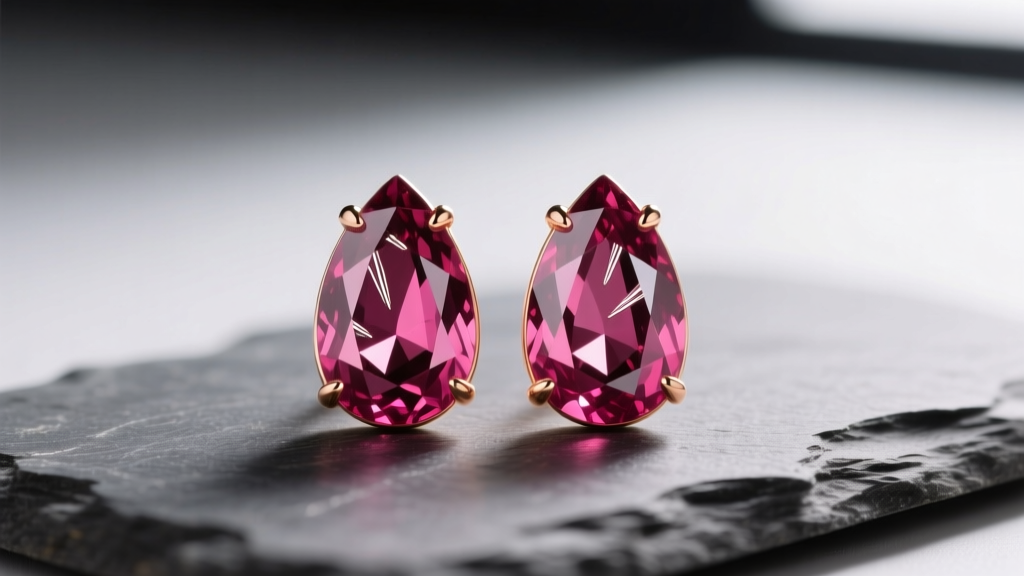
Rubellite is the undisputed crown jewel of the tourmaline family. Prized for its saturated, neon-pink to deep crimson-red hues, this manganese-rich elbaite is a favorite among high-jewelry collectors and everyday enthusiasts alike. However, its unique gemological properties—specifically its hardness, heavy inclusion patterns, and strong pleochroism—demand specialized knowledge when selecting, setting, and maintaining it. In the current 2026 gemstone market, synthetic simulants and misclassified pink tourmalines are increasingly common, making buyer education essential.
This comprehensive guide will walk you through the exact steps to authenticate genuine rubellite earrings, choose the most secure settings, and clean your jewelry without causing catastrophic structural damage.
Understanding Rubellite: More Than Just Pink Tourmaline
Not all pink tourmaline qualifies as rubellite. According to the Gemological Institute of America (GIA), the defining characteristic of true rubellite is its color stability under different light sources. While standard pink tourmaline may shift to a muddy brown or orange under incandescent lighting, genuine rubellite maintains its vivid pink or red saturation regardless of whether it is viewed in daylight or artificial light.
From a structural standpoint, rubellite scores a 7 to 7.5 on the Mohs hardness scale. While this makes it suitable for daily wear in earrings (which suffer fewer impacts than rings), it is significantly softer than sapphire or diamond. Furthermore, rubellite is notorious for its internal 'trichite' inclusions—parallel, needle-like hollow tubes and liquid-filled fractures that form during its crystallization in pegmatite rocks. These inclusions are a hallmark of authenticity but also represent the stone's primary structural vulnerability.
Step-by-Step Guide to Authenticating Rubellite Earrings
Before purchasing high-value rubellite studs or dangles, perform these three gemological checks to ensure you are not buying glass, synthetic spinel, or lower-grade pink tourmaline.
Step 1: The Incandescent Light Test
Take the earrings away from the jeweler's bright white LED display lights. Examine them under warm, yellow incandescent light (or the warm flash of your smartphone). If the stones shift to a brownish-pink or orangey-red, you are looking at standard pink tourmaline, which commands a much lower price per carat.
Step 2: Pleochroism Inspection
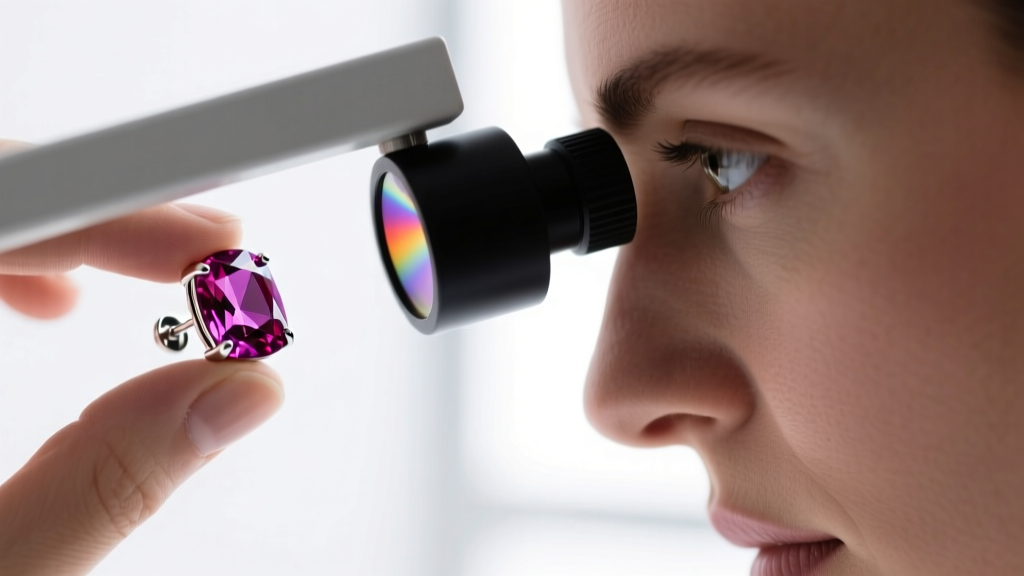
Tourmaline is highly pleochroic, meaning it displays different colors when viewed from different crystallographic axes. Using a simple dichroscope (an inexpensive gemological tool), look through the stone. Genuine rubellite will show two distinct shades—typically a dark, saturated red alongside a paler, almost colorless pink. Glass and synthetic spinel are singly refractive and will show no color change.
Step 3: Loupe the Inclusions
Examine the earrings under a 10x triplet loupe. As noted by Mindat.org, natural rubellite almost always contains internal flaws. Look for parallel growth tubes, irregular liquid feathers, and sharp color zoning. If the stone is perfectly flawless, or if you see perfectly spherical gas bubbles, you are likely looking at a glass imitation.
Choosing the Right Setting and Metal for Rubellite
Because of its 7.5 Mohs hardness and brittle cleavage planes, the setting you choose for rubellite earrings dictates the stone's lifespan. Prong settings leave the vulnerable girdle (the outer edge of the gem) exposed to chipping.
| Setting Style | Protection Level | Best Earring Type | Risk Factor |
|---|---|---|---|
| Full Bezel | Excellent | Studs, Huggies, Active Wear | Lowest risk of girdle chipping; slightly reduces light entry. |
| Semi-Bezel | High | Dangles, Drops | Protects north/south poles; leaves east/west edges slightly exposed. |
| 4-Prong | Moderate | Occasion Studs | High risk of edge chipping if bumped; requires annual prong checks. |
| Halo | High | Statement Drops | Surrounding diamonds protect the center stone's perimeter. |
Post and Wire Gauges: For rubellite studs, ensure the earring post is at least 20-gauge (0.81mm) to support the weight of the stone without bending. For heavy rubellite drop earrings exceeding 4 grams, the jeweler should use an 18-gauge (1.02mm) wire or a reinforced Omega-back fitting to prevent the earring from drooping and stretching the earlobe.
The 4-Step Cleaning and Maintenance Protocol
The most common way owners destroy rubellite earrings is by using ultrasonic or steam cleaners. The high-frequency cavitation bubbles in an ultrasonic machine will violently expand the liquid inclusions inside the rubellite, causing the stone to shatter from the inside out.
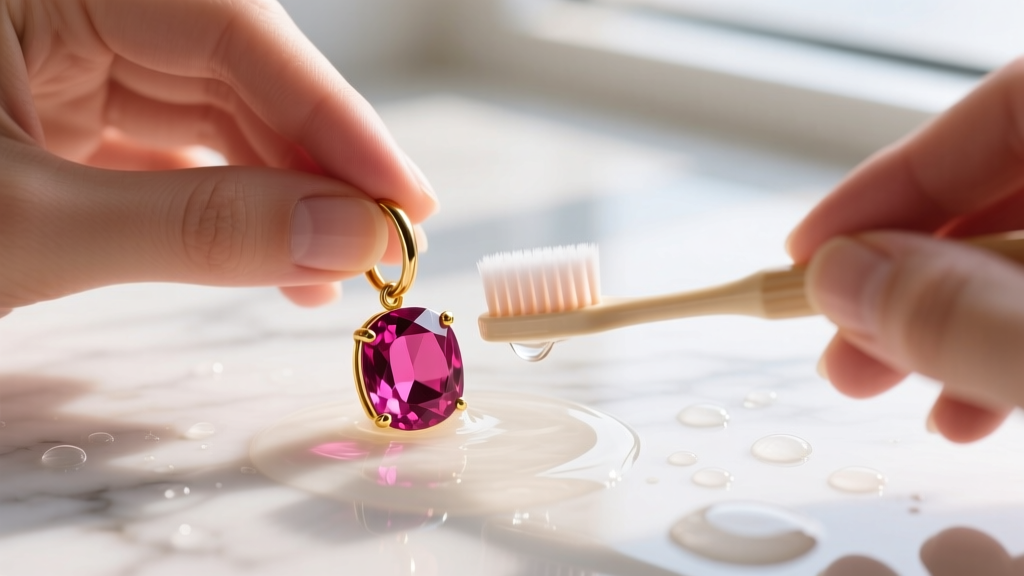
- Preparation: Mix a few drops of pH-neutral, phosphate-free dish soap into a bowl of lukewarm distilled water. Avoid hot water, as thermal shock can fracture included stones.
- Soak: Submerge the rubellite earrings for exactly 3 to 5 minutes. This loosens sebum, lotion, and dead skin cells trapped behind the setting.
- Agitate: Using a brand-new, ultra-soft baby toothbrush, gently sweep the bristles across the back of the stone (the pavilion) and along the bezel edges. Never scrub the face of the gem aggressively.
- Dry: Rinse under a gentle stream of lukewarm water. Pat dry with a lint-free microfiber cloth. Do not use a hairdryer or compressed air, which can force moisture into the earring's friction backs or clutch mechanisms.
Troubleshooting Common Rubellite Earring Issues
- Stone Appears Cloudy or Dull: Rubellite has a high refractive index (1.62-1.64), giving it excellent brilliance. If it looks dull, it is almost certainly coated in hand lotion or hairspray on the pavilion. Follow the 4-step cleaning protocol above.
- Earring Post Bending: If your 20G posts are constantly bending, upgrade to 18G posts or switch to a screw-back clutch system, which distributes the tension more evenly across the earlobe.
- Prongs Catching on Hair: Rubellite prongs must be filed completely flush. If they catch, take them to a jeweler to have the prong tips 'tipped and polished'—do not attempt to file them down yourself, as you risk slipping and scratching the tourmaline.
Pricing Expectations and Sourcing
In the 2026 market, pricing for rubellite earrings varies wildly based on color saturation and clarity. Expect to pay between $150 and $400 per carat for commercial-grade stones with visible inclusions and lighter pink hues. Gem-grade rubellite—characterized by a 'neon' cranberry-red color and eye-clean clarity—commands $800 to over $2,500 per carat. Always request a report from a reputable laboratory (such as GIA, AGL, or Gübelin) for any rubellite earring pair priced above $2,000 to verify the absence of artificial irradiation or fracture filling.
True rubellite is a masterclass in geological imperfection. Its internal needles and liquid feathers are not flaws to be hidden, but the very fingerprints that prove its natural, unheated origin.


