Sensitive Solutions Earrings: A Material Guide for Reactive Lobes
Discover the best sensitive solutions earrings for reactive skin. Compare implant-grade titanium, niobium, and gold to stop contact dermatitis.

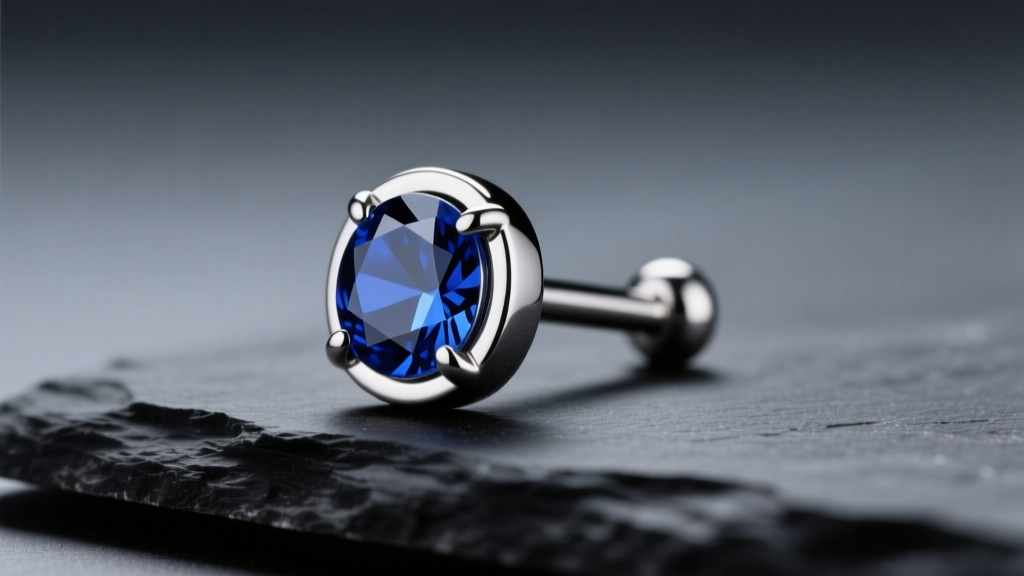
For millions of jewelry lovers, putting on a new pair of earrings is less about self-expression and more about a calculated risk. Will today be the day your earlobes swell, itch, or develop an angry red rash? If you have ever experienced this, you already know that finding truly effective sensitive solutions earrings requires looking far beyond the marketing term 'hypoallergenic.' The reality of metal allergies is rooted in metallurgy, ion release rates, and mechanical friction.
In this comprehensive guide, we strip away the marketing fluff and examine the exact material grades, alloy compositions, and gauge specifications you need to build a collection of earrings that your skin will actually tolerate. Whether you are dealing with a fresh cartilage piercing or decades-old reactive lobes, understanding these properties is your first line of defense.
The Science of Earlobe Contact Dermatitis
Before evaluating specific metals, it is crucial to understand what actually triggers a reaction. Allergic contact dermatitis in the earlobe is most commonly caused by nickel, though cobalt and chromium can also be culprits. When sweat and natural skin oils interact with certain metal alloys, they leach microscopic metal ions into the skin. The immune system identifies these ions as foreign invaders, triggering an inflammatory response.
The European Union's REACH regulation (specifically the Nickel Directive) sets the standard for safe metal release, capping it at 0.5 micrograms per square centimeter per week. However, the term 'hypoallergenic' remains largely unregulated in the global jewelry market. A piece stamped as hypoallergenic might simply be plated with a thin layer of rhodium or gold that will eventually wear away, exposing the reactive base metal beneath. True sensitive solutions earrings must be crafted from intrinsically inert materials, not merely coated ones.
Top Tier: The Ultimate Sensitive Solutions Earrings Materials
If your ears react to almost everything, these three elemental and alloy options represent the gold standard for biocompatibility.
Implant-Grade Titanium (ASTM F136)
Not all titanium is created equal. When shopping for sensitive solutions earrings, you must look for Implant-Grade Titanium, specifically designated as ASTM F136 or ASTM F67. ASTM F136 (Ti 6AL-4V ELI) is the exact alloy used in medical joint replacements and surgical pins. It contains zero nickel and boasts an incredibly passive oxide layer that prevents ion leaching. Unlike commercial-grade titanium, which may contain trace impurities, F136 is processed in a vacuum to ensure absolute purity. It is lightweight, highly durable, and can be anodized to produce vibrant colors without using dyes or plating.
Niobium (Unalloyed)
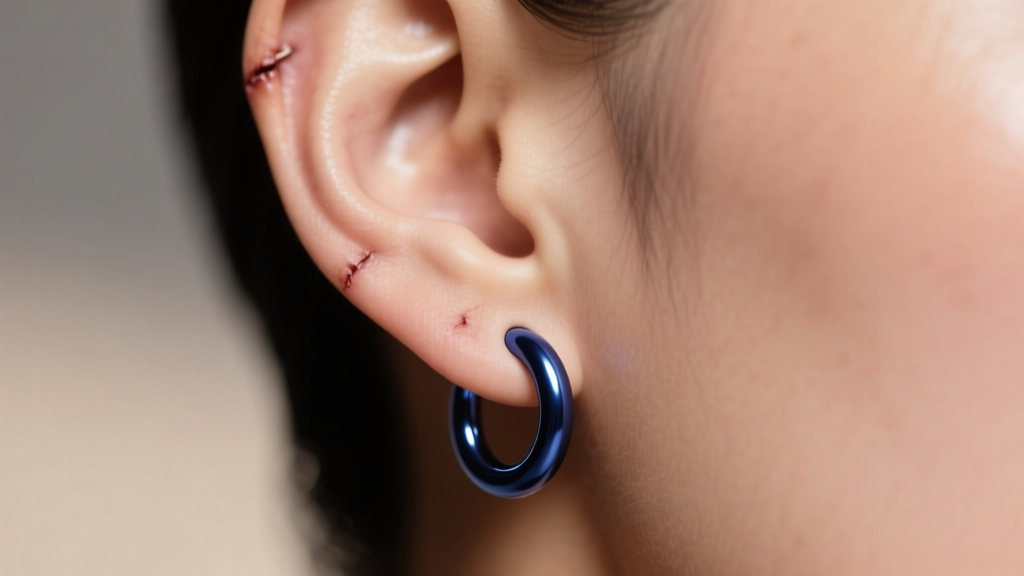
Niobium is an elemental metal, meaning it is not an alloy and contains absolutely no nickel or lead. It is highly malleable and biocompatible, making it a favorite among professional piercers for initial jewelry. Because it is a softer metal than titanium, it is most frequently used for seamless hoops, clickers, and captive bead rings rather than threaded labret posts. Like titanium, niobium can be anodized, though achieving a true black finish requires specialized heat treatments. According to the Association of Professional Piercers, unalloyed niobium is one of the safest materials available for reactive tissue.
Platinum and Palladium
For those seeking luxury fine jewelry without the allergic fallout, platinum (specifically 950 Pt) and palladium are exceptional choices. These platinum-group metals are extraordinarily inert and do not tarnish or oxidize. While they are significantly heavier and more expensive than titanium, they offer a brilliant, naturally white luster that never requires rhodium plating. Palladium is slightly harder and lighter than platinum, making it an excellent alternative for larger statement hoops or intricate huggie designs.
Mid-Tier and 'Hypoallergenic' Traps
Many materials marketed as safe for sensitive ears actually harbor hidden risks. Understanding these traps will save you from painful flare-ups.
Surgical Stainless Steel (316L)
Surgical steel is a massive trap for the highly sensitive. The most common jewelry grade, 316L stainless steel, contains between 8% and 10.5% nickel. While the alloy is designed to trap the nickel within the crystalline structure of the steel, the friction of daily wear, combined with the acidic pH of human sweat, can cause enough nickel ion release to trigger a reaction in highly sensitized individuals. It is generally safe for fully healed, non-reactive lobes, but it should never be used as a sensitive solution for fresh piercings or severe allergies.
Yellow and White Gold (14k and 18k)
Pure 24k gold is too soft for jewelry, so it must be alloyed. 14k and 18k yellow gold are generally safe, provided the jeweler uses a nickel-free alloy (typically mixing gold with silver, copper, and zinc). However, white gold is notoriously problematic. To achieve a silvery color, white gold is frequently alloyed with nickel or palladium, and then plated with rhodium. Once the rhodium plating wears off—which happens quickly on earring posts and friction backs—the underlying nickel is exposed directly to the piercing channel. The American Academy of Dermatology frequently cites white gold jewelry as a primary trigger for nickel contact dermatitis.
Material Comparison Matrix
| Material | Nickel Content | Best Application | Avg. Price Range (Studs/Hoops) | Durability & Weight |
|---|---|---|---|---|
| ASTM F136 Titanium | 0% | Fresh piercings, severe allergies, threaded posts | $25 - $85 | Extremely high / Very light |
| Unalloyed Niobium | 0% | Seamless hoops, clickers, healed sensitive lobes | $30 - $90 | Moderate / Medium |
| 950 Platinum | 0% | Fine jewelry, luxury studs, heirloom pieces | $250 - $1,500+ | Extremely high / Heavy |
| 14k/18k Yellow Gold | 0% (if nickel-free alloy) | Everyday wear, healed piercings | $100 - $600 | High / Medium |
| 316L Surgical Steel | 8% - 10.5% | Non-reactive healed lobes only | $10 - $40 | High / Medium |
Sizing, Gauges, and Mechanical Irritation
Material is only half the battle; the physical dimensions of your earrings play a massive role in tissue health. Many people mistake mechanical irritation for a metal allergy. This is most evident in the 'cheese-cutter effect.'
Standard fashion earrings often feature ultra-thin 20-gauge (0.81mm) or 22-gauge (0.64mm) posts. If your piercing was originally done at a standard 18-gauge (1.02mm) or 16-gauge (1.29mm) using a professional piercing needle, forcing a thin 20-gauge wire into that channel creates uneven pressure. The thin wire acts like a cheese wire, slowly migrating through the tissue, causing micro-tears, inflammation, and localized swelling. Your earlobe is not rejecting the metal; it is rejecting the mechanical stress.
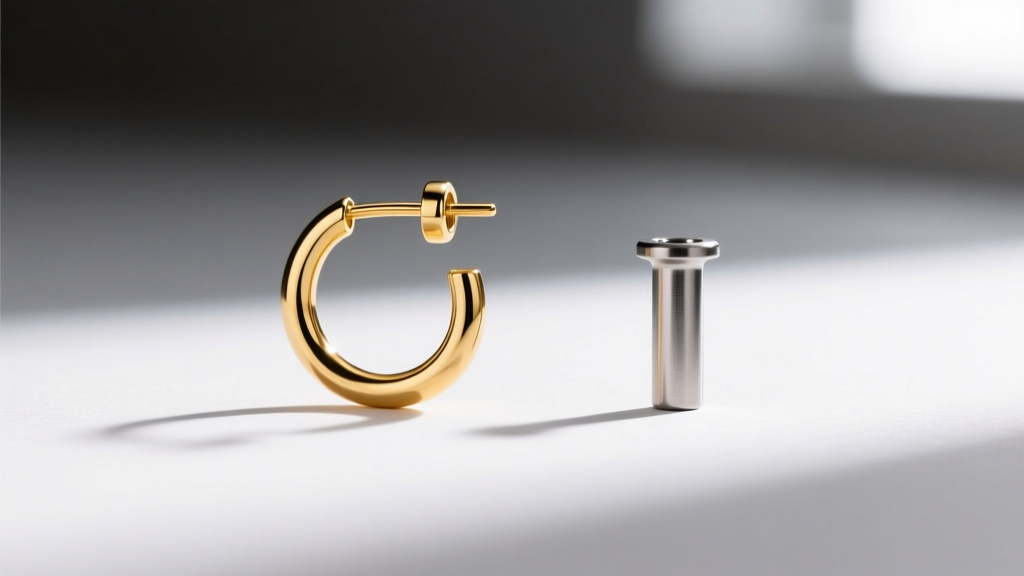
When sourcing sensitive solutions earrings, always verify the gauge. For standard lobe piercings, 18-gauge is the safest baseline to prevent migration and tearing. For cartilage piercings (like the helix, tragus, or conch), you must use 16-gauge or 14-gauge jewelry to provide adequate structural support to the denser tissue. Furthermore, opt for internally threaded or threadless (push-pin) posts. Externally threaded jewelry features sharp ridges that scrape and damage the delicate fistula (the skin tube inside the piercing) every time you insert or remove the earring.
Maintenance and Cleaning Protocols
Even the most biocompatible titanium earring will cause irritation if it is coated in oxidized sebum, dead skin cells, and hair product residue. This buildup creates a breeding ground for bacteria, leading to localized infections that mimic allergic reactions.
Expert Protocol: Clean your earrings weekly using a sterile 0.9% sodium chloride wound wash spray. Avoid harsh chemicals like rubbing alcohol, hydrogen peroxide, or tea tree oil. These substances strip the natural lipid barrier of the piercing channel, causing severe dryness, micro-cracking, and contact dermatitis that is entirely unrelated to the metal itself.
For the jewelry itself, a gentle wash with mild, fragrance-free liquid soap and a soft-bristled toothbrush will remove debris from the settings and threading without scratching the passive oxide layer of your titanium or niobium pieces.
Final Verdict on Building Your Collection
Curating a collection of sensitive solutions earrings requires a shift in how you shop. You must prioritize verifiable material grades over vague marketing claims. By anchoring your collection in ASTM F136 titanium for your foundational studs and posts, utilizing unalloyed niobium for your seamless hoops, and carefully vetting the alloy composition of your fine gold pieces, you can completely eliminate the anxiety of earlobe flare-ups. Remember to respect your gauge sizes and maintain a gentle cleaning routine, and your piercings will remain healthy, comfortable, and beautifully adorned for a lifetime.
For further reading on metal biocompatibility and piercing aftercare, consult the guidelines provided by the Mayo Clinic's overview on nickel allergies and your local board-certified dermatologist.


