Shell Gold Earrings: Technical Guide to Materials & Bonding
Explore the technical construction of shell gold earrings. Learn about 14k vs 18k bonding, nacre thickness, gauge sizing, and moisture care.

The Material Science of Shell and Gold
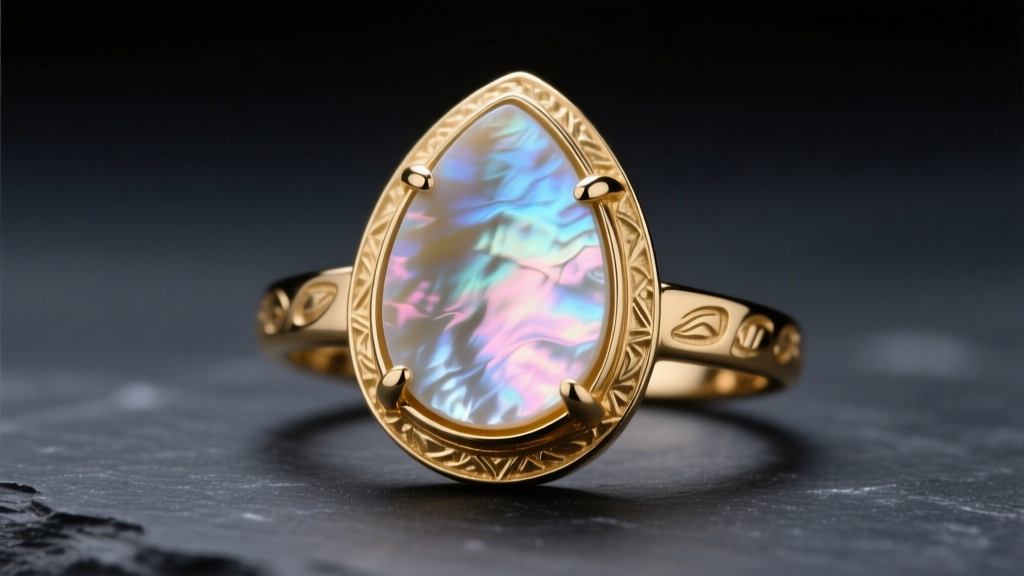
The intersection of organic gemstones and precious metals presents unique engineering challenges in jewelry manufacturing. Shell gold earrings are not merely decorative; they are a study in contrasting material properties. Shell, primarily composed of calcium carbonate (CaCO3) in the form of aragonite platelets, registers a mere 2.5 to 3.0 on the Mohs hardness scale. In stark contrast, gold alloys used in fine jewelry are engineered for durability, malleability, and resistance to oxidation. Understanding how these disparate materials interact is critical for both designers and collectors seeking longevity in their pieces.
According to the Gemological Institute of America (GIA), organic gems like mother of pearl, abalone (paua), and conch shell possess a cross-lamellar microstructure. This gives them their signature iridescence (orient) but also makes them highly susceptible to cleavage and thermal shock. When setting these materials into gold, jewelers must account for the shell's low Vickers hardness and high porosity, ensuring that the metal housing does not exert destructive lateral pressure.
Nacre Varieties and Structural Integrity
- Mother of Pearl (Pinctada maxima): Features a dense, highly ordered aragonite structure. Best for flat inlays and cabochons due to its uniform thickness.
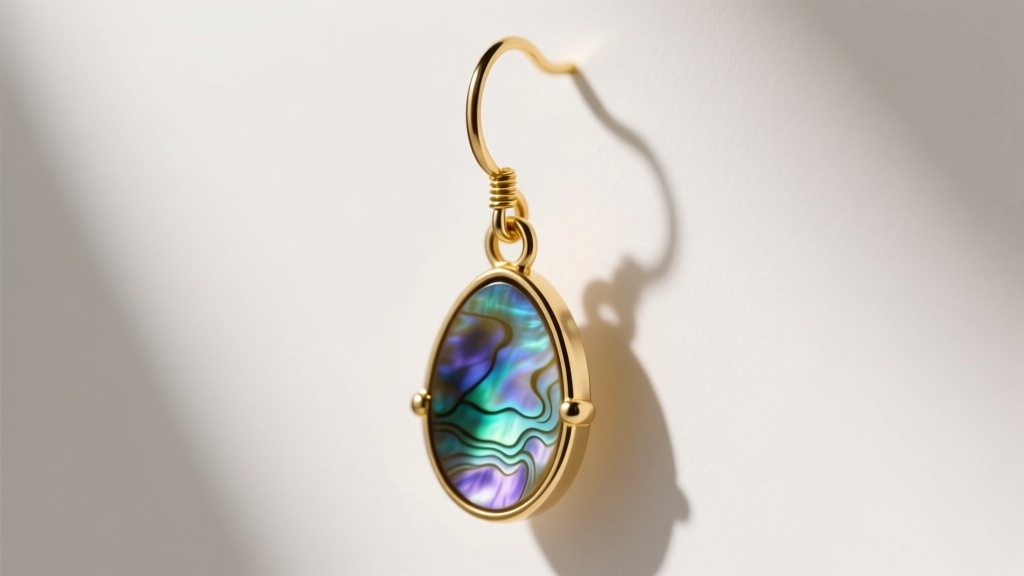
- Paua / Abalone (Haliotis iris): Exhibits extreme color-shifting properties but contains natural striations and micro-fissures that require stabilization before being set in heavy gold bezels.
- Conch Shell (Strombus gigas): Non-nacreous but highly prized for its 'flame' pattern. It is significantly more brittle than nacreous shells and requires protective prong or halo settings.
Metallurgy & Bonding Techniques
The choice of gold alloy directly impacts the structural integrity of shell gold earrings. Pure 24k gold is too soft to securely hold organic materials. Therefore, 14k (58.5% pure gold) and 18k (75% pure gold) are the industry standards. 14k gold possesses a higher Vickers hardness (approximately 130-150 HV) compared to 18k gold (110-120 HV). This increased rigidity makes 14k gold vastly superior for mechanical bezel settings, as it can withstand the tension required to grip the shell without warping over time.
As of 2026, advancements in UV-stable jeweler's epoxies have supplemented traditional mechanical settings, though mechanical bonds remain the gold standard for heirloom-quality pieces. Below is a technical comparison of the primary bonding methods used in modern shell earring fabrication.
| Bonding Method | Mechanism | Durability | Primary Failure Mode |
|---|---|---|---|
| Bezel Setting | Mechanical Tension | High | Shell fracture if tolerance is under 0.1mm |
| Jeweler's Epoxy | Chemical Adhesion | Medium | Yellowing and degradation via solvents/UV |
| Prong Setting | Point Pressure | Low | Chipping at localized stress points |
| Flush / Gypsy | Friction & Displacement | Medium-High | Spalling of the shell's nacreous top layer |
Expert Insight: When purchasing bezel-set shell earrings, inspect the interior lip of the gold setting. A micro-bezel with a 0.2mm lip provides adequate security without obscuring the shell's natural growth lines, whereas thick, rolled bezels often indicate mass-produced castings that rely on excessive glue rather than precise metalwork.
Hardware Specifications: Gauge & Weight Distribution
A frequently overlooked aspect of shell gold earrings is the hardware gauge. Shell drops, particularly carved abalone or large mother of pearl ovals, can easily exceed 4 to 6 grams per earring. When suspended from a standard 20-gauge (0.81mm) gold post or wire, this weight creates a pendulum effect during normal movement.
Under cyclic loading, a 20-gauge 14k gold wire will eventually yield (bend permanently) or fatigue at the soldered jump ring. Furthermore, heavy drops on thin wires cause the 'cheese-wire' effect, where the earring slowly migrates downward through the earlobe piercing, causing tissue thinning and discomfort. For any shell earring component exceeding 3.5 grams, an 18-gauge (1.02mm) or even 16-gauge (1.29mm) French wire or leverback is technically required to maintain structural equilibrium and protect the earlobe tissue. Always verify the wire thickness at the point of insertion before purchasing heavyweight organic drops.
Chemical Vulnerabilities & Maintenance Protocol
While the gold components of your earrings are virtually inert, the shell is highly reactive. Calcium carbonate is alkaline and will readily react with weak acids. Human sweat, which typically has a pH ranging from 4.5 to 7.0, can slowly etch the polished surface of the shell, leaving it dull and chalky over time. Furthermore, everyday cosmetics, hairsprays, and perfumes contain alcohols and esters that will rapidly degrade the chemical bonds of epoxy resins used in non-bezel settings.
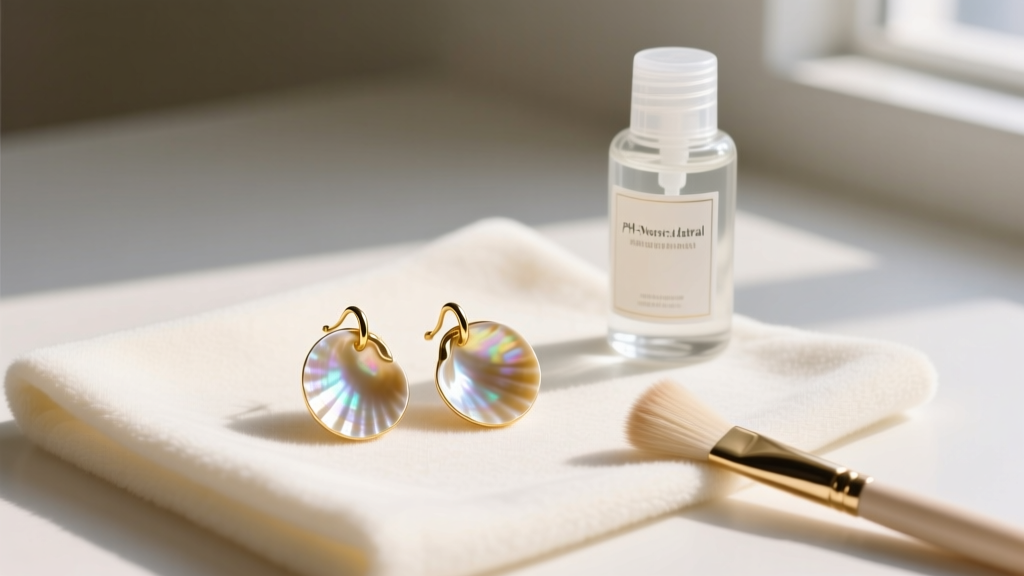
To maintain the optical properties of the aragonite platelets, strict maintenance protocols must be followed:
- Avoid Ultrasonic Cleaners: The high-frequency cavitation bubbles generated by ultrasonic cleaners will violently collapse against the shell, causing micro-fractures and delamination of the nacre layers.
- Use pH-Neutral Cleaners Only: Clean the gold with standard jewelry solutions, but ensure the solution is explicitly pH-neutral (7.0) before it touches the shell. Alternatively, use a barely damp microfiber cloth.
- The 'Last On, First Off' Rule: Shell gold earrings must be the last item put on after applying cosmetics, and the first item removed upon returning home to minimize chemical exposure.
Market Pricing & Authenticity Verification
The market is currently saturated with 'shell' earrings that utilize dyed howlite, resin composites, or crushed shell powder bound in plastic. Authentic, solid gold earrings featuring genuine, un-dyed nacre command a premium due to the high wastage rate during the cutting and polishing of organic materials. According to data tracked by the World Gold Council, the baseline cost of 14k and 18k gold continues to necessitate precise manufacturing to minimize scrap.
Expect to pay between $150 and $400 for high-quality, 14k solid gold and mother of pearl stud earrings, while intricate 18k gold and paua abalone drop earrings typically range from $450 to $1,200 depending on the complexity of the goldwork. To verify authenticity, utilize the thermal conductivity test: genuine shell will feel distinctly cool to the touch and will take several seconds to warm to body temperature, whereas resin and plastic composites will feel warm almost immediately. Additionally, under 10x magnification, genuine shell will reveal overlapping aragonite platelets and natural growth striations, while molded fakes will exhibit a uniform, grainy texture or microscopic air bubbles.