Silver Filigree Earrings: 2026 Trend Analysis & Style Guide
Discover the 2026 resurgence of silver filigree earrings. Explore wire gauges, artisan vs. cast construction, and expert styling for every face shape.

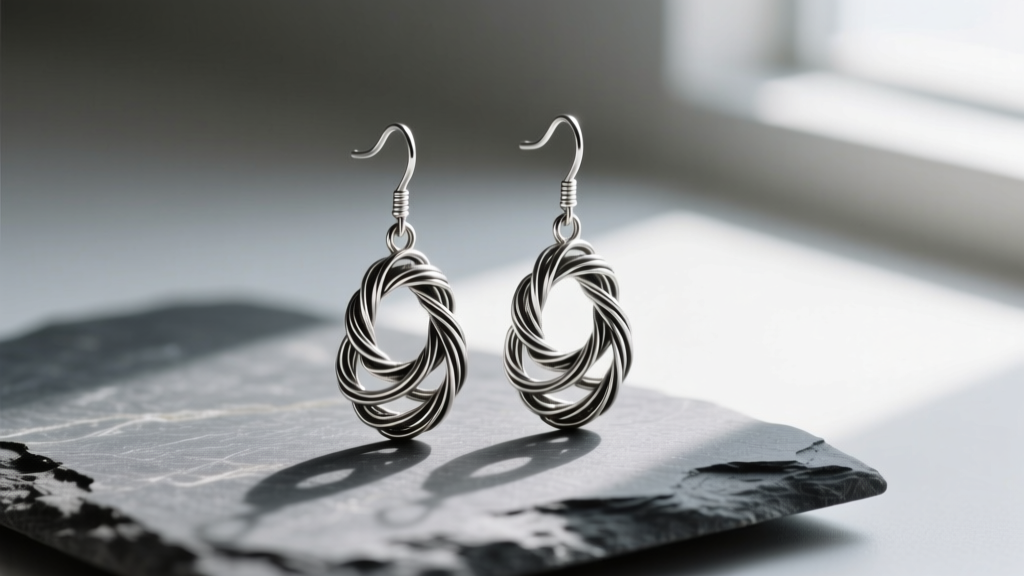
The jewelry landscape of 2026 has decisively pivoted away from the heavy, solid gold minimalist aesthetics that dominated the early 2020s. In its place, a demand for intricate, romantic, and historically grounded metalwork has surged. At the forefront of this movement are silver filigree earrings, a style that marries Victorian-era craftsmanship with modern ear curation. However, as demand skyrockets, the market has been flooded with mass-produced imitations that lack the structural integrity of true wirework. This comprehensive guide breaks down the metallurgy, structural biomechanics, and styling matrices you need to navigate the silver filigree trend with expert precision.
The 2026 Resurgence: Why Silver Filigree is Dominating Ear Curations
The current fascination with silver filigree earrings is deeply tied to the 'heirloom-core' and neo-romanticism trends forecasted by major fashion houses. According to Vogue's 2026 Jewelry Trend Report, consumers are increasingly seeking pieces that feel discovered rather than manufactured. Filigree—with its lace-like appearance and deliberate oxidation—provides an instant sense of history and artisanal weight.
Unlike solid metal studs or thick hoops, filigree offers a high visual impact with remarkably low physical weight. This makes it the ultimate solution for stretched lobes or multiple-piercing curations where metal fatigue and earlobe drooping are genuine concerns. The negative space inherent in filigree designs allows light to pass through, creating a dynamic, shifting shadow profile that solid metal simply cannot replicate.
Anatomy of Authentic Filigree: Wire Gauges and Silver Grades
To evaluate silver filigree earrings like a domain expert, you must understand the difference between true hand-soldered wirework and cast 'filigree.' True filigree is constructed from fine silver wires that are twisted, flattened, and soldered into a structural frame. Cast filigree is merely a solid piece of metal with holes punched or molded out, resulting in a thick, porous, and brittle aesthetic.
Master artisans utilize specific silver grades for different components of the earring to balance malleability with durability. As detailed in the Rio Grande Silver Metallurgy Guide, fine silver (999) is preferred for the intricate wirework, while sterling (925) is used for the base frames and ear wires.
| Component | Silver Grade | Wire Gauge (Thickness) | Metallurgical Purpose |
|---|---|---|---|
| Inner Lacework / Curls | 999 Fine Silver | 26g (0.40mm) to 28g (0.32mm) | High malleability; prevents work-hardening and snapping during tight twisting. |
| Outer Structural Frame | 925 Sterling Silver | 20g (0.81mm) to 18g (1.02mm) | Provides rigid borders to protect the delicate inner wirework from bending. |
| Ear Wires / Posts | 925 Sterling Silver | 20g (0.81mm) standard | Ensures durability and tension-spring memory for secure wear. |
Lobe vs. Cartilage: Structural Integrity and Placement Guide
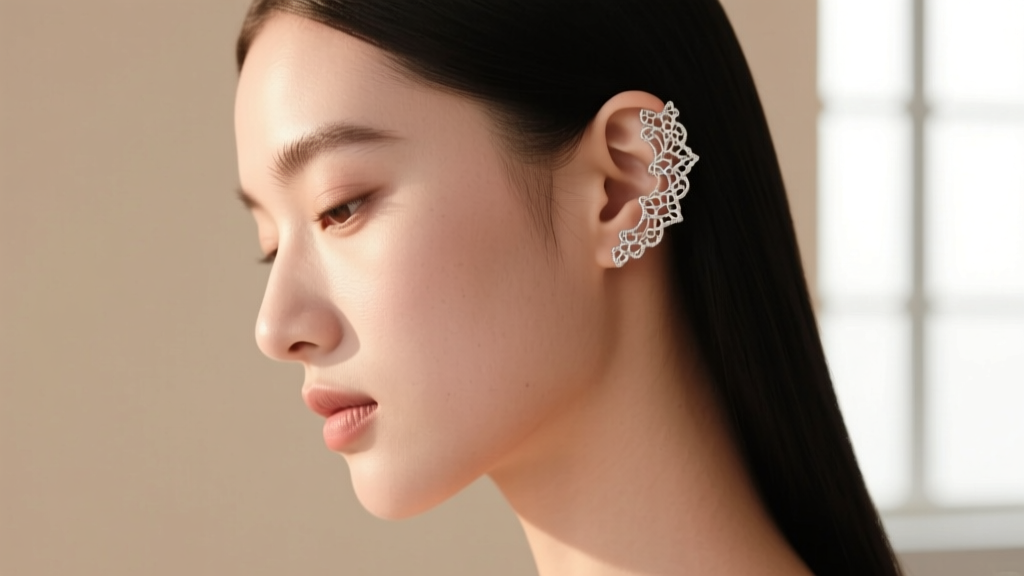
While silver filigree earrings are exceptionally lightweight, their open-wire construction makes them highly susceptible to 'catch-and-pull' distortion. The placement of the earring on the ear dictates the required structural framing.
The Helix Snag Test: Navigating Hair and Fabrics
Placing filigree in upper cartilage piercings (like the helix or forward helix) requires extreme caution. Hair, scarves, and sweater collars frequently catch on the upper ear. If a 28-gauge fine silver wire catches on a wool sweater, it will permanently kink. For cartilage placements, insist on designs that feature a continuous, soldered 20-gauge outer border with no protruding wire loops. Huggie-style filigree hoops or fully enclosed teardrop frames are the safest options for the helix.
Lobe Placements: Embracing the Dangle
The earlobe is a much safer environment for elaborate, protruding filigree chandeliers and drop styles. Because the lobe moves with the jaw and neck, a well-constructed filigree drop will sway gracefully without catching. Ensure the jump ring connecting the filigree drop to the ear wire is soldered shut; an open jump ring will eventually warp under the pendulum motion of a dangle earring, leading to loss.
Face Shape Pairing Matrix for Filigree Styles
The intricate visual texture of silver filigree earrings draws immediate attention to the sides of the face. Selecting the correct silhouette is critical for balancing facial proportions.
- Round Faces: Opt for elongated filigree teardrops or rectangular dangles. The vertical lines and negative space create an optical illusion that lengthens the jawline and cheekbones. Avoid wide, circular filigree hoops.
- Square Faces: Soften strong jawlines with oval or chandelier-style filigree earrings that feature curved, organic motifs (like floral or vine patterns). The rounded wirework contrasts beautifully with angular bone structure.
- Heart-Shaped Faces: Balance a wider forehead and narrow chin with bottom-heavy filigree designs. Triangle or inverted-teardrop silhouettes add visual weight to the lower half of the face.
- Oval Faces: The universal canvas. Oval faces can carry highly complex, wide filigree ear cuffs or dramatic shoulder-dusting filigree dangles without throwing off facial symmetry.
Price Tiers: Artisan vs. Cast vs. Estate
Understanding the pricing architecture of silver filigree earrings protects you from overpaying for mass-produced goods disguised as artisan craftsmanship.
Pro-Tip: Inspect the edges of the negative space. True wirework will show slightly rounded, wire-like edges and visible solder joints under a 10x jeweler's loupe. Cast filigree will have flat, stamped edges and a uniform, porous texture.
- Mass-Produced Cast ($30 - $90): Often labeled as 'filigree' but actually die-struck or cast. Lacks the crispness of twisted wire. Prone to snapping if bent.
- Hand-Soldered Artisan ($150 - $450+): True wirework crafted by contemporary jewelers. Priced based on the hours of labor required to twist, flatten, and solder hundreds of individual wire components.
- Antique / Estate ($500 - $2,000+): Genuine Victorian or Edwardian era pieces. Highly collectible, but often feature outdated ear wire mechanisms (like shepherd hooks without safety catches) that require retrofitting by a modern bench jeweler.
Care and Maintenance: Preventing Oxidation in Intricate Wirework
The greatest enemy of silver filigree is not tarnish itself, but the improper removal of it. Many artisan filigree earrings rely on intentional oxidation (patina) to make the twisted wire details pop against the recessed background. Submerging these pieces in liquid chemical silver dips will strip the patina, leaving the earring looking flat and washed out.
The Dry-Clean Method for Filigree
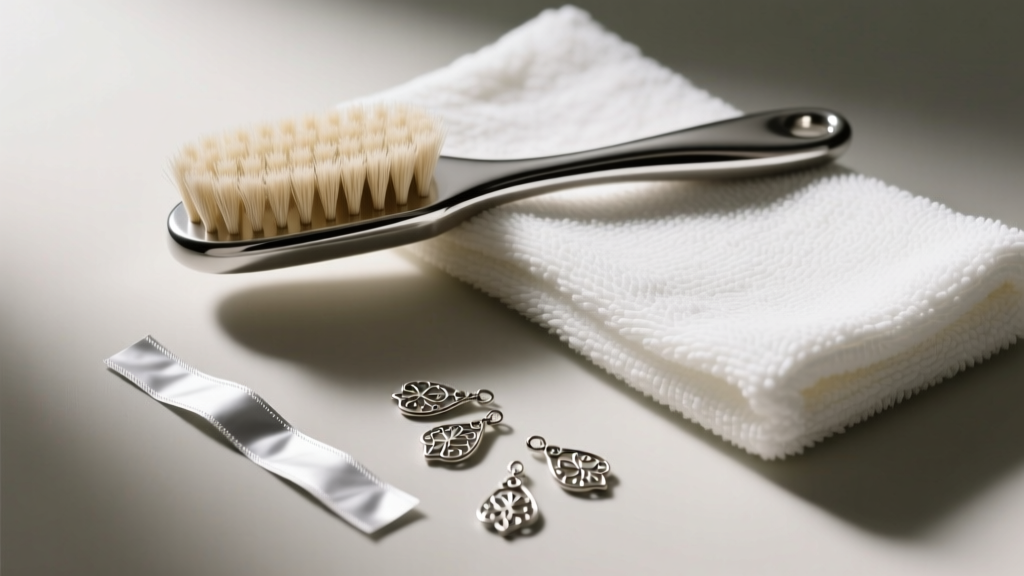
- Dust Removal: Use a clean, dry horsehair detailing brush to gently sweep dust and skin oils out of the microscopic wire crevices. Toothbrushes are too stiff and will scratch high-polish silver wires.
- Targeted Polishing: Wrap a silver-infused microfiber polishing cloth around a wooden toothpick to gently buff only the raised, high-polish edges of the wirework, leaving the dark oxidation in the recesses untouched.
- Storage: Store filigree earrings flat in an airtight ziplock bag with a 3M anti-tarnish strip. Hanging them on a jewelry tree exposes the delicate wires to ambient humidity and increases the risk of accidental crushing.
By understanding the metallurgy, structural limitations, and styling nuances of silver filigree earrings, you can curate an ear profile that is not only on-trend for 2026 but rooted in genuine horological and jewelry-making heritage. Invest in true wirework, respect the gauge limitations, and your filigree pieces will remain heirloom staples for decades.


