The Ultimate Guide to Small Cross Earrings: Sizing, Metals & Styling
Discover everything about small cross earrings. Learn about gauge sizes, hypoallergenic metals, and styling tips for everyday wear in this beginner guide.

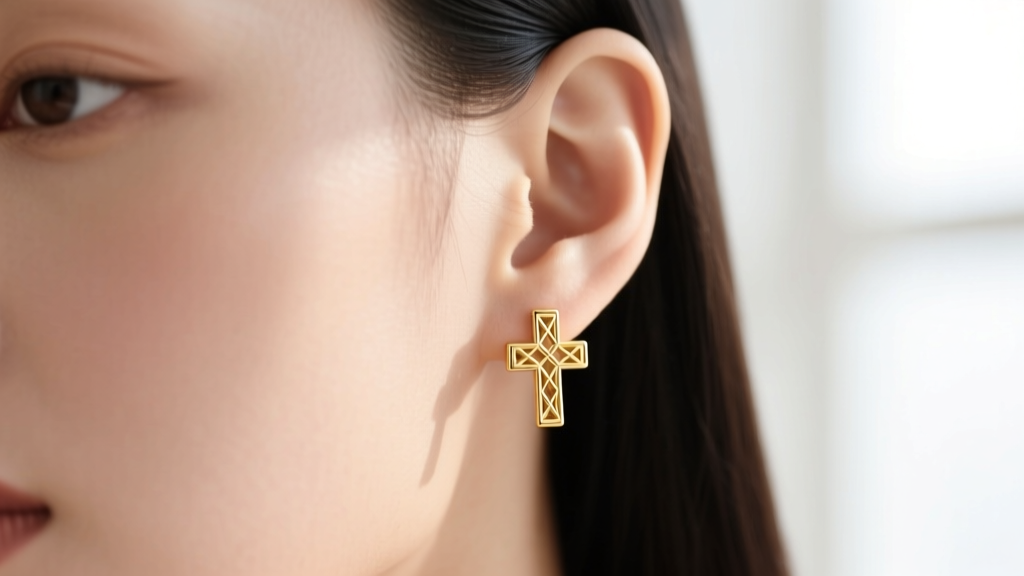
Small cross earrings have transcended their traditional roots to become one of the most versatile, enduring staples in modern jewelry wardrobes. Whether you are building a curated ear, looking for a subtle everyday stud for your primary lobe piercing, or seeking a meaningful gift, the micro cross is a masterclass in understated elegance. However, buying fine jewelry requires more than just picking a pretty design. From understanding exact millimeter dimensions to navigating the complex metallurgy of hypoallergenic alloys, there is a science to selecting the perfect piece.
This beginner-friendly explainer breaks down everything you need to know about small cross earrings in 2026, ensuring your next purchase is as comfortable and durable as it is stylish.
Why Small Cross Earrings Are a Timeless Staple
The appeal of the small cross earring lies in its geometric perfection and inherent symbolism. Unlike oversized statement pieces that can weigh down the earlobe or catch on clothing, a micro or standard-small cross sits flush and secure. In contemporary styling, the cross has been fully embraced by the minimalist and streetwear movements alike. It bridges the gap between personal faith, cultural aesthetics, and pure sartorial expression. Because of its compact footprint, a small cross can be worn in almost any piercing placement—from the standard lobe to the upper helix or tragus—without overwhelming the anatomy of the ear.
Decoding Dimensions: A Sizing Framework
When shopping online, the term "small" can be highly subjective. A 4mm cross is virtually a speck of metal, while a 12mm cross begins to enter statement territory. To help you visualize scale, we have categorized small cross earrings into three distinct size brackets based on their vertical height.
| Size Category | Height (mm) | Width (mm) | Best Piercing Placements | Visual Impact |
|---|---|---|---|---|
| Micro Cross | 3mm - 5mm | 2mm - 3mm | Helix, Tragus, Second/Third Lobe | Barely-there, delicate sparkle |
| Standard Small | 6mm - 9mm | 4mm - 6mm | Primary Lobe, Conch | Subtle, recognizable everyday stud |
| Medium-Small | 10mm - 12mm | 7mm - 9mm | Primary Lobe (Stretch/Heavy Gauge) | Noticeable, minimalist statement |
Pro Tip: If you are buying for a standard earlobe piercing and want a classic, visible but unobtrusive look, the 6mm to 8mm range is the undisputed sweet spot. Anything smaller than 5mm will likely get lost in the folds of the earlobe or be hidden by hair.
Metallurgy for Sensitive Ears: What to Buy and Avoid
The earlobe is highly vascular and prone to contact dermatitis if exposed to reactive metals. According to the American Academy of Dermatology, nickel allergy is the most common cause of allergic contact dermatitis, affecting millions of people globally. Many cheap jewelry items use nickel as a hardening agent in base metals or lower-karat gold alloys. Here is a breakdown of what to look for when buying small cross earrings:
The Safe List (Hypoallergenic)
- ASTM F136 Implant-Grade Titanium: The absolute gold standard for sensitive ears and fresh piercings. It contains zero nickel, is lightweight, and will never tarnish. It is highly recommended by the Association of Professional Piercers (APP).
- 14k or 18k Solid Yellow Gold: Ensure it is explicitly labeled "nickel-free." Pure 24k gold is too soft for jewelry, so it is alloyed. High-quality jewelers alloy yellow gold with copper, silver, or zinc to maintain strength without triggering allergies.
- Platinum: A dense, naturally white, and inherently hypoallergenic precious metal. It is heavier than gold and titanium, which gives a premium feel, though it comes with a significantly higher price tag.
The Danger Zone (Avoid for Sensitive Ears)
- Surgical Steel / Stainless Steel: Despite the medical-sounding name, surgical steel contains up to 10% nickel. It is fine for surgical tools that do not remain in the body, but poor for long-term wear in sensitive piercings.
- Sterling Silver (925): While beautiful, silver tarnishes when exposed to moisture and sulfur. The 7.5% copper alloy can cause green discoloration on the skin, and it is generally not recommended for 24/7 wear or sleeping.
- White Gold (Unverified): White gold is frequently alloyed with nickel to achieve its silvery hue. Unless it is alloyed with palladium, it is a major trigger for allergic reactions.

The Mechanics of Comfort: Posts and Backings
The front of the earring gets all the glory, but the post and backing dictate how comfortable the earring is to wear, especially when sleeping. Understanding gauge sizes and backing mechanisms is crucial for a beginner.
Understanding Gauge Sizes
Gauge refers to the thickness of the post that passes through your piercing. The higher the number, the thinner the wire.
- 20 Gauge (0.81mm): The standard for most commercial fine jewelry and standard lobe piercings. Delicate and lightweight.
- 18 Gauge (1.02mm): Slightly thicker, offering more durability for the post. Common in higher-end body jewelry.
- 16 Gauge (1.29mm): The standard for cartilage piercings (helix, conch). If you plan to wear your small cross in an upper ear piercing, you will likely need a 16g post.
Friction Backs vs. Threadless Flat-Backs
Most traditional small cross earrings come with a friction back (often called a butterfly clutch). These rely on tension to stay on the post. While easy to put on, they can trap dead skin and bacteria in their crevices, and the post often pokes the neck when sleeping.
For superior comfort, look for threadless flat-back labrets. These feature a flat disc that rests flush against the back of the ear, eliminating the "poke" factor entirely. The decorative front (the cross) features a slightly bent pin that inserts into the hollow post, using tension to lock securely in place without any screw threads to harbor bacteria.
Styling Small Cross Earrings in a Curated Ear
If you have multiple piercings, the small cross is an exceptional tool for creating visual balance. When designing a "curated ear," jewelry stylists often use the Rule of Odds and Geometric Contrast.
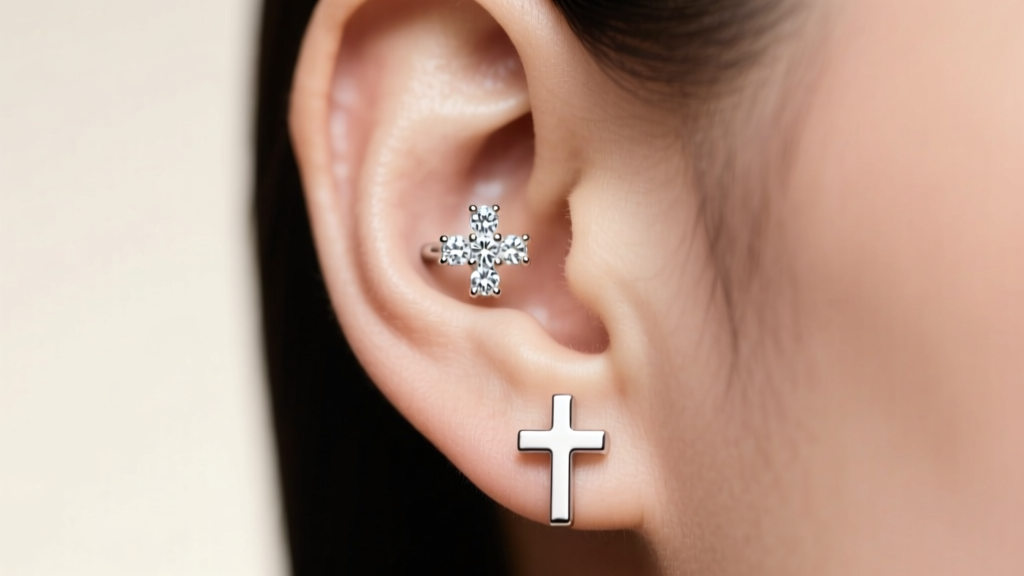
Because a cross is composed of rigid, intersecting straight lines, it pairs beautifully with round, organic shapes. Try placing a pavé diamond small cross in your primary lobe, and balance it with simple, seamless titanium clicker hoops in your second and third lobe piercings. If you have a helix piercing, a 4mm micro cross provides a brilliant, unexpected focal point at the top of the ear, drawing the eye upward and elongating the neck.
Daily Maintenance and Cleaning Protocols
To keep your small cross earrings brilliant and your piercings healthy, establish a simple maintenance routine. Avoid harsh chemicals, rubbing alcohol, and hydrogen peroxide, as these can degrade certain gemstone settings and dry out the delicate fistula (the skin tunnel of the piercing).
Instead, use a sterile 0.9% sodium chloride wound wash. Spray it lightly on a cotton swab or non-woven gauze and gently clean around the post and backing once a week. If your cross features diamonds or cubic zirconia, soak the jewelry in a bowl of warm water with a drop of mild, fragrance-free dish soap for ten minutes, then gently brush the stones with a soft-bristled baby toothbrush to restore their light refraction.
Final Thoughts on Building Your Collection
Investing in high-quality small cross earrings is an investment in your daily comfort and personal style. By prioritizing biocompatible metals like implant-grade titanium or nickel-free solid gold, paying attention to exact millimeter dimensions, and upgrading to flat-back mechanics, you elevate a simple accessory into a lifelong staple. Whether you opt for a classic polished metal stick cross or a glittering diamond-encrusted design, the right small cross earring will seamlessly integrate into your wardrobe for decades to come.


