Snake Bite Earrings: Technical Guide to Double-Lobe Styling
Master the snake bite earrings trend. Explore technical specs, ideal lobe spacing, gauge sizes, and implant-grade materials for double-lobe setups.

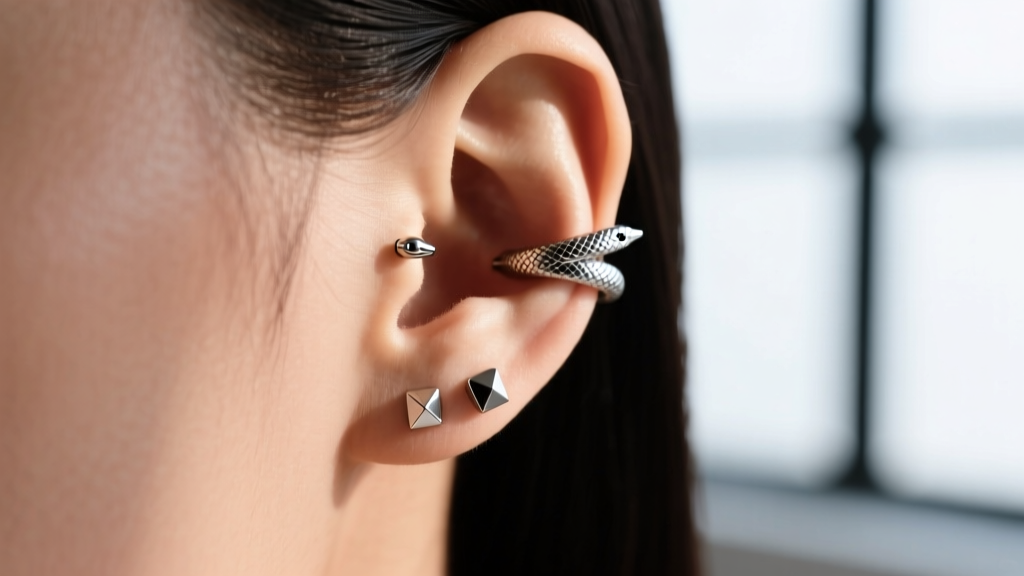
In the evolving landscape of ear curation, the term 'snake bite' has migrated from its traditional lip-piercing origins to define a highly specific, symmetrical double-lobe configuration. When enthusiasts and professional piercers discuss snake bite earrings in the context of ear anatomy, they are referring to two horizontally aligned piercings placed on the lower earlobe, or specialized single-post jewelry designed to mimic this dual-puncture aesthetic. This configuration demands a rigorous understanding of tissue geometry, metallurgical compatibility, and precise jewelry engineering.
As we move through 2026, the trend has shifted away from haphazard, closely clustered lobe holes toward mathematically spaced, structurally sound placements. Whether you are a collector looking to optimize your current setup or a curator advising clients, mastering the technical parameters of the snake bite earlobe configuration is essential for long-term tissue health and aesthetic superiority.
The Anatomy and Geometry of a Snake Bite Ear Placement
Unlike standard vertical lobe progressions, a true horizontal snake bite configuration requires a wide, fleshy lower lobe. The primary challenge is accommodating the diameter of two decorative earring ends without them overlapping or causing localized tissue necrosis due to friction.
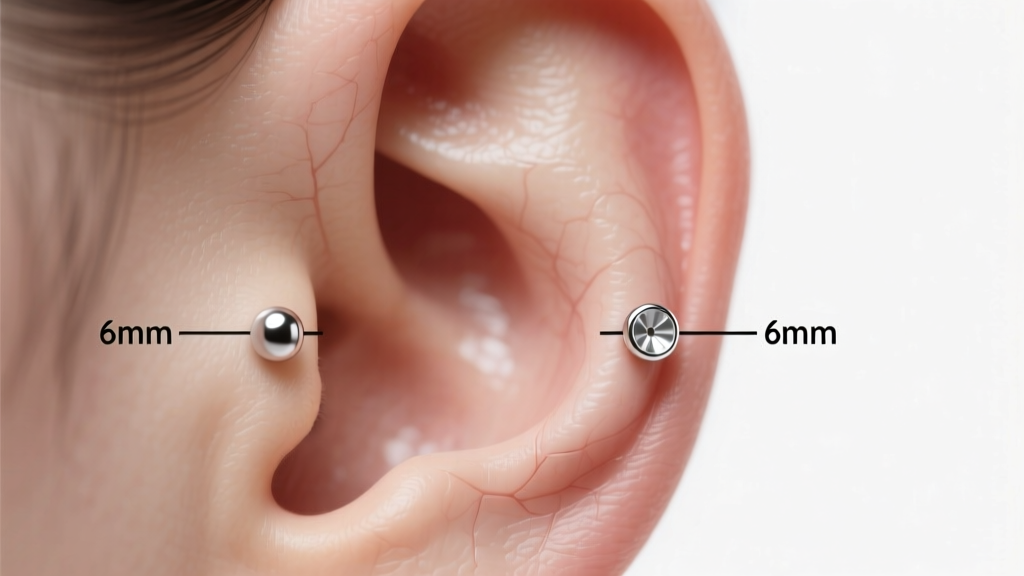
Calculating the Ideal Intercanthal Spacing
To achieve a flawless snake bite layout, the distance between the two puncture sites must be calculated based on the intended jewelry size. If you plan to wear standard 3mm or 4mm stud earrings, the absolute minimum distance between the centers of the two piercings must be 6mm to 8mm.
- Less than 5mm spacing: Results in jewelry overlap, trapping moisture and bacteria between the metal ends, leading to contact dermatitis and hypertrophic scarring.
- Edge proximity: Both piercings must maintain at least a 4mm buffer from the outer rim of the earlobe to prevent the 'cheese-cutter effect,' where the weight of the earrings slowly slices through the tissue over time.
- Angular alignment: The needle insertion must be perfectly perpendicular to the sagittal plane of the lobe. Even a 5-degree deviation can cause the decorative ends to tilt toward each other, ruining the parallel symmetry.
Technical Specifications: Gauge, Threading, and Metallurgy
The longevity of snake bite earrings relies heavily on the structural integrity of the jewelry. Because this placement features two points of tension on a single plane of tissue, downgrading on material or gauge thickness will accelerate tissue rejection.
Gauge Thickness and Tension Distribution
While standard earlobe piercings are often performed at 20-gauge (0.81mm) or 18-gauge (1.02mm), professional studios strongly recommend a 16-gauge (1.29mm) needle for horizontal snake bite setups. The thicker post distributes the mechanical load across a wider surface area of the fistula (the healed tissue tube), drastically reducing the risk of migration.
Material Grades: Beyond 'Surgical Steel'
The term 'surgical steel' is an unregulated marketing buzzword. For fresh or sensitive snake bite piercings, the only acceptable standard is ASTM F-136 Implant-Grade Titanium (Ti-6Al-4V-Eli). This specific alloy contains virtually zero nickel, eliminating the risk of allergic contact dermatitis, which is highly prevalent in dual-puncture setups where the skin barrier is compromised in two adjacent locations.
| Material Specification | Nickel Content | Surface Finish | Suitability for Snake Bite Setup |
|---|---|---|---|
| ASTM F-136 Titanium | None (Trace) | Mirror Polish (Ra < 0.2 µm) | Optimal for initial healing and long-term wear |
| Niobium (99.99% Pure) | None | Anodized / Polished | Excellent alternative for heavy metal sensitivities |
| 316L Surgical Steel | 8% - 12% | Variable | Poor; high risk of localized allergic reaction |
| 14k / 18k Solid Gold | Depends on alloy | High Polish | Good for fully healed fistulas (avoid white gold) |
For a comprehensive breakdown on safe body jewelry materials, the Association of Professional Piercers (APP) provides the industry gold standard for metallurgical safety in body modifications.
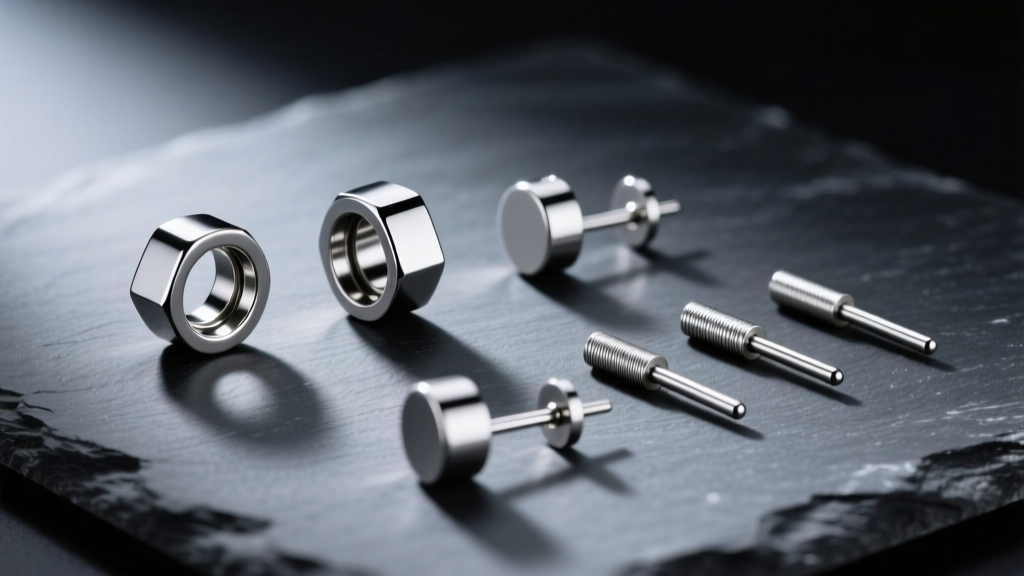
The Mechanics of Threadless (Press-Fit) Jewelry
For snake bite earrings, threadless (press-fit) jewelry is vastly superior to internally threaded options. Threadless systems utilize a slight bend in the pin that creates tension against the inside wall of the shaft. This ensures the decorative end sits completely flush against the lobe without the microscopic gaps found in threaded joints, which can harbor sebum and dead skin cells.
Jewelry Configurations and Styling Frameworks
Once the anatomical foundation is established, the styling possibilities for the snake bite configuration expand significantly. Here are the primary structural frameworks utilized by expert curators:
1. The Symmetrical Flush Stud
The most common iteration features two identical bezel-set gemstones (typically 2.5mm to 3mm in diameter). Using lab-grown diamonds or synthetic moissanite set in titanium bezels ensures maximum light refraction while maintaining a low profile that won't catch on hair or clothing.
2. The Connected Chain Drape
This advanced styling technique involves linking the two snake bite piercings with a delicate, custom-measured 14k solid gold chain. The chain must feature a precise 'drop' (usually 4mm to 6mm of slack) to allow for natural lobe movement without pulling on the fistulas. If the chain is too taut, the constant micro-tension will cause the piercings to migrate toward one another.
3. The Faux Snake Bite (Single-Puncture Mimicry)
For those lacking the lobe real estate for two distinct punctures, jewelers have engineered 'faux snake bite' earrings. These feature a single 16-gauge post that splits into a Y-shaped bridge, holding two decorative ends at a fixed 6mm distance. This provides the visual weight of a double piercing without compromising the structural integrity of a small earlobe.
Healing Protocols and Failure Mode Troubleshooting
Healing two adjacent piercings simultaneously introduces compounding variables. The localized inflammatory response is effectively doubled, requiring stringent aftercare protocols.
'When addressing dual-plane lobe piercings, the primary clinical concern is not infection, but rather mechanical irritation and hypertrophic scarring caused by improper jewelry length during the initial edema phase.' — Guidelines adapted from dermatological piercing aftercare standards outlined by the Mayo Clinic.
Managing the 'Edema Phase'
During the first 14 days, the earlobe will swell. If the initial jewelry posts are too short (e.g., standard 6mm posts), the metal will embed into the tissue, causing necrosis. Professional piercers will use 10mm to 12mm flat-back labret posts for the initial snake bite piercing. Down-sizing to a 6mm or 8mm post must occur exactly when the swelling subsides, usually around week three, to prevent the longer posts from snagging and tearing the delicate new fistula.
Troubleshooting Migration
If you notice the two piercings slowly drifting closer together, this is a sign of tissue rejection or mechanical tension. Immediate intervention requires removing any connected chains, switching to lightweight, flat-backed titanium studs, and allowing the tissue to rest. Ignoring migration will result in the two holes merging into a single, elongated slit, requiring surgical correction.
Cost Breakdown and Studio Selection
Executing a flawless snake bite earlobe setup is an investment in precision. Avoid mall kiosks or piercing guns, which use blunt-force trauma and cannot guarantee the exact millimeter spacing required for this specific layout.
- Piercing Service Fee: $40 to $80 per puncture (Total: $80 - $160)
- Implant-Grade Titanium Jewelry: $35 to $120 per piece (Total: $70 - $240)
- Downsizing Appointment: Often included in initial fee, or $20 to $40 if purchased separately.
Expect to invest between $150 and $400 for a complete, professional-grade snake bite setup using high-end, ethically sourced gemstones and ASTM F-136 titanium hardware. By prioritizing anatomical precision and metallurgical safety, your snake bite earrings will remain a striking, structurally sound centerpiece of your ear curation for decades.


