2026 Snake Earring Value Guide: Budget to Fine Gold
Evaluate snake earring value across 2026 price tiers. We compare budget alloys, vermeil, and solid gold to help you avoid tarnish and tension failure.

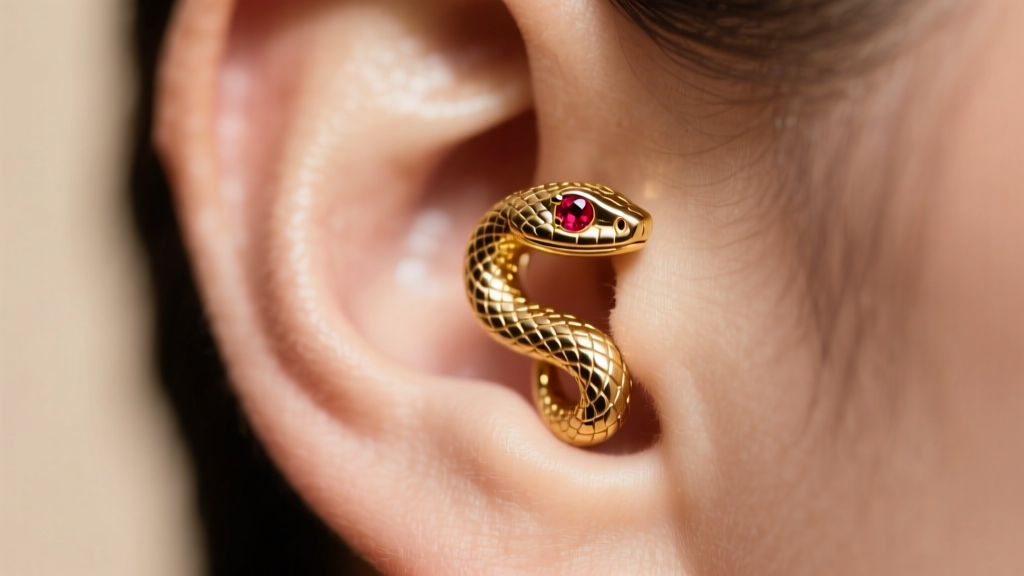
The Anatomy of a Snake Earring: What You Are Actually Paying For
The snake earring has slithered its way into mainstream jewelry boxes, drawing on ancient symbolism of rebirth, eternity, and hidden wisdom. As we navigate the jewelry market in 2026, the serpent motif remains a dominant force in ear styling, appearing as ear cuffs, cartilage climbers, and intricate dangles. However, the visual similarity between a $15 fast-fashion cuff and a $1,500 heirloom cartilage climber can be deceiving. To truly assess the value of a snake earring, you must look past the aesthetic and evaluate the metallurgy, structural mechanics, and long-term wearability. This guide breaks down the true cost of ownership across three distinct market tiers, helping you determine where your money is best spent.
Tier 1: Budget and Fashion (Under $50) – The Tarnish Trap
Budget snake earrings are typically mass-produced using zinc alloys, brass, or stainless steel bases, finished with a micro-thin layer of "gold tone" or flash plating. While the upfront cost is appealing, the long-term value is virtually non-existent. The primary failure mode in this tier is work hardening. When you purchase a cheap brass snake ear cuff, you inevitably have to bend it to fit the unique contour of your helix or lobe. Brass and zinc alloys do not possess the malleability of precious metals; repeated bending causes the crystalline structure of the metal to lock and become brittle. Within a few adjustments, the snake's tail or head will snap clean off.
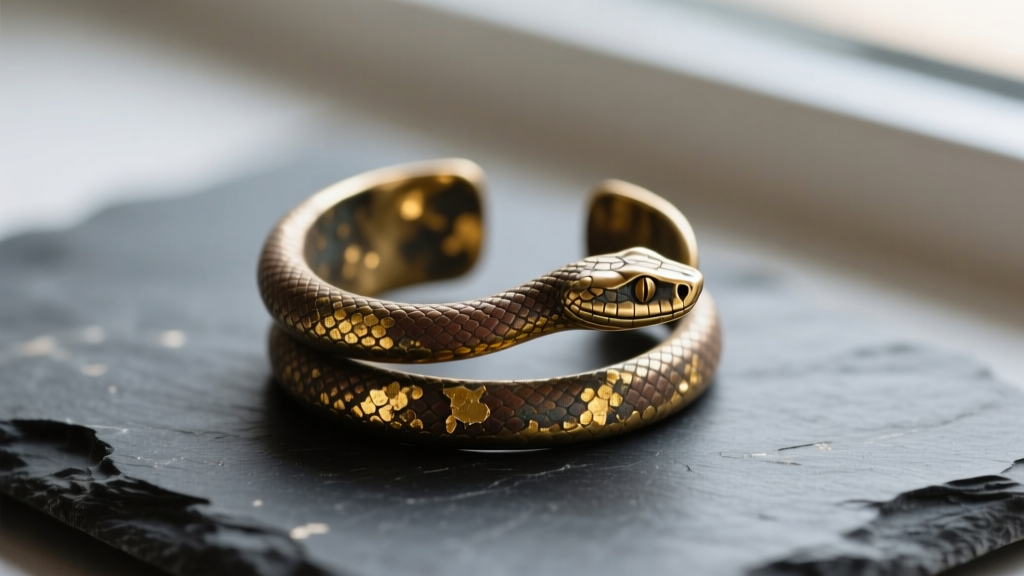
Furthermore, budget tiers frequently utilize nickel as a hardening agent in their base alloys. According to the American Academy of Dermatology, nickel exposure is the leading cause of contact dermatitis. When the flash plating (often less than 0.1 microns thick) wears away from the friction of your hair and skin, the exposed base metal will trigger severe allergic reactions, turning a fashionable accessory into a medical liability.
Tier 2: Mid-Range and Vermeil ($50 - $150) – The Sweet Spot?
The mid-range market offers a significant step up in material integrity, predominantly utilizing 925 sterling silver as a base metal coated in gold vermeil. By law, the Federal Trade Commission (FTC) mandates that for a piece to be legally marketed as "vermeil," it must feature a sterling silver base and a gold plating of at least 2.5 microns thick. This provides a rich, luxurious appearance that closely mimics solid gold at a fraction of the cost.
Material Grade Breakdown and Lifespan
While 2.5 microns is sufficient for a pendant or a ring that experiences minimal friction, snake ear cuffs are high-friction items. The tension required to keep the cuff on the ear, combined with the oils from your skin and the friction from brushing your hair, will eventually wear through the vermeil layer.
| Material Tier | Base Metal | Plating / Purity | Tensile Flexibility | Avg. Price | Estimated Daily Lifespan |
|---|---|---|---|---|---|
| Budget Fashion | Brass / Zinc Alloy | Flash Plate (<0.1μm) | Poor (Snaps easily) | $12 - $45 | 1 - 3 Months |
| Mid-Range Vermeil | 925 Sterling Silver | Gold Vermeil (2.5μm+) | Moderate (Bends safely) | $60 - $140 | 1 - 2 Years |
| Fine Jewelry | Solid 14k / 18k Gold | Solid Alloy (No plate) | Excellent (Highly malleable) | $250 - $1,200+ | Lifetime / Heirloom |
For buyers who enjoy rotating their jewelry seasonally, mid-range vermeil snake earrings offer the best aesthetic ROI. Just be prepared to retire the piece once the silver base begins to show through the high-contact points.
Tier 3: Fine and Heirloom ($200 - $1,000+) – True Value Retention
When you invest in solid 14k or 18k gold snake earrings, you are paying for structural permanence and intrinsic metal value. Solid gold is inherently malleable, meaning a jeweler can custom-fit a solid gold ear cuff to the exact millimeter of your ear cartilage without risking metal fatigue or snapping. Furthermore, fine jewelry snake earrings often feature advanced construction techniques, such as die-struck components or hand-fabricated scales, which provide superior detail and structural integrity compared to the porous, cast finishes found in cheaper tiers.
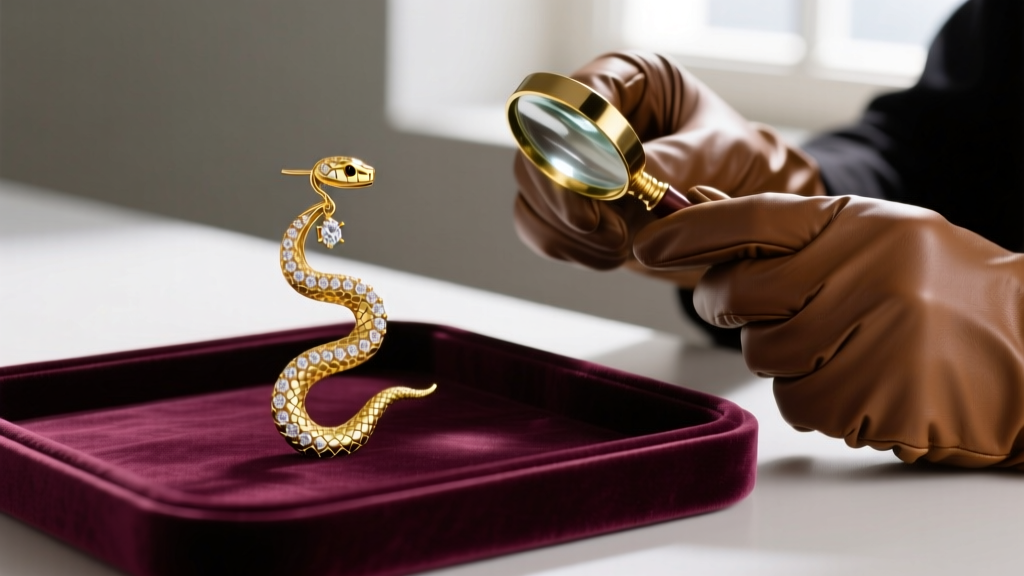
From a pure value assessment perspective, solid gold snake earrings retain a significant portion of their melt value and artisan premium. A well-crafted 18k gold serpent cartilage climber with sapphire eyes can easily be passed down as an heirloom, making the cost-per-wear over a lifetime exceptionally low compared to replacing a $40 brass cuff every six months.
Cartilage Climbers vs. Ear Cuffs: Structural Value and Failure Points
Not all snake earrings are created equal, and the style you choose dictates the mechanical stresses the jewelry will endure. Understanding these mechanics is crucial for assessing value.
The Ear Cuff (Non-Pierced)
Snake ear cuffs rely entirely on spring tension to grip the helix or lobe. The ideal gauge for a durable cuff is 18-gauge (1.0mm) or 16-gauge (1.2mm) wire. Anything thinner (like 20G) will easily warp out of shape when taking it on and off, losing its grip and eventually falling into the abyss of a car seat or bathroom drain. When assessing a cuff's value, check the "tail" end. High-value cuffs feature a slightly rounded, polished bead at the tail tip to prevent it from scratching the skin or catching on fine hair.
The Cartilage Climber (Pierced)
Snake climbers feature a standard post (usually 18G or 16G) that goes through a piercing, while a secondary wire traces upward along the ear's anatomy. The failure point here is the solder joint where the decorative snake body meets the structural post. In budget tiers, this joint is often glued or poorly soldered, snapping under the weight of the earring. In fine jewelry, this joint is laser-welded or seamlessly cast, ensuring the piece can withstand the weight of gemstone-set scales.
Expert Troubleshooting: Fixing a Loose Cuff
Pro-Tip: If your sterling silver or solid gold snake ear cuff loses its grip over time, never use your bare fingers to squeeze it back into shape. Fingers apply uneven torque and transfer corrosive skin oils directly to the metal. Instead, use a pair of nylon-jaw pliers to gently compress the curve of the snake's body. The nylon protects the gold finish from scratching while allowing you to apply even, controlled pressure to restore the original tension.
Final Verdict: Which Tier Offers the Best ROI?
The true value of a snake earring depends entirely on your wearing habits. If you are purchasing a snake ear cuff for a single event or a brief seasonal trend, the mid-range vermeil tier ($60 - $140) offers the perfect intersection of skin-safe materials, structural flexibility, and aesthetic luxury. You avoid the dermatological risks of budget brass while achieving the look of fine jewelry.
However, if you are looking at a pierced snake cartilage climber or a piece you intend to wear daily in the shower and at the gym, bypass the plated options entirely. The friction and moisture will destroy vermeil within months. In this scenario, investing in a solid 14k gold piece ($250+) is the only financially sound decision. The upfront cost is higher, but the elimination of replacement costs, combined with the intrinsic value of the gold and the safety of hypoallergenic materials, makes it the undisputed winner in long-term value assessment.


