Square Earrings for Guys: The Complete Buying Guide & Style Rules
Discover the ultimate buying guide to square earrings for guys. Learn about titanium grades, exact sizing, threadless backs, and top brands.


The landscape of men's jewelry has shifted dramatically over the last decade, moving away from safe, generic circles into bold, architectural territory. When it comes to curating a masculine aesthetic, square earrings for guys offer a sharp, structured alternative to traditional round studs or hoops. Whether you are looking for a subtle geometric accent for the office or a heavy tungsten statement piece for the weekend, understanding the mechanics of men's earrings is critical. This guide breaks down the exact materials, sizing matrices, and backing mechanisms you need to know before making a purchase.
The Geometry of Men's Earrings: Why Square?
Facial geometry plays a massive role in how jewelry is perceived. Round earrings tend to soften features, which is why square and rectangular silhouettes have become the default for men seeking a more structured look. If you have a round or oval face shape, the hard 90-degree angles of a square stud introduce a necessary visual contrast, sharpening the jawline and adding an edge to your profile. Conversely, if you already have a highly angular, square jaw, a slightly rounded square (often called a cushion cut or squircle in jewelry design) can balance your features without making your face look overly boxy.
Material Grades: What to Actually Buy (and Avoid)
The biggest mistake men make when buying earrings is prioritizing the visual finish over the metallurgical grade. Your ear tissue is highly reactive, and cheap alloys will lead to blowouts, rejection, or chronic dermatitis.
Implant-Grade Titanium (ASTM F136)
This is the gold standard for body jewelry. According to the Association of Professional Piercers (APP), ASTM F136 titanium is entirely nickel-free and biocompatible. If you are buying square studs for a fresh piercing or have sensitive lobes, this is the only metal you should consider for the post.
Tungsten Carbide
Tungsten is incredibly dense, scratch-resistant, and holds a matte black or polished gunmetal finish better than almost any other metal. However, it is heavy. A 7mm tungsten square stud is excellent for a stretched or well-healed standard lobe, but the weight will cause migration and tearing if used in a delicate helix or cartilage piercing.
Solid Gold vs. Vermeil
For luxury square earrings, 14k or 18k solid gold is mandatory. Avoid 'gold vermeil' or 'gold plated' brass for daily wear; the friction of the post against your fistula will strip the plating within months, exposing reactive base metals. The American Academy of Dermatology (AAD) frequently cites nickel and cobalt in cheap plated jewelry as the primary culprits behind allergic contact dermatitis in earlobes.
The Sizing Matrix: Millimeters Matter
Sizing is where most men get it wrong. A stud that looks proportional on a jewelry bust often looks comically small or overwhelmingly large on a human ear. Here is the definitive sizing framework for men's square earrings.
| Size (mm) | Visual Impact | Best Use Case |
|---|---|---|
| 3x3mm | Micro / Subtle | Second or third lobe piercings; minimalist office wear. |
| 5x5mm | Standard / Proportional | The sweet spot for primary lobe piercings. Noticeable but not loud. |
| 7x7mm | Bold / Statement | Thicker lobes, stretched piercings, or streetwear aesthetics. |
| 9x9mm+ | Heavy / Avant-Garde | Requires a heavy-duty post. Best for editorial looks or lower cartilage. |
Lobe vs. Cartilage Placements
For standard earlobes, a 5x5mm to 7x7mm square stud sits perfectly within the average male lobe tissue boundary (which is typically 10mm to 15mm in diameter). If you are placing a square stud in the flat or helix (cartilage), drop down to 3x3mm or 4x4mm. Cartilage tissue is rigid and lacks the surface area to support a wide geometric base without the edges digging into the side of your head while sleeping.
Post Mechanics and Backings (The Hidden Failure Point)
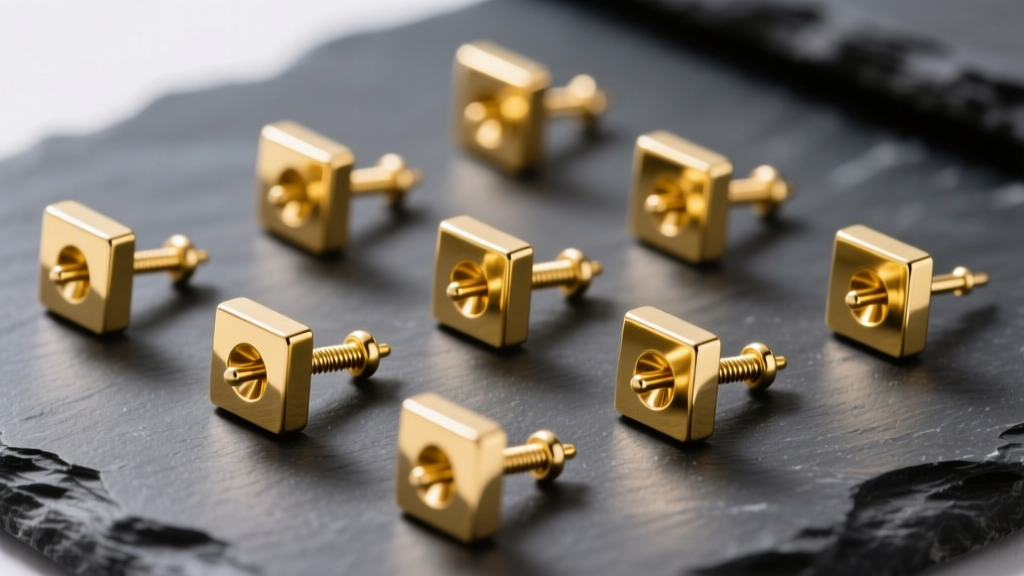
The backing of an earring is just as important as the front. Traditional 'butterfly' friction backs are a design flaw. They trap dead skin cells, sebum, and hair products, creating a breeding ground for bacteria that leads to the dreaded 'earring cheese' smell and localized infections.
Upgrade to Threadless (Push-Pin) Backs
If you are investing in high-end square earrings, look for threadless systems (like Neometal or Maria Tasha). These feature a flat back disc that sits flush against the ear, with a front pin that you slightly bend to create tension inside the hollow post. They do not snag on hair, they do not trap debris, and they are incredibly secure.
Screw-Back Alternatives
If threadless isn't an option, internally threaded screw-backs are the next best choice. The threading is on the post, not the backing, meaning you aren't dragging sharp metal threads through your healing fistula every time you take the earring out. Avoid externally threaded posts at all costs.
Gauge Thickness: Don't Ignore the Post
Most commercial men's earrings come with a 20-gauge (0.8mm) or 18-gauge (1.0mm) post. While 20g is fine for lightweight 3mm studs, a heavy 7mm tungsten or solid gold square block requires an 18-gauge or even 16-gauge (1.2mm) post to prevent the 'cheese-cutter effect,' where the weight of the earring slowly slices through the bottom of your lobe over time. Always check the gauge specification before buying, especially for heavier geometric shapes.
Real-World Pricing and Brand Benchmarks
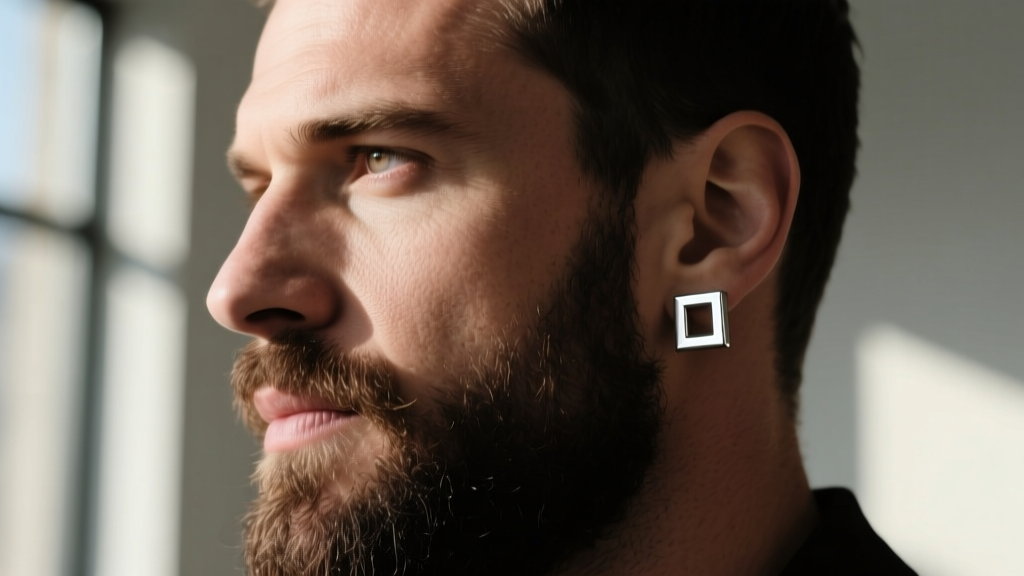
Understanding the market will prevent you from overpaying for plated metals or underpaying for questionable alloys. Here is what you should expect to spend on quality square earrings for guys.
- Budget Tier ($25 - $60): Brands like Vitaly or King Ice dominate here. You will mostly find PVD-coated titanium or surgical steel with matte black or gunmetal finishes. Excellent for testing out the square silhouette without a massive investment.
- Mid-Tier ($70 - $180): This is where you find solid 14k gold small studs and high-grade titanium from brands like Miansai or Mejuri. Expect clean lines, bezel-set black onyx, or brushed metal textures.
- Luxury Tier ($250+): Designers like Tom Wood or Jacquie Aiche offer heavy, architectural square signet studs, often featuring cushion-cut diamonds, lapis lazuli, or mother-of-pearl inlays set in 18k gold or sterling silver.
Maintenance: Keeping Geometric Edges Sharp
Square earrings have corners, and those 90-degree angles are prime real estate for accumulating lint, soap scum, and oxidized oils. Once a week, remove your earrings and soak them in a small glass of warm water mixed with a few drops of mild, fragrance-free dish soap. Use a soft-bristled baby toothbrush to gently scrub the corners and the post. If you are wearing sterling silver square hoops or studs, keep a specialized silver polishing cloth on hand to remove sulfur-induced tarnish from the flat surfaces, ensuring the light catches the geometric edges properly.
Expert Tip: Never sleep in square stud earrings with sharp, un-beveled corners. The pressure of your pillow will drive the corner of the metal into your neck or the back of your ear, causing micro-tears in the skin. Always look for squares with slightly softened or chamfered edges for daily wear.
Final Verdict: Building Your Core Collection
When building your collection of square earrings for guys, start with a 5x5mm matte titanium or tungsten stud for daily, low-maintenance wear. Once you are accustomed to the geometric silhouette, expand into a 4x4mm solid 14k gold square with a bezel-set black onyx stone for elevated evening wear. By prioritizing implant-grade metals, proper gauge thickness, and flat-back threadless mechanics, you ensure your jewelry remains a sharp, enduring asset to your personal style rather than a source of irritation.


