Squiggle Earrings: The 2026 Wavy Trend & Style Guide
Discover the 2026 squiggle earrings trend. Learn how to style wavy, abstract ear pieces, choose the right metals, and match them to your face shape.

The Anatomy of the Squiggle: Why Wavy is Winning in 2026
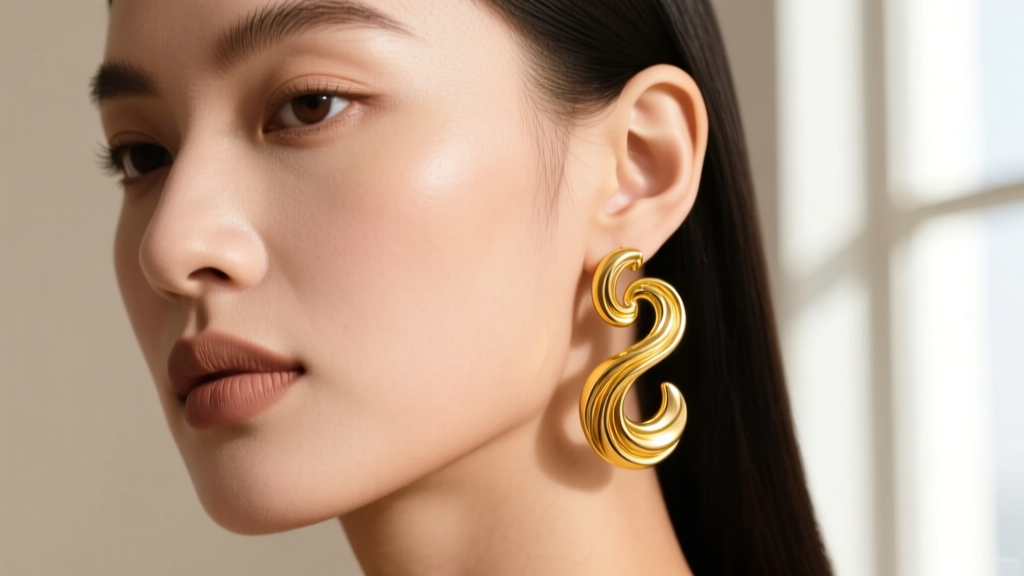
Minimalism had its decade-long reign, but 2026 marks a definitive pivot toward kinetic, abstract jewelry. Enter the squiggle earring. Characterized by undulating, serpentine, zigzag, or sine-wave silhouettes, squiggle earrings introduce movement and visual weight to the ear without relying on heavy gemstones or oversized hoops. Unlike traditional geometric shapes, the asymmetrical nature of a wavy earring catches the light from multiple angles, creating a dynamic, eye-catching effect as the wearer moves.
However, the very geometry that makes squiggle earrings so visually appealing also introduces unique structural challenges. The offset center of gravity in a wavy design can cause the earring to rotate, while the undulating curves are notorious for snagging on hair and knitwear. This guide breaks down the metallurgy, gauge mechanics, and styling frameworks you need to master the squiggle trend.
Material Grades & Durability: What to Look For
Because squiggle earrings feature continuous bends and curves, the metal must possess high tensile strength to prevent warping when accidentally pulled. Furthermore, the constant friction of the curves against the ear demands hypoallergenic properties.
| Material | Grade / Standard | Price Range | Best For | Tarnish & Snag Risk |
|---|---|---|---|---|
| Implant-Grade Titanium | ASTM F136 | $45 - $120 | Fresh cartilage piercings, sensitive skin | Zero tarnish; highly scratch-resistant |
| Solid Gold | 14k or 18k (Nickel-Free) | $180 - $450+ | Everyday lobe wear, luxury curation | Very low; 18k is softer and may bend if snagged |
| Sterling Silver | 925 with Rhodium Plating | $40 - $95 | Occasional wear, trend experimentation | Moderate; crevices trap moisture, accelerating oxidation |
| Brass / Bronze | Raw or Lacquered | $15 - $35 | Editorial shoots, temporary styling | High; causes green skin discoloration and rapid tarnishing |
When shopping for sterling silver squiggles, always verify the presence of a rhodium flash. According to the American Academy of Dermatology, nickel allergies are a leading cause of contact dermatitis. Many cheaper wavy alloys use nickel as a hardening agent; sticking to verified nickel-free 14k gold or ASTM F136 titanium ensures your earlobes remain irritation-free, even when the metal rests against the skin in the curves of the squiggle.
Gauge Sizes & Piercing Placements: Preventing 'The Flip'
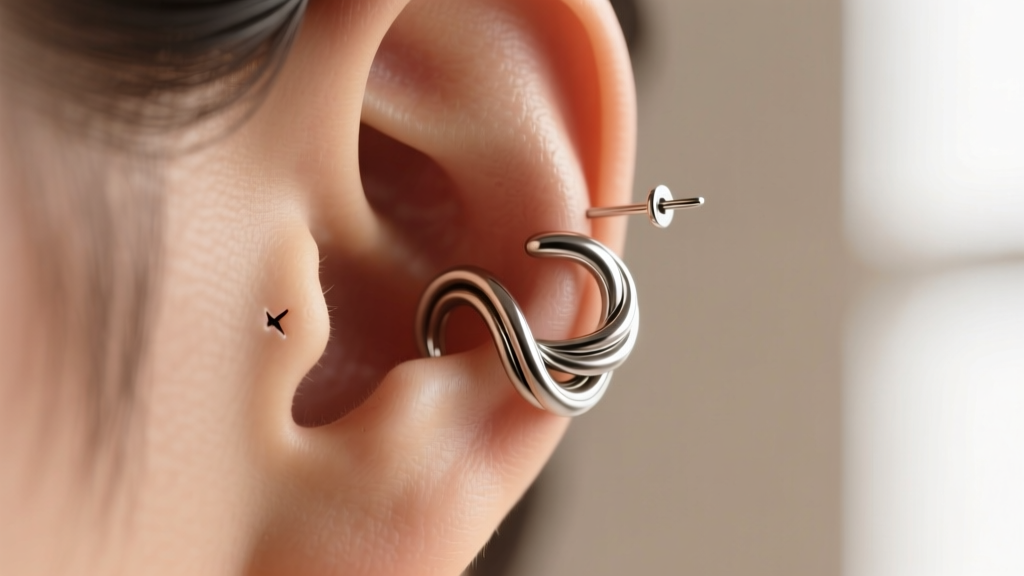
The most common failure mode of wavy ear jewelry is what piercers call "the flip." Because a squiggle's mass is unevenly distributed, a standard 20-gauge (0.81mm) friction-back earring will often rotate upside down, hiding the design behind the earlobe.
Lobe Placements
- The Fix: Opt for squiggles crafted from 18-gauge (1.0mm) or 16-gauge (1.2mm) wire. The thicker post provides structural rigidity and resists rotation.
- Backings: Discard standard butterfly backs. Use silicone O-rings or secure screw-backs to maintain the exact forward-facing angle of the wave.
Cartilage & Helix Placements
For upper ear curation, standard wire hooks are a disaster waiting to happen. The curves will catch on masks, headphones, and pillows. The Association of Professional Piercers (APP) strongly recommends flat-back labret posts for cartilage stability. Look for internally threaded 16g (1.2mm) titanium flat-backs where the squiggle charm is soldered directly to the front disc. This guarantees the wavy design sits flush and perfectly oriented against the helix, completely eliminating rotation.
Face Shape Framework: Matching the Curve
Squiggle earrings are not one-size-fits-all. The frequency and amplitude of the wave should be chosen to balance your natural facial geometry.
Angular Faces (Square & Diamond)
If you have a strong, angular jawline or prominent cheekbones, avoid sharp, aggressive zig-zag squiggles, which will only exaggerate the harshness of your features. Instead, choose sine-wave or serpentine squiggles with soft, rounded peaks and valleys. The continuous, fluid curves will visually soften the lower half of the face and draw the eye upward in a gentle motion.
Round & Oval Faces
Round faces benefit from the introduction of structure and angles. Look for geometric squiggles—think sharp, Art Deco-inspired zig-zags or triangular wave patterns. These create an illusion of length and add necessary architectural contrast to soft, curved jawlines. Oval faces possess the most versatility and can pull off both tight, high-frequency coils and long, languid drops.
Styling the Squiggle: Asymmetry and Ear Curation
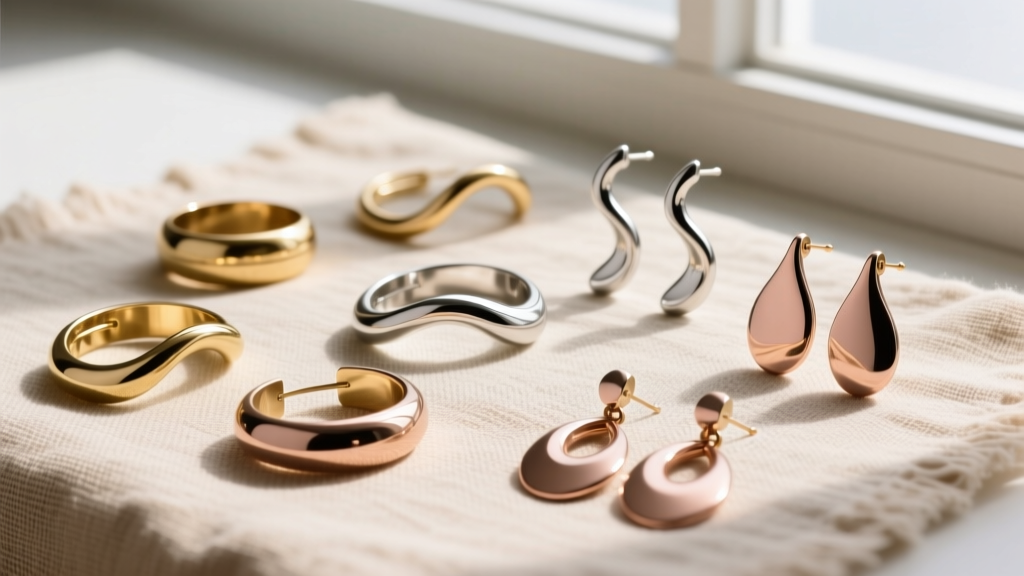
The 2026 approach to ear curation relies on intentional asymmetry. A squiggle earring is inherently loud; it demands attention. Therefore, it should act as the "hero" piece in your ear stack.
The Golden Rule of Squiggle Styling: Never pair two identical, oversized wavy drops on both ears. It creates visual chaos and overwhelms the face. Instead, try the "Hero and Anchor" method:
- Left Ear (The Hero): A long, 14k gold squiggle drop in the primary lobe piercing, paired with a simple, flush-set diamond stud in the upper lobe.
- Right Ear (The Anchor): A classic, medium-sized huggie hoop in the primary lobe, followed by a tiny, subtle squiggle charm on a flat-back labret in the helix.
This styling framework balances the kinetic energy of the wavy design while maintaining a cohesive, high-end aesthetic. For non-pierced individuals, squiggle ear cuffs are a massive trend this year. Look for cuffs with a tension-fit mechanism lined with silicone grips to ensure they don't slide off the thinnest parts of the cartilage.
Maintenance: Preventing Tarnish and Snagging
The undulating crevices of a squiggle earring are magnets for sebum, dead skin cells, hairspray, and lotion buildup. Over time, this grime will dull the metal and accelerate tarnishing, particularly in sterling silver pieces.
Cleaning Protocol: Avoid harsh chemical silver dips, which can strip rhodium plating and damage any epoxy-set stones. Instead, use a soft-bristled baby toothbrush dipped in a solution of warm water and mild, phosphate-free dish soap. Gently trace the curves of the squiggle, paying special attention to the inner loops where debris accumulates. Rinse thoroughly and dry immediately with a microfiber cloth to prevent water spots.
Snag Prevention: Always put your squiggle earrings in after you have finished styling your hair and applying cosmetics. When removing them, do not pull them straight down; gently trace the curve of the wire backward through the piercing to avoid catching the earlobe tissue on the peaks of the wave. Store them individually in soft pouches to prevent the wavy wires from interlocking and bending out of shape inside your jewelry box.


