What Are Leverback Earrings? A Troubleshooting & Fit Guide
Discover what are leverback earrings and learn expert troubleshooting for loose clasps, drooping designs, and pinching with our repair guide.

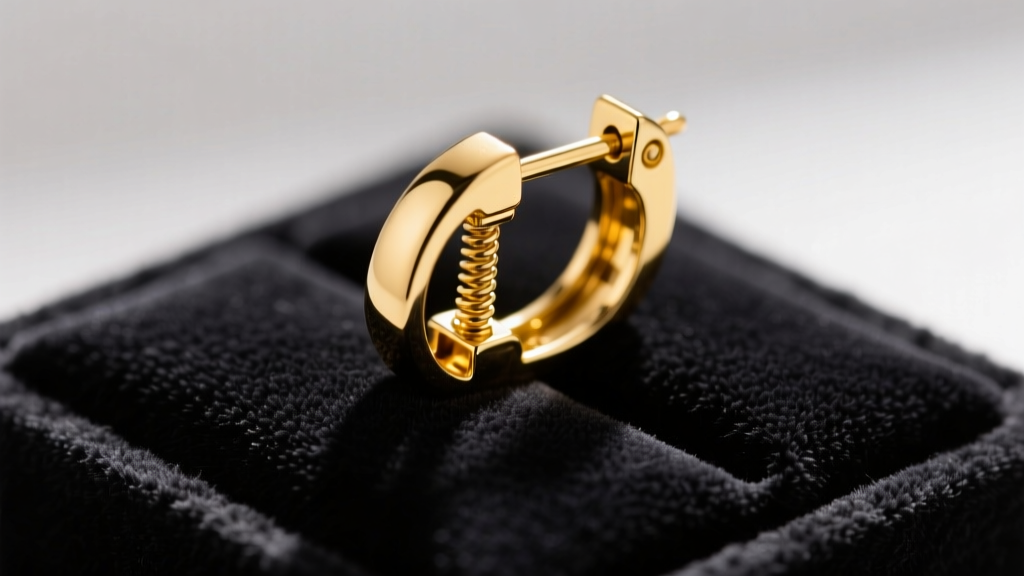
The Anatomy of a Leverback Earring (And Why It Fails)
If you have ever found yourself asking what are leverback earrings and why they differ from standard French wires or fishhooks, you are not alone. A leverback earring is a premium finding characterized by a hinged wire that passes through the ear piercing and snaps securely into a catch (or 'cradle') on the back of the earring. This mechanism creates a closed loop, making it one of the most secure options for heavy drop earrings, valuable gemstones, and active lifestyles.
However, the mechanical complexity of the leverback is also its greatest vulnerability. Unlike a simple friction post or a continuous hoop, a leverback relies on precise metallurgical tension, a functional micro-hinge, and a perfectly aligned catch. When any of these three components fail, the earring becomes unwearable. According to manufacturing standards outlined by Rio Grande Jewelry Supply, the most common failure points occur at the hinge pin (due to shear stress) and the wire curve (due to metal fatigue and repeated bending).
Understanding Wire Gauge and Tension
Most high-quality leverbacks are crafted from 20-gauge (0.81mm) or 18-gauge (1.02mm) wire. Anything thinner, such as 22-gauge, lacks the structural integrity to maintain the 'click' tension over time. The wire must be work-hardened during manufacturing to act as a spring. When you open and close the clasp hundreds of times, the metal undergoes microscopic stress, eventually leading to a loss of tension memory.
Troubleshooting Common Leverback Clasp Issues
Before discarding a valuable piece of jewelry, it is crucial to diagnose the exact mechanical failure. Here is how to troubleshoot the three most frequent leverback problems.
Problem 1: The Clasp Won't 'Click' Shut (Loss of Tension)
The Diagnosis: The wire has lost its spring tension, or debris is blocking the catch. Over time, the repeated flexing of the wire causes 'work softening' in certain alloys, or the wire simply bends slightly outward, preventing it from snapping into the cradle.
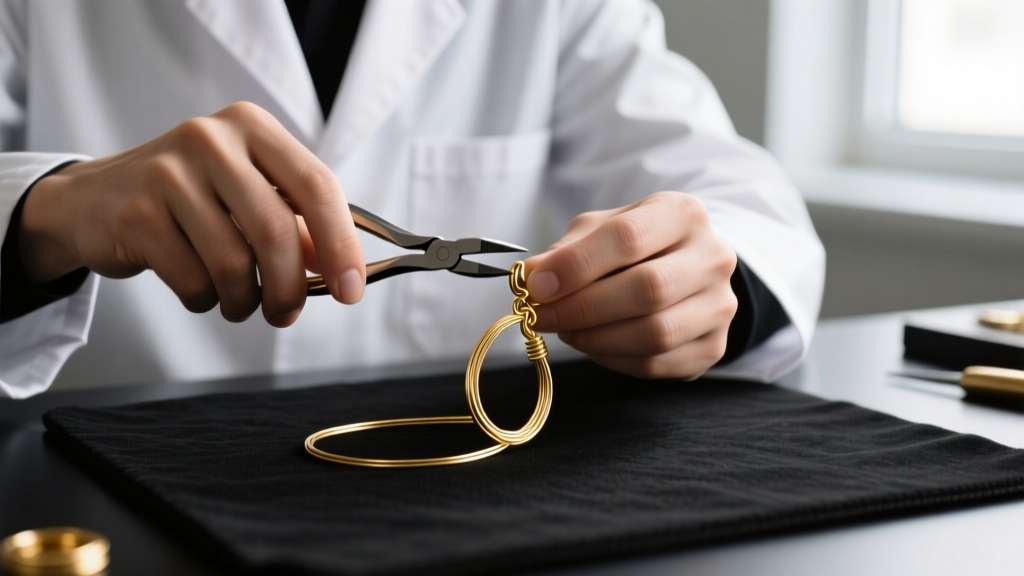
The Fix: First, clean the catch. Use a wooden toothpick or a soft-bristled brush with mild soapy water to remove compacted skin cells, lotion, or dust from the cradle. If the catch is clean but the wire still won't snap, you must adjust the wire's curvature. Using nylon-jaw pliers (never steel jewelry pliers, which will permanently mar and scratch the precious metal), gently squeeze the wire curve inward by a fraction of a millimeter. Test the click. Repeat until the tension is restored.
Problem 2: Pinching the Earlobe
The Diagnosis: The catch has a microscopic burr, or the hinge tension is too tight, causing the back of the earring to clamp down on the skin rather than resting flush against it.
The Fix: Inspect the inside of the catch under a jeweler's loupe (10x magnification). If you see a burr (a rough edge of metal left from the casting or stamping process), a jeweler can easily file and polish it smooth. If the pinching is caused by the earring's design pressing into the back of the lobe, applying a tiny dab of clear nail polish to the inside edge of the catch can create a smooth, friction-reducing barrier. The Gemological Institute of America (GIA) recommends avoiding harsh chemical cleaners on modified areas to prevent degrading these temporary fixes.
Problem 3: The Earring Droops Forward
The Diagnosis: This is rarely a clasp issue; it is a center-of-gravity problem. Heavy front-facing gemstones pull the earring downward, causing the leverback wire to rest awkwardly against the front of the piercing hole rather than sitting centered.
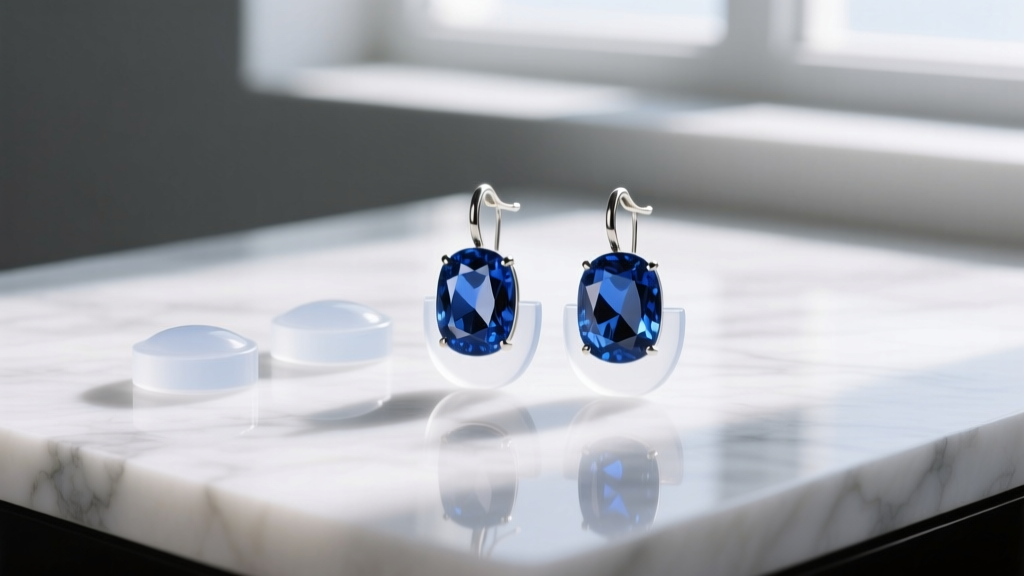
The Fix: You cannot bend the wire to fix a heavy drop, as this will distort the closure mechanism. Instead, use clear silicone earring stabilizer pads (often called 'earring nuts' or 'supports'). Slide the silicone pad onto the leverback wire behind the earlobe before closing the clasp. This pushes the earring's center of gravity backward, forcing the front design to sit upright and relieving pressure on the piercing fistula.
Material Grades and Tension Tolerance
The longevity of your leverback's 'click' depends heavily on the metal alloy used. Different metals respond differently to work hardening and malleability. Below is a troubleshooting matrix to help you understand your earring's material limits.
| Material | Typical Gauge | Malleability | Tension Memory | Troubleshooting Note |
|---|---|---|---|---|
| Sterling Silver (925) | 20g (0.81mm) | High | Low | Prone to bending out of shape. Requires frequent gentle adjustments with nylon pliers. |
| 14k Yellow Gold | 18g - 20g | Medium | High | Excellent spring memory. If it loses tension, the hinge pin may be failing, not the wire. |
| 18k Yellow Gold | 18g (1.02mm) | High | Medium | Softer than 14k. Avoid pulling the wire open too wide when inserting into the ear. |
| Platinum (950) | 18g - 20g | Low | Very High | Extremely durable. Tension loss is rare; failure usually occurs at the hinge joint itself. |
| Titanium (Grade 23) | 18g (1.02mm) | Very Low | Extreme | Cannot be bent to adjust tension. If the clasp fails, the entire finding must be replaced. |
Preventative Maintenance for Leverback Findings
To minimize mechanical failure and extend the life of your leverback earrings, adopt a strict maintenance routine. The hinge is a trap for microscopic debris, which acts as an abrasive paste every time you open and close the clasp.
- Ultrasonic Cleaning: Once a month, place your earrings in an ultrasonic cleaner with a mild jewelry solution. The cavitation bubbles will dislodge grit from the hinge pin and the catch cradle that a brush cannot reach.
- Hinge Lubrication: If the leverback feels stiff or squeaks, apply a microscopic drop of synthetic watch oil to the hinge pin. Wipe away all excess with a microfiber cloth to prevent skin irritation.
- Opening Technique: Never pull the wire straight down to open the earring. This puts lateral shear stress on the micro-hinge pin. Instead, push the wire up and back along the natural arc of the hinge.
When to Retire Your Leverbacks (Safety Limits)
While many issues can be troubleshot at home, there is a definitive point where a leverback finding becomes a liability. If you notice any of the following, stop wearing the earrings immediately and take them to a professional bench jeweler for a finding replacement:
- Micro-fractures at the Hinge: Inspect the base of the hinge under magnification. If you see dark lines or cracking in the solder joint where the hinge meets the earring body, the earring is at high risk of snapping and dropping the gemstone.
- Hinge Pin Play: Hold the earring body still and gently wiggle the wire side-to-side. If there is noticeable lateral wobble, the hinge pin has worn down the metal tubing. This cannot be repaired; the entire leverback mechanism must be laser-welded off and replaced.
- Severe Wire Thinning: If the wire has worn down to a sharp edge where it passes through the earlobe, it will eventually slice through the skin or snap under the weight of the earring.
Understanding what are leverback earrings goes beyond simply knowing how to put them on. By respecting the metallurgy of the clasp, utilizing the correct tools for adjustment, and recognizing the signs of terminal metal fatigue, you can ensure your favorite drop earrings remain secure, comfortable, and functional for decades.


