Star and Moon Earrings: A 2026 Budget & Value Guide
Discover the true value of star and moon earrings in 2026. We break down material costs, gemstone grades, and pricing tiers to help you shop smart.
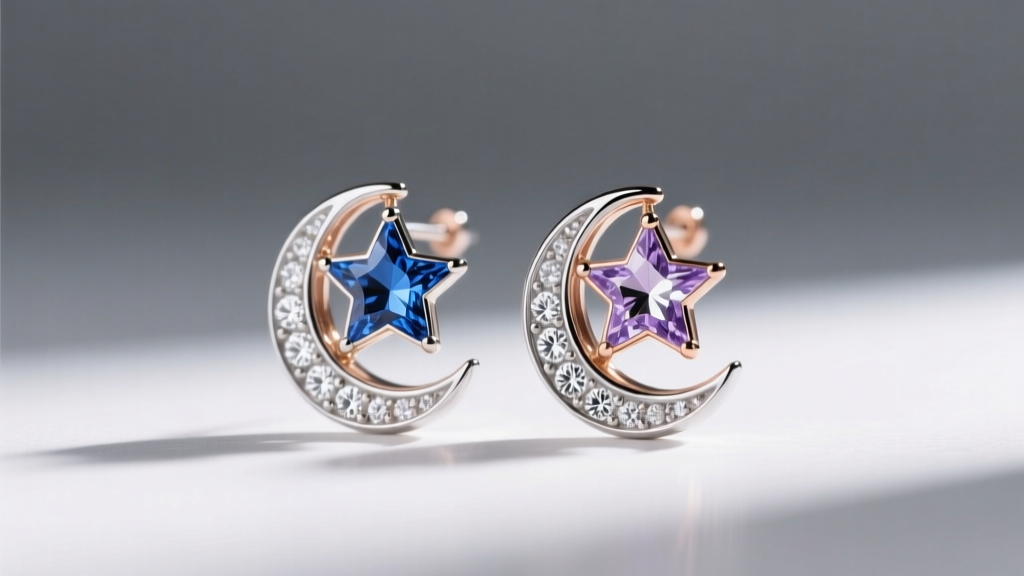
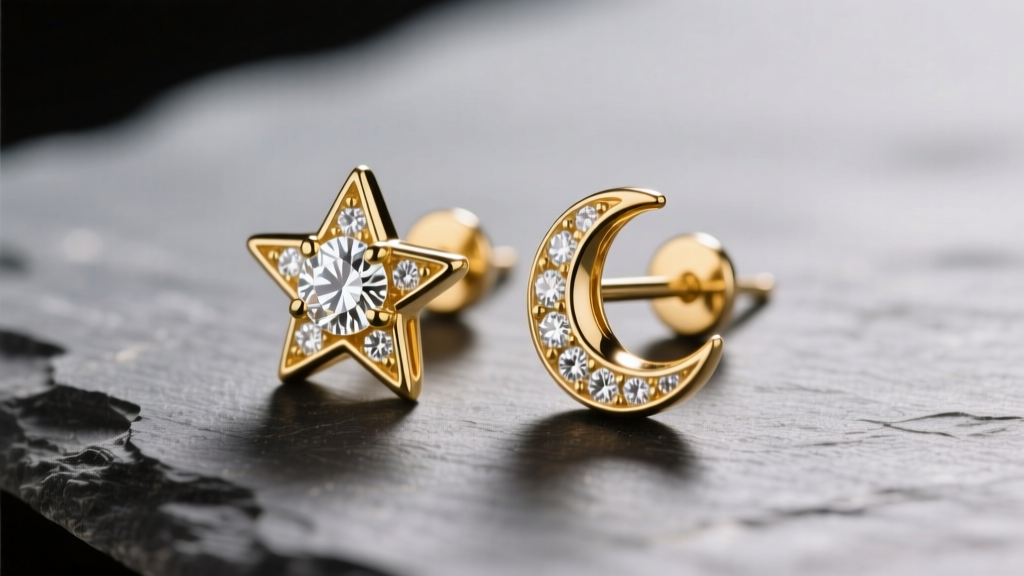
The celestial jewelry trend shows no signs of fading as we navigate 2026, but the market for star and moon earrings has become increasingly saturated. From fast-fashion accessories to high-end bespoke jewelers, you can find a pair of crescent moon hoops or starburst studs for anywhere between $12 and $2,500. But how do you determine the actual value of these pieces? Are you paying for precious metals and genuine gemstones, or simply a hefty brand markup on plated brass?
As a jewelry appraiser and trend analyst, I see consumers overpay for poorly crafted celestial motifs every day. This comprehensive budget and value assessment will break down the exact material grades, gemstone alternatives, and pricing frameworks you need to make an informed purchase. Whether you are looking for everyday lobe studs or dramatic cartilage cuffs, understanding the intrinsic value of your jewelry is the key to building a sustainable collection.
The Celestial Markup: Why Star and Moon Earrings Vary Wildly
Celestial motifs—specifically stars, moons, and sunbursts—require intricate casting or precise stamping. The complexity of the design directly impacts the manufacturing cost. A simple, flat-stamped crescent moon charm is cheap to produce in bulk. However, a three-dimensional star with pavé-set gemstones requires advanced CAD modeling, skilled stone-setting, and extensive polishing.
Furthermore, the 'celestial markup' is a real phenomenon in 2026. Because moon and star designs are perpetually trendy, mid-tier brands often inflate their prices by 30% to 40% simply based on the motif's popularity. To bypass this markup, you must ignore the design for a moment and evaluate the raw materials and structural integrity of the earring.
The Material Matrix: Base Metals vs. Precious Alloys
The most critical factor in assessing the value of star and moon earrings is the metal composition. Many brands use misleading terms like 'gold-tone' or 'silver-dipped' to obscure the fact that the base metal is cheap brass or copper. Here is the true cost analysis of the materials you will encounter.
| Material Grade | Base Metal | Plating / Purity | Avg. Price Range (Studs) | Longevity & Value |
|---|---|---|---|---|
| Plated Brass | Brass/Copper Alloy | Flash plated (0.1 microns) | $15 - $45 | Poor. Tarnishes in weeks; high nickel allergy risk. |
| Sterling Silver (925) | 92.5% Silver, 7.5% Copper | Solid (Rhodium plated optional) | $40 - $120 | Good. Hypoallergenic, but requires polishing to prevent oxidation. |
| Gold Vermeil | Sterling Silver (925) | Min. 2.5 microns of 14k/18k Gold | $65 - $180 | Very Good. Durable if cared for; legally regulated by the FTC. |
| Solid 14k Gold | 58.3% Gold Alloy | Solid throughout | $180 - $450 | Excellent. Lifetime durability, holds intrinsic scrap value. |
According to the Federal Trade Commission Jewelry Guides, a piece can only be legally marketed as 'vermeil' if it has a sterling silver base and a gold plating of at least 2.5 microns thick. If a brand sells 'gold-plated silver' star earrings for $90 but does not specify the micron thickness, you are likely paying a premium for a substandard product that will wear down to the silver base within six months of daily wear.
The Gemstone Factor: CZ vs. Genuine Moonstone vs. Diamonds
Celestial earrings frequently incorporate gemstones to mimic the night sky. The value assessment here requires a sharp eye, as the price difference between simulants and genuine stones is astronomical.
- Cubic Zirconia (CZ): High-quality AAA-grade CZ offers brilliant sparkle and is perfect for budget-friendly starburst designs. You should never pay more than $60 for a pair of CZ celestial studs unless the metal is solid gold.
- Rainbow Moonstone: Technically a variety of labradorite, genuine rainbow moonstone displays 'adularescence'—a billowy blue or rainbow sheen. The Gemological Institute of America (GIA) notes that the value of moonstone relies heavily on the transparency and strength of this sheen. Opaque, chalky stones are virtually worthless, while highly transparent stones with strong blue flashes command premium prices ($150+ for earrings).
- Melee Diamonds: For luxury star and moon earrings, jewelers use 'melee' diamonds (under 0.15 carats). Ensure the listing specifies the clarity (SI1 or better) and color (G-H or better). Avoid 'diamond-accented' pieces where the total carat weight is less than 0.05 ctw, as these offer virtually no resale value.
Assessing Craftsmanship: Hidden Cost Drivers
Beyond materials, the physical construction of the earring dictates its long-term value. Cheap manufacturing leads to lost earrings, bent posts, and scratched motifs.
Post Gauge and Threading
Standard lobe piercings accommodate 20-gauge (0.8mm) or 18-gauge (1.0mm) posts. Many budget brands use ultra-thin 22-gauge wire to save on gold costs. These thin posts bend easily when inserting the earring, eventually snapping off. Always check the product specifications for the gauge size. Furthermore, if you are buying solid gold star earrings, look for 'internally threaded' or 'threadless' push-pin posts if they are designed for cartilage piercings, as externally threaded posts can tear the delicate fistula of the piercing.
Stone Setting Techniques
How are the tiny stars and moons decorated? Prong settings allow maximum light to enter the gemstone, enhancing sparkle, but the tiny prongs on budget earrings are often mass-cast and prone to catching on hair or sweaters, eventually losing the stone. Bezel settings, where a rim of metal surrounds the stone, are vastly superior for everyday wear. A bezel-set moonstone earring will protect the relatively soft gemstone (Mohs hardness of 6-6.5) from chipping against hard surfaces.
Budget Tiers: What You Should Actually Pay in 2026
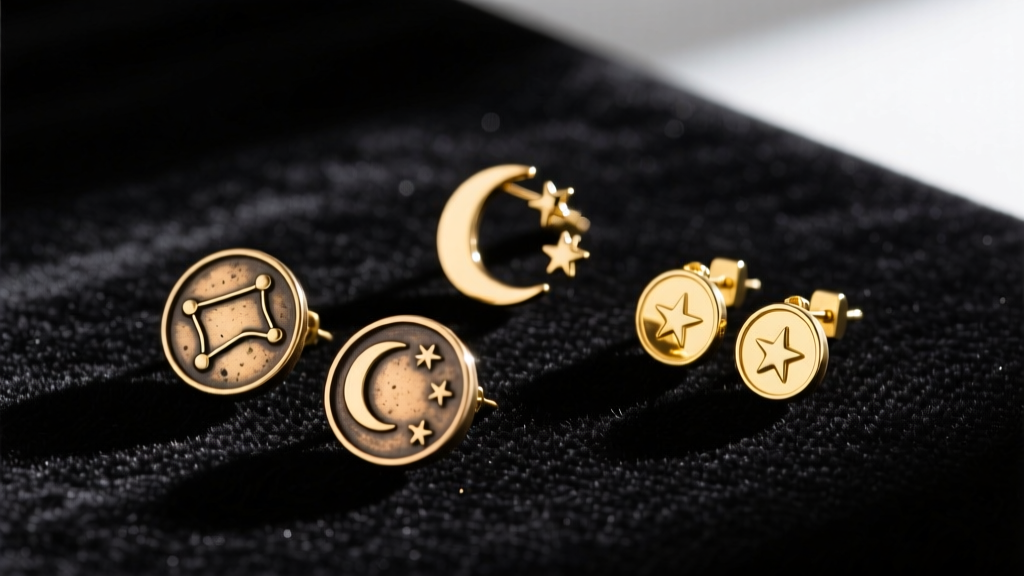
To help you navigate the market, I have developed a practical decision framework based on three distinct budget tiers. Use this guide to benchmark prices before clicking 'checkout'.
Tier 1: The Trend Shopper (Under $50)
Target Materials: Gold-plated brass, sterling silver, high-grade CZ.
Value Proposition: You are paying for the aesthetic, not the heirloom value. These pieces are perfect for seasonal trends or costume styling.
Red Flags: Avoid any piece in this tier that claims to feature 'genuine diamonds' or 'natural moonstone.' At this price point, the stones are almost certainly glass or synthetic spinel.
Tier 2: The Everyday Wearer ($80 - $250)
Target Materials: Heavy gold vermeil (3+ microns), solid 14k gold (small, lightweight studs), genuine rainbow moonstone in 925 silver.
Value Proposition: This is the sweet spot for cost-per-wear. You are investing in hypoallergenic materials that can survive daily showers and active lifestyles without turning your earlobes green.
Red Flags: Paying over $150 for gold vermeil. No matter how thick the plating, vermeil will eventually require re-plating. Do not pay solid gold prices for plated metal.
Tier 3: The Fine Jewelry Investor ($300 - $1,000+)
Target Materials: Solid 14k or 18k gold, ethically sourced melee diamonds, high-grade translucent moonstones.
Value Proposition: Heirloom quality. These pieces hold intrinsic metal value and will not degrade over time.
Red Flags: Hollow-backed castings. Some brands create large, oversized moon hoops that appear substantial but are hollowed out in the back to save on gold weight. While this keeps the price lower, hollow jewelry dents easily and is nearly impossible to repair if damaged.
Cost-Per-Wear & Longevity: The Ultimate Value Metric
When evaluating the budget for star and moon earrings, the initial price tag is only half the equation. The true metric of value is the Cost-Per-Wear (CPW).
The CPW Formula: Total Cost of Earrings + Maintenance Costs / Estimated Number of Wears.
Consider a $30 pair of plated brass moon studs. If the plating rubs off after 40 wears, and the nickel in the brass causes a contact dermatitis flare-up requiring a $15 hydrocortisone cream, your CPW is over $1.12 per wear, plus physical discomfort. Now consider a $220 pair of solid 14k gold star huggies. If you wear them 300 days a year for five years (1,500 wears), your CPW is roughly $0.14 per wear. The solid gold pair is mathematically the superior financial decision for anyone who wears jewelry daily.
Final Verdict: Where to Invest and Where to Save
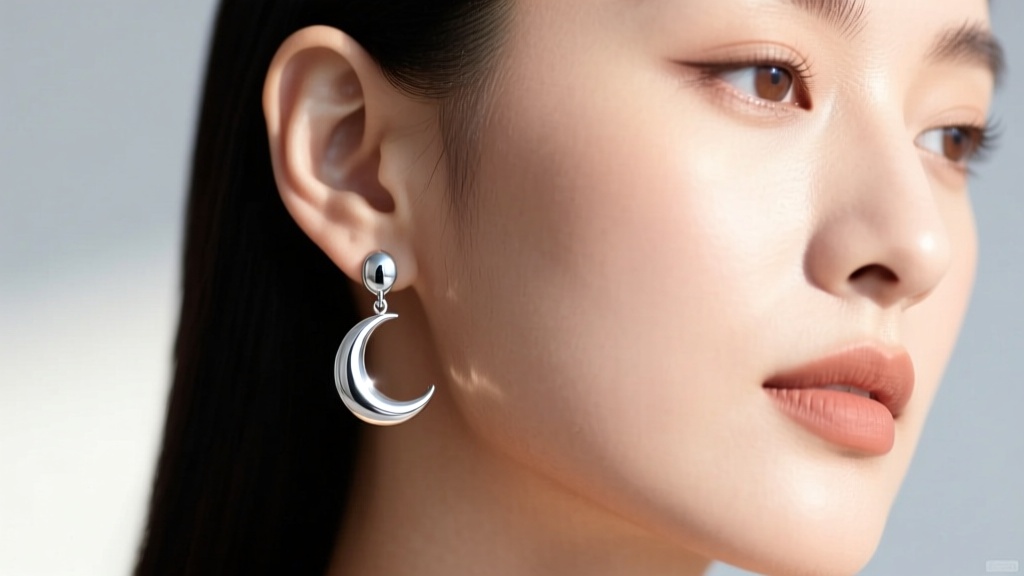
Star and moon earrings are a staple of modern jewelry wardrobes, but they require a strategic approach to purchasing. Save your money on large, dramatic celestial drop earrings or ear cuffs. Because these are statement pieces worn occasionally, gold-plated sterling silver or high-quality vermeil is perfectly acceptable and saves you hundreds of dollars.
Conversely, invest your budget in small, delicate star studs or moon huggies that sit snugly against the earlobe or helix. Because these pieces are exposed to friction from hair, pillows, and phones, they demand the durability of solid 14k gold and bezel-set gemstones. By applying this material and structural framework, you can build a celestial collection that offers genuine value, enduring beauty, and financial sense in 2026 and beyond.


