Best Star Stud Earrings: The Ultimate Material Guide
Discover the best metals for star stud earrings. We compare titanium, gold, and silver for durability, sensitive skin, and cartilage healing.

Why Material Dictates the Lifespan of Your Star Studs
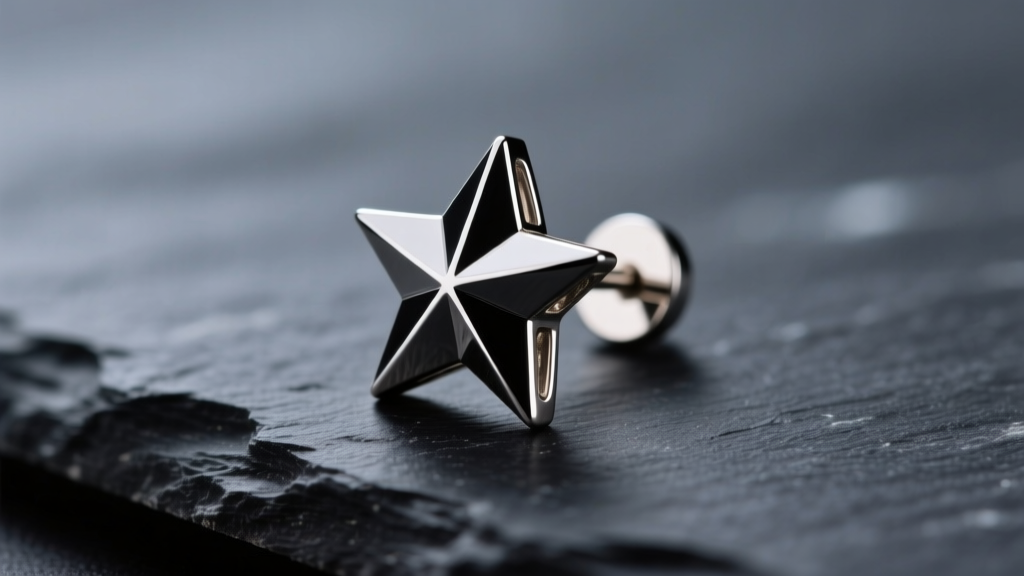
When shopping for star stud earrings, consumers often prioritize the aesthetic silhouette—the sharp points, the geometric symmetry, or the celestial vibe—while treating the metal composition as an afterthought. However, as a domain expert in jewelry metallurgy and piercing aftercare, I cannot stress this enough: the material of your star stud earrings dictates not only their longevity but also your biological compatibility with them. A poorly chosen alloy can lead to contact dermatitis, cartilage rejection, or rapid tarnishing that ruins the piece's structural integrity. In this comprehensive guide, we dissect the metallurgical properties of the most common metals used for star stud earrings, providing you with an actionable framework to choose the right piece for your specific piercing anatomy.
The Metallurgy of Star Stud Earrings: A Deep Dive
Implant-Grade Titanium (ASTM F136)
For anyone with sensitive skin or unhealed piercings, Implant-Grade Titanium is the undisputed gold standard. It is crucial to distinguish between commercial pure titanium and ASTM F136 compliant titanium. The latter is specifically alloyed for surgical implants, containing zero nickel and boasting a highly polished surface finish that prevents bacterial adhesion. When you purchase star stud earrings made from F136 titanium, you are getting a biocompatible metal that is 45% lighter than steel but possesses superior tensile strength. This lightweight nature is particularly beneficial for larger, wider star shapes that might otherwise drag down delicate earlobes. Furthermore, titanium naturally forms a passive oxide layer when exposed to oxygen, making it entirely immune to tarnish and galvanic corrosion.
Solid Gold (14k vs. 18k Alloys)
Gold is a classic choice for fine jewelry, but pure 24k gold is far too soft to hold the sharp, defined edges of a star stud earring. Therefore, gold must be alloyed. According to the Gemological Institute of America (GIA), 14k gold contains 58.5% pure gold, while 18k contains 75%. For star studs, 14k is often the superior functional choice. The higher concentration of alloying metals (like silver, zinc, and copper) increases the Vickers hardness of the metal, ensuring the delicate points of the star do not bend or warp during daily wear or sleep. However, buyers must be vigilant about white gold; if the alloy uses nickel instead of palladium to achieve the silver color, it can trigger severe allergic reactions. Always seek out nickel-free, palladium-alloyed white gold or stick to yellow and rose gold variants.
Sterling Silver (925) and the Copper Problem
Sterling silver is an alloy comprising 92.5% pure silver and 7.5% copper. While it offers a beautiful, bright luster at an accessible price point, the copper content is its Achilles' heel. Copper reacts with sulfur in the air and the natural acids in your skin, leading to oxidation (tarnish). If worn in a fresh or irritated piercing, the oxidized silver can leave a permanent black stain in the tissue known as an amalgam tattoo. While star stud earrings made of sterling silver are perfectly fine for fully healed, non-sensitive lobes, they are entirely unsuitable for cartilage piercings or newly stretched lobes. For a superior alternative, look for Argentium silver, which replaces some of the copper with germanium, drastically increasing tarnish resistance.
Surgical Stainless Steel (316L)
Often marketed as 'hypoallergenic,' 316L Surgical Stainless Steel is actually a misnomer in the context of severe metal allergies. This alloy contains between 8% and 10.5% nickel to provide its corrosion resistance and high polish. While the nickel is tightly bound within the crystalline structure of the steel, the friction of a star stud earring post moving against the fistula (the piercing hole) can release enough nickel ions to trigger a reaction in highly sensitized individuals. The Association of Professional Piercers (APP) explicitly advises against using steel for initial piercings. If you choose steel star studs for budget reasons, restrict them to fully healed, older lobe piercings.
Comprehensive Material Comparison Matrix
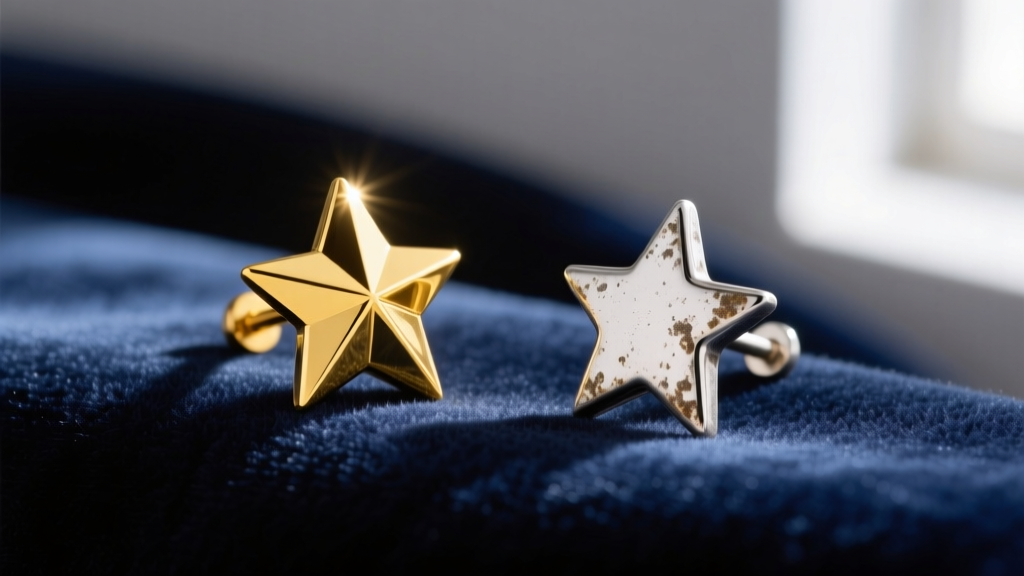
To help you make an informed purchasing decision, refer to the data table below outlining the core properties of each metal grade commonly used for star stud earrings.
| Metal Grade | Nickel Content | Tarnish Resistance | Avg. Price Range | Best Placement |
|---|---|---|---|---|
| Implant Titanium (F136) | 0% | Excellent | $35 - $90 | Cartilage & Fresh Lobes |
| 14k Solid Gold | 0% (if alloyed right) | Very High | $150 - $400 | Healed Lobes & Cartilage |
| 18k Solid Gold | 0% | High | $250 - $600+ | Healed Lobes Only |
| Sterling Silver (925) | 0% | Poor (Oxidizes) | $20 - $65 | Fully Healed Lobes Only |
| Surgical Steel (316L) | 8% - 10.5% | High | $15 - $40 | Healed Lobes (Non-Allergic) |
Gauge Thickness and the 'Cheese Cutter' Effect
An often-overlooked aspect of star stud earrings is the thickness of the post, measured in gauge sizes. Standard lobe piercings are typically done at 20G (0.81mm) or 18G (1.02mm), while cartilage piercings are usually 16G (1.29mm) or 14G (1.63mm). Many mass-produced star studs feature thin 20G posts to save on material costs. If you insert a 20G post into a 16G cartilage hole, the discrepancy creates a dangerous mechanical vulnerability. Because star shapes have protruding edges that can easily catch on hair or clothing, a sudden snag on a thin post can cause the 'cheese cutter effect,' where the thin wire slices through the tissue, leading to migration, tearing, and scarring. Always verify the gauge size before purchasing; for cartilage placements, insist on a minimum of 18G, preferably 16G, with a flat-back labret style to prevent the post from pressing into the back of the ear.
Lobe vs. Cartilage Placement Strategies
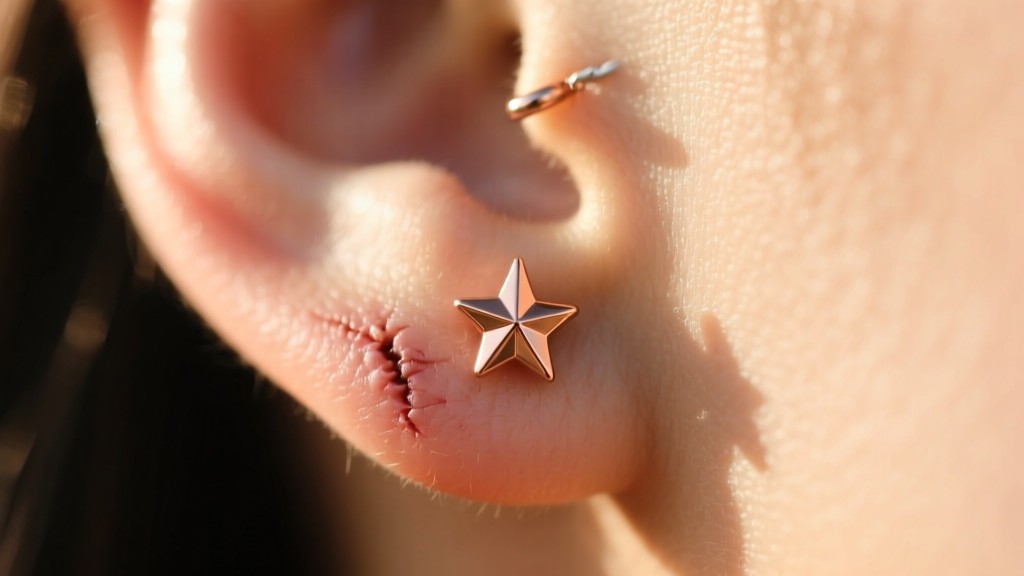
The anatomy of your ear should directly influence the size and backing mechanism of your star stud earrings. For standard earlobes, traditional butterfly friction backs on 18G or 20G posts are generally acceptable, provided the star face is under 8mm in diameter to prevent drooping. However, for upper ear placements like the helix, tragus, or conch, friction backs are a liability. They harbor bacteria, apply uneven pressure, and are notoriously difficult to secure by yourself. For cartilage, you must opt for internally threaded or threadless (push-pin) flat-back labret star studs. The flat disc sits flush against the back of the ear, eliminating the pressure points that cause cartilage bumps (hypertrophic scarring) and ensuring the star face remains perfectly parallel to the front of the ear.
Maintenance Protocols by Metal Type
Proper maintenance ensures the sharp edges and brilliant shine of your star studs remain intact. For titanium and solid gold, an ultrasonic jewelry cleaner using a mild, ammonia-free solution is the most effective way to remove sebum and dead skin cells from the crevices of the star design. Avoid ultrasonic cleaning if your star studs feature tension-set gemstones, as the vibrations can loosen the settings. For sterling silver, skip the ultrasonic and instead use a chemical reduction bath: line a bowl with aluminum foil, add boiling water, a tablespoon of baking soda, and a pinch of salt. Submerge the silver star studs for three minutes. The galvanic reaction will safely transfer the sulfur tarnish from the silver to the foil without abrasive polishing that could dull the star's sharp points. Store all pieces in individual anti-tarnish ziplock bags to prevent micro-scratches and environmental oxidation.
Final Verdict
Selecting the perfect star stud earrings requires looking past the initial sparkle and evaluating the metallurgical reality of the piece. If you are navigating a fresh piercing, dealing with sensitive skin, or outfitting a cartilage placement, Implant-Grade Titanium (ASTM F136) is the only logical choice for its unbeatable biocompatibility and strength. For heirloom-quality pieces meant for healed lobes, 14k solid gold offers the ideal balance of luxurious color and structural hardness necessary to maintain the star's geometry. By matching the metal grade, gauge thickness, and backing style to your specific anatomical needs, you ensure your celestial jewelry remains both safe and stunning for a lifetime.


