Black Flower Earrings: Budget vs Premium Value Guide
Discover if budget black flower earrings are worth the price. We compare materials, enamel vs onyx, and plating grades to help you find true value.

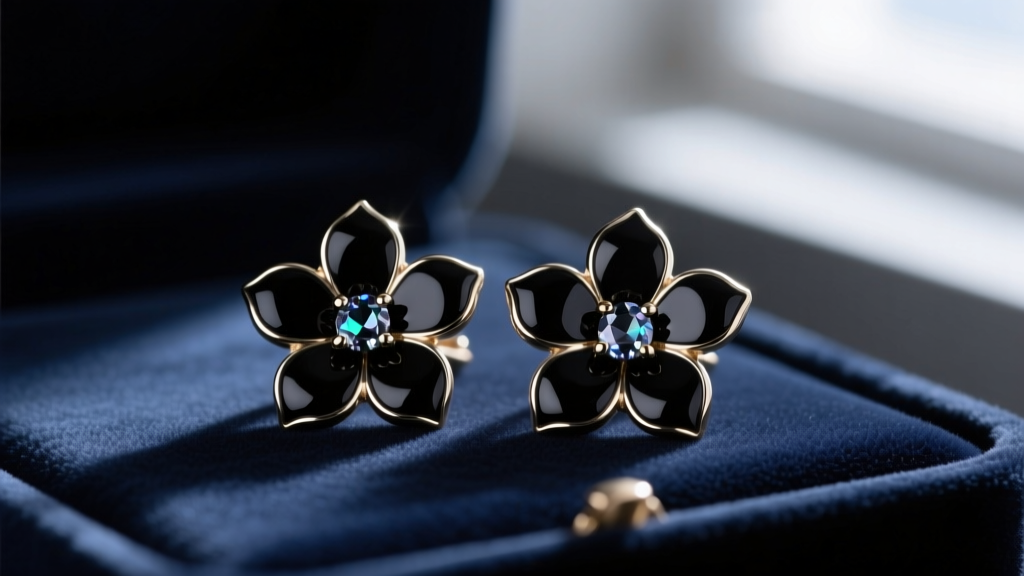
Dark botanical jewelry has transcended seasonal trends to become a staple in modern accessory wardrobes. Specifically, black flower earrings offer a striking blend of gothic romance and contemporary minimalism. However, as the market floods with options ranging from $12 fast-fashion pieces to $1,200 fine jewelry creations, consumers are left wondering: what are you actually paying for? In 2026, the disparity between budget and premium floral earrings is wider than ever, driven by advancements in metallurgical coatings and gemstone sourcing.
This comprehensive value assessment breaks down the material science, hardware integrity, and true cost-per-wear of black floral earrings. Whether you are eyeing a pair of dark dangles or sleek blackened studs, understanding the hidden costs of cheap manufacturing will save you money and protect your earlobes in the long run.
The Allure of Dark Botanicals: Why Black Floral Jewelry?
The appeal of black flower earrings lies in their versatility. Unlike bright metallics or vivid gemstones, black floral silhouettes provide a high-contrast, slimming effect that frames the face without overwhelming it. From a design perspective, black allows the structural architecture of the petal and stem to take center stage. Yet, achieving a true, lasting black finish in jewelry is notoriously difficult. Pure black metals do not exist in nature; the color must be engineered through chemical treatments, plating, or vitreous fusing. This engineering process is where budget brands cut corners, and where premium brands justify their price tags.
Material Breakdown: What Are You Actually Paying For?
When evaluating black flower earrings, the base material and the method used to achieve the black coloration dictate the lifespan of the piece. Here is a deep dive into the three primary methods used in today's market.
Vitreous Enamel vs. Cold Enamel (Epoxy)
Budget brands almost exclusively use "cold enamel," which is essentially a two-part epoxy resin tinted with black pigment. While cheap to produce, epoxy resin is highly susceptible to UV degradation. Within 12 to 18 months of daily wear, cheap black resin will begin to yellow, chip, and peel away from the metal backing. Conversely, mid-tier and premium brands utilize vitreous enamel. This is a glass-based powder that is kiln-fired at temperatures exceeding 1400°F (760°C). Vitreous black enamel is completely UV-stable, waterproof, and will retain its glass-like luster for decades. If a product description does not explicitly state "fired" or "vitreous" enamel, assume it is epoxy.
Black Rhodium vs. PVD Coating
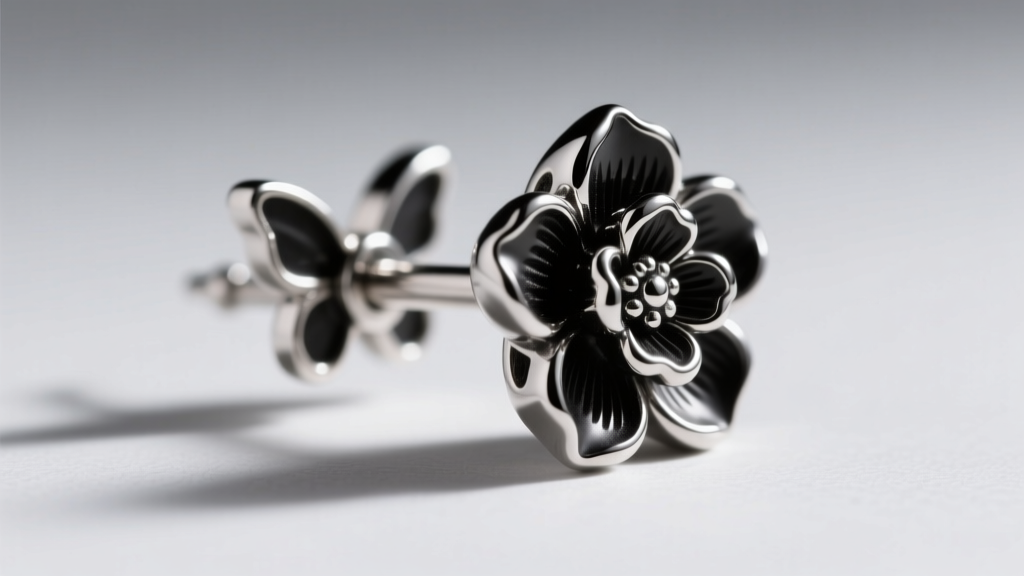
For metallic black flower earrings, the finish is everything. Black rhodium is a precious metal plating applied over sterling silver or white gold. While beautiful, traditional black rhodium plating is incredibly thin (usually 0.1 to 0.3 microns) and will wear off within a year of daily friction, revealing the bright silver underneath. In 2026, the gold standard for black metal jewelry is PVD (Physical Vapor Deposition) coating. PVD bonds titanium or zirconium nitride to the base metal at a molecular level in a vacuum chamber. PVD black coatings are up to 10 times more durable than black rhodium and are highly resistant to sweat and cosmetics.
Gemstones: Black Onyx vs. Black Spinel
Many budget black flower earrings feature "black onyx" centers. According to the Gemological Institute of America (GIA), most commercial black onyx is actually gray chalcedony or agate that has been boiled in sulfuric acid and sugar to artificially induce a black color. While safe to wear, dyed agate lacks the depth and light refraction of natural black gemstones. Premium brands opt for natural black spinel (Mohs hardness of 8) or black diamonds. Black spinel offers exceptional value, providing the deep, opaque darkness of onyx but with superior scratch resistance and natural origin.
The Pricing Matrix: Budget, Mid-Tier, and Fine Jewelry
To truly assess value, we must look beyond the initial purchase price and calculate the cost-per-wear and expected lifespan. The table below illustrates what you can realistically expect across different price brackets for black floral studs and dangles.
| Tier | Price Range | Base Metal & Finish | Center Stone / Accent | Expected Lifespan |
|---|---|---|---|---|
| Budget | $15 - $45 | Brass with thin PVD or black paint | Epoxy resin, dyed agate | 1 - 2 Years |
| Mid-Tier | $60 - $150 | 925 Sterling Silver, black rhodium | Vitreous enamel, natural onyx | 5 - 10 Years |
| Premium | $250 - $800+ | 14k/18k White Gold or PVD Titanium | Black spinel, black diamond | Lifetime / Heirloom |
As the data shows, budget earrings suffer from planned obsolescence. A $30 pair of brass and epoxy earrings that tarnishes and breaks in a year is ultimately more expensive over a decade than a $120 pair of sterling silver and vitreous enamel earrings.
Hardware & Findings: The Hidden Cost of Cheap Earrings
The most critical failure point in budget black flower earrings is not the flower itself, but the hardware that pierces your skin. The post and the solder joint are where cheap manufacturing poses actual health risks.
Gauge Sizes and Solder Joints
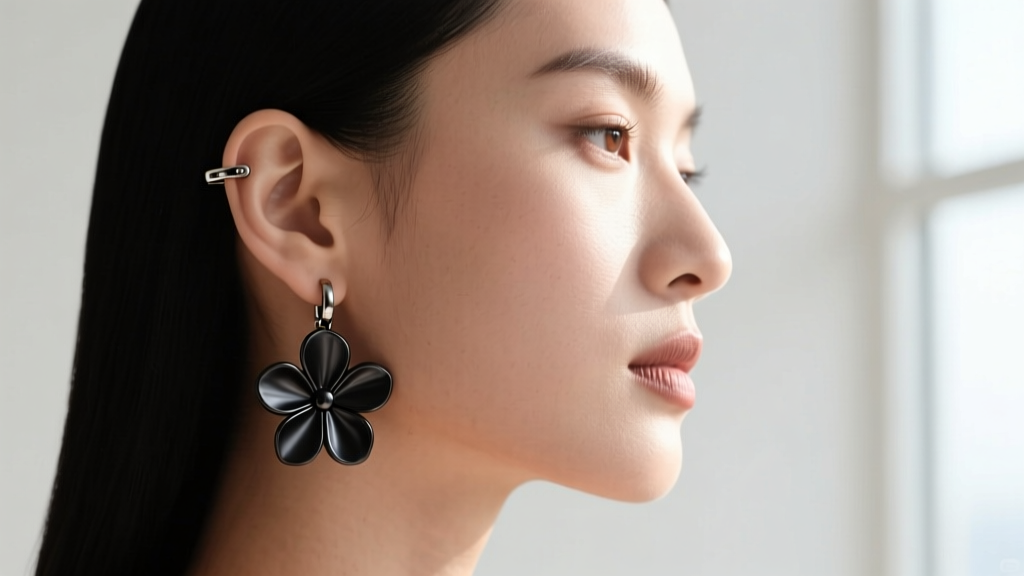
Standard earlobe piercings are typically 20-gauge (0.81mm) or 18-gauge (1.02mm). Budget manufacturers often use ultra-thin 22-gauge wire to save on metal costs, which can easily bend or snap under the weight of a heavy floral dangle. Furthermore, the solder joint connecting the post to the flower head is often done with low-temperature leaded solder in unregulated factories. This results in the flower head snapping off cleanly at the base within months.
The Nickel Allergy Epidemic
Brass and low-grade stainless steel (like 304 series) contain high levels of nickel. When mixed with the acidic environment of human sweat, these metals leach nickel ions into the skin. The Mayo Clinic notes that nickel allergy is one of the most common causes of allergic contact dermatitis, resulting in itchy, red, and blistering earlobes. When shopping for black flower earrings, always verify that the post is made of ASTM F136 implant-grade titanium, niobium, or at least 14k gold. If a brand simply lists "hypoallergenic surgical steel" without specifying the grade (316L or ASTM F136), proceed with caution, as 316L still contains trace nickel that can trigger sensitive ears.
How to Spot High-Value Budget Black Flower Earrings
If your budget is strictly under $50, you can still find exceptional value by knowing exactly what red flags to avoid and what green lights to look for. Use this actionable checklist before checking out:
- Check the Post Material: Ignore the flower head for a moment. If the post is not titanium or 925 sterling silver, do not buy it. A titanium post ensures the earring is safe for your body, even if the decorative head is made of cheaper materials.
- Inspect the Black Finish: Look closely at product photos. If the black metal has a slightly purple or iridescent sheen, it is likely cheap electroplating that will rub off. True PVD or oxidized silver has a flat, gunmetal-to-onyx depth.
- Avoid Glued Settings: In budget floral earrings, center stones are often glued into the petals rather than set with prongs or bezels. Glue degrades when exposed to perfumes, hairspray, and natural skin oils, guaranteeing the stone will fall out.
- Weight Distribution: For dangle or drop black flower earrings, ensure the brand specifies a lightweight design (under 5 grams per earring). Heavy budget earrings will stretch the earlobe piercing over time, causing permanent tissue thinning.
Pro Tip: If you already own a pair of beloved budget black flower earrings with fading posts, a local jeweler can often laser-weld new titanium posts onto the existing floral heads for under $40, instantly upgrading a cheap pair into a comfortable, long-lasting staple.
Final Verdict: Where Should You Spend and Save?
When it comes to black flower earrings, the "budget" route is only a true value if you are purchasing them for occasional, short-term wear. For daily rotation, the value proposition heavily favors the mid-tier ($60–$150) category. At this price point, you gain access to 925 sterling silver bases, secure bezel settings, and either vitreous enamel or high-quality PVD coatings that will not turn your earlobes green or flake into your hair.
By prioritizing biocompatible hardware (titanium or solid gold posts) and stable coloration methods (PVD or fired enamel) over sheer size or brand name recognition, you can curate a collection of dark botanical earrings that offer genuine, lifelong value. True luxury in jewelry is not just about the initial price tag; it is about the engineering that allows a piece to survive the realities of daily wear.


