The Metallurgy & Mechanics of Sterling Silver Square Hoop Earrings
An expert technical deep dive into sterling silver square hoop earrings, covering 925 alloy metallurgy, corner stress points, and clasp mechanics.

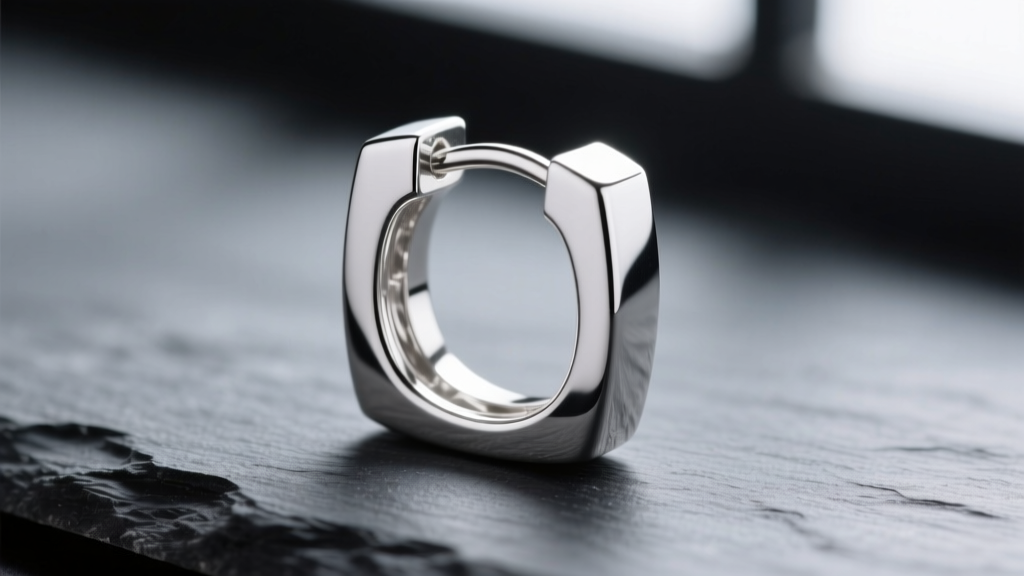
Introduction to Geometric Hoop Engineering
While circular hoops have dominated jewelry manufacturing for centuries due to their inherent structural symmetry, the modern demand for sterling silver square hoop earrings introduces a complex array of metallurgical and mechanical challenges. From an engineering perspective, a square hoop is not merely a circle with edges; it is a geometric frame subject to unique kinetic stressors, localized tension at 90-degree vertices, and specific alloy requirements to maintain its shape over time. This technical deep dive examines the material science, structural failure points, and biomechanical considerations that separate premium geometric earrings from mass-market fashion jewelry.
Metallurgical Breakdown: 925 Sterling Silver vs. Alternatives
The term "sterling silver" is legally protected in most international markets. According to the Federal Trade Commission (FTC) Jewelry Guides, an item must contain at least 925 parts per thousand of pure silver to be stamped "925" or "Sterling." The remaining 75 parts are typically copper, which provides the necessary tensile strength that pure silver (999 fine silver) lacks.
Vickers Hardness and Work-Hardening
Pure silver possesses a Vickers Hardness (HV) of roughly 25, making it far too malleable for geometric frames. Standard 925 sterling silver in an annealed (softened) state sits at approximately 65 HV. However, manufacturing square hoops requires the metal to undergo work-hardening—a process where the crystalline structure of the alloy is deformed through drawing and bending, increasing its hardness to upwards of 110-120 HV. This is critical for square hoops; without adequate work-hardening, the 90-degree corners will easily warp under the minor lateral pressure of daily wear or the friction of putting on a winter scarf.
For consumers seeking superior tarnish resistance, Argentium silver (usually 935 or 960 purity) replaces a portion of the copper alloy with germanium. This creates a transparent germanium dioxide layer on the surface that drastically slows the formation of silver sulfide (tarnish), making it an elite choice for low-maintenance geometric hoops.
Structural Integrity: Why Square Hoops Fail at the Corners
The most common point of catastrophic failure in sterling silver square hoop earrings is the corner joint. Unlike a continuous circular wire, a square frame requires the metal to be bent sharply or soldered at four distinct vertices. These corners act as stress concentrators.
The Pendulum Effect and Kinetic Stress
When a hoop earring moves, it acts as a pendulum. In a circular hoop, kinetic energy is distributed evenly along the continuous curve. In a square hoop, the terminal momentum of the swing arc is abruptly halted and transferred directly into the 90-degree corners. Over months of wear, this repetitive micro-trauma can cause metal fatigue, leading to micro-fractures in poorly soldered joints.
| Joint Technique | Tensile Strength | Visual Seam | Best Application |
|---|---|---|---|
| Laser Welding | High (Matches Base Metal) | Invisible | Premium Seamless Hoops |
| Hard Solder (Torch) | Medium-High | Visible Line (Requires Polishing) | Artisan/Textured Hoops |
| Soft Solder | Low (Brittle) | High | Fashion Jewelry (Avoid) |
| Continuous Wire Bending | Very High (No Joint) | N/A (Rounded Inner Corners) | Minimalist/Modernist Designs |
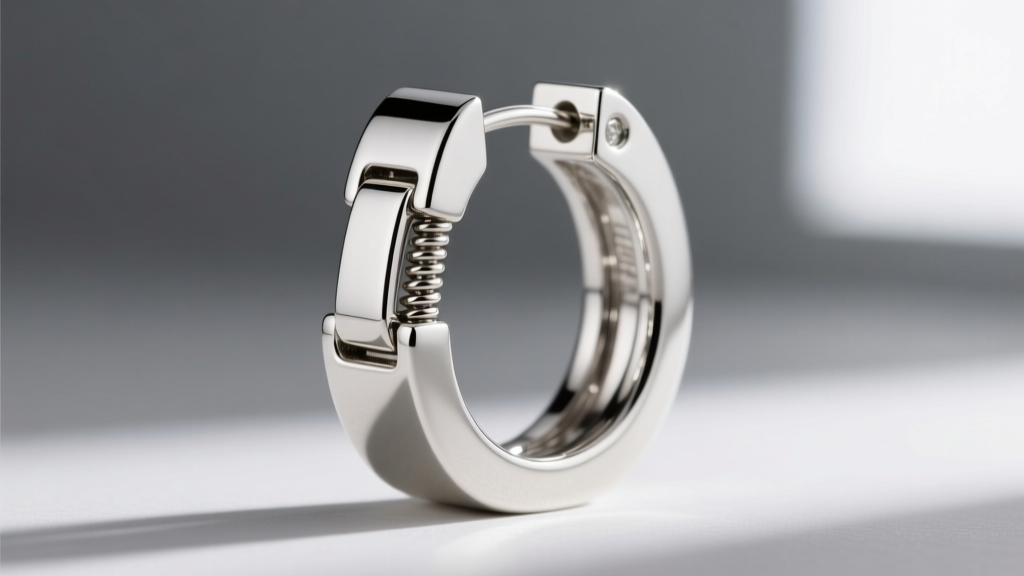
Gauge Thickness, Weight, and Lobe Biomechanics
Selecting the correct wire gauge is a balancing act between structural rigidity and lobe biomechanics. The sharp geometry of square hoops creates an optical illusion of heaviness, but the actual gram weight is dictated by the wire's cross-sectional area and the hoop's overall dimensions.
Optimal Gauge Sizing for Square Frames
- 20-Gauge (0.81mm): Too fragile for square hoops larger than 15mm. The corners will warp, and the wire will bend under its own pendulum momentum.
- 18-Gauge (1.02mm): The absolute minimum for medium-sized square hoops (20mm - 30mm). Provides a delicate aesthetic but requires careful handling.
- 14-Gauge (1.62mm) to 12-Gauge (2.05mm): The gold standard for statement square hoops (35mm+). This thickness provides the necessary Vickers hardness to maintain the geometric shape and supports heavier, more secure clasp mechanisms without bending the wire at the insertion point.
Furthermore, heavy square hoops (exceeding 12 grams per earring) can cause lobe elongation over time. The concentrated weight at the bottom edge of the square pulls downward more aggressively than a circular hoop of the same weight, due to the higher center of mass. For heavy geometric designs, a wider clasp post or a specialized ear support backing is highly recommended to distribute the load across a larger surface area of the earlobe.
Clasp Mechanisms for Angular Geometries
The clasp on a square hoop must withstand the unique kinetic stressors mentioned earlier. Standard friction posts (butterfly backs) are generally unsuitable for large square hoops because the pendulum effect will gradually work the backing loose, leading to lost earrings.
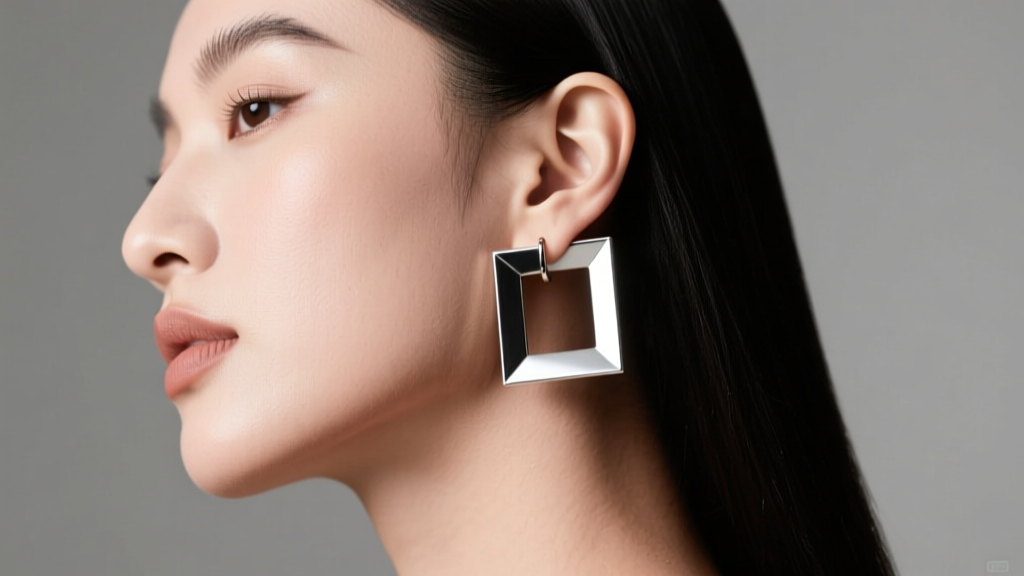
Recommended Clasp Types
When evaluating high-end sterling silver square hoop earrings, look for these mechanical closures:
- Hinged Saddleback (Click-Top): The most secure option for medium to large square hoops. A hinged post snaps into a grooved catch on the opposite side of the hoop. The tension of the snap closure easily resists the downward and lateral forces generated by the square's swing arc.
- Locking Clicker Ring: Often used in smaller square "huggie" styles. A continuous wire with a hidden hinge and a locking groove that produces an audible "click" when fully seated. This prevents the clasp from catching on hair or clothing.
- Omega Back with Square Post: For heavy, thick-gauge statement squares, an omega clip provides a wide, hinged backing that grips the earlobe securely without relying on a thin friction post.
Sourcing and Hallmark Verification
Because square hoops require precise manufacturing, verifying the authenticity of the metal is paramount. Reputable manufacturers will stamp their pieces with a "925" hallmark, often accompanied by a maker's mark. In regions with strict assay laws, such as the UK, the Assay Office London mandates a full hallmark (including sponsor mark, fineness mark, and assay office mark) for any silver item exceeding 7.78 grams. If you are purchasing heavy, solid 12-gauge square hoops that exceed this weight threshold from a UK-based artisan, the absence of a full assay hallmark is a red flag regarding the alloy's true composition.
Conclusion: Investing in Engineered Geometry
Sterling silver square hoop earrings are a triumph of modern jewelry engineering, blending stark, contemporary aesthetics with complex material science. By understanding the metallurgical properties of 925 and Argentium alloys, recognizing the importance of laser-welded or continuous-wire corner joints, and selecting appropriate gauge thicknesses and clasp mechanisms, consumers and collectors can invest in geometric pieces that are not only visually striking but structurally enduring. True luxury in geometric jewelry lies not just in the shine of the silver, but in the invisible mechanics that keep the perfect square intact.


