How to Choose and Style Black Triangle Earrings Perfectly
Learn how to select, fit, and style black triangle earrings for your face shape and piercing type with our expert metallurgy and sizing guide.


Black triangle earrings have transcended fleeting trends to become a permanent staple of brutalist and minimalist jewelry aesthetics. Whether you are navigating a fresh cartilage piercing or curating a complex lobe constellation, the geometric severity of a triangle paired with the light-absorbing depth of black creates an unmatched visual anchor. As we move through 2026, the demand for dark, architectural jewelry has shifted from simple acrylic novelty pieces to high-end, biocompatible metals and advanced ceramics.
However, selecting the right pair requires more than just picking a shape. The failure mode of most dark jewelry is coating degradation, and wearing the wrong gauge in a cartilage piercing can lead to severe migration. This comprehensive guide provides a step-by-step framework for selecting, fitting, and maintaining black triangle earrings based on your unique anatomy and piercing profile.
Material Matters: Decoding Black Finishes
Not all black metals are created equal. The most common point of failure in dark geometric jewelry is the degradation of the surface finish, leading to a patchy, brassy appearance. When investing in black triangle earrings, you must understand the metallurgy behind the color. Below is a breakdown of the most common materials, ranked by durability and biocompatibility.
| Material | Color Process | Durability & Failure Modes | Best Application | Avg. Price Range |
|---|---|---|---|---|
| PVD Black Titanium (ASTM F136) | Physical Vapor Deposition | Extremely High. Scratch-resistant. Fails only under extreme abrasion. | Fresh piercings, daily cartilage wear | $45 - $120 |
| Anodized Niobium | Electrochemical oxidation | High. No plating to chip, but surface can scratch if dragged against hard surfaces. | Hypersensitive skin, healed lobes | $25 - $60 |
| Black Zirconia (Ceramic) | Sintered ceramic (ZrO2) | High. Completely inert, no coating to wear off. Shatter-resistant but rigid. | Minimalist studs, severe allergy sufferers | $30 - $85 |
| Black Enamel on 14k Gold | Kiln-fired glass powder | Moderate. Prone to chipping on impact. Fails if dropped on tile floors. | Special occasion drops, lobe dangles | $80 - $250+ |
For any piercing that is less than a year old, or for cartilage placements that are prone to irritation bumps, implant-grade titanium is non-negotiable. According to the Association of Professional Piercers (APP), ASTM F136 titanium is the gold standard for initial piercings due to its inert nature and lack of nickel. When this titanium is treated with PVD (Physical Vapor Deposition), the black color becomes permanently bonded at a molecular level, making it vastly superior to traditional electroplating.
Step-by-Step: Matching Triangle Silhouettes to Face Shapes
The orientation, proportion, and scale of a triangle dramatically alter facial perception. Use this styling matrix to choose the right silhouette for your bone structure.
Round and Oval Faces
Goal: Elongate the profile and add structural contrast to soft curves.
Action: Opt for inverted triangles (point facing down) in a drop or dangle style. The downward point draws the eye vertically, lengthening the jawline and neck. Aim for a drop length of 1.5 to 2.5 inches. Avoid wide, upright triangles that sit flush against the lobe, as these can emphasize cheek width and make the face appear wider.
Square and Diamond Faces
Goal: Soften strong angles without adding unnecessary visual bulk.
Action: Choose upright triangles with rounded corners or asymmetric geometric clusters. A small, 8mm black niobium triangle stud placed on the upper helix or mid-lobe offsets a strong jawline by introducing a sharp but contained focal point. The dark color recedes visually, allowing the geometry to frame the face without overpowering it.
Heart and Inverted Triangle Faces
Goal: Balance a narrower chin with visual weight at the lower ear.
Action: Bottom-heavy triangle drops or wide-based triangular huggies work best. The horizontal width at the bottom of the earring creates an optical illusion that widens the lower third of the face, achieving harmony with a broader forehead.
Piercing Placement and Gauge Sizing Guide
A common mistake when buying geometric earrings is ignoring the post gauge and length, leading to migration, embedding, or the dreaded "forward droop." Black triangle earrings, especially those made of dense materials like zirconia or solid gold, carry specific weight distributions that require precise hardware.
- Standard Lobe Piercings: The standard gauge is 20g (0.8mm) or 18g (1.0mm). For heavy black enamel triangle drops, ensure the post is at least 18g. A 20g wire post will bend under the weight of a 2-inch geometric drop, causing the earring to face downward rather than sitting flush.
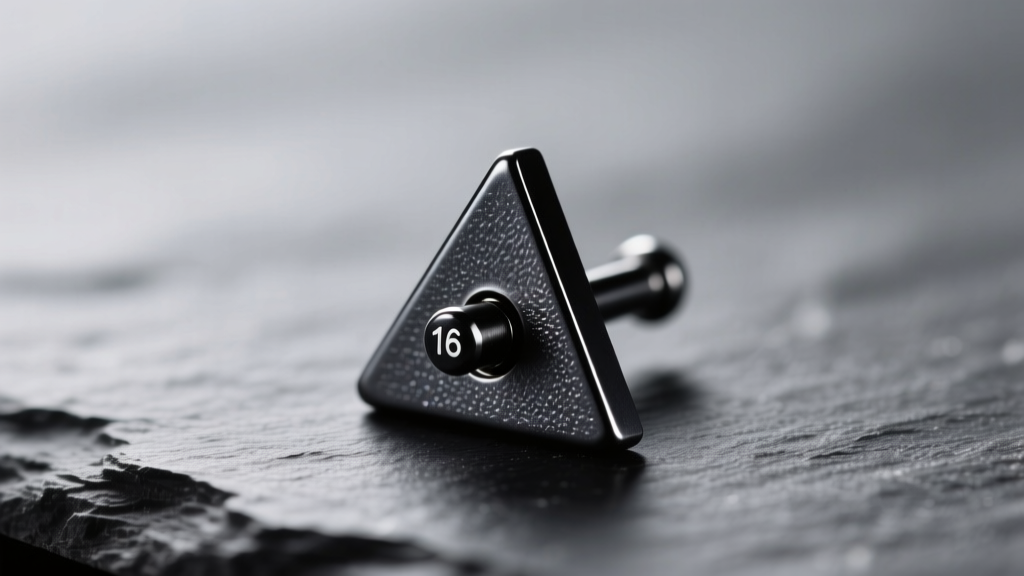
- Cartilage (Helix, Conch, Flat): The industry standard for cartilage is 16g (1.2mm) or 14g (1.6mm). If you are placing a black PVD titanium triangle stud in a conch piercing, a 16g post with a 5/16" (8mm) length is typically required to accommodate the thickness of the cartilage ridge and prevent the backing from pressing into the skin.
- Ear Cuffs (Non-Pierced): For black triangle ear cuffs, look for adjustable tension bands made of memory metal or sterling silver with a PVD black coating. Ensure the cuff has a silicone grip pad on the interior to prevent it from sliding down the helix ridge throughout the day.
Building a Cartilage Constellation with Black Triangles
If you have multiple piercings, black triangle studs are exceptional for building a "constellation" layout. The key to a successful constellation is varying the scale while maintaining a unified geometric theme. Start with a 10mm inverted triangle in your primary lobe piercing. Move up to a 6mm upright triangle in your second lobe hole, and finish with a 4mm black zirconia triangle stud in your lower helix. This graduated sizing creates a cohesive line that follows the natural curve of the ear's anatomy. According to material experts at the Gemological Institute of America (GIA), utilizing high-tech ceramics like black zirconia in these micro-stud sizes ensures the jewelry remains completely inert and lightweight, reducing the risk of cartilage fatigue.
Step-by-Step Maintenance for Black Coated Metals
Black jewelry requires specific care to prevent the "brassing" effect (where the underlying gold or steel shows through worn coating) or the dulling of matte finishes. Follow this maintenance protocol to extend the life of your geometric pieces.
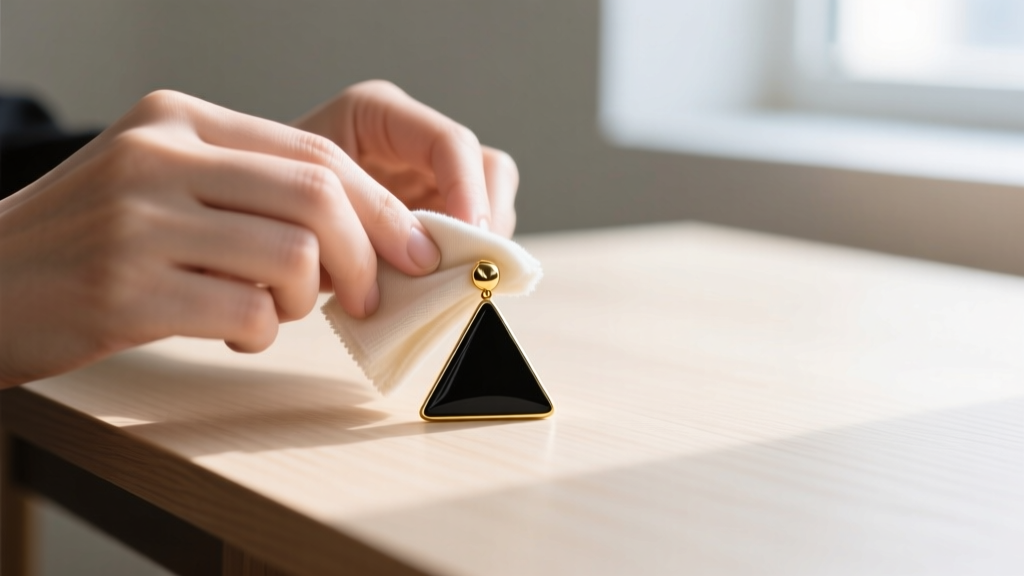
- The Daily Wipe: Sebum and dead skin cells accumulate rapidly in the sharp corners of triangle earrings. At the end of the day, gently wipe the jewelry with a dry, lint-free microfiber cloth. This prevents oil buildup, which can degrade certain enamel finishes over time.
- Chemical Avoidance: Never wear PVD-coated or enameled black earrings in chlorinated pools or hot tubs. High pH levels and harsh oxidizers can break down the molecular bonds of the black coating, leading to irreversible fading. Always remove them before swimming.
- Ultrasonic Cleaning Warning: While ultrasonic cleaners are excellent for raw gold and platinum, they are highly destructive to black enamel and can cause micro-fractures in anodized niobium. Stick to a mild, unscented glycerin soap and warm water for deep cleaning, using a soft-bristled baby toothbrush to gently clear the crevices.
- Storage Protocol: Store black triangle earrings individually in soft flannel pouches. The sharp points of geometric jewelry can easily scratch the surface of adjacent pieces, and while PVD titanium is scratch-resistant, black enamel and anodized niobium are highly susceptible to surface marring when tossed into a communal jewelry box.
"The beauty of black geometric jewelry lies in its ability to absorb light and create negative space. Treat the material with the same respect you would give to a fine gemstone, and the architectural lines will remain sharp and striking for decades."
By understanding the metallurgy of black finishes, mapping the geometry to your specific face shape, and adhering to strict gauge and maintenance standards, you can seamlessly integrate black triangle earrings into your permanent jewelry rotation. Whether you favor the brutalist edge of matte titanium or the refined elegance of black enamel on gold, the right triangle earring is a masterclass in modern styling.


