How to Style and Care for Black Diamond Hanging Earrings
Master the art of styling and maintaining black diamond hanging earrings with our step-by-step guide on settings, face shapes, and safe cleaning.

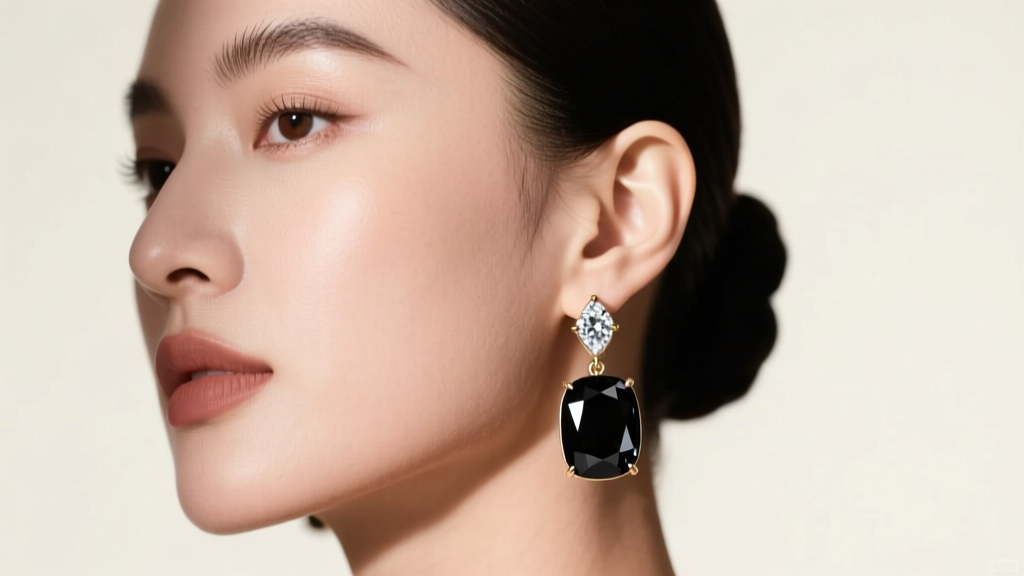
The Gemology of Black Diamonds in Kinetic Settings
Black diamond hanging earrings offer a striking, avant-garde alternative to traditional brilliant-cut diamond dangles. However, styling and maintaining them requires a deep understanding of their unique gemological properties. Unlike white diamonds that refract light, black diamonds absorb it, resulting in a deep, opaque luster. According to the Gemological Institute of America (GIA), the color in natural black diamonds is typically caused by dense clouds of mineral inclusions like graphite, pyrite, or hematite.
When it comes to hanging or dangle earrings, kinetic stress is the primary enemy. As you walk or move your head, hanging earrings swing, creating micro-impacts against the neck or jawline. If your earrings feature heat-treated or irradiated natural black diamonds—which are often heavily fractured low-clarity white diamonds—these micro-impacts can cause the stones to chip or shatter along their cleavage planes. In 2026, the rise of lab-grown black diamonds (created via CVD with boron doping) has revolutionized the market, offering structurally sound, fracture-free alternatives that are far better suited for the physical demands of dangle settings.
Material Comparison for Dangle Durability
| Stone Type | Structural Integrity | Suitability for Hanging Settings | Average Price per Carat (2026) |
|---|---|---|---|
| Natural Carbonado | Polycrystalline, porous, tough but brittle on edges | Moderate (Requires bezel setting) | $150 - $300 |
| Treated Mined Diamond | Heavily fractured, prone to cleavage splitting | Low (High risk of shattering in dangles) | $200 - $500 |
| Lab-Grown Black Diamond | Monocrystalline, uniform, highly durable | Excellent (Safe for prong and dangle settings) | $80 - $200 |
Step 1: Selecting the Right Setting and Wire Gauge
The hardware supporting your black diamond hanging earrings is just as critical as the stones themselves. Because dangle earrings act as pendulums, they exert continuous lateral torque on the ear wire and the stone's setting.
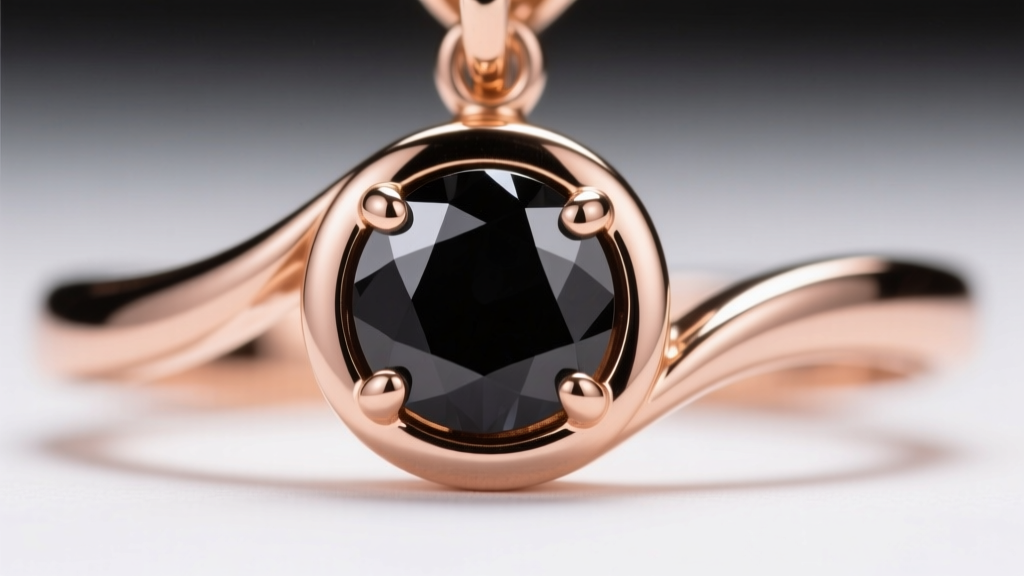
Choose Bezel Over Prong
While four-prong settings maximize light exposure, they are a liability for opaque black diamonds in hanging styles. Prongs can easily catch on hair or clothing, pulling the earring and bending the wire. A full bezel or half-bezel setting encases the girdle of the diamond in a smooth metal rim, protecting the vulnerable edges from impact and preventing snags.
Verify the Wire Gauge
Standard lobe piercings are typically 20-gauge (0.81mm) or 18-gauge (1.02mm). However, if your black diamond hanging earrings feature stones larger than 1.5 carats each, a 20-gauge French wire will eventually bend and warp under the dynamic weight. Always opt for 18-gauge or 16-gauge (1.29mm) ear wires for heavy dangles. If you prefer a thinner wire for aesthetic reasons, ensure the earring features a leverback closure, which provides structural rigidity and prevents the earring from slipping out during movement.
Step 2: Styling for Face Shapes and Occasions
Black diamonds possess a heavy visual weight due to their light-absorbing nature. Styling black diamond hanging earrings requires balancing this visual darkness with the geometry of your face.
- Round Faces: Opt for linear, geometric drops. Angular silhouettes, such as black diamond baguette drops or elongated rectangular dangles, create the illusion of length and draw the eye vertically, countering the width of a round face.
- Square Faces: Choose curved, fluid designs. Teardrop or oval black diamond dangles soften a strong jawline. Avoid boxy or square chandelier styles, which will only accentuate angular features.
- Heart-Shaped Faces: Look for dangles that are wider at the bottom. Chandelier styles or pear-shaped black diamond drops help add visual volume to the lower half of the face, balancing a narrower chin.
- Oval Faces: You have the versatility to wear any silhouette, from minimalist black diamond threader earrings to elaborate, multi-stone Art Deco dangles.
"Because black diamonds do not sparkle in the traditional sense, their impact relies entirely on silhouette and contrast. Pairing them with bright white metals like platinum or 18k white gold creates a striking monochromatic boundary that defines the earring's shape against the skin."
Step 3: The Safe Cleaning Protocol (No Ultrasonics!)
Cleaning black diamonds requires a completely different approach than cleaning white diamonds. The GIA strongly advises against using ultrasonic cleaners for fracture-filled or heavily included stones. The high-frequency vibrations of an ultrasonic bath can easily shake a treated black diamond apart or loosen the graphite inclusions in a natural carbonado, leaving you with a dull, pitted stone.
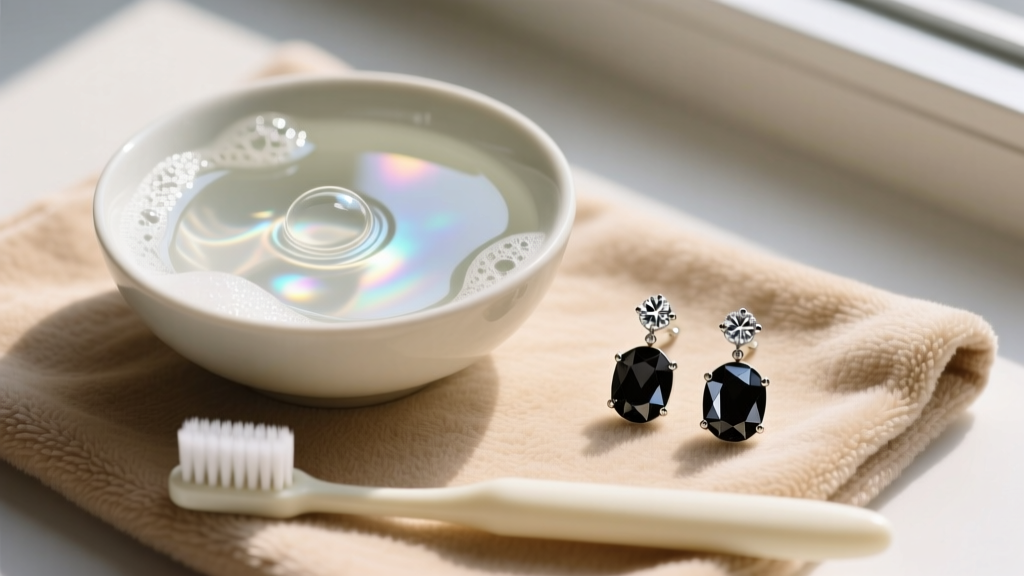
Your Step-by-Step Cleaning Routine
- Prepare the Solution: Mix one part mild, lotion-free dish soap (like Dawn) with ten parts lukewarm distilled water in a small ceramic bowl. Avoid hot water, which can expand metal settings and loosen adhesive if any fracture-filling is present.
- Soak Briefly: Submerge the earrings for no more than 3 to 5 minutes. This is enough time to break down sebum and cosmetic residue without risking the stone's integrity.
- Agitate Gently: Using a brand-new, extra-soft baby toothbrush, gently sweep the bristles over the back of the setting and the surface of the diamond. Do not scrub aggressively; black diamonds can scratch other jewelry, but the metal setting can easily accumulate micro-scratches.
- Rinse and Dry: Rinse under a gentle stream of lukewarm water. Immediately pat dry with a lint-free microfiber cloth. Ensure the earring post and clutch are completely dry before storing to prevent oxidation on the metal components.
Troubleshooting Common Wear and Tear Issues
Even with meticulous care, the kinetic nature of hanging earrings introduces specific mechanical issues. Here is how to troubleshoot them like a professional jeweler.
Issue: The Earring Droops Forward
The Cause: Heavy black diamond drops often exceed the counterweight of a standard metal butterfly clutch, causing the earring to tilt forward on the lobe.
The Fix: Replace standard metal clutches with wide, flat silicone earring backs or specialized support discs (like Bling Guards). These distribute the weight across a wider surface area of the earlobe, keeping the dangle perfectly vertical.
Issue: The French Wire Snags on Hair
The Cause: The exposed tip of a standard fishhook French wire catches on loose hair or knitwear.
The Fix: Apply a microscopic dot of clear jeweler's wax or a silicone coating to the tip of the wire. Alternatively, have a jeweler solder a tiny metal bead to the end of the wire to create a smooth, snag-free termination point.
Issue: The Metal Setting Looks Dull
The Cause: Black diamonds are often set in rhodium-plated white gold. Over time, the friction of the earring swinging against the neck wears away the rhodium, revealing the slightly yellowish underlying gold.
The Fix: Take the earrings to a jeweler for a quick rhodium re-plating. This is a standard maintenance procedure that should be done every 12 to 18 months for frequently worn white gold dangles to maintain that high-contrast, modern aesthetic.


