A Step-by-Step Guide to Styling Red and Golden Earrings
Master the art of wearing red and golden earrings. Follow our step-by-step guide to styling, skin tone matching, and cleaning ruby, garnet, and gold.

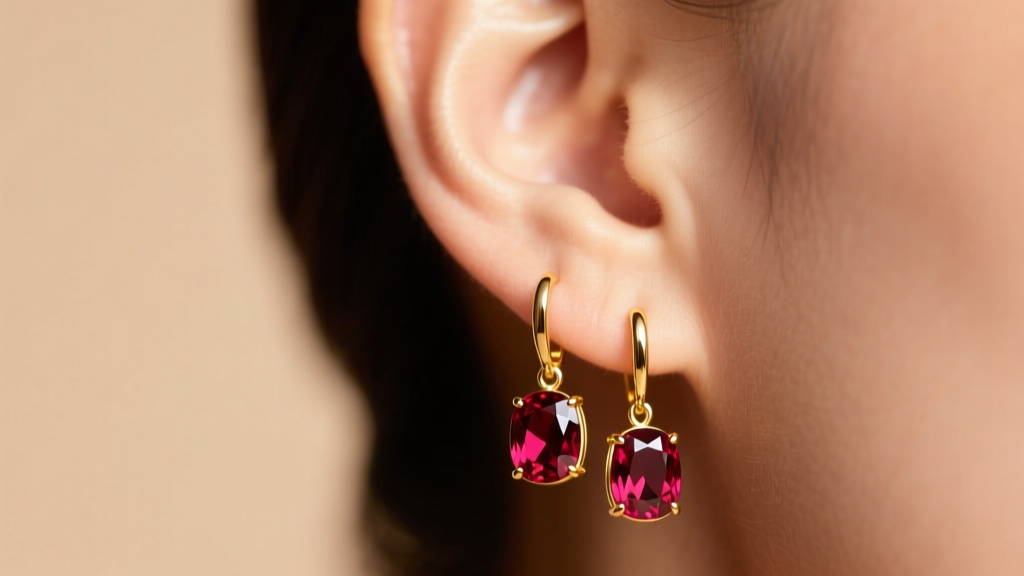
Introduction: The Timeless Allure of Crimson and Gold
The combination of rich, warm gold and deep, vibrant red gemstones has captivated jewelry lovers for centuries. In 2026, red and golden earrings remain a staple in both high jewelry and everyday wear, bridging the gap between vintage opulence and modern minimalism. Whether you are drawn to the fiery depths of a Burmese ruby, the earthy warmth of a carnelian cabochon, or the sleek finish of crimson vitreous enamel, mastering this color pairing requires an understanding of metallurgy, gemology, and personal styling.
This comprehensive, step-by-step guide will walk you through exactly how to select, style, and maintain your red and golden earrings. We will bypass generic fashion advice and dive deep into the specifics of gold karats, gemstone hardness, and professional-grade cleaning protocols to ensure your pieces last a lifetime.
Step 1: Identifying Your Metal and Gemstone Composition
Before you can properly style or care for your earrings, you must understand what they are actually made of. The term 'golden' can refer to solid gold alloys, gold vermeil, or gold plating, while 'red' encompasses a wide spectrum of materials with vastly different physical properties.
Decoding the Gold: Karats and Plating
- 18k Solid Gold (75% Pure Gold): Offers a deeply saturated, rich yellow hue that perfectly complements warm red stones. However, it is relatively soft (Vickers hardness of ~125), making it less ideal for intricate prong settings holding heavy drop earrings.
- 14k Solid Gold (58.3% Pure Gold): The industry standard for durability. The addition of copper and silver alloys increases its tensile strength, making it the superior choice for secure gemstone settings and everyday huggies or hoops.
- Gold Vermeil vs. Gold Plated: By FTC guidelines, vermeil must consist of a sterling silver base coated with at least 2.5 microns of 10k gold or higher. Standard gold plating often uses a brass base with a much thinner gold layer (under 0.5 microns), which will quickly wear away on high-friction areas like ear cuffs or cartilage huggies.
Decoding the Red: Gemstones and Enamel
Not all red stones are created equal. According to the Gemological Institute of America (GIA), a natural ruby scores a 9 on the Mohs hardness scale, making it exceptionally resistant to scratching. Conversely, garnet (6.5 to 7.5) and carnelian (6.5 to 7) are much more susceptible to abrasion from everyday dust, which contains microscopic quartz particles (Mohs 7). If your earrings feature cold enamel (an epoxy resin) rather than vitreous enamel (fired glass), be aware that the red pigment can yellow or chip if exposed to harsh chemicals or extreme heat.
Step 2: Matching Red and Golden Earrings to Your Undertone
The interplay between your skin's undertone and the specific shade of red and gold is crucial for a harmonious look. Here is a practical framework for matching:
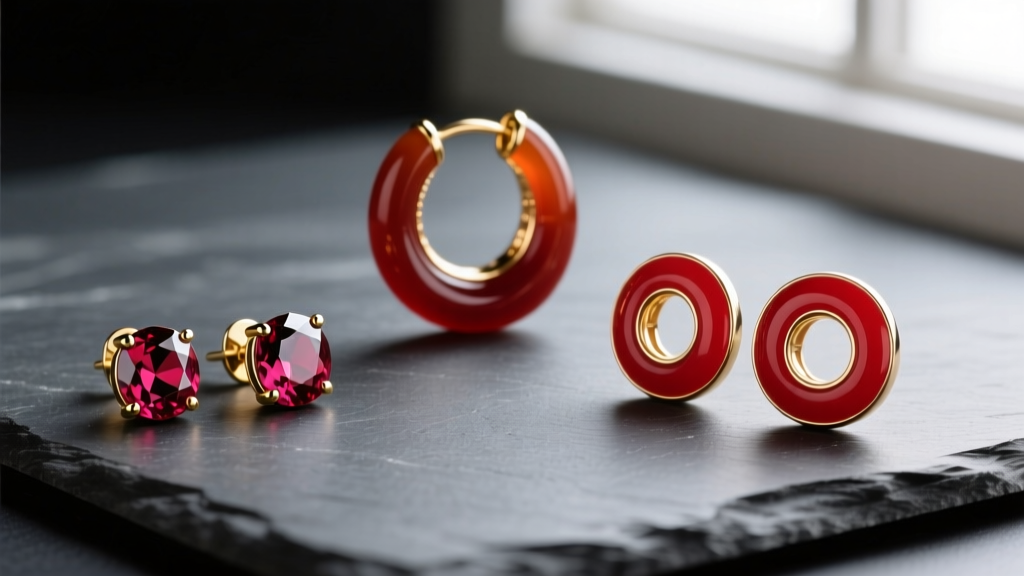
Warm Undertones (Golden, Peachy, Yellow)
If your veins appear greenish in natural light, you have warm undertones. Opt for 18k or 22k yellow gold paired with warm, orange-leaning reds. Think Mozambique garnets, fiery carnelians, or coral-toned enamels. The high copper content in lower-karat golds (like 14k rose gold) also flatters warm skin beautifully.
Cool Undertones (Pink, Red, Bluish)
If your veins appear blue or purple, cool undertones dominate. To prevent the gold from looking brassy against your skin, choose lighter 14k yellow gold or even red gold alloys. Pair these with cool, blue-leaning reds such as pigeon blood rubies, deep burgundy spinels, or dark cranberry vitreous enamel.
Neutral Undertones
Neutral skin tones can pull off the highest contrast pairings. A striking combination for 2026 is polished 18k yellow gold huggies featuring vivid, almost neon-red lab-created star rubies, providing a modern, high-impact aesthetic.
Step 3: Styling by Earring Silhouette and Gauge
The physical structure of the earring dictates how the red and gold elements interact with light and movement.
Studs and Posts (20G to 18G)
For standard lobe piercings (typically 20G or 0.8mm), bezel-set ruby studs in 14k gold offer a low-profile, snag-free option. The gold bezel acts as a protective bumper for the garnet or ruby, preventing the girdle from chipping against desks or phones.
Huggies and Cartilage Hoops (16G to 18G)
Cartilage piercings (helix, tragus) usually require thicker 16G (1.2mm) or 18G (1.0mm) posts. Red enamel gold huggies are incredibly popular here. Ensure the hinge mechanism is solid gold or heavy vermeil; plated hinges are a primary failure point, often snapping or causing contact dermatitis as the base metal is exposed to the healing cartilage environment.
Dangles and Drop Earrings
When styling long red and golden drop earrings, balance is key. If the earrings feature heavy, multi-carat garnet briolettes, ensure the ear wire is reinforced. A standard 20G wire will bend under the weight of a 15-gram stone. Look for 18G or 16G ear wires, or styles that utilize a secure lever-back closure to distribute the weight evenly across the lobe.
Step 4: The Ultimate Cleaning and Maintenance Protocol
Improper cleaning is the fastest way to ruin red and golden earrings. Ultrasonic cleaners, while excellent for plain diamond and platinum jewelry, are disastrous for many red stones. As noted in the GIA's Garnet Care Guidelines, vibrations can easily fracture stones with pre-existing inclusions or shatter fracture-filled rubies. Furthermore, ultrasonic waves will strip cold enamel right off the gold base.
Step-by-Step Manual Cleaning Guide
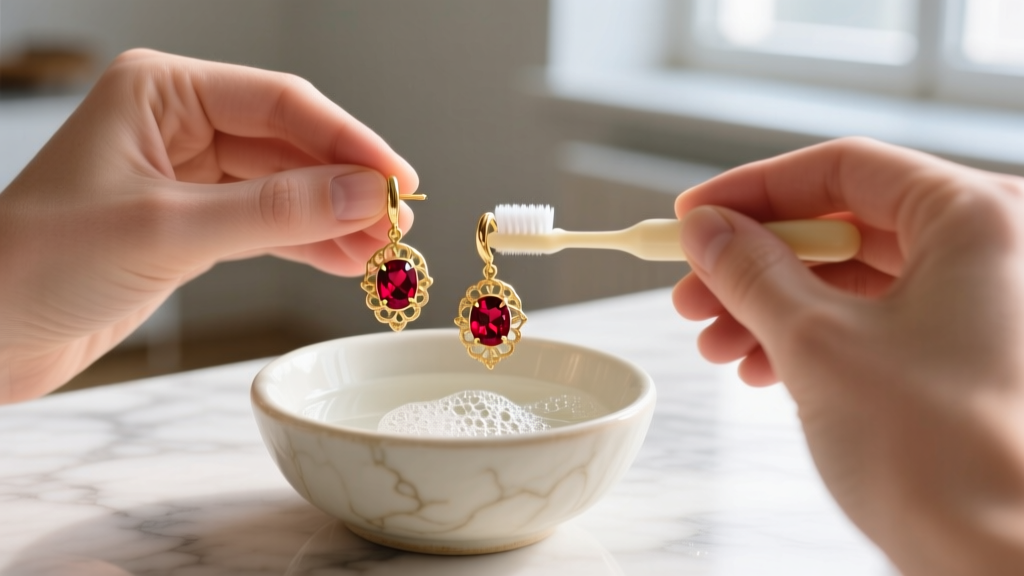
- Prepare the Solution: Mix 1 part mild, phosphate-free dish soap with 10 parts lukewarm (never hot) distilled water in a small ceramic bowl.
- Soak Briefly: Submerge solid gold and ruby/garnet earrings for 3 to 5 minutes to loosen sebum and cosmetic buildup. Do not soak enamel or pearl-accented pieces.
- Agitate Gently: Using an extra-soft baby toothbrush, gently sweep the bristles behind the gemstone and along the gold prongs. Never scrub the face of a soft stone like carnelian.
- Rinse and Dry: Rinse under a gentle stream of lukewarm water. Pat dry with a lint-free microfiber cloth. Allow the earrings to air dry completely on a paper towel before storing to prevent moisture from tarnishing the alloy metals in 14k gold.
Gemstone & Metal Care Matrix
| Material Combination | Mohs Hardness | Ultrasonic Safe? | Steam Cleaner Safe? | Primary Failure Mode to Avoid |
|---|---|---|---|---|
| 18k Gold + Natural Ruby | 9.0 | Yes (if untreated) | Yes | Fracture-filled rubies shattering in ultrasonic |
| 14k Gold + Mozambique Garnet | 6.5 - 7.5 | No | No | Thermal shock causing internal stress fractures |
| Gold Vermeil + Carnelian | 6.5 - 7.0 | No | No | Vermeil plating wearing off at friction points |
| 14k Gold + Vitreous Enamel | N/A (Glass) | No | No | Enamel cracking due to metal flexing or heat |
Common Mistakes and How to Avoid Them
Expert Warning: Never wear 14k or 18k gold earrings in a chlorinated swimming pool or hot tub. Chlorine reacts aggressively with the copper and silver alloys in gold, leading to a phenomenon known as 'stress corrosion cracking.' This can cause the delicate prongs holding your red gemstones to become brittle and snap without warning.
Another frequent mistake is storing red and golden earrings loosely in a communal jewelry box. Because gold is a soft metal and garnets can be scratched by harder gems, always store your earrings in individual anti-tarnish flannel pouchs. If your earrings feature enamel, keep them away from extreme temperature fluctuations, as the metal base and the glass enamel expand and contract at different rates, leading to microscopic crazing and eventual chipping.
Conclusion
Red and golden earrings are a powerful sartorial tool, capable of elevating a simple outfit into a statement of refined elegance. By understanding the specific metallurgical properties of your gold, the gemological realities of your red stones, and the precise cleaning protocols required to maintain them, you ensure that your jewelry remains as vibrant in 2026 as the day you acquired it. Treat your pieces with the technical respect they deserve, and they will reward you with a lifetime of brilliant wear.


