How to Style and Care for Sterling Silver Black Onyx Earrings
Learn how to style, clean, and maintain your sterling silver black onyx earrings with our expert step-by-step guide for lasting shine and stone protection.

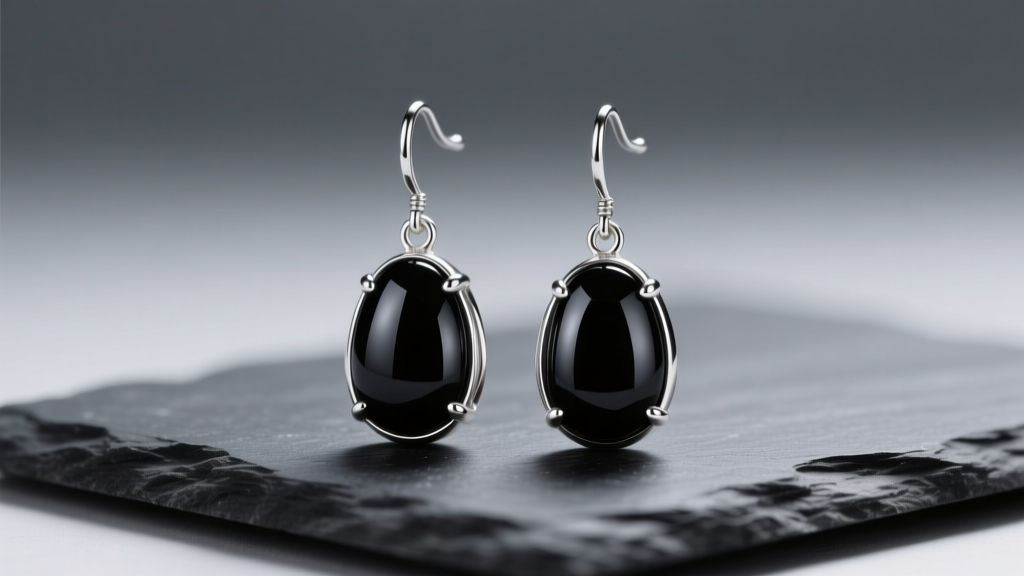
The Timeless Contrast: 925 Silver Meets Black Onyx
The pairing of sterling silver and black onyx represents one of the most striking contrasts in fine jewelry. The brilliant, cool-toned luster of polished 925 silver perfectly frames the deep, light-absorbing void of a black onyx cabochon. However, owning sterling silver black onyx earrings requires a nuanced understanding of both metallurgy and gemology. As of 2026, modern jewelry care has moved away from harsh chemical dips, favoring targeted, material-specific maintenance routines that preserve both the metal's rhodium plating and the stone's delicate carbonized treatment. This comprehensive, step-by-step guide will walk you through verifying your materials, styling them for your unique anatomy, and executing a safe cleaning protocol to ensure your earrings remain heirloom-quality for decades.
Step 1: Verifying Your Materials and Gemological Treatments
Before applying any cleaning solution or styling technique, you must understand the exact physical properties of your earrings. The Federal Trade Commission (FTC) Jewelry Guides mandate that authentic sterling silver bear a quality stamp, typically '925', indicating 92.5% pure silver and 7.5% alloy (usually copper). This copper content is vital; pure 999 silver is far too soft to securely hold a heavy onyx stone in a bezel or prong setting, especially for active earlobe or cartilage wear.
Regarding the gemstone, the Gemological Institute of America (GIA) classifies black onyx as a variety of chalcedony quartz. Naturally occurring pure black onyx is exceedingly rare. The vast majority of black onyx on the market is actually gray or white banded agate that has been treated. The traditional, permanent treatment involves soaking the porous chalcedony in a sugar solution, followed by heating it in sulfuric acid. This carbonizes the sugar, turning the stone a rich, opaque black. Because of this porosity and chemical treatment, black onyx registers a 6.5 to 7 on the Mohs hardness scale, making it susceptible to thermal shock and chemical stripping if exposed to the wrong cleaning agents.
Step 2: Styling Guide by Earring Type and Face Shape
Sterling silver black onyx earrings are remarkably versatile, but the specific silhouette you choose should complement your facial geometry and piercing placement. Below is a structural matrix to help you select the ideal style.
| Face Shape | Recommended Earring Style | Dimensions & Gauge Specifications | Styling Rationale |
|---|---|---|---|
| Round | Linear Drop Earrings | 30mm-50mm drop, 20G (0.8mm) post | Elongates the jawline and draws the eye vertically, countering facial width. |
| Oval | Geometric Huggies or Studs | 12mm-15mm diameter, 18G (1.0mm) wire | Oval faces can pull off any style; huggies highlight the cheekbones without overwhelming features. |
| Square | Curved Hoops with Onyx Inlay | 20mm-25mm hoop, 16G (1.2mm) thickness | Soft, circular lines soften a strong, angular jawline and prominent cheekbones. |
| Heart | Teardrop or Chandelier Dangles | 40mm length, lightweight hollow-back setting | Adds visual weight to the lower half of the face, balancing a narrower chin. |

Cartilage vs. Lobe Considerations
If you are styling sterling silver black onyx earrings for cartilage piercings (such as the helix, tragus, or conch), you must pay strict attention to the post gauge and backing mechanism. Standard lobe earrings are typically 20-gauge (0.8mm) or 18-gauge (1.0mm) with a friction butterfly back. Cartilage piercings, however, are usually pierced at 16-gauge (1.2mm) and heal best with flat-back labret posts or secure screw-in bezels. Forcing a 20G silver post into a 16G cartilage hole can cause the 'cheese-cutter effect,' where the thin wire migrates through the dense cartilage tissue over time.
Step 3: The Safe Cleaning Protocol
Cleaning mixed-material jewelry requires a bifurcated approach. What is safe for silver can be catastrophic for treated onyx. Never use commercial silver dip solutions, baking soda pastes, or ultrasonic cleaners. Ultrasonic waves can easily fracture the internal crystalline structure of the onyx or loosen the adhesive used in bezel settings, while harsh chemicals can strip the carbonized dye, leaving the stone with a chalky, grayish residue.
Phase A: Cleaning the 925 Sterling Silver
- Prepare the Solution: Mix three drops of phosphate-free, mild dish soap (like Dawn) into a bowl of lukewarm distilled water. Avoid tap water, as the chlorine and heavy minerals can accelerate silver tarnishing.
- Targeted Application: Dip a soft-bristled baby toothbrush into the solution. Gently brush only the silver components of the earring—focusing on the prongs, bezel walls, and the post. Do not scrub the onyx stone directly with the brush.
- Rinse and Dry: Quickly rinse the silver under a low stream of distilled water. Immediately pat dry with a lint-free microfiber cloth. Moisture trapped between the silver setting and the onyx cabochon can lead to localized oxidation.
Phase B: Polishing the Black Onyx
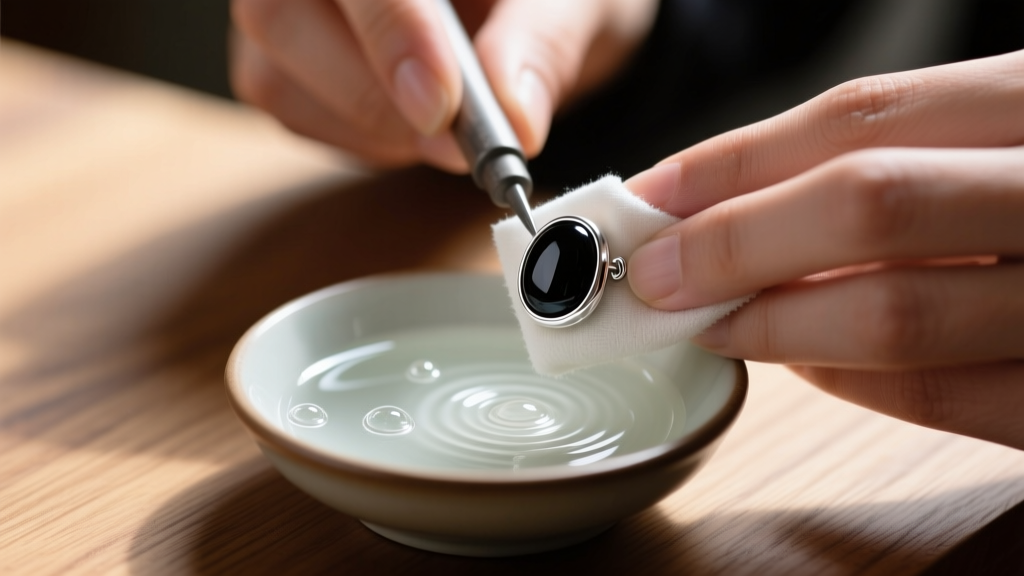
To restore the glass-like luster of the black onyx, use a completely dry, untreated jeweler's polishing cloth. Gently buff the surface of the stone in small, circular motions. If the onyx has accumulated skin oils or lotion residue that water won't remove, slightly dampen a corner of the microfiber cloth with a 50/50 mix of distilled water and isopropyl alcohol, wipe the stone swiftly, and dry it immediately. Never let the alcohol pool around the silver prongs.
Step 4: Proper Storage to Prevent Tarnish and Scratches
Storage is where most sterling silver black onyx earrings suffer irreversible damage. Silver tarnishes when the copper alloy reacts with sulfur compounds in the ambient air, forming silver sulfide. Onyx, being a 7 on the Mohs scale, is significantly harder than sterling silver (which sits around 2.5 to 3). If your earrings are tossed loosely into a jewelry box, the onyx stones will act like sandpaper, deeply scratching the silver settings and posts.
- Individual Pouches: Store each pair in its own soft, anti-tarnish flannel pouch. This prevents physical abrasion and limits air exposure.
- Chalk or Silica Gel: Place a small packet of silica gel or a piece of white chalk in your jewelry drawer to absorb ambient humidity, which accelerates the copper oxidation process.
- Anti-Tarnish Strips: Invest in 3M anti-tarnish tabs. These strips absorb airborne sulfur and hydrogen sulfide, keeping your 925 silver bright for up to 12 months without the need for chemical polishes.
Troubleshooting Common Issues
Even with meticulous care, vintage or frequently worn pieces may encounter structural issues. Here is how to handle them without causing further damage:
Issue 1: The Onyx Stone Feels Loose or Rattles
The Cause: Over time, the silver bezel wall or prongs can wear thin or bend outward from the pressure of putting on tight clothing or sleeping in the earrings. Furthermore, if the onyx was glued rather than mechanically set, temperature fluctuations can degrade the epoxy.
The Fix: Stop wearing the earrings immediately. Do not attempt to push the prongs back yourself with pliers, as silver is highly malleable and you risk snapping the prong or cracking the stone's edge. Take the piece to a professional bench jeweler who can use a bezel roller or laser welder to secure the setting.
Issue 2: Heavy, Blackened Tarnish on the Silver
The Cause: Prolonged exposure to high-sulfur environments (such as hot springs, high humidity, or even certain wool fabrics) has resulted in a thick layer of silver sulfide.
The Fix: Use a specialized silver polishing cloth impregnated with jeweler's rouge (iron oxide). Carefully fold the cloth to reach the crevices around the onyx setting, ensuring the rouge does not transfer onto the black stone, where it can leave a stubborn, rusty smudge. If the tarnish is in deep, oxidized grooves, a jeweler's steam cleaner (used strictly on the metal, avoiding the stone) is the safest professional intervention.
Expert Insight: Many modern sterling silver black onyx earrings feature a deliberate 'oxidized' or 'blackened' silver finish to create a monochromatic, gothic aesthetic. If your earrings are intentionally oxidized, never use silver polishing cloths on the recessed areas of the metal, as you will strip away the designer's intended contrast and ruin the piece's visual depth.
By respecting the distinct chemical and physical boundaries of both 925 silver and treated chalcedony, your sterling silver black onyx earrings will maintain their dramatic, light-devouring elegance for a lifetime. Proper material verification, anatomical styling, and disciplined, non-abrasive cleaning are the true secrets to mastering this iconic jewelry pairing.


