Cat Earring Holder Troubleshooting: Fix Tarnish, Tangles & Bent Posts
Troubleshoot common cat earring holder issues. Learn how to prevent tarnish, stop wire tangling, and protect delicate posts with expert storage tips.

The Hidden Dangers of Novelty Jewelry Displays
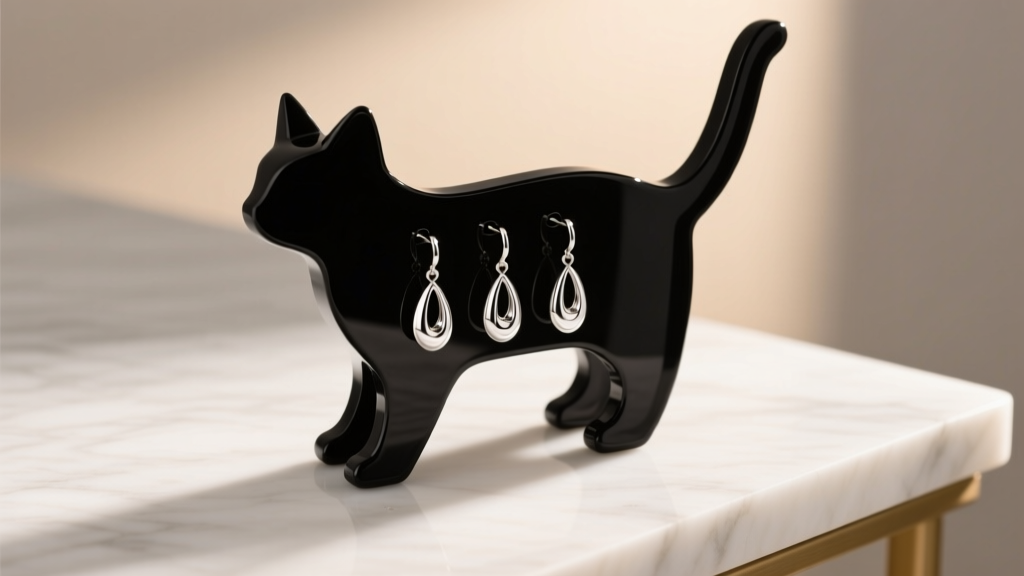
The cat earring holder has become a ubiquitous staple on vanities and Etsy shops alike. Shaped like a feline silhouette, these organizers use the cat's ears, whiskers, and tail as hanging points for dangles, hoops, and studs. While they offer undeniable aesthetic charm, as jewelry experts, we must address a growing problem in 2026: these novelty displays are actively damaging fine jewelry. From accelerated tarnishing caused by acidic engineered woods to bent sterling silver posts forced through poorly calibrated laser-cut holes, the structural reality of these holders often clashes with the delicate metallurgy of high-end earrings.
If your favorite feline organizer is ruining your jewelry collection, this comprehensive troubleshooting guide will help you identify the failure points and implement professional-grade solutions to protect your pieces.
Troubleshooting Tarnish: Wood, Felt, and Acidic Materials
The most common complaint regarding wooden cat earring holders is rapid tarnishing of sterling silver and copper alloys. Tarnish is a chemical reaction—specifically, the copper in sterling silver (which makes up 7.5% of the alloy) reacting with hydrogen sulfide and moisture in the air to form silver sulfide. However, the rate of this reaction is drastically accelerated by the materials used in cheap jewelry displays.
Many novelty cat holders are made from MDF (Medium-Density Fiberboard) or plywood. These engineered woods off-gas formaldehyde and acidic volatile organic compounds (VOCs). When combined with the cheap, sulfur-containing dyes used in the velvet or felt pads lining the base, your earrings are essentially sitting in a corrosive gas chamber. According to the Gemological Institute of America (GIA), improper storage environments are the leading cause of premature silver degradation.
Material Comparison: Is Your Holder Toxic to Silver?
| Holder Material | Acid/VOC Off-Gassing | Tarnish Risk Level | Expert Recommendation |
|---|---|---|---|
| MDF / Painted Wood | High (Formaldehyde) | Severe | Line with archival polyethylene film |
| Solid Walnut / Oak | Moderate (Natural Tannins) | Moderate | Seal wood with polyurethane before use |
| Cast Acrylic | None (Inert) | Low | Best choice for long-term silver storage |
| Velvet / Felt Linings | High (Sulfur Dyes) | Severe | Replace with acid-free, unbleached cotton |
The Fix: If you own a wooden cat holder, seal the base with a water-based polyurethane to trap VOCs. Remove any glued-on felt pads and replace them with acid-free, unbleached cotton batting or anti-tarnish treated flannel (such as Pacific Silvercloth).
Fixing Bent Posts and Warped Ear Wires
A frustratingly common issue involves bending the post of a stud earring while trying to insert it into the cat's 'paw' or base. To understand why this happens, we must look at jewelry wire gauges and manufacturing tolerances.
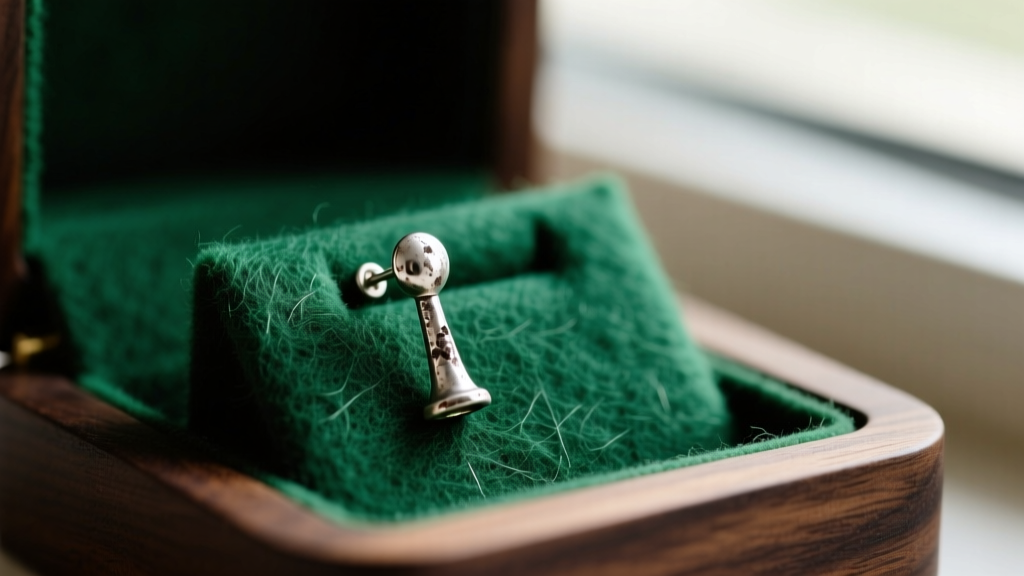
Standard earring posts are typically manufactured in 20-gauge (0.81mm) or 22-gauge (0.64mm) wire. Sterling silver, especially in 22-gauge, is 'dead soft' and bends with minimal lateral pressure. Many laser-cut wooden cat earring holders are designed with 1mm holes. However, the laser-cutting process leaves a charred 'kerf' (burn residue), and subsequent layers of paint or varnish can easily reduce a 1mm hole down to 0.5mm.
When you force a 22-gauge (0.64mm) sterling silver post through a paint-clogged 0.5mm hole, the post will buckle. Sterling silver lacks the tensile strength to push through painted MDF without warping.
The Troubleshooting Protocol for Tight Holes
- Do not use pliers to force the earring: This will snap the solder joint where the post meets the earring backing plate.
- Ream the holes: Use a 1mm diamond-tipped bead reamer or a miniature needle file to gently clear the paint and char from the holder's holes.
- Lubricate temporarily: A microscopic dab of beeswax on the earring post can reduce friction during insertion without damaging the metal.
If you have already bent a post, do not bend it back and forth with your fingers, as this will work-harden the silver and cause it to snap. Use a nylon-jaw jewelry plier to gently squeeze the post back into a true vertical alignment, referencing a steel machinist square for a perfect 90-degree angle.
Solving the Dangle Tangle on 'Whisker' Hooks
The 'whisker' design—horizontal wires protruding from the cat's cheeks—is a hallmark of metal wire cat earring holders. While visually striking, these smooth, downward-sloping whiskers create a massive headache for French wire (fishhook) earrings. Gravity and minor vibrations from walking past the table cause the hooks to slide down the whisker, clustering together and tangling the delicate jump rings and gemstone drops.
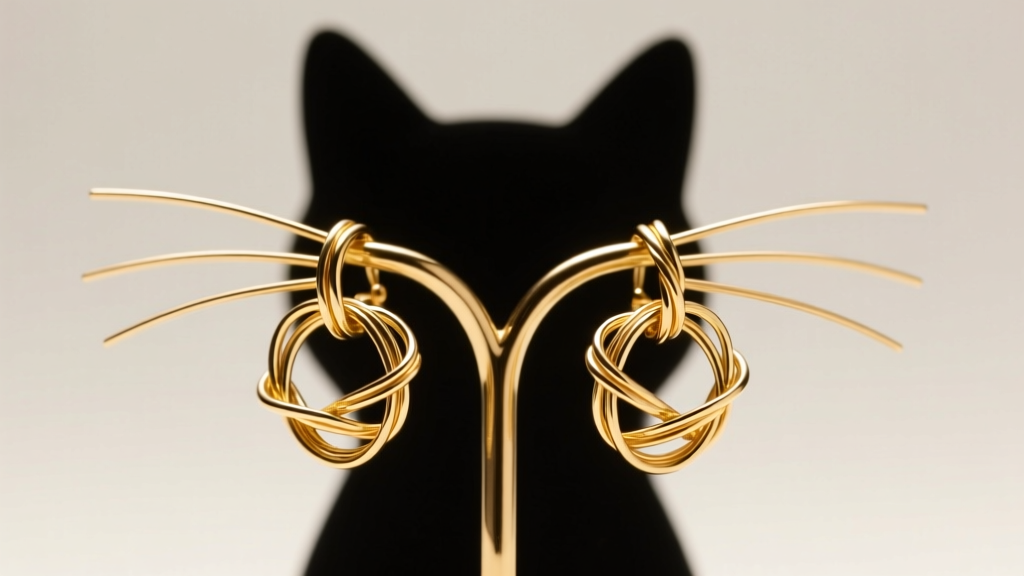
This tangling isn't just an annoyance; it causes micro-scratches on gold plating and can pull open unsoldered jump rings, leading to lost gemstones. According to repair guidelines from experts at Tiffany & Co., preventing metal-on-metal friction and chain knotting is paramount for preserving the finish of delicate drop earrings.
Creating Friction Baffles on Whiskers
To solve the sliding and tangling issue, you must introduce physical 'baffles' or friction zones along the metal whiskers.
- Clear Heat Shrink Tubing: Purchase 2mm clear polyolefin heat shrink tubing. Cut it into 1/4-inch segments, slide them onto the whiskers, and apply gentle heat. This creates soft, grippy silicone-like barriers that stop French wires from sliding into a single cluster.
- Silicone Earring Stoppers: For a non-permanent fix, slide standard clear silicone earring backs onto the whiskers to act as dividers between each pair of dangling earrings.
Step-by-Step Restoration for Damaged Earrings
If your cat earring holder has already taken a toll on your jewelry, follow this professional restoration sequence to bring your pieces back to retail condition:
- Step 1: Ultrasonic Degreasing. Before polishing, remove skin oils and lotion buildup using an ultrasonic cleaner with a mild ammoniated jewelry solution. Do not use this on porous stones like opals or pearls.
- Step 2: Silver Sulfide Removal. For heavily tarnished silver caused by acidic wood off-gassing, use an electrochemical reduction bath (aluminum foil, boiling water, and baking soda) rather than abrasive pastes, which remove microscopic layers of silver.
- Step 3: Post Straightening. Secure the earring face-down in a soft-jaw vise. Use a nylon-jaw plier to apply even, gradual pressure to the bent post until it sits flush against a 90-degree steel block.
- Step 4: Jump Ring Inspection. Use a 10x jeweler's loupe to inspect all jump rings on dangle earrings. If the slit is open even a fraction of a millimeter due to whisker-tangling, use two pairs of flat-nose pliers to twist (not pull) the ring closed.
Expert Verdict: Upgrading Your Feline Organizer
The cat earring holder remains a beloved vanity accessory, but treating it as a purely functional storage unit without understanding its material interactions is a recipe for damaged jewelry. By upgrading to cast acrylic models, sealing wooden bases against VOC off-gassing, reaming paint-clogged post holes, and adding friction baffles to wire whiskers, you can maintain the whimsical charm of your feline organizer without sacrificing the integrity of your fine earrings. Remember, proper jewelry storage is not just about organization; it is an active form of metallurgical preservation.


