Aeroplane Earrings: Technical Guide to Metals, Weight & Fit
Explore the engineering of aeroplane earrings. We analyze metal grades, weight distribution, gauge sizes, and ergonomic fit for lobe and cartilage piercings.

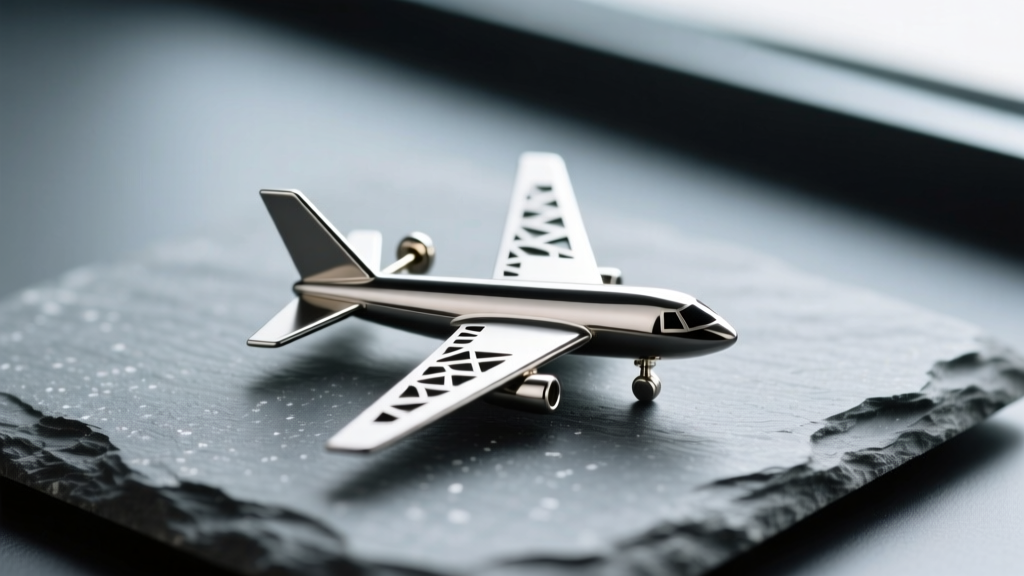
Beyond Novelty: The Physics and Engineering of Aviation Jewelry
Aeroplane earrings have transcended their origins as cheap tourist-shop souvenirs to become a sophisticated niche within thematic body jewelry. Whether worn as a nod to aviation heritage, a pilot's gift, or a symbol of wanderlust, the modern market demands pieces that balance aesthetic wingspan with biomechanical comfort. However, the unique geometry of an airplane—specifically its wide, horizontal fuselage and extended wings—creates distinct ergonomic challenges that standard circular or teardrop earrings do not face.
As a domain expert in jewelry metallurgy and piercing ergonomics, I frequently see poorly engineered aviation-themed jewelry causing fistula irritation, lobe drooping, and contact dermatitis. This deep dive examines the material science, weight distribution physics, and precise gauge requirements necessary to select or design high-quality aeroplane earrings that are safe for long-term wear in both standard lobe and cartilage placements.
Metallurgy & Material Grades: Avoiding the 'Novelty Alloy' Trap
The most critical failure point in novelty jewelry is the base metal. Because aeroplanes require intricate detailing (like rivets, propellers, and wing flaps), manufacturers often rely on die-casting techniques that favor cheap, low-melting-point alloys over body-safe metals.
The Danger of Zamak and Pot Metals
Over 70% of budget aeroplane earrings are cast from Zamak, a zinc alloy containing aluminum, magnesium, and copper. While Zamak captures micro-details beautifully, it is highly porous and almost always plated with a thin layer of nickel or silver. Once this plating wears off from friction against the earlobe, the zinc and hidden nickel leach into the skin, triggering severe allergic contact dermatitis. According to the National Center for Biotechnology Information (NCBI), nickel allergy remains the most common cause of jewelry-induced skin reactions, affecting up to 20% of the population.
ASTM F136 Titanium vs. 316L Surgical Steel
For heirloom-quality aeroplane earrings, you must look for specific metallurgical certifications. 316L surgical steel is acceptable for healed lobes, but it still contains 8-10% nickel. The undisputed gold standard is ASTM F136 Implant-Grade Titanium (Ti-6Al-4V ELI). This alloy is entirely nickel-free, highly resistant to corrosion, and significantly lighter than steel. This weight reduction is paramount when dealing with the extended wingspans of aviation designs. The Association of Professional Piercers (APP) explicitly recommends ASTM F136 titanium for all fresh piercings and sensitive tissue due to its biocompatibility and superior strength-to-weight ratio.
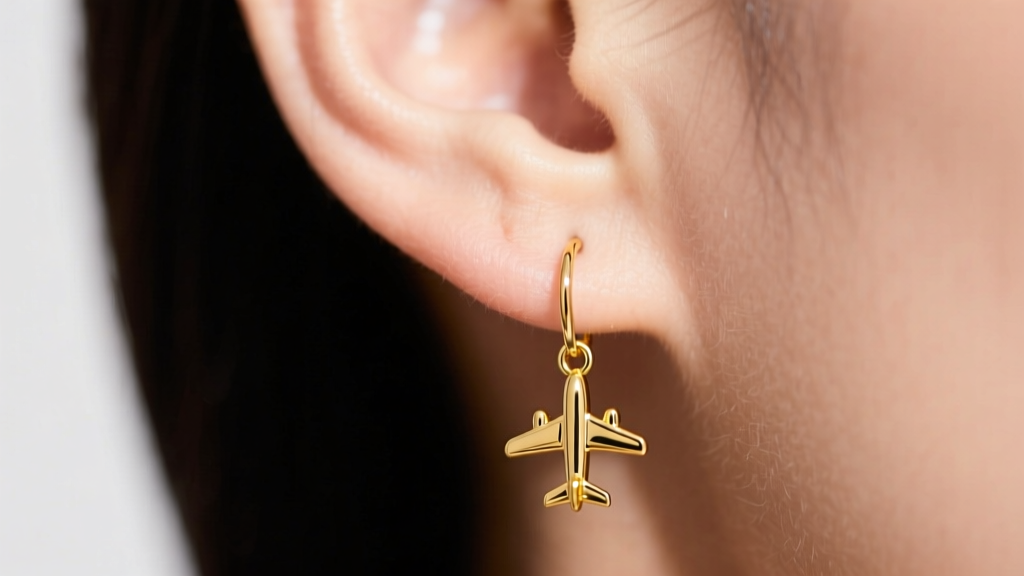
Weight Distribution & The 'Fulcrum' Failure Mode
An airplane is inherently wide. A standard dangle or stud with a 30mm to 40mm wingspan introduces lateral torque to the piercing channel. If the earring's center of gravity is not perfectly aligned with the fistula, the jewelry will constantly tilt, causing the post to dig into the side of the piercing tract.
Offset Post Placement
In poorly designed aeroplane studs, the earring post is soldered to the exact dead-center of the fuselage. Because the nose of the airplane is typically denser and longer than the tail, the front-heavy design causes the 'nose' to droop downward, making the airplane look like it is crashing. Expert jewelers solve this via offset post placement, soldering the post 2mm to 4mm forward toward the nose to act as a counterbalance, ensuring the plane sits perfectly horizontal on the earlobe.
Threadless vs. Friction Backs
For wide aeroplane studs, standard butterfly friction backs often fail to provide enough surface area to prevent the earring from spinning or sagging. Threadless (press-fit) labret ends are vastly superior. The internal tension of the bent pin grips the shaft tightly, and the wide, flat base of a threadless backing acts as a stabilizer, distributing the lateral weight of the wingspan across a broader area of the earlobe's posterior.
Gauge Sizing & Piercing Placement Matrix
Wearing the wrong gauge for the specific piercing placement is a primary cause of the 'cheese-cutter effect'—where a thin wire slowly migrates through the tissue under the weight of the jewelry. Below is a technical matrix for matching aeroplane earring dimensions to specific ear anatomy.
| Aeroplane Style | Wingspan | Required Gauge | Best Placement | Backing Type |
|---|---|---|---|---|
| Micro Stud | 8mm - 12mm | 20g (0.81mm) or 18g (1.0mm) | Standard Lobe, Helix | Friction or Threadless |
| Widespan Stud | 25mm - 40mm | 18g (1.0mm) or 16g (1.29mm) | Standard Lobe Only | Threadless (Press-fit) |
| Dangle / Drop | 15mm - 30mm | 18g (1.0mm) or 16g (1.29mm) | Standard Lobe, Conch | Hinge or Secure Clasp |
| Ear Cuff (No Pierce) | 10mm - 20mm | N/A (Tension Band) | Upper Cartilage Ridge | Adjustable Tension |
Note: Never place a standard 22g (0.64mm) novelty hook into a 16g cartilage piercing. The thin wire will act like a blade against the dense cartilage tissue, leading to irreversible migration and rejection.
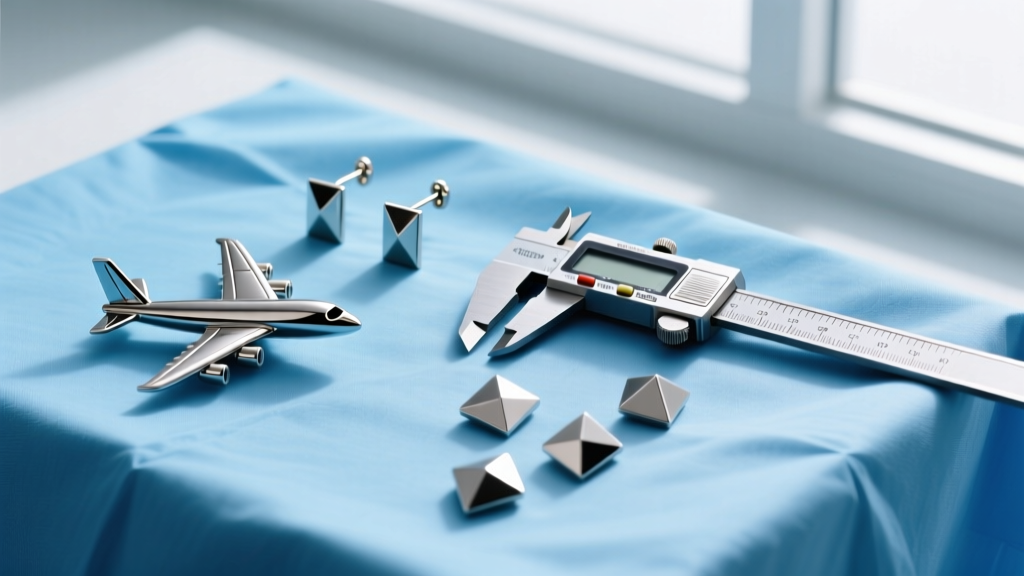
Surface Finishes and Enamel Durability
Aviation jewelry frequently utilizes vitreous enamel or epoxy resins to replicate airline liveries, military insignias, or cockpit glass. The longevity of these colors depends entirely on the application method.
- Vitreous Enamel (Fired): Fused to the metal at temperatures exceeding 1,400°F (760°C). This creates a glass-like surface that will not fade, chip easily, or react to skin oils. It is the hallmark of luxury aeroplane earrings.
- Cold Epoxy Resin: Poured into recessed metal cavities and air-dried. While cheaper and capable of brighter, neon colors, epoxy will yellow over time when exposed to UV light and will degrade upon contact with alcohol-based perfumes or hand sanitizers.
- Anodized Titanium: For a more modern, stealth-bomber aesthetic, titanium can be anodized using electrical currents to create a permanent, hypoallergenic oxide layer in colors like gunmetal, deep blue, or gold, completely eliminating the need for enamel.
Maintenance: Preserving Micro-Details
The intricate crevices of miniature propellers and landing gear trap sebum, dead skin cells, and hair products. Submerging detailed aeroplane earrings in ultrasonic cleaners can be disastrous if the piece contains epoxy-set micro-gemstones (like tiny rubies for navigation lights), as the high-frequency vibrations will shatter the adhesive bond.
Expert Cleaning Protocol: Soak the earrings in a warm bath of distilled water and mild, phosphate-free castile soap for 10 minutes. Use a single-tufted end-tuft brush (often used for orthodontic braces) to gently agitate the micro-crevices around the wings and tail fins. Rinse with distilled water and dry immediately with a microfiber cloth to prevent water spots on high-polish surfaces.
By prioritizing implant-grade materials, respecting the physics of lateral weight distribution, and adhering to strict gauge requirements, you can curate a collection of aeroplane earrings that are not only visually striking but biomechanically sound for decades of continuous wear.


