How to Organise Earrings: A Step-by-Step Storage Guide
Learn how to organise earrings with our step-by-step guide. Discover top storage solutions for studs, hoops, and dangles to prevent tarnish and loss.

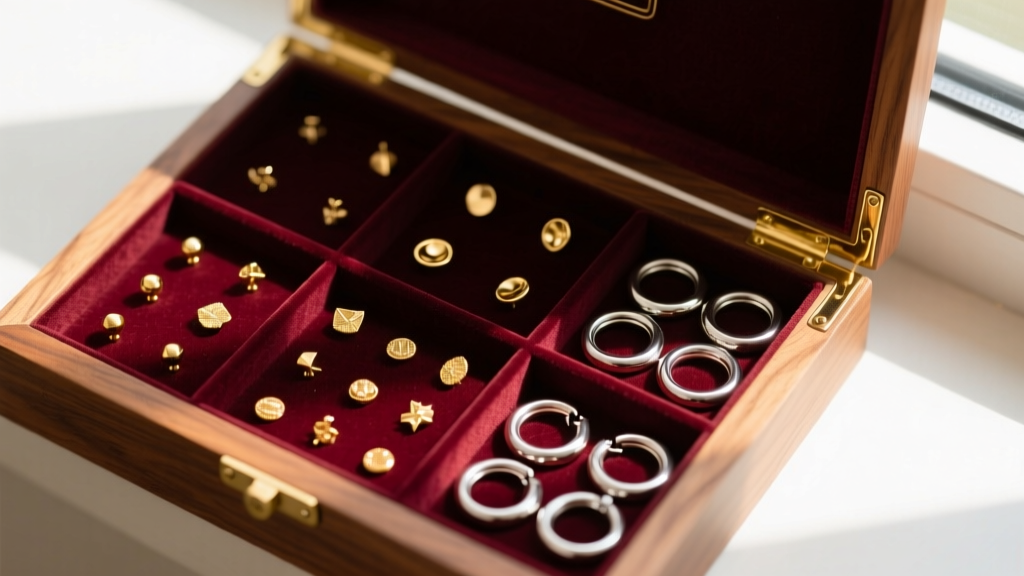
Learning how to organise earrings properly is not just about maintaining a tidy vanity; it is a critical practice for preserving the structural integrity and material quality of your jewellery. Earrings are uniquely vulnerable to environmental damage, mechanical stress, and misplacement due to their small size and intricate components. From delicate 18k gold huggies to heavy gemstone dangles, every earring type requires a specific storage approach to prevent bent posts, stripped threads, and accelerated tarnishing.
In this comprehensive guide, we break down the exact steps to audit, clean, and store your earring collection, utilising material science and gemological best practices to ensure your pieces remain in pristine condition for decades.
The Hidden Cost of Poor Earring Storage
Many collectors toss their earrings into a generic communal tray or a tangled velvet pouch. This leads to three primary failure modes:
- Mechanical Deformation: Pure 24k gold and high-karat 18k gold alloys have a low Vickers hardness score. When heavy dangles are piled on top of studs, the friction and weight can easily bend the posts or warp hinged snap closures on hoops.
- Gemstone Abrasion: Storing diamonds (Mohs 10) in the same compartment as pearls (Mohs 2.5-4.5) or opals (Mohs 5.5-6.5) guarantees micro-scratches on the softer stones. According to the Gemological Institute of America (GIA), diamonds can scratch almost any other gemstone and even other diamonds if they rub together repeatedly.
- Chemical Tarnishing: Sterling silver (925) contains 7.5% copper. When exposed to ambient humidity and trace hydrogen sulfide in the air, the copper reacts to form silver sulfide—a black, stubborn tarnish layer that degrades the metal's finish over time.
Step 1: Audit and Sort by Material, Gauge, and Hardness
Before purchasing an organiser, you must audit your collection. Group your earrings not just by style, but by their metallurgical and gemological properties. This prevents cross-contamination of tarnish and physical scratching.
Pay special attention to the gauge size of your posts. Standard lobe earrings are typically 20G (0.81mm) or 18G (1.02mm), while cartilage pieces often range from 16G (1.29mm) to 14G (1.60mm). If you use an acrylic organiser with pre-punched holes designed for 20G wires, forcing a 14G titanium or steel post into the hole will crack the acrylic or permanently bend the earring post.
Material Sorting Matrix
| Material / Grade | Mohs / Hardness | Tarnish Risk | Ideal Storage Type |
|---|---|---|---|
| ASTM F136 Titanium | Very Rigid | Zero | Open acrylic trays, slotted silicone |
| 18k Solid Gold | Soft (Vickers ~125) | Very Low | Individual velvet slots, lined wood |
| 925 Sterling Silver | Moderate | High | Sealed containers with anti-tarnish strips |
| Pearls / Opals | 2.5 - 6.5 (Soft) | N/A (Organic/Porous) | Breathable fabric pouches, away from heat |
Step 2: Selecting the Right Organiser Architecture
Not all earring organisers are created equal. The market is flooded with cheap, mass-produced plastic grids that fail to accommodate the diverse mechanics of modern jewellery. Here is how to match your earring type to the correct storage architecture.
Studs, Huggies, and Threaded Backs
For standard friction-back studs, a slotted silicone pad or a perforated acrylic sheet is ideal. Silicone grips the post gently without bending it. However, if you own high-end studs with screw-backs (common in luxury diamond solitaires), avoid pushing them into tight holes. The friction can strip the microscopic threads on the post. Instead, store screw-backs in shallow, divided wooden trays where the earring and its backing can sit side-by-side without pressure.
Pricing expectation: High-quality silicone and acrylic inserts range from $15 to $35, while custom-fitted wooden inserts cost $50 to $120.
Hoops, Dangles, and Ear Cuffs
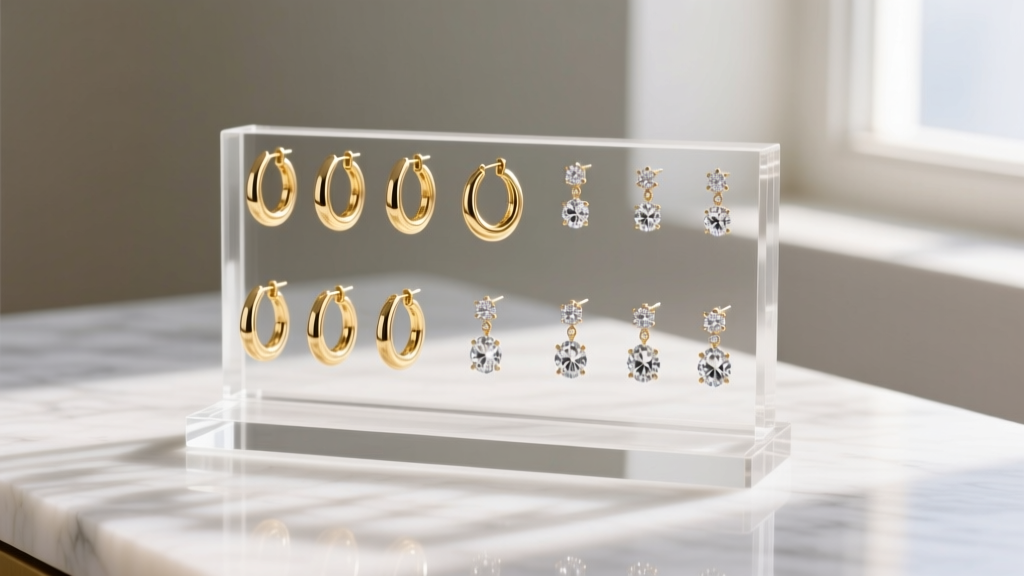
Hoops and dangles require vertical clearance. Storing a 50mm drop earring flat in a shallow drawer will force the wire to bend at the hinge point, eventually causing metal fatigue and snapping. Invest in a hanging earring tree or a deep-compartment leather roll for travel. For huggies with hinged closures, ensure they are stored fully closed; leaving them open in a crowded drawer often results in the delicate hinge pin becoming dislodged.
Step 3: Environmental Control and Anti-Tarnish Protocols
Once your earrings are sorted and placed in the correct physical organiser, you must control the micro-climate inside the storage unit. This is especially critical for sterling silver, brass, and copper alloys.
"Tarnish is not a defect in the silver; it is a natural chemical reaction. Controlling the environment is the only way to halt the process without relying on abrasive polishing." — The Silver Institute
To neutralise tarnish, place 3M Anti-Tarnish Strips inside your drawers or jewellery boxes. These strips utilise copper-based particles that absorb hydrogen sulfide and other corrosive gases from the air before they can reach your silver. Replace these strips every 3 to 6 months. Additionally, avoid storing your jewellery box in the bathroom; the extreme fluctuations in humidity and temperature from showers will rapidly degrade both metals and organic gemstones like pearls.
Step 4: The Pre-Storage Cleaning Routine
Never put a worn earring directly back into your organiser without a quick wipe. Human sebum, sweat, and cosmetic residues (like foundation and hairspray) create an acidic film on the metal. Over time, this film accelerates oxidation and attracts dust, which acts as an abrasive paste against gemstone settings.
- Wipe: Use a clean, lint-free microfibre cloth to gently wipe the post, the back of the setting, and the gemstone.
- Inspect: Check the prongs on gemstone settings. If a prong is lifted, store the piece separately in a soft pouch and take it to a jeweller immediately to prevent stone loss.
- Sanitise (Optional): For body jewellery (like cartilage studs or clickers), wipe the post with a 70% isopropyl alcohol pad before storage to eliminate bacteria, ensuring it is fully dry before placing it in a closed container to prevent moisture trapping.
Troubleshooting Common Storage Failures
Even with a meticulous system, issues can arise. Here is how to troubleshoot the most common earring storage problems:
- Stuck Butterfly Clutches: If a friction back becomes fused to the post due to dried cosmetics or oxidation, do not pull it with pliers, as this will snap the post. Soak the earring in warm water with a drop of mild dish soap for 10 minutes, then gently twist the clutch off.
- Green Discolouration on Skin/Metal: If your stored earrings develop a green tinge, this is copper oxidation from sweat reacting with base metals or low-karat gold alloys. Clean with a gentle jewellery polishing cloth and store with a silica gel packet to absorb residual moisture.
- Lost Earring Backs: Dedicate a small, lidded glass apothecary jar specifically for spare earring backs (both silicone and metal). Keeping them in a communal drawer guarantees they will be lost or swallowed by the vacuum cleaner.
By treating your earring collection with the same level of care as a professional jeweller, you protect your financial investment and ensure that every piece is ready to wear, pristine, and perfectly paired whenever you need it.


