How to Fix Broken Pearl Earrings: Material & Repair Guide
Discover why pearl earrings break and how to fix them. Compare nacre, metal, and adhesive properties to permanently repair broken pearl earrings.

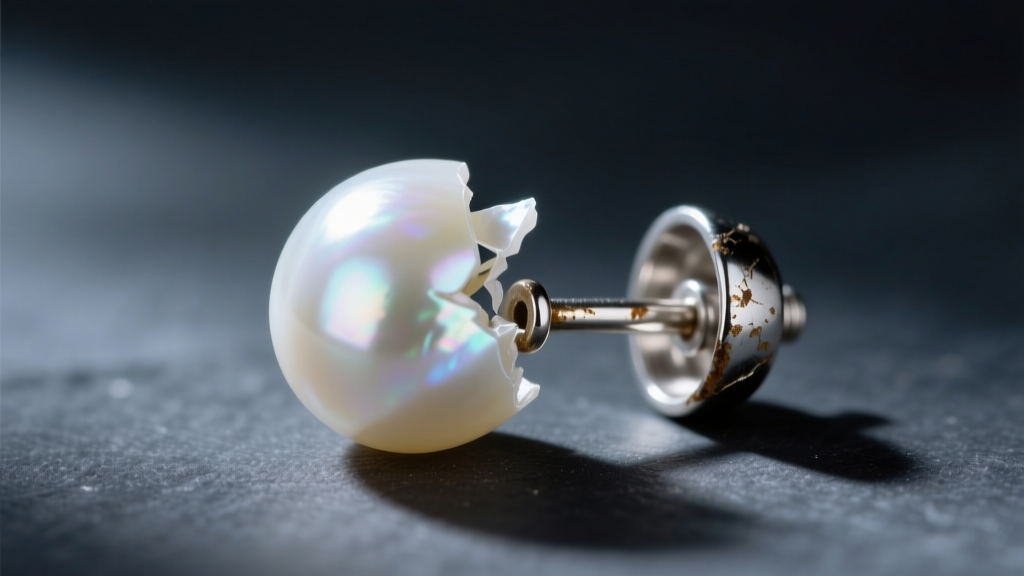
Pearl earrings are a cornerstone of fine jewelry, but their unique organic composition makes them highly susceptible to specific structural failures. When you encounter broken pearl earrings, the issue rarely stems from the pearl itself shattering; instead, it is almost always a failure at the junction where organic nacre meets inorganic metal and synthetic adhesives. Understanding the material science behind these components is the only way to execute a lasting repair. In this comprehensive guide, we break down the metallurgical and chemical properties of pearl earring components, providing you with a professional-grade framework for restoration and preventative care.
The Anatomy of a Pearl Earring Failure
To fix broken pearl earrings, you must first understand why they detach. Most pearl studs utilize a "half-drilled" configuration, where a hole is drilled approximately 1mm to 1.5mm into the nacre. This hole receives a metal pin (the post) that is seated inside a concave metal cup. The bond relies entirely on adhesive friction and chemical adhesion.
According to the Gemological Institute of America (GIA), pearls rank between 2.5 and 4.5 on the Mohs scale of hardness. This extreme softness means the nacre cannot be threaded or mechanically locked like a gemstone with a girdle. Furthermore, pearls are porous and contain roughly 2% to 4% water. When environmental humidity drops, or when the pearl is exposed to harsh chemicals, the nacre can micro-shrink, breaking the rigid seal of inferior adhesives and causing the pearl to pop off the post.
Material Compatibility Matrix: Metals and Nacre
The metal chosen for the earring post and cup drastically influences the longevity of the adhesive bond. As of 2026, jewelers have moved beyond basic sterling silver for high-end pearl settings due to oxidation issues. Below is a comparison of common post materials and their interaction with pearl adhesives.
| Metal Type | Oxidation Risk | Adhesive Bond Strength | Best Use Case |
|---|---|---|---|
| Sterling Silver (925) | High (Tarnishes and expands microscopically) | Moderate (Tarnish breaks glue seal) | Budget-friendly, low-wear pieces |
| 14k / 18k Yellow Gold | Very Low | Excellent (Porous alloy grips epoxy) | Heirloom and daily-wear studs |
| Grade 23 Titanium (Ti6Al4V) | None (Highly inert) | Poor to Moderate (Requires surface scoring) | Hypoallergenic and cartilage piercings |
| Surgical Steel (316L) | Low | Moderate (Smooth surface resists glue) | Mass-market fashion jewelry |
The Chemistry of Adhesives: Why Super Glue Ruins Pearls
The most common mistake consumers make when attempting to repair broken pearl earrings is reaching for cyanoacrylate (commonly known as Super Glue). From a material science perspective, cyanoacrylate is disastrous for pearls for two reasons:
- Exothermic Reaction: As cyanoacrylate cures, it releases heat. Because pearls are highly sensitive to thermal shock, this localized heat can cause the nacre to craze (develop micro-fractures) or dehydrate, leading to permanent dullness.
- Brittleness and Lack of Gap-Filling: Super glue cures into a rigid, brittle plastic. It lacks the viscosity to fill the microscopic gaps between a 14k gold cup and a curved pearl base. When the earring experiences lateral shear force (e.g., pulling a sweater over your head), the brittle glue shatters.
The Professional Standard: Two-Part Jeweler's Epoxy
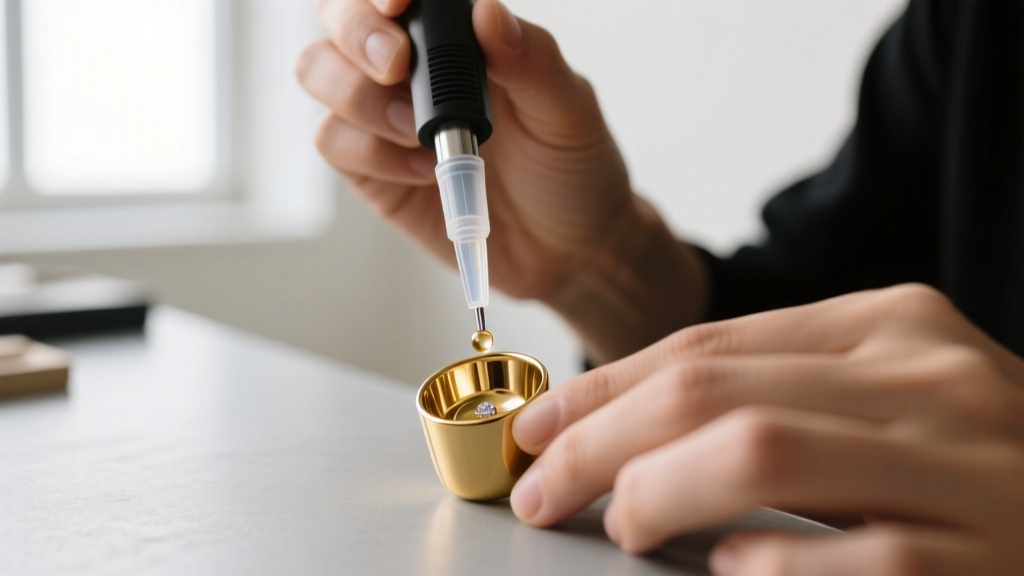
Master jewelers and lapidaries rely on two-part epoxy resins, such as Devcon 5-Minute Epoxy or specialized formulations available through suppliers like Rio Grande. Epoxy provides a flexible, gap-filling bond that can withstand the natural expansion and contraction of the organic pearl without transferring destructive shear stress to the nacre. For smaller, lightweight seed pearls, a flexible cyanoacrylate alternative like G-S Hypo Cement is sometimes used, but for standard 7mm to 10mm Akoya or Freshwater pearls, epoxy remains the undisputed champion.
Step-by-Step Repair Protocol for Broken Pearl Earrings
If your pearl has detached, follow this material-conscious protocol to ensure a permanent bond.
1. Solvent Stripping and Degreasing
Do not simply apply new glue over old glue. You must remove the degraded adhesive from both the metal cup and the pearl's drill hole. Dip a cotton swab in 100% pure acetone and gently swab the inside of the metal cup. Warning: Acetone is generally safe for untreated, high-quality nacre, but it will strip the dye from color-treated freshwater pearls. If you suspect your pearls are dyed, use high-purity isopropyl alcohol (99%) instead, though it requires more mechanical agitation.
2. Mechanical Surface Preparation
Adhesives require microscopic abrasions to grip. Take a fine needle or a miniature wire brush and lightly score the inside of the metal cup. If you are using a Grade 23 Titanium post, scoring is absolutely mandatory, as titanium's natural oxide layer is too smooth for epoxy to grip effectively. Do not score the inside of the pearl's drill hole, as this can weaken the nacre walls and cause the pearl to split when the post is inserted.
3. Epoxy Mixing and Application
Mix your two-part jeweler's epoxy on a non-porous surface (like a glass slide) using a wooden toothpick. Avoid using metal tools to mix, as they can introduce unwanted ions into the resin. Apply a minuscule drop of epoxy to the tip of the metal pin, and use a needle to coat the inner walls of the metal cup. You want enough adhesive to create a seal, but not so much that it squeezes out and creates a visible rim around the base of the pearl.
4. Curing and Alignment
Seat the pearl onto the post with a gentle twisting motion to distribute the epoxy evenly. Wipe away any excess immediately with a microfiber cloth lightly dampened with alcohol. Prop the earring upright in a small cup of dry rice or a specialized jewelry curing block, ensuring the pearl is facing perfectly straight. Allow the epoxy to cure for a full 24 hours at room temperature (approx. 70°F / 21°C) before wearing.
Upcycling Irreparably Damaged Pearls
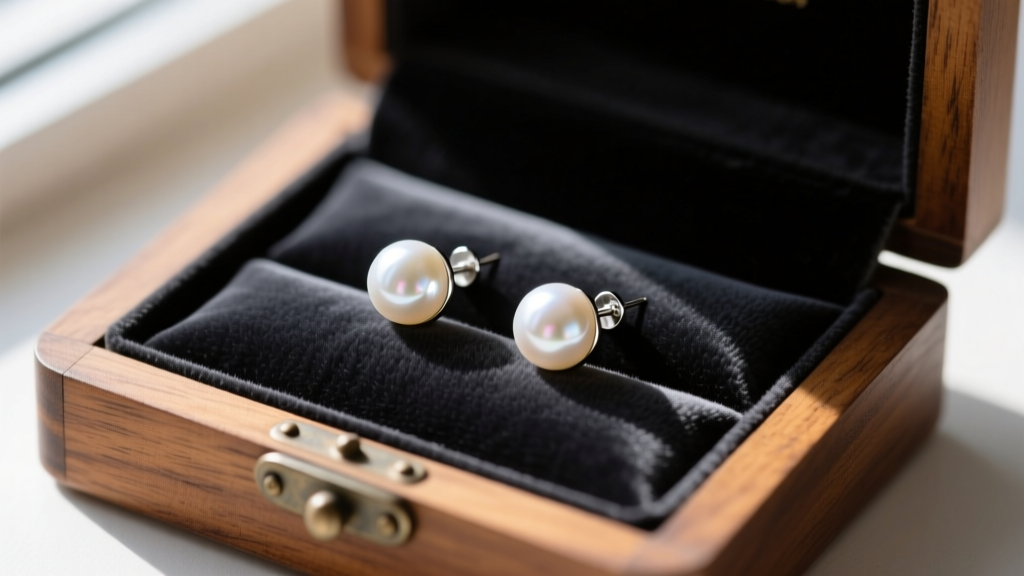
Sometimes, broken pearl earrings cannot be re-glued. If the drill hole has been "blown out" (meaning the nacre around the hole has chipped away, making the hole too wide for the post to grip), or if the nacre has peeled due to prolonged exposure to acidic skin pH, the half-drilled setting is no longer viable.
In these cases, material upcycling is the best approach. A bench jeweler can carefully drill entirely through the pearl using a diamond-tipped micro-bit with continuous water lubrication to prevent thermal shock. Once fully drilled, the pearl can be mounted on a standard wire post with a secure mechanical backing, or incorporated into a wire-wrapped cage setting that relies on tension rather than adhesive. This not only saves the heirloom nacre but transforms the piece into a more secure, mechanically locked design.
Preventative Material Care in 2026
Preventing your pearl earrings from breaking in the first place requires respecting their organic nature. Modern jewelry conservation standards dictate strict boundaries for pearl care:
- Avoid Ultrasonic Cleaners: The high-frequency cavitation bubbles generated by ultrasonic cleaners will literally vibrate the adhesive bond apart and can cause the nacre layers to delaminate.
- The "Last On, First Off" Rule: Cosmetics, hairsprays, and perfumes contain volatile organic compounds (VOCs) and alcohols that degrade both the epoxy seal and the pearl's natural luster. Always apply pearls after your beauty routine.
- Humidity Control: Store pearls in a soft, breathable cotton pouch rather than an airtight plastic bag or a safety deposit box. Pearls need ambient moisture to maintain their structural integrity; sealing them in dry plastic accelerates dehydration and subsequent adhesive failure.
By understanding the delicate interplay between organic nacre, inert metals, and modern polymer adhesives, you can successfully rescue broken pearl earrings and ensure they remain secure for generations to come.


