Why Do My Earrings Smell? Science, Metals, and Cures
Discover why your earrings smell, the science behind ear odor, and how to fix it with hypoallergenic metals and proper cleaning routines.

The Uncomfortable Truth: What Exactly Is That Smell?
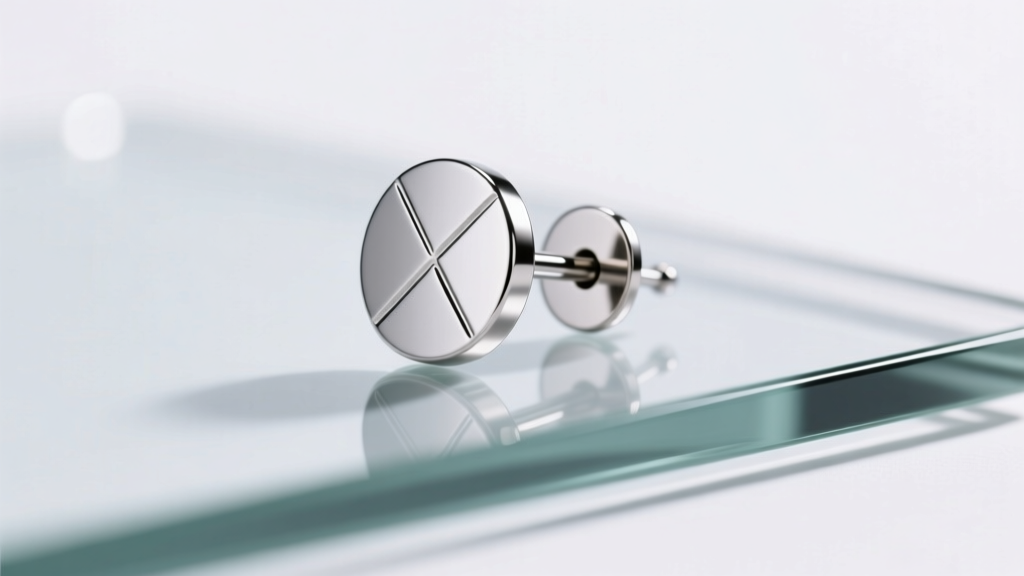
If you have ever taken out a pair of stud earrings and been hit with a pungent, cheesy odor, you are not alone. In the piercing community, this is colloquially known as 'ear cheese.' But why do my earrings smell so bad, even when I shower daily? The answer lies in a perfect storm of human biology, jewelry design, and microbiology.
The odor is not actually the metal itself degrading. Instead, it is a biological buildup. Your earlobes are packed with sebaceous glands that secrete sebum (natural skin oils). When sebum mixes with dead skin cells (keratin) and the natural microbiome of your skin—specifically bacteria like Corynebacterium and Staphylococcus hominis—it creates a paste. As these bacteria break down the proteins and lipids in this trapped paste, they release volatile sulfur compounds, which produce that distinct, foul odor.
While this is a natural biological process, certain earring materials and designs act as magnets for this buildup, accelerating the smell and increasing the risk of contact dermatitis.
Material Matters: Which Metals Trigger the Worst Odors?
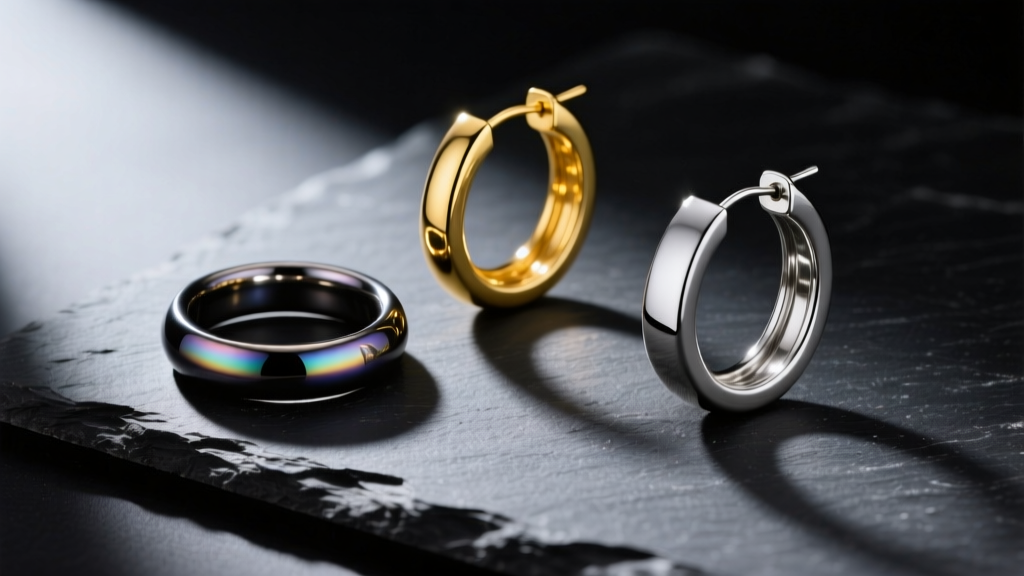
Not all jewelry is created equal. When you ask, 'why do my earrings smell?', the culprit is often a reactive metal that causes micro-inflammation in the piercing fistula (the hole). This inflammation causes the body to weep clear lymphatic fluid, which mixes with the sebum and creates a much thicker, smellier paste.
According to the Association of Professional Piercers (APP), only specific grades of metal are truly biocompatible for long-term wear. Below is a breakdown of common earring metals and their odor-causing potential.
| Metal Type | Grade / Standard | Odor Risk | Why It Reacts |
|---|---|---|---|
| Implant-Grade Titanium | ASTM F-136 | Very Low | Highly biocompatible, zero nickel, polished mirror finish prevents debris adherence. |
| Niobium | Unalloyed / Pure | Low | Hypoallergenic and inert, though slightly softer than titanium, making it prone to micro-scratches if not polished well. |
| Yellow / White Gold | 14k or 18k Solid | Low to Medium | Safe if nickel-free. White gold often contains nickel alloys which can trigger weeping and odor in sensitive ears. |
| Surgical Steel | 316L / ASTM F-138 | Medium to High | Contains up to 15% nickel. The porosity of lower-grade steel traps bacteria and dead skin. |
| Fashion Alloy / Brass | Unknown / Plated | Extremely High | Reacts with skin acidity, corrodes quickly, and causes severe contact dermatitis, leading to heavy biological buildup. |
The Anatomy of an Odor-Prone Piercing
Beyond the metal itself, the physical design of your earring plays a massive role in trapping odor-causing bacteria. If you are wearing standard friction-back studs (commonly known as butterfly backs), you are creating a mechanical trap for dead skin and oils.
Why Butterfly Backs Are the Main Culprits
Standard push-pin earrings with butterfly backs feature multiple crevices, sharp angles, and a hollow backing mechanism. As the post slides through the earlobe, it acts like a squeegee, pulling dead skin cells and sebum directly into the hollow cavity of the butterfly back. Because this area is dark, warm, and poorly ventilated, it becomes an incubator for anaerobic bacteria. Furthermore, the thin posts (usually 20-gauge or 0.8mm) can cause the earlobe to sag slightly, creating a micro-fold in the skin where moisture pools.
The Flat-Back Labret Solution
To eliminate the mechanical trap, professional piercers recommend switching to flat-back labret studs. These feature a single, solid post with a flat disc on the back that sits flush against the earlobe.
- Gauge Size: Opt for 18-gauge (1.0mm) or 16-gauge (1.2mm) posts. The slightly thicker post prevents the 'cheese-cutter effect' and provides a smoother surface that is easier to clean.
- Threading: Choose internally threaded or threadless (push-pin) posts from reputable brands like BVLA, Inni, or Anatometal. External threading (where the screw is on the post) harbors bacteria and damages the fistula upon insertion.
Your Step-by-Step Protocol to Eliminate Ear Odor
Now that you understand the biology and mechanics behind the smell, it is time to implement a targeted cleaning protocol. Throwing away your current earrings won't solve the issue if the fistula itself harbors the bacteria. Follow this routine to reset your piercing's microbiome.
Step 1: The Saline Soak
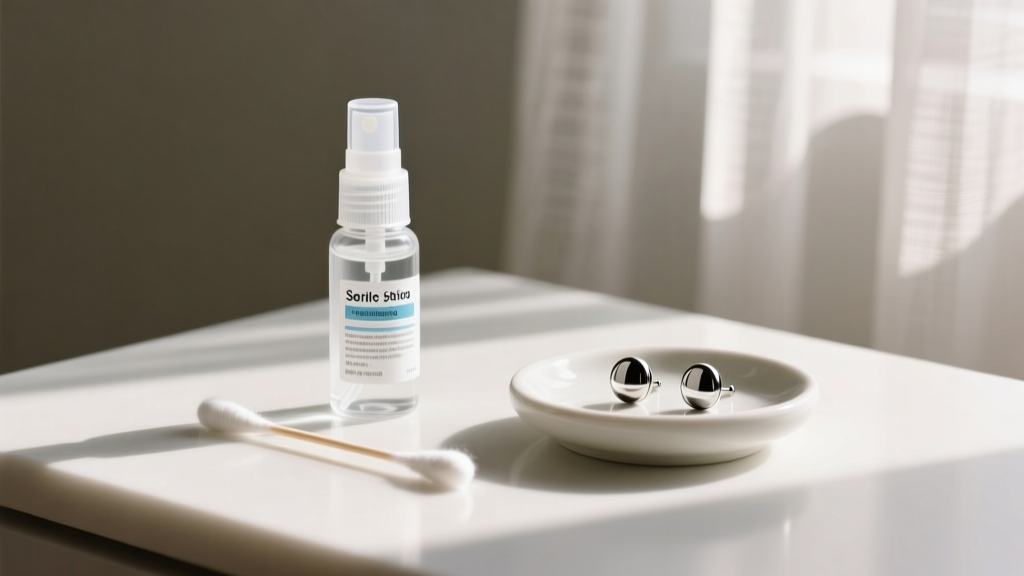
Do not use rubbing alcohol or hydrogen peroxide. These harsh astringents strip the earlobe of its natural moisture barrier, causing micro-tears that signal the body to overproduce sebum to compensate. Instead, use a sterile 0.9% sodium chloride wound wash (like NeilMed Piercing Aftercare). Spray it onto a sterile cotton swab and gently clean the front and back of the earlobe, allowing it to sit for 30 seconds to soften any hardened debris.
Step 2: Chemical Exfoliation
Because the smell is caused by the breakdown of keratin (dead skin protein), you need a keratolytic agent to dissolve it. Apply a 7% Glycolic Acid toner (such as The Ordinary Glycolic Acid 7% Toning Solution) to a cotton pad and gently wipe the back of your earlobes twice a week. This lowers the pH of the skin, making it inhospitable to odor-causing bacteria while gently dissolving the keratin buildup.
Step 3: Jewelry Sanitization
When you remove your earrings for cleaning, wash them with warm water and a mild, fragrance-free dish soap. Use a soft-bristled baby toothbrush to gently scrub the post and the backing. For non-porous metals like titanium and solid gold, you can also soak the jewelry in a small cup of 70% isopropyl alcohol for 10 minutes to sterilize it before reinsertion. Never use alcohol on porous gemstones like pearls or opals.
When to See a Professional: Infection vs. Normal Buildup
It is vital to differentiate between normal biological odor and a medical infection. According to the American Academy of Dermatology, allergic contact dermatitis from nickel can mimic an infection, causing weeping, crusting, and odor.
The Golden Rule of Piercing Health: If the odor is accompanied by clear or slightly white, paste-like buildup, it is normal sebum and dead skin. If the odor is accompanied by thick yellow or green pus, radiating heat, extreme tenderness, or a foul, rotting smell, you may have a bacterial infection requiring medical intervention.
If you suspect an infection or a severe nickel allergy, remove the jewelry, switch to an ASTM F-136 titanium flat-back stud to keep the hole from closing while allowing it to breathe, and consult a dermatologist or a licensed professional piercer. By understanding the science of your skin and investing in high-quality, biocompatible jewelry, you can permanently eliminate the guesswork—and the odor—behind why your earrings smell.


