Glass Bead Earrings in 2026: Artisan Trends & Styling Guide
Discover the 2026 trends for glass bead earrings. Explore artisan lampwork, Murano styles, weight limits for cartilage, and expert styling tips.

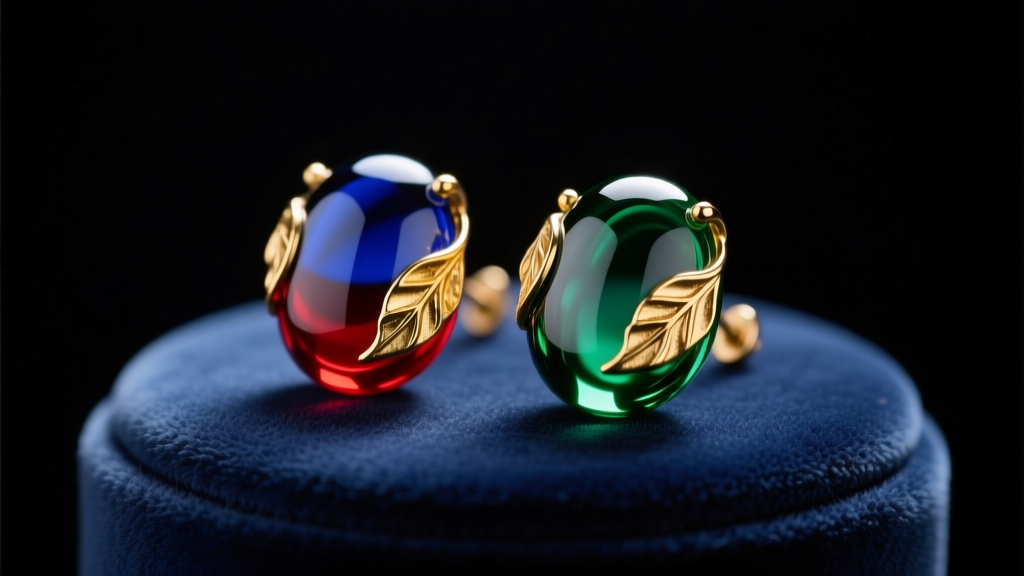
The 2026 Resurgence of Artisan Glass Bead Earrings
As we navigate the jewelry landscape of 2026, a distinct shift is occurring in the accessories market. The dominance of lightweight, mass-produced acrylics and resins that defined the early 2020s Y2K revival is waning. In its place, glass bead earrings have emerged as the definitive statement of sustainable luxury and artisanal craftsmanship. Consumers and high-fashion houses alike are gravitating toward the tactile weight, optical refraction, and heritage techniques of genuine glass. Unlike synthetic polymers, glass offers a cool-to-the-touch thermal signature and a depth of color that simply cannot be replicated in a mold. This trend analysis breaks down the material science, structural mechanics, and styling frameworks you need to master the glass bead movement this year.
Material Deep Dive: Murano vs. Lampwork vs. Recycled Glass
Not all glass is created equal. The optical clarity, durability, and price point of your earrings depend entirely on the origin and manufacturing process of the beads. According to the Gemological Institute of America (GIA), glass identification and classification rely heavily on refractive index and internal inclusions. Here is how the top three artisan categories compare in 2026:
| Glass Type | Base Composition | Average Weight (12mm Bead) | 2026 Price Range | Best Application |
|---|---|---|---|---|
| Murano (Venetian) | Soda-lime glass, often lead-free with 24k gold foil inclusions | 3.8 - 4.2 grams | $120 - $450+ | High-end drop earrings, formal wear, lobe stretching |
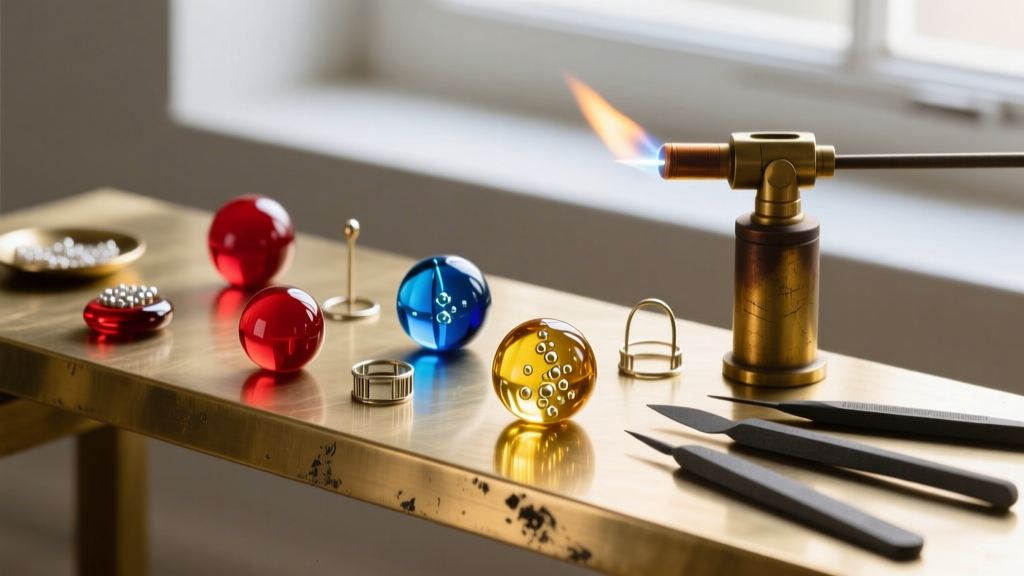
| Artisan Lampwork | Soft glass or borosilicate, torch-melted over a brass mandrel | 4.0 - 4.8 grams | $45 - $150 | Everyday statement studs, colorful dangles, bohemian styles |
| Recycled / Kiln-Fused | Crushed post-consumer glass, kiln-fired to a matte or frosted finish | 3.5 - 4.0 grams | $30 - $85 | Minimalist hoops, sustainable fashion lines, cartilage studs |
Murano glass remains the gold standard for luxury. As detailed in Britannica's comprehensive guide to Murano glass, the centuries-old soda-lime composition allows for unparalleled clarity and the seamless integration of metallic inclusions. Lampwork, conversely, offers bespoke, highly detailed floral or geometric patterns trapped within the glass matrix, making every single bead a one-of-a-kind artifact.
Weight Mechanics and Gauge Sizing: Lobe vs. Cartilage
The most critical failure point when wearing glass bead earrings is ignoring the specific gravity of the material. Glass has a specific gravity of approximately 2.5 g/cm³, making it more than twice as heavy as acrylic (1.18 g/cm³). A solid 15mm glass bead can easily weigh between 4.5 and 6 grams. This density requires strict adherence to jewelry gauge mechanics to prevent tissue damage.
The Lobe "Cheese-Cutter" Effect
Standard earlobe piercings are typically done at 20-gauge (0.81mm) or 18-gauge (1.0mm). When a heavy glass bead (over 5 grams) is suspended from a thin 20-gauge wire, the downward force concentrates on a microscopic surface area. Over time, this causes the "cheese-cutter effect," where the wire slowly slices through the earlobe tissue, leading to irreversible stretching or tearing.
- Under 3 grams: Safe for standard 20g or 18g headpins and fishhook wires.
- 3 to 6 grams: Requires a minimum of 16-gauge (1.2mm) wire or sturdy leverback findings to distribute the weight.
- Over 6 grams: Must be worn on 14-gauge (1.6mm) ear wires, or ideally, hung from a structural ear cuff or chain that wraps around the ear to offload the weight from the piercing hole itself.
Cartilage Limitations
Cartilage piercings (helix, conch, tragus) lack the vascular density and structural elasticity of earlobes. Heavy glass beads can cause cartilage migration, rejection, or chronic inflammation. For upper-ear placements, glass beads should be strictly limited to 6mm or smaller (weighing under 1.5 grams). If you desire the look of large glass beads in the cartilage, opt for hollow-core lampwork beads, which offer the visual volume of a 14mm bead at a fraction of the weight.
Face Shape Pairings for Glass Drop and Stud Styles
Because glass beads possess high visual weight and light-reflective properties, they draw immediate attention to the jawline and cheekbones. Pairing the correct silhouette with your face shape is essential for balanced styling in 2026.
- Round Faces: Avoid perfectly spherical glass studs, which will exaggerate facial roundness. Instead, opt for elongated, angular geometric glass beads or long, linear dangles that create a vertical illusion and elongate the neck.
- Square Faces: Soften a strong, angular jawline with smooth, rounded Murano drops or circular lampwork beads set inside delicate gold huggie hoops. The organic curves of the glass will contrast beautifully with sharp bone structure.
- Heart-Shaped Faces: Balance a wider forehead and narrower chin with teardrop-shaped glass beads or chandelier styles that add visual volume and width at the lower half of the ear.
- Oval Faces: The universal canvas. Oval faces can pull off oversized, avant-garde architectural glass beads, including asymmetrical pairs where one ear features a heavy, solid glass drop and the other features a cluster of tiny recycled glass seed beads.
Hardware Integration: Setting Glass Beads Securely
The intersection of glass and metal is where most artisan earrings fail. Glass beads have sharp edges around the drill hole that can easily fray or snap standard beading wire. When designing or purchasing glass bead earrings, inspect the hardware integration closely.
High-quality artisan pieces will use flush-cut wire wrapping (typically 24-gauge or 26-gauge sterling silver or 14k gold-filled wire) with a protective micro-bead or silicone buffer placed between the glass and the metal finding. Furthermore, the post material should ideally be ASTM F-136 implant-grade titanium or solid 14k/18k gold. Glass is heavy; cheap brass or nickel-silver posts will bend under the weight and cause contact dermatitis as the metal plating wears away from the friction.
Care, Maintenance, and Thermal Shock Prevention
Glass is highly durable against scratching (ranking around 5.5 to 7 on the Mohs hardness scale, depending on the composition), but it is uniquely vulnerable to thermal shock. Rapid temperature changes cause the outer layer of the glass to expand or contract faster than the core, leading to microscopic internal fractures or catastrophic shattering.
What to Avoid
- Wearing solid glass drop earrings in saunas, hot tubs, or while jumping into freezing cold water.
- Using ultrasonic jewelry cleaners on beads with internal gold leaf, silver inclusions, or pre-existing micro-fractures, as the high-frequency vibrations will shatter the inclusions.
- Storing glass earrings loosely in a drawer where they can strike harder gemstones like diamonds or sapphires, which will easily scratch the glass surface.
Proper Cleaning Protocol
To maintain the optical clarity of your glass bead earrings, simply wash them in lukewarm water with a drop of mild, phosphate-free dish soap. Use a soft-bristled baby toothbrush to gently clean the drill holes where sebum and skin cells accumulate. Dry immediately with a microfiber cloth to prevent water spots, and store them individually in soft flannel pouches.
Final Verdict on the Glass Bead Movement
The 2026 pivot toward glass bead earrings represents a broader consumer demand for permanence, sustainability, and tactile luxury in a market saturated with disposable fast fashion. By understanding the specific gravity of glass, respecting gauge limitations, and choosing heritage materials like Murano or artisan lampwork, you can curate an earring collection that is not only visually stunning but structurally sound for years to come. Whether you are adorning a standard lobe with a heavy gold-foil drop or点缀 a helix with a lightweight recycled glass stud, glass remains the ultimate medium for wearable, light-catching art.


