Spirit Halloween Earrings: How to Fix & Wear Them Safely
Learn how to safely wear Spirit Halloween earrings without infections or allergies. Expert troubleshooting for rough posts and base metals.

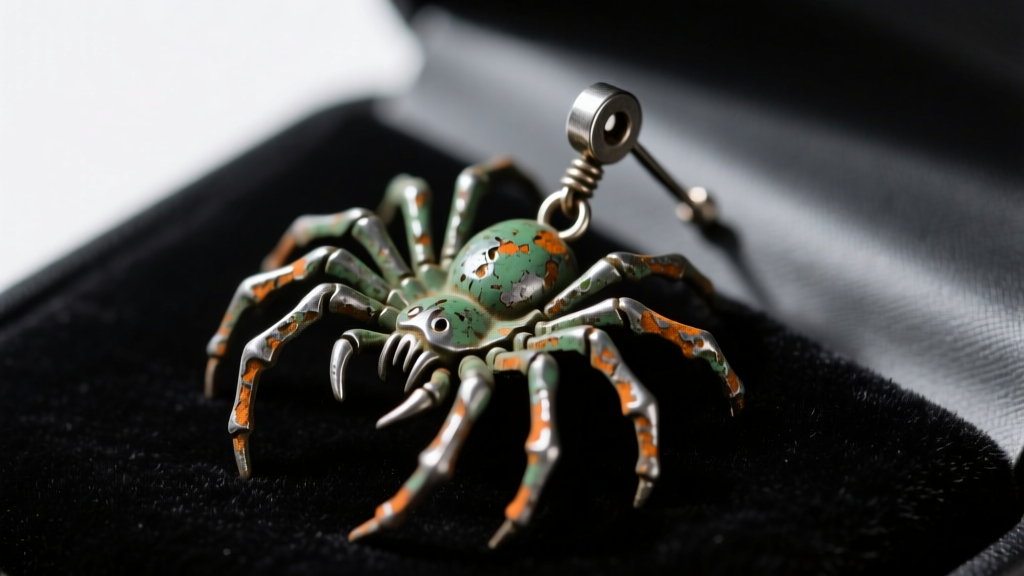
The Hidden Dangers of Novelty Halloween Jewelry
Every October, millions of shoppers flock to pop-up stores and online retailers to complete their costumes, often grabbing a pair of Spirit Halloween earrings at the checkout counter. While these novelty accessories are undeniably fun and budget-friendly, they present a unique set of dermatological and structural challenges. As a jewelry specialist, I see a massive spike in contact dermatitis, micro-tears, and localized infections in the first week of November. The root cause? A combination of unknown base metal alloys, poorly finished earring posts, and heavy, unbalanced designs that stress the earlobe.
Unlike fine jewelry crafted from implant-grade titanium, 14k gold, or surgical steel, novelty earrings are mass-produced from "pot metals"—typically zinc alloys, brass, or nickel-plated copper. When these metals interact with the natural acidity and salts in your sweat, they trigger rapid oxidation and allergic responses. However, with the right troubleshooting techniques, you can safely wear your favorite spooky dangles for a single night without compromising your ear health.
The Metallurgy of Novelty Jewelry: Why Ears Turn Green and Itch
To troubleshoot a problem, you must first understand the chemistry. The infamous "green ear" effect is not a sign of toxicity, but rather a simple chemical reaction. Most Spirit Halloween earrings are cast from brass (a copper-zinc alloy) or copper-based pot metal. When copper reacts with the oxygen, sweat, and natural oils on your skin, it forms copper chloride, a green salt that stains the epidermis.
More concerning than the green stain is the presence of nickel. According to the American Academy of Dermatology, nickel allergy is the most common cause of allergic contact dermatitis, affecting roughly 18% of adults. When nickel-plated novelty earrings are worn, the plating quickly wears thin, exposing the underlying nickel sulfate to the skin. This results in the classic symptoms: intense itching, redness, scaling, and weeping blisters along the earlobe piercing tract.
Troubleshooting the Allergic Response
- Pre-Wear Barrier: If you know you have a nickel sensitivity, you must create a physical barrier between the metal and your skin.
- Post-Wear Cleaning: Immediately upon removal, wash the earlobe with a gentle, fragrance-free cleanser to remove any residual copper chloride or metal salts.
- Hydrocortisone Intervention: If itching begins within the first hour, remove the earring immediately and apply a 1% over-the-counter hydrocortisone cream to halt the histamine response.
Troubleshooting the "Cheese Grater" Post: Gauge and Burr Issues
One of the most frequent complaints regarding Spirit Halloween earrings is the physical trauma caused by the earring post. A standard, professionally pierced earlobe is typically 20-gauge (0.81mm) or 18-gauge (1.02mm). However, to cut manufacturing costs and support the weight of heavy plastic or resin charms, novelty manufacturers often use stamped 16-gauge (1.29mm) or even 14-gauge (1.63mm) wire.
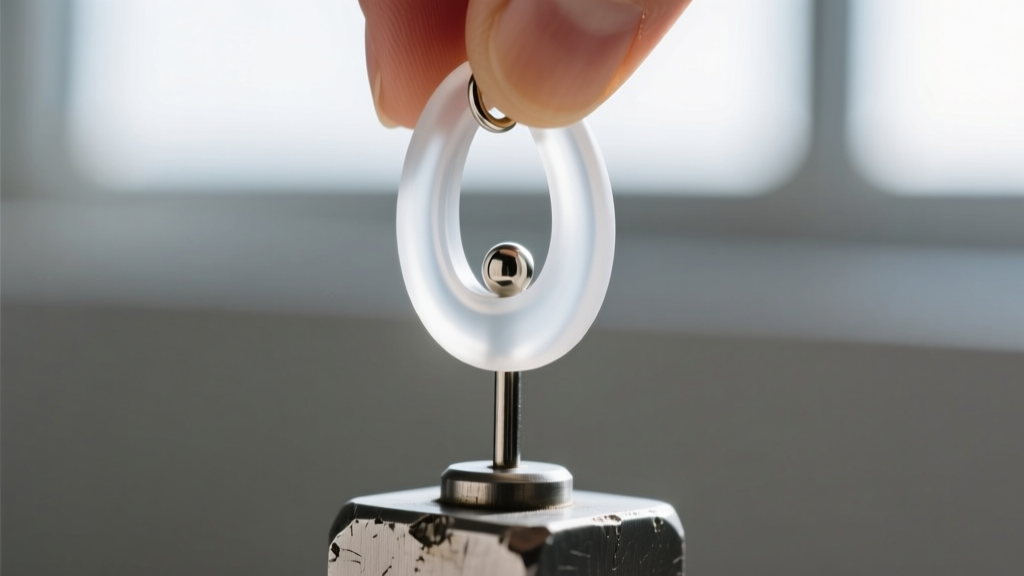
Furthermore, these posts are rarely tumble-polished. If you run your fingernail along the post of a cheap novelty earring, you will often feel sharp ridges, burrs, and a blunt, flattened tip. Forcing this unpolished, thick wire through a delicate 20-gauge fistula (the piercing hole) acts like a cheese grater, causing micro-tears in the healing tissue and introducing bacteria directly into the bloodstream.
How to Fix a Rough or Thick Post
- The Emery Board Method: Take a fine-grit nail buffer or emery board and gently roll the post against it. This will smooth out any manufacturing burrs and slightly taper the blunt tip, making insertion significantly easier.
- Silicone Earring Sleeves: If the post is simply too thick and causes pressure, purchase 20-gauge PTFE or silicone earring sleeves (often sold as "earring converters"). These act as a lubricated, hypoallergenic sheath that slides over the base metal post, reducing the gauge size that actually touches your skin and eliminating metal-to-skin contact.
- Lubrication: Never force a dry, thick post into your ear. Apply a microscopic amount of sterile saline or a water-based personal lubricant to the post to reduce friction during insertion.
The Clear Nail Polish Hack: Science, Application, and Failure Points
The most widely circulated internet hack for wearing Spirit Halloween earrings safely is coating the post and backing in clear nail polish. But does this actually work from a materials science perspective?
Clear nail polish is primarily composed of nitrocellulose dissolved in a solvent like ethyl acetate. When the solvent evaporates, it leaves behind a hard, non-porous polymer film. This film does act as an effective temporary barrier against nickel ions and copper oxidation. However, it is not a foolproof, long-term solution.
Where the Nail Polish Hack Fails
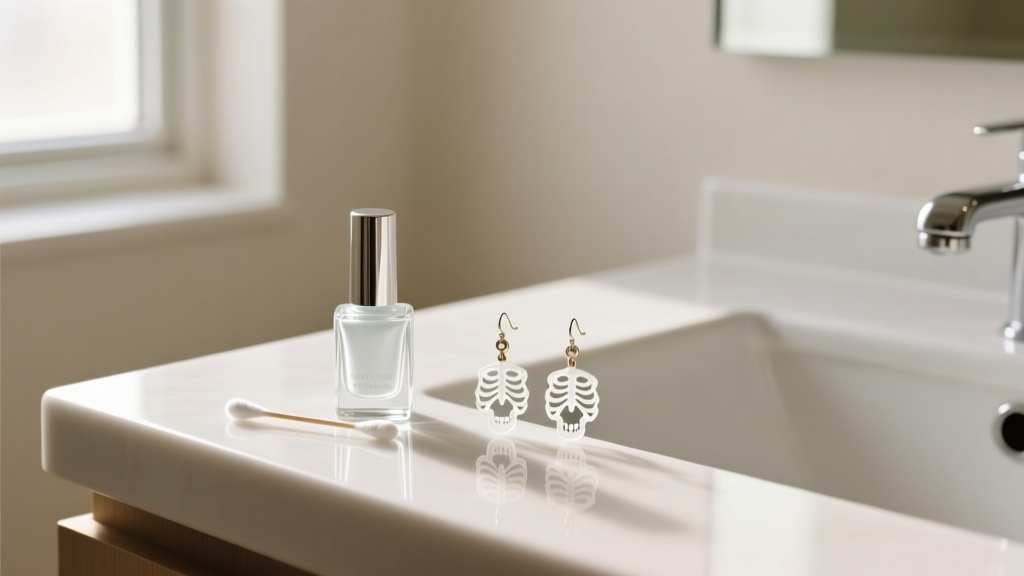
The primary failure mode of the nail polish barrier is mechanical shear. As you push the earring post through the tight fistula of your earlobe, the friction strips the nitrocellulose coating right off the metal, depositing plastic flakes inside your piercing tract while exposing the bare nickel underneath. To maximize the effectiveness of this hack, you must apply two thin coats, allowing 20 minutes of cure time between each, and only wear the earrings for a maximum of 4 to 6 hours.
Hardware Swaps: Upgrading the Hook and Backing
If you have purchased a pair of heavy, over-the-ear novelty dangles or fishhook-style drop earrings, the safest troubleshooting method is to bypass the Spirit Halloween hardware entirely. Many novelty earrings are attached to standard base-metal fishhooks via a small jump ring.
Using a pair of jewelry pliers, gently twist the jump ring open, remove the cheap base-metal hook, and replace it with a hypoallergenic 20-gauge niobium or surgical steel fishhook. This allows you to keep the fun, spooky aesthetic of the Halloween charm while ensuring that the only metal touching your piercing is biocompatible. Similarly, discard the cheap "butterfly" friction backs that come with stud-style novelty earrings. These backs harbor bacteria in their tight coils and pinch the earlobe, restricting blood flow. Replace them with flat-back silicone O-rings or medical-grade plastic friction backs to distribute the weight of the heavy charm more evenly.
Cartilage vs. Lobe: The Infection Risk Matrix
It is absolutely critical to understand that not all piercings are created equal when it comes to wearing cheap costume jewelry. The Association of Professional Piercers (APP) strictly advises against wearing any jewelry of unknown metallurgy in cartilage piercings. You can review their guidelines on jewelry safety via the safepiercing.org resources.
| Piercing Location | Tissue Type | Risk Level for Novelty Metals | Primary Complication |
|---|---|---|---|
| Standard Earlobe | Vascularized soft tissue | Moderate (Manageable for 1 night) | Contact dermatitis, green staining |
| Upper Lobe / Mid Lobe | Soft tissue / thin cartilage border | High | Micro-tearing, localized swelling |
| Helix / Tragus / Conch | Avascular cartilage | EXTREME (Never wear) | Perichondritis, cartilage necrosis |
Cartilage is avascular, meaning it lacks a direct blood supply and relies on surrounding tissues for healing and immune response. If a rough, nickel-laden Spirit Halloween earring introduces bacteria or causes severe inflammation in the helix or tragus, the resulting infection (perichondritis) can rapidly degrade the cartilage, leading to permanent "cauliflower ear" deformities. Rule of thumb: Novelty earrings are strictly for standard, fully healed lower lobes only.
Post-Halloween Removal and Lobe Rehabilitation
Once the Halloween festivities are over, the troubleshooting process shifts to aftercare. Because novelty earrings are heavy and poorly balanced, they often stretch or stress the fistula over the course of an 8-hour wear. Upon removal, your earlobes may feel tender, warm, or slightly elongated.
Immediately cleanse the area with a sterile saline wound wash (0.9% sodium chloride). Avoid using rubbing alcohol or hydrogen peroxide, as these harsh astringents will dry out the micro-tears caused by the rough earring posts. For the next 48 hours, give your earlobes a "hardware holiday." Do not wear any earrings, allowing the vascular soft tissue to rebound and flush out any residual metal salts or trapped debris. By treating your Spirit Halloween earrings as a prop rather than fine jewelry, and applying these targeted troubleshooting steps, you can enjoy your costume without paying the price in November.


