Earring Display Case Trends 2026: Curating Your Collection
Discover 2026 earring display case trends, from cast acrylics to anti-tarnish woods. Learn how to curate, light, and protect your jewelry collection.

The Shift to Curatorial Display
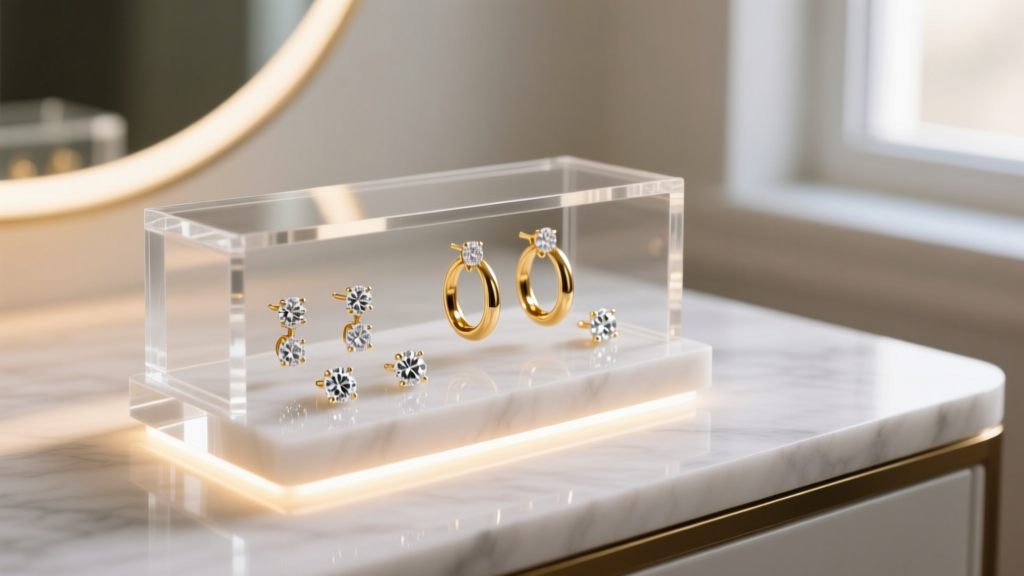
In the realm of interior design and personal style, the way we interact with our accessories has fundamentally shifted. Gone are the days of relegating fine jewelry to dark, felt-lined boxes hidden in the back of a dresser drawer. As we move through 2026, the modern collector views their accessories as functional art. According to recent spatial design analyses by Architectural Digest, the integration of visible, museum-quality storage into bedroom and dressing area architecture is one of the defining luxury home trends of the decade. An earring display case is no longer just a storage vessel; it is a curatorial statement that bridges the gap between personal adornment and interior decor.
This evolution demands a higher standard of material science, spatial ergonomics, and environmental control. Whether you are housing a minimalist collection of everyday 14k gold huggies or an expansive array of high-carat chandelier drops, selecting the right display infrastructure requires a deep understanding of jewelry conservation and aesthetic presentation.
Material Science: Beyond Basic Plastic
The market is saturated with inexpensive, mass-produced organizers, but true collection curation requires an understanding of material grades. The two dominant premium materials defining the 2026 landscape are cast acrylic and sustainably sourced hardwoods.
Cast Acrylic vs. Extruded Acrylic
When opting for a transparent earring display case, the distinction between cast and extruded acrylic is paramount. Extruded acrylic, commonly found in budget organizers, is manufactured by pushing molten plastic through rollers. This process leaves internal stresses that make the material prone to micro-cracking and clouding over time, especially when exposed to the UV radiation present in ambient sunlight. Cast acrylic, conversely, is poured into molds, resulting in a higher molecular weight and superior optical clarity. Premium cast acrylic boasts a light transmission rate of up to 92%—rivaling optical glass—while being significantly lighter and more shatter-resistant. When edge-polished with a diamond cutter, cast acrylic refracts light beautifully, elevating the visual weight of the earrings housed within.
Sustainable Hardwoods and Veneers
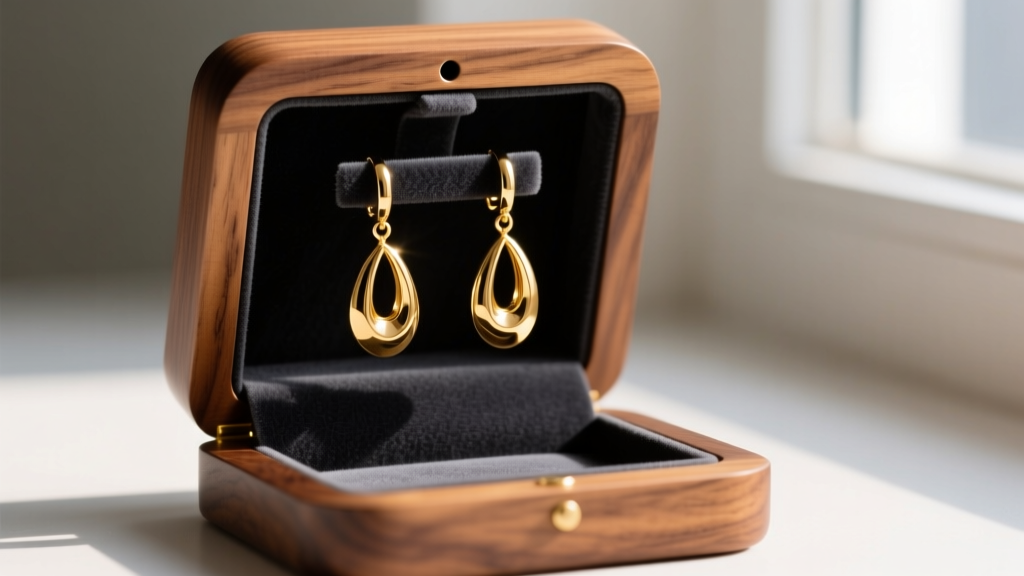
For collectors who prefer an opaque, tactile aesthetic, FSC-certified hardwoods like American Black Walnut and White Ash are the gold standard. These dense woods provide excellent structural integrity, preventing the warping that plagues MDF or particleboard alternatives. Furthermore, the natural tannins in walnut offer a subtle, earthy olfactory experience that complements a luxury dressing space. The best wooden display cases utilize precision CNC-milled joinery rather than metal hinges, which can introduce rust-inducing iron particles into the storage environment.
The Chemistry of Tarnish Prevention
A beautiful earring display case is useless if it accelerates the degradation of your metals. Sterling silver, in particular, is highly susceptible to tarnishing—a chemical reaction where silver reacts with hydrogen sulfide in the air to form silver sulfide, resulting in a dull, blackened surface. Standard velvet or cotton linings often trap ambient moisture and fail to filter airborne pollutants, inadvertently creating a microclimate that accelerates oxidation.
To combat this, elite display cases in 2026 are lined with specialized anti-tarnish textiles. The most authoritative solution is Pacific Silvercloth, a fabric embedded with microscopic silver particles. These embedded particles act as a sacrificial anode, absorbing and neutralizing tarnish-causing gases before they can reach your actual jewelry. The Smithsonian Institution recommends utilizing specialized tarnish-inhibiting barriers for long-term silver conservation, noting that controlling the immediate atmospheric environment is vastly superior to reactive polishing, which strips away microscopic layers of precious metal over time. When evaluating a wooden or leather earring display case, always verify that the interior lining utilizes active tarnish-inhibiting technology rather than passive velvet.
Lighting: The CRI and Kelvin Imperative
Lighting is the invisible architecture of jewelry display. The wrong illumination can make a flawless diamond look like cloudy glass, or render warm 18k yellow gold with a sickly greenish pallor. Integrating LEDs into an earring display case requires strict adherence to two metrics: Color Temperature (measured in Kelvin) and Color Rendering Index (CRI).
- Color Temperature (3000K - 3500K): This is the critical sweet spot. Temperatures below 2700K are too warm and will mask the spectral fire of diamonds and white gold. Temperatures above 4000K mimic harsh daylight or clinical fluorescent lighting, stripping the warmth from yellow and rose gold alloys. A 3500K LED provides a neutral, balanced canvas that honors all metal types.
- CRI (90+ Minimum): The CRI measures a light source's ability to reveal the true colors of objects compared to natural light. The Gemological Institute of America (GIA) emphasizes that high CRI lighting is essential for accurately perceiving gemstone body color and diamond brilliance. Never install LEDs with a CRI below 90 in a display case; aim for 95+ for true gallery-grade presentation.
2026 Trend Matrix: Top Earring Display Case Categories
To help you navigate the current market, we have categorized the prevailing display case styles based on material, ideal use case, and current pricing expectations for premium tiers.
| Category | Best Material | Ideal Earring Type | 2026 Price Range |
|---|---|---|---|
| Modular Acrylic | Cast Acrylic (92% light transmission) | Studs, Huggies, Small Hoops | $85 - $250 |
| Heritage Wood | FSC-Certified Walnut with Alcantara | Heavy Drops, Chandeliers, Cartilage | $300 - $800 |
| Travel Leather | Full-Grain Leather with Pacific Silvercloth | Daily Wear Studs, Threaders | $120 - $350 |
| Gallery Pedestal | Brushed Brass & Museum-Grade Glass | Statement Pieces, Fine High Jewelry | $500 - $1,500+ |
Spatial Ergonomics: Sizing Your Storage
The physical dimensions of an earring display case must be dictated by the specific anatomy of your collection. A common failure mode in commercial organizers is the misalignment of stud holes and inadequate vertical clearance for drop earrings.
Stud Hole Calibration
Standard earring posts range from 18-gauge (1.0mm) to 20-gauge (0.8mm). However, drilling holes at exactly 1.0mm creates friction that can scratch soft gold posts or damage delicate pearl settings. Premium display cases utilize 1.5mm to 2.0mm laser-drilled holes, allowing the post to slide in effortlessly while the butterfly clutch or silicone stopper rests flat against the underside of the display panel. For collectors of heavy-gauge or stretched-lobe jewelry, dedicated 3.0mm to 4.0mm slots are necessary to accommodate thicker wire gauges without bending the metal.
Vertical Clearance for Dangles
Chandelier and drop earrings require significant vertical real estate. If a display tier offers only two inches of clearance, the earring will rest awkwardly on the shelf below, risking gemstone abrasion and chain tangling. When measuring a potential earring display case, ensure a minimum vertical clearance of 3.5 to 4.5 inches between tiers. For oversized runway-style drops, a dedicated open-concept vertical column is the only viable solution to prevent structural stress on the earring's solder points.
Final Thoughts on Curating Your Display
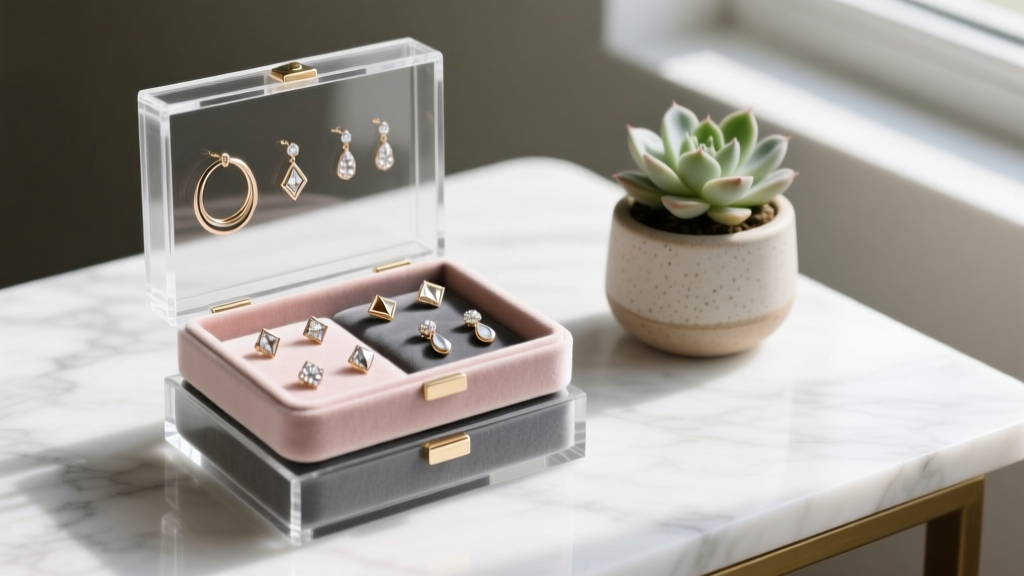
Investing in a high-caliber earring display case is an exercise in both preservation and daily ritual. By prioritizing optically pure cast acrylics, active anti-tarnish linings, and gallery-grade LED illumination, you transform a mundane morning routine into an immersive aesthetic experience. As 2026 continues to blur the lines between fine jewelry collection and interior art installation, your display infrastructure should reflect the same level of craftsmanship and intentionality as the pieces it holds. Choose materials that respect the chemistry of your metals, and design a spatial layout that honors the unique silhouette of every stud, hoop, and chandelier in your vault.


