How to Authenticate Vintage Lisner Earrings: A Collector's Guide
Learn how to authenticate, date, and restore vintage Lisner earrings. Discover hallmark timelines, material analysis, and expert cleaning steps.

The Enduring Allure of Vintage Lisner Earrings
For mid-century costume jewelry enthusiasts, few names evoke the same level of accessible luxury and botanical brilliance as Lisner. Founded in 1904 and reaching its creative zenith between the 1950s and 1970s, the company produced stunning, nature-inspired designs that rivaled high-end houses like Dior and Miriam Haskell, but at a fraction of the cost. Today, as the secondary market for mid-century accessories continues to surge, knowing how to properly identify, date, and care for vintage Lisner earrings is an essential skill for both novice collectors and seasoned curators.
Unlike fine jewelry, which is hallmarked by precious metal purity, vintage costume jewelry relies on a complex web of manufacturer stamps, material timelines, and hardware evolution to prove its provenance. In this comprehensive step-by-step guide, we will break down the exact methodologies experts use to authenticate vintage Lisner earrings, assess their structural integrity, and safely restore them to their former glory.
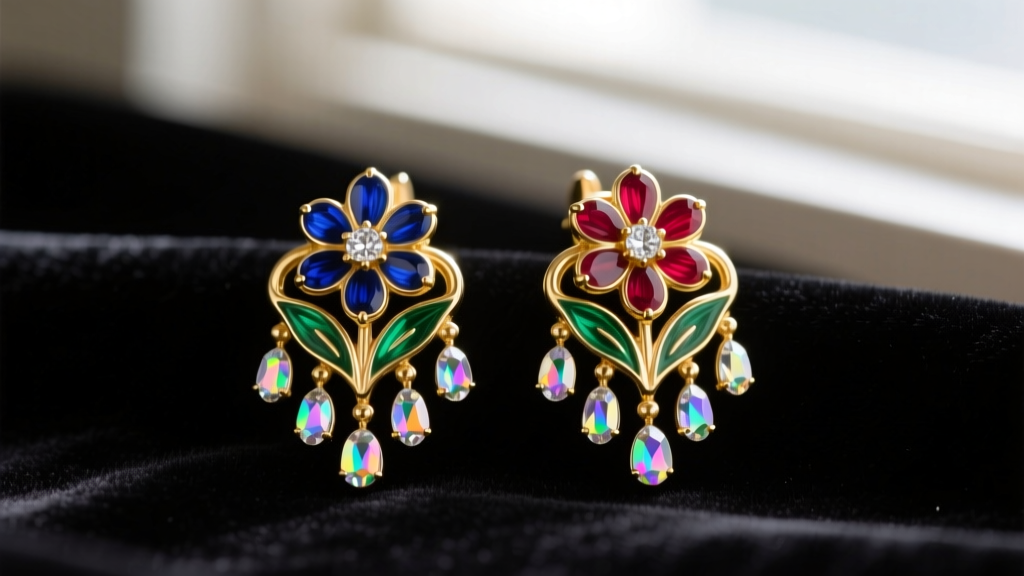
Step 1: Decoding the Lisner Hallmarks
The most critical step in authenticating any piece of vintage costume jewelry is locating and interpreting the manufacturer's mark. Lisner’s hallmarking practices evolved significantly over the decades, heavily influenced by changes in copyright law and manufacturing locations. According to archival data from Collectors Weekly, the presence—or absence—of specific symbols can pinpoint an earring's production era within a five-to-ten-year window.
The Copyright Symbol Turning Point
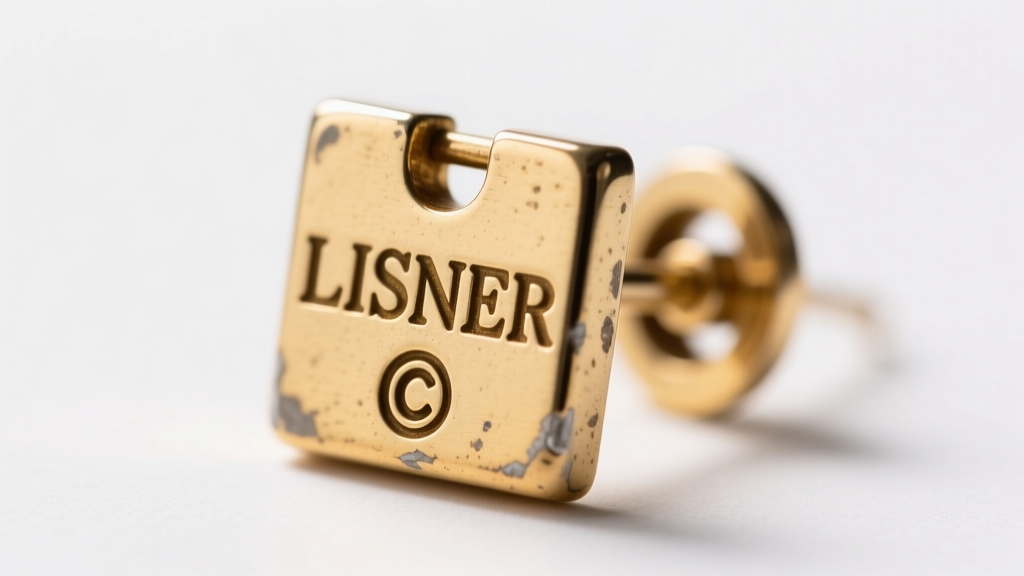
The most vital chronological marker for Lisner jewelry is the copyright symbol (©). Following the Universal Copyright Convention of 1955, Lisner began stamping the © symbol alongside their name. If you are examining a pair of earrings featuring Aurora Borealis (AB) rhinestones and a block-letter "LISNER" stamp without the © symbol, you are likely looking at a piece from the early 1950s or late 1940s. However, if the piece features a script logo inside an oval cartouche, it almost certainly dates to the late 1960s or 1970s.
| Era | Hallmark Style | Key Identifiers & Notes |
|---|---|---|
| 1930s–1954 | Block Letters / Unmarked | Often marked only with paper tags; stamped 'LISNER' in simple block capitals if marked at all. |
| 1955–1960s | Block with © | Introduction of the copyright symbol. Deep, clean stamping usually found on the clip paddle. |
| 1960s–1970s | Script / Oval Cartouche | Cursive 'Lisner' or an oval cartouche. Often accompanied by '©'. Highly detailed casting. |
| 1980s+ | Modern Stamp | Less refined, shallow stamping; marks the transition to overseas manufacturing before brand decline. |
Step 2: Analyzing Materials, Rhinestones, and Enamel
Authentication goes beyond the stamp; the materials themselves must align with the era claimed by the hallmark. Lisner was renowned for its intricate enameled leaves (particularly oak, maple, and ivy) and floral motifs. The enamel work on genuine mid-century Lisner earrings is typically smooth, opaque, and fired directly onto the base metal, exhibiting a glass-like finish that modern cold-enamel (resin) replicas cannot replicate.
Rhinestone Chronology
Lisner frequently utilized chaton, navette, and marquise-cut rhinestones. A major authentication red flag involves the Aurora Borealis (AB) finish. Swarovski introduced the AB coating in 1955. Therefore, if a dealer attempts to sell you a pair of Lisner earrings with vibrant AB stones but claims they are from the 1930s or 1940s, the stones have either been replaced, or the piece is misdated. Furthermore, genuine vintage Lisner stones are almost always foil-backed and set in closed-back metal cups to protect the delicate silvering from moisture and skin oils.
Expert Tip: Examine the prongs holding the rhinestones. Vintage Lisner pieces typically feature hand-set stones with tiny, folded metal prongs. Modern reproductions or lower-tier contemporary costume jewelry often rely on glue or machine-stamped, uniform prongs that lack the slight asymmetry of hand-setting.
Step 3: Inspecting Hardware and Identifying Failure Modes
Because vintage Lisner earrings were crafted from base metals (often brass or white pot metal) rather than solid gold or platinum, they are susceptible to specific structural failure modes. Evaluating the hardware is essential for determining both authenticity and restoration costs.
- Clip-On Tension Loss: Pre-1970s earrings predominantly feature clip-on or screw-back mechanisms. Over decades of wear, the metal hinges on clip-on paddles suffer from metal fatigue, resulting in a loss of tension. If the clip does not snap back firmly against the earring face, it requires professional re-tensioning.
- Stripped Screw-Backs: Common in 1950s designs, screw-backs rely on a threaded post and a tension pad. Cross-threading or overtightening by previous owners can strip the soft base metal threads, rendering the earring unwearable without a hardware swap.
- Verdigris Accumulation: The most common enemy of vintage base metal jewelry is verdigris—a toxic, crusty green copper acetate or carbonate buildup. It thrives in the crevices of clip-on hinges and earring backs where moisture and skin acids accumulate. While light verdigris is normal and cleanable, deep pitting into the base metal indicates structural compromise.
Step 4: Safe Cleaning and Restoration Techniques
Cleaning vintage Lisner earrings requires a delicate touch. The biggest mistake novice collectors make is using ultrasonic cleaners or harsh chemical dips, which will instantly strip the rhodium or gold-tone plating and destroy the delicate foil backing behind the rhinestones. For authoritative cleaning protocols, conservators often reference guidelines similar to those outlined by The Spruce Crafts for preserving vintage finishes.
The Dry-to-Wet Cleaning Protocol
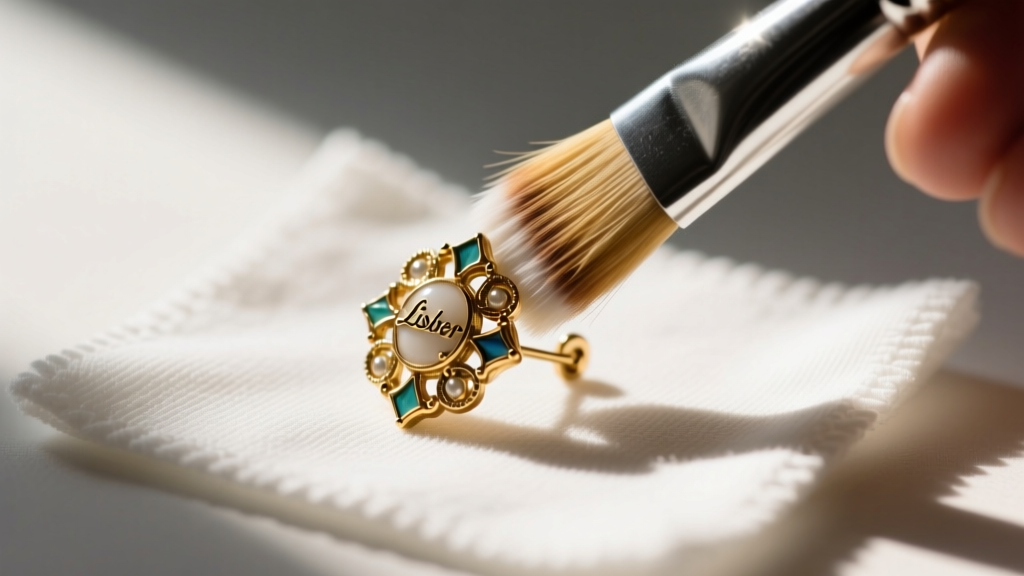
- Dry Brushing: Always begin with a clean, dry, ultra-soft makeup brush or a camel-hair artist brush. Gently sweep away loose dust, skin cells, and debris from the rhinestone settings and enamel grooves.
- Targeted Verdigris Removal: If you spot green crust on the hardware, dip a wooden toothpick or a dry cotton swab in a tiny amount of white vinegar. Apply it only to the verdigris. The mild acid dissolves the copper salts. Immediately neutralize the area with a barely damp cotton swab and dry it thoroughly.
- Surface Wiping: For general grime on the enamel or metal, use a microfiber cloth slightly dampened with distilled water and a drop of pH-neutral dish soap. Never submerge the earrings.
- Rhinestone Brightening: To restore sparkle to dull rhinestones, lightly mist a glass cleaner (ammonia-free) onto a cotton swab—never directly onto the stone—and gently wipe the top facet of the stone. Avoid letting any liquid seep into the prongs.
- Moisture Extraction: Moisture trapped under a stone will ruin the foil backing, turning it black. After any damp cleaning, use a can of compressed air or a hair dryer on the "cool" setting to blast water out of the settings.
Market Value and Pricing Realities
Understanding the current market value of vintage Lisner earrings prevents overpaying and helps you spot undervalued treasures. While prices fluctuate based on condition and rarity, here is a general pricing framework for the current market:
- Standard Floral Clip-Ons (1960s-1970s): $25 – $45 per pair. These are abundant and make excellent entry-level collector pieces.
- Enameled Leaf Dangles & Japanned Pieces: $60 – $120 per pair. The highly sought-after japanned (dark oxidized) finishes and intricate oak leaf dangles command a premium due to their dramatic visual impact.
- Rare Figural or High-End Line Pieces: $150 – $300+. Pieces from specific high-end Lisner sub-lines, or rare figural designs featuring complex moving parts and pristine enamel, are highly contested by serious collectors and investment buyers.
By mastering these authentication steps, material analyses, and restoration techniques, you can confidently navigate the vintage market, ensuring that every pair of vintage Lisner earrings you acquire is genuine, structurally sound, and beautifully preserved for decades to come.


