How to Authenticate Balenciaga Earrings: 2026 Guide
Troubleshoot counterfeit Balenciaga earrings with our 2026 authentication guide. Learn to spot fake hallmarks, metals, and hardware flaws.

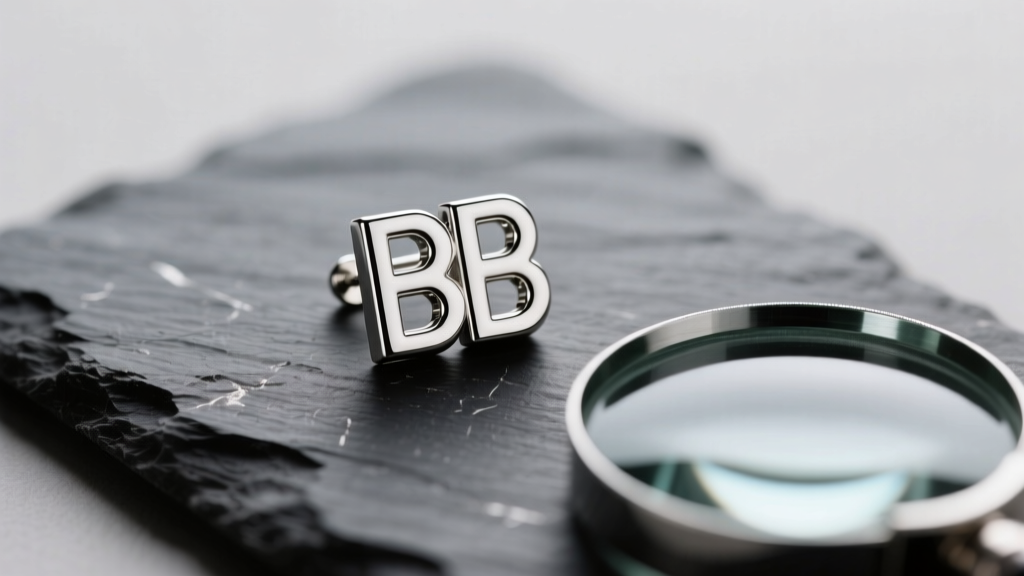
The secondary market for luxury fashion jewelry has exploded by 2026, and with it, the sophistication of counterfeiters. Balenciaga earrings, particularly the iconic BB logo studs, Hourglass hoops, and safety-pin ear cuffs, are prime targets for high-grade replicas. Troubleshooting whether your piece is authentic or a clever fake requires moving beyond superficial visual checks. As an authentication specialist, I have seen fakes that perfectly mimic the visual weight and packaging of genuine pieces, only to fail under metallurgical scrutiny. This guide provides a rigorous, step-by-step diagnostic framework to authenticate Balenciaga earrings and troubleshoot common hardware issues found in both genuine and counterfeit pieces.
The Metallurgy and Weight Diagnostic
Understanding the base alloys used by the house of Balenciaga is your first line of defense. Balenciaga's fashion jewelry (often referred to internally as bijoux) is predominantly crafted from solid brass (laiton) with high-micron plating of silver, palladium, or gold. Counterfeits frequently cut costs by using zinc alloys, pewter, or hollow-cast aluminum. To troubleshoot a suspicious pair, start with the density and thermal tests.
A standard authentic BB logo stud earring typically weighs between 4.5 and 6.2 grams, depending on the specific seasonal cast and post thickness. If the earring feels suspiciously light, or if it warms to your skin almost instantly upon touch—a hallmark trait of cheap aluminum alloys—you are likely holding a counterfeit. Furthermore, authentic brass bases possess a distinct acoustic resonance. When gently tapped against a glass surface, solid brass produces a dull, dense clink, whereas zinc alloys emit a higher-pitched, hollow sound.
Troubleshooting Skin Reactions and Plating Failures
Even authentic Balenciaga earrings can experience plating wear, especially on high-friction areas like the post or the interior of huggie hoops. However, the nature of the wear is highly diagnostic. Authentic palladium or silver plating over brass will slowly oxidize or wear down to reveal the yellowish hue of the brass beneath. Counterfeits often use a thin flash-plating over nickel or pot metal, which flakes, chips, or turns the wearer's skin green due to acidic reactions. If your earrings are causing contact dermatitis, they almost certainly contain nickel, a metal strictly regulated and largely avoided in authentic Balenciaga fashion jewelry post-2018. For more insights on luxury material standards, refer to the authentication guidelines provided by Vestiaire Collective.
Decoding the Hallmarks and Engravings
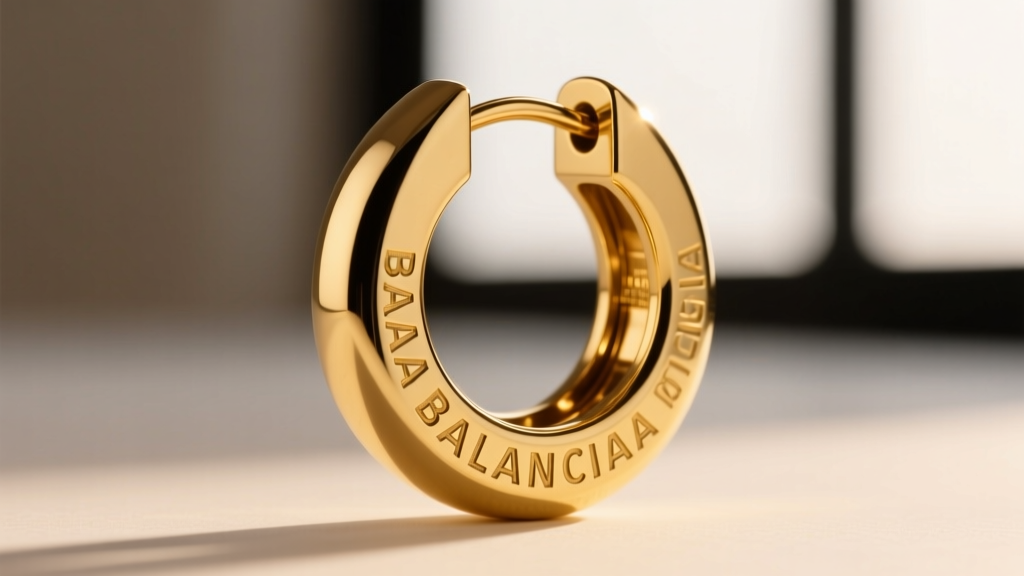
The most common failure point for counterfeiters is the hallmark. Balenciaga utilizes precise laser engraving or deep-cast molding for their logos and metal stamps. Fakes often rely on superficial acid etching or cheap mechanical stamping that results in blurred edges. When examining the post of a stud or the interior band of a hoop, use a 10x jeweler's loupe to inspect the kerning (spacing) of the letters in 'BALENCIAGA' and the origin stamps (often 'MADE IN ITALY' or specific metal indicators like 'BRASS').
| Diagnostic Feature | Authentic Balenciaga | Counterfeit Replica |
|---|---|---|
| Engraving Depth | Deep, laser-sharp, uniform floor | Shallow, stamped, blurred edges |
| Font Kerning | Perfectly spaced, sharp serifs | Uneven spacing, bleeding ink/metal |
| Post Thickness | Standard 18g or 16g, smooth finish | Often too thin (20g) or rough edges |
| Logo Alignment | Perfectly centered on the clasp/post | Slightly off-center or crooked |
Pro Tip: On the popular Hourglass hoop earrings, the Balenciaga stamp is located on the flat interior of the hinged clasp. The letter 'A' in authentic pieces from recent collections features a distinctly flat apex, whereas fakes often use a standard pointed 'A' due to incorrect font licensing.
Troubleshooting Hardware and Clasp Failures
Not all troubleshooting is about spotting fakes; sometimes, you need to fix authentic pieces that have suffered wear and tear. Luxury fashion jewelry requires specific care to maintain its structural integrity without stripping the precious metal plating.
Fixing a Stiff Hinge on Balenciaga Hoops
If the hinge on your authentic Balenciaga clicker hoops becomes stiff, do not use standard WD-40 or petroleum-based lubricants, as these will degrade the metal finish and attract micro-debris. Instead, apply a microscopic drop of synthetic watchmaker's oil to the hinge pin using a needle-tip oiler. Work the clasp open and closed gently to distribute the lubricant. Wipe away any excess immediately with a microfiber cloth.
Dealing with Bent Posts on Heavy Studs
Balenciaga's oversized crystal or resin stud earrings place significant leverage on the brass post. If the post bends, attempting to bend it back with standard pliers will often snap the metal at the stress point due to work-hardening. To troubleshoot this, wrap the jaws of your flat-nose pliers in jeweler's tape to prevent marring the plating. Apply gentle, steady pressure rather than a sharp bend. If the post is severely kinked, it must be sent to a professional jeweler for a laser weld, a service Balenciaga's official after-sales care can facilitate.
Packaging and Dust Bag Forensics
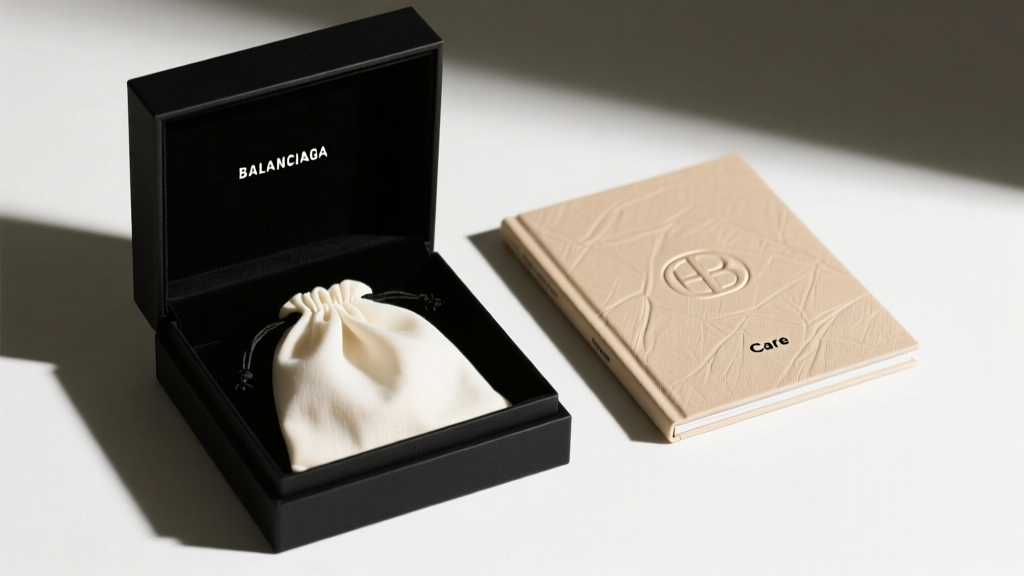
In 2026, counterfeiters have nearly perfected the visual replication of luxury packaging, but they still fail on tactile and material forensics. An authentic Balenciaga jewelry box features a specific matte-black textured cardstock that feels slightly velvety to the touch. The interior insert is made of high-density, flocked foam that holds the earrings firmly in place without scratching the plating.
The accompanying dust bag is another major diagnostic tool. Authentic dust bags are crafted from a heavy, tightly woven cotton blend with a subtle sheen, featuring a crisp, screen-printed logo. Counterfeit dust bags often use cheap, porous polyester blends with heat-transferred logos that feel rubbery and eventually crack. Furthermore, the drawstring on an authentic bag is a thick, braided cotton cord with metal aglets (tips), whereas fakes use thin, synthetic strings that fray easily.
When to Seek Professional Authentication
While this diagnostic framework will help you identify 95% of counterfeit Balenciaga earrings, the remaining 5% consist of 'super-fakes' that utilize stolen molds and genuine base metals. If you are purchasing a rare archival piece from the Demna era or a limited-run runway ear cuff, the financial stakes are simply too high to rely solely on at-home troubleshooting. In these instances, utilize AI-driven authentication services or consult a certified luxury appraiser who can perform X-ray fluorescence (XRF) testing to verify the exact micron thickness of the gold or palladium plating.
By mastering these metallurgical, structural, and cosmetic diagnostics, you can confidently navigate the secondary market, troubleshoot common wear issues, and ensure your Balenciaga earrings remain a staple of your curated jewelry collection for years to come.


