How to Choose Emerald and Silver Earrings: A Beginner Guide
Discover how to choose, wear, and care for emerald and silver earrings. Learn about gemstone treatments, silver alloys, and ideal settings.

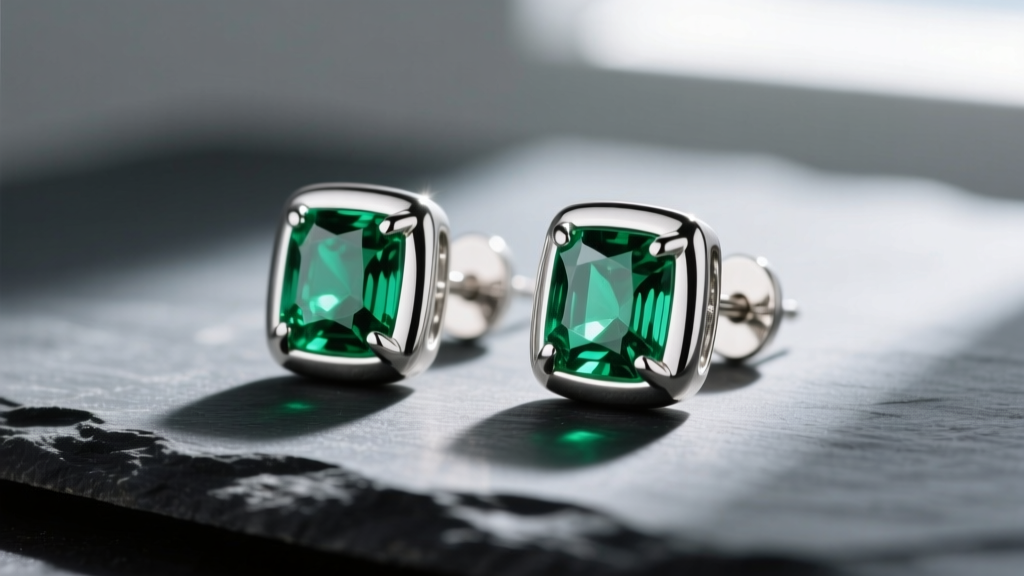
The pairing of lush green gemstones with crisp white metal creates a striking visual contrast that has captivated jewelry lovers for centuries. For beginners stepping into the world of fine jewelry, emerald and silver earrings offer an accessible yet deeply luxurious entry point. However, emeralds are notoriously complex gemstones, and silver comes in various alloys that behave very differently over time.
This beginner-friendly explainer will demystify the gemology, metallurgy, and practical styling of emerald and silver earrings, ensuring you make an informed purchase in 2026 and beyond.
Understanding Your Emeralds: Natural vs. Lab-Created
Before evaluating the silver setting, you must understand the emerald itself. Emeralds are a variety of the mineral beryl, colored by trace amounts of chromium and vanadium. On the Mohs scale of hardness, they rank between 7.5 and 8. While this sounds durable, emeralds are highly brittle due to their natural inclusions.
The "Jardin" and Clarity Enhancements
Gemologists refer to an emerald's internal inclusions as the jardin (French for garden). These inclusions often include "three-phase" pockets containing solid, liquid, and gas bubbles, which are hallmarks of natural origin. Because of these fissures, nearly all natural emeralds undergo clarity enhancement. According to the Gemological Institute of America (GIA), traditional cedar oil is used to fill surface-reaching fractures, improving transparency. Modern treatments may use polymer resins like Opticon, which are more stable but must be strictly disclosed by reputable sellers.
Lab-Created Alternatives: Hydrothermal lab-grown emeralds share the exact chemical and physical properties of natural stones but lack the heavy fracturing. For beginners seeking vibrant green drops without the anxiety of chipping a heavily included natural stone, lab-created emeralds set in silver are an excellent, budget-friendly choice.
Silver Alloys Explained: Sterling vs. Argentium
Pure silver (999) is too soft for jewelry, so it is alloyed with other metals for strength. The type of silver used in your earrings dictates their longevity, tarnish resistance, and overall maintenance.
| Silver Alloy | Composition | Tarnish Resistance | Best Earring Styles |
|---|---|---|---|
| Sterling Silver (925) | 92.5% Silver, 7.5% Copper | Low (Tarnishes via Copper Oxidation) | Classic Studs, Huggies, Hoops |
| Argentium Silver (960) | 96% Silver, Germanium | High (Forms Protective Germanium Dioxide Layer) | Heirloom Drops, Daily-Wear Ear Cuffs |
| Rhodium-Plated 925 | Sterling Core, Rhodium Flash | Very High (Until Plating Wears Off) | Intricate Halo Studs, Prong-Set Dangles |
For emerald earrings, Argentium silver is highly recommended. The addition of germanium creates a transparent tarnish-resistant layer, meaning you spend less time polishing the metal near the delicate gemstone settings. If you opt for standard Sterling Silver, look for pieces that are rhodium-plated to mimic the look of white gold and delay tarnishing.
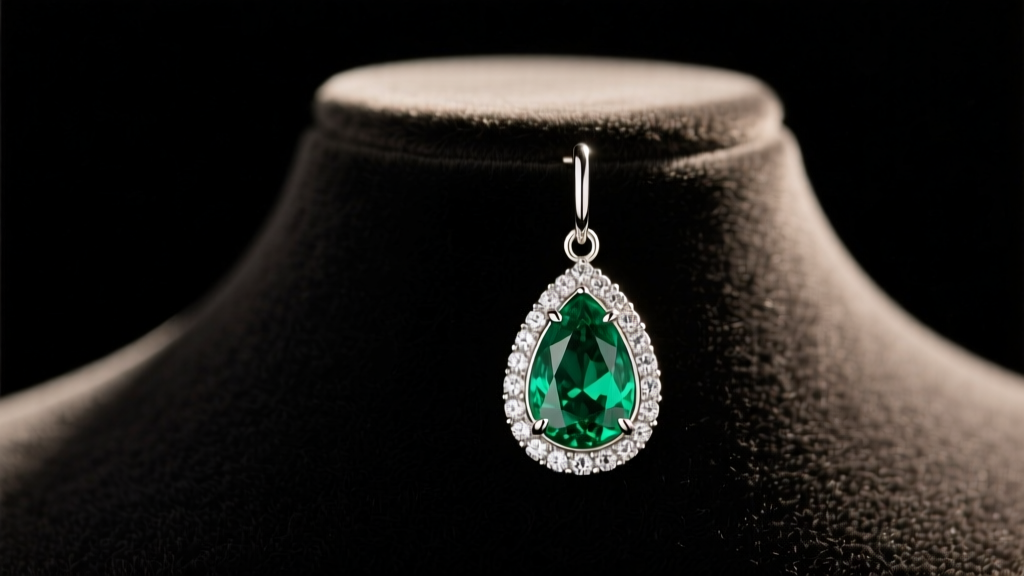
Best Settings and Styles for Emerald Earrings
Because emeralds are brittle, the setting style is not just an aesthetic choice—it is a structural necessity. The corners of an emerald (especially in square or emerald cuts) are highly vulnerable to chipping from minor impacts.
Bezel vs. Prong Settings
- Full Bezel: A rim of silver completely encircles the gemstone's girdle. This is the safest setting for emeralds, protecting the edges from knocks and preventing oils and lotions from degrading the fracture fillings.
- V-Prong: If you prefer a prong setting to allow more light into the stone, ensure the setting uses "V-prongs" at the corners. Standard round prongs leave the most fragile points of the emerald exposed to catastrophic chipping.
Gauge Sizes and Earring Mechanics
When buying silver drop or dangle earrings featuring heavy emeralds, pay attention to the wire gauge. A standard 20-gauge (0.81mm) post is fine for lightweight studs. However, for substantial emerald drops, the ear wire should be at least 18-gauge (1.02mm) or 19-gauge to prevent the silver from bending under the gemstone's weight. Always opt for secure leverback closures or French wires with silicone stoppers to prevent loss.
Pricing Guide: What Should You Expect to Pay?
The price of emerald and silver earrings varies wildly based on the origin of the gemstone and the craftsmanship of the silverwork. Below is a general pricing framework for the 2026 market.
| Emerald Type | Silver Setting | Estimated Price Range (Per Pair) | Market Notes |
|---|---|---|---|
| Simulated (Glass/CZ) | 925 Sterling Silver | $30 - $80 | Fun, disposable fashion jewelry. No intrinsic gem value. |
| Lab-Created (Hydrothermal) | 925 or Argentium | $120 - $350 | Excellent color, high durability. Best value for beginners. |
| Natural (Commercial Grade) | 925 Sterling Silver | $250 - $800 | Heavily included, opaque. Often heavily oiled. |
| Natural (Fine Gem Grade) | Argentium / Rhodium-Plated | $1,500 - $5,000+ | Vivid saturation, minor inclusions. Requires lab certification. |
Face Shapes and Styling Proportions
Emerald and silver earrings can be tailored to flatter your specific face shape. The cool tone of silver draws attention to the eyes and jawline, while the green gemstone adds a pop of color that brightens the complexion.
- Round Faces: Elongate your features with angular emerald drop earrings or rectangular bezel-set dangles. Avoid large, round silver hoops, which will mirror and exaggerate the roundness of your face.
- Square Faces: Soften a strong jawline with rounded emerald cabochon studs or medium-sized silver huggies featuring small emerald accents.
- Heart-Shaped Faces: Balance a narrower chin with chandelier or teardrop emerald earrings that add volume at the bottom of the earlobe.
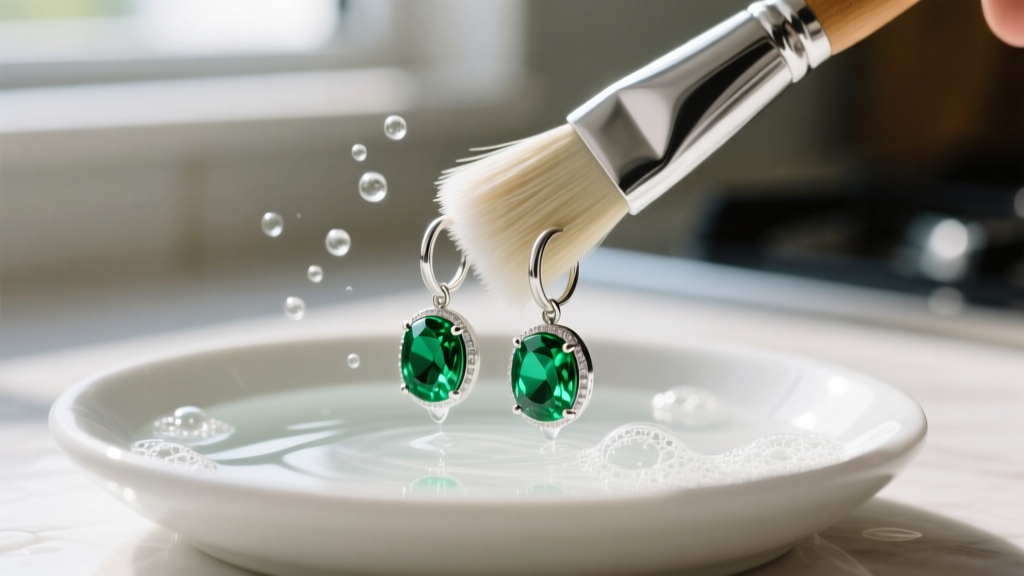
Crucial Care Instructions (Avoid the Ultrasonic Trap!)
The most common way beginners destroy their emerald jewelry is by using ultrasonic or steam cleaners. According to GIA care guidelines, the high-frequency vibrations of an ultrasonic cleaner will shatter a heavily included emerald or boil out the cedar oil/resin used to fill its fractures, leaving the stone cloudy and fractured.
The Only Safe Cleaning Method
- Mix a few drops of mild, phosphate-free dish soap into a bowl of lukewarm (never hot) water.
- Soak the earrings for 3 to 5 minutes to loosen skin oils and cosmetics.
- Gently agitate the water. If necessary, use a baby-soft toothbrush to lightly sweep the back of the silver setting, avoiding direct scrubbing on the emerald's surface.
- Rinse under a gentle stream of lukewarm water and pat dry with a lint-free microfiber cloth.
Final Thoughts for First-Time Buyers
Investing in emerald and silver earrings is a rewarding experience that bridges the gap between everyday wearability and high-end luxury. By prioritizing protective bezel or V-prong settings, opting for modern Argentium silver, and strictly avoiding ultrasonic cleaners, your earrings will maintain their brilliant green fire and crisp silver shine for decades. Always request a gemological report for natural stones, and embrace the unique jardin that makes every natural emerald entirely one-of-a-kind.


