Square Diamond Stud Earrings: The Ultimate Buying Guide
Discover how to choose the perfect square diamond stud earrings. Compare Princess, Asscher, and Cushion cuts, settings, and pricing in our expert guide.

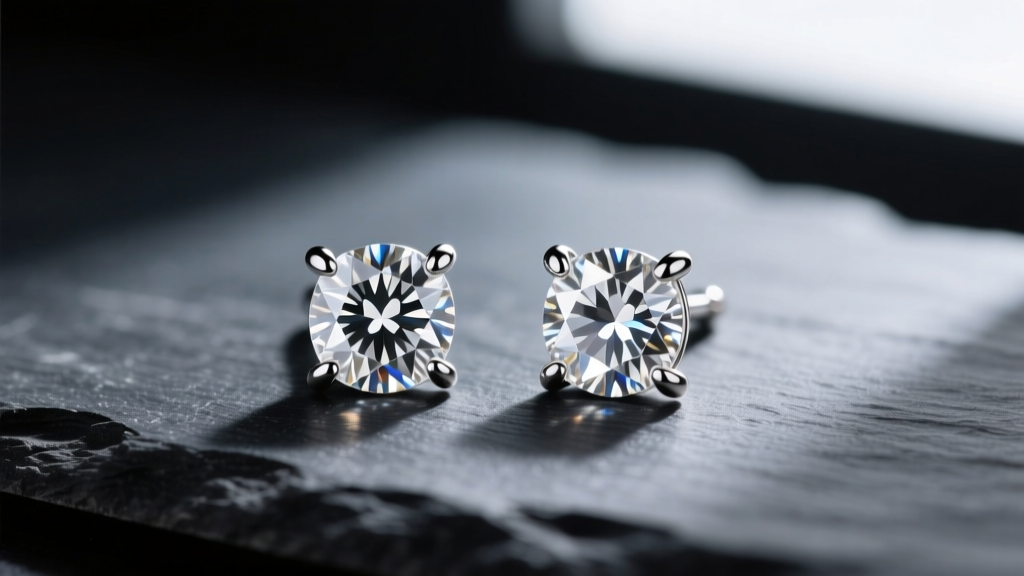
When it comes to timeless elegance with a modern geometric edge, square diamond stud earrings are an unparalleled choice. Unlike the ubiquitous round brilliant, square-shaped diamonds offer a distinctive architectural silhouette that catches the light in complex, mesmerizing patterns. Whether you are drawn to the fiery brilliance of a Princess cut, the vintage hall-of-mirrors effect of an Asscher, or the soft edges of a Cushion, navigating the nuances of square cuts requires specialized knowledge. This comprehensive buying guide will walk you through the exact specifications, setting vulnerabilities, and pricing metrics you need to know in 2026 to make a confident, expert-level purchase.
Decoding the Square Cuts: Princess, Asscher, and Cushion
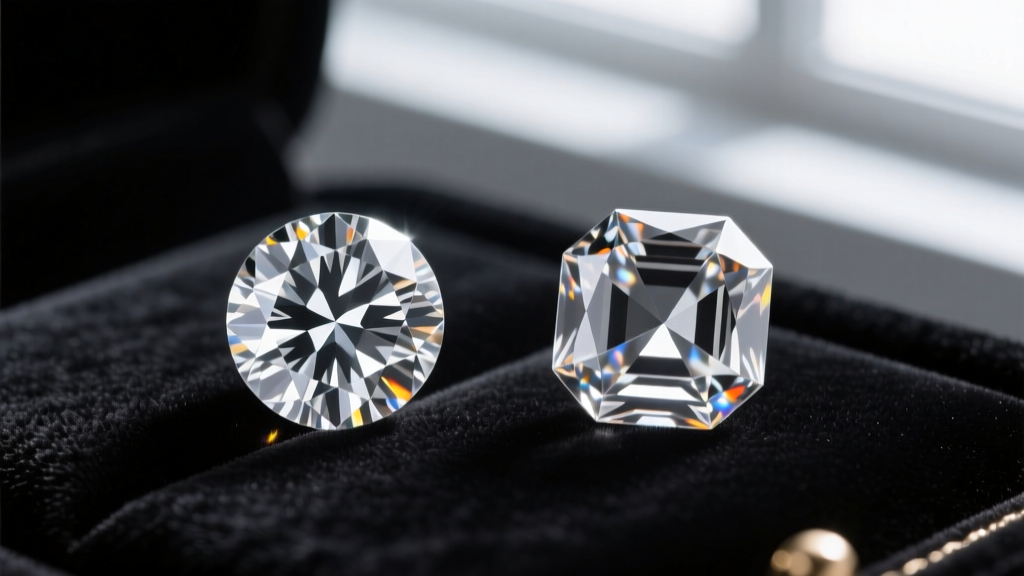
Not all square diamonds are created equal. The term "square" encompasses several distinct faceting styles, each interacting with light differently. Understanding these differences is the first step in selecting your perfect pair.
Princess Cut: Maximum Brilliance
The Princess cut is the undisputed king of square diamonds. Featuring a brilliant faceting pattern (typically 50 to 58 facets), it delivers fire and scintillation that rivals the round brilliant. For stud earrings, you want a length-to-width (L/W) ratio between 1.00 and 1.04 to ensure the stones look perfectly square to the naked eye. According to the Gemological Institute of America (GIA), the Princess cut's inverted pyramid base makes it highly efficient at retaining rough diamond weight, often making it 10% to 15% more affordable per carat than a round brilliant of the same quality.
Asscher Cut: The Vintage Step-Cut
If you prefer understated elegance and geometric precision over sheer sparkle, the Asscher cut is your ideal match. As a step-cut diamond, it features broad, open facets that create a "hall of mirrors" effect. Because the table is large and open, inclusions are highly visible. You must prioritize clarity (VS1 or VS2 minimum) when buying Asscher square diamond stud earrings.
Cushion and Radiant: The Hybrids
Cushion cuts feature a square outline with rounded corners, offering a softer, more romantic look. Radiant cuts combine the squarish outline of an Asscher with the brilliant faceting of a Princess. Both are excellent, durable choices for everyday wear because their modified corners are less prone to chipping.
The 4Cs Re-Engineered for Square Shapes
The traditional 4Cs (Cut, Color, Clarity, Carat) must be recalibrated when shopping for square diamond stud earrings. What works for a round diamond may result in a dull or flawed-looking square stone.
Carat Weight vs. Millimeter Spread
Square diamonds carry more of their weight in the depth (pavilion) than round diamonds. This means a 1.00-carat Princess cut will face up slightly smaller in millimeter diameter than a 1.00-carat round. Below is a precise sizing chart to help you visualize the physical footprint of your earrings.
| Total Carat Weight (Pair) | Per Earring Carat | Princess Cut Size (mm) | Asscher Cut Size (mm) |
|---|---|---|---|
| 0.50 ct | 0.25 ct | 3.50 x 3.50 | 3.60 x 3.60 |
| 1.00 ct | 0.50 ct | 4.30 x 4.30 | 4.40 x 4.40 |
| 2.00 ct | 1.00 ct | 5.50 x 5.50 | 5.60 x 5.60 |
| 3.00 ct | 1.50 ct | 6.40 x 6.40 | 6.50 x 6.50 |
Color and Clarity Minimums
Square brilliant cuts like the Princess tend to retain more body color than round diamonds. Therefore, if you are setting your earrings in platinum or white gold, do not drop below an H color grade. For yellow or rose gold settings, you can safely step down to an I or J color, as the warm metal masks the faint yellow tint.
Clarity requirements diverge sharply based on the cut. As the American Gem Society notes, step-cuts require higher clarity grades. For Asscher studs, demand VS1 or VS2. For Princess studs, the complex facet pattern hides inclusions well, making a well-vetted SI1 a highly cost-effective, eye-clean option.
Setting Styles: Protecting the Vulnerable Corners
The most critical structural vulnerability of square diamond stud earrings—specifically Princess and Asscher cuts—is the sharp 90-degree corner. These points are incredibly thin and susceptible to chipping from accidental impacts against desks, steering wheels, or hairbrushes.
The V-Prong Mandate
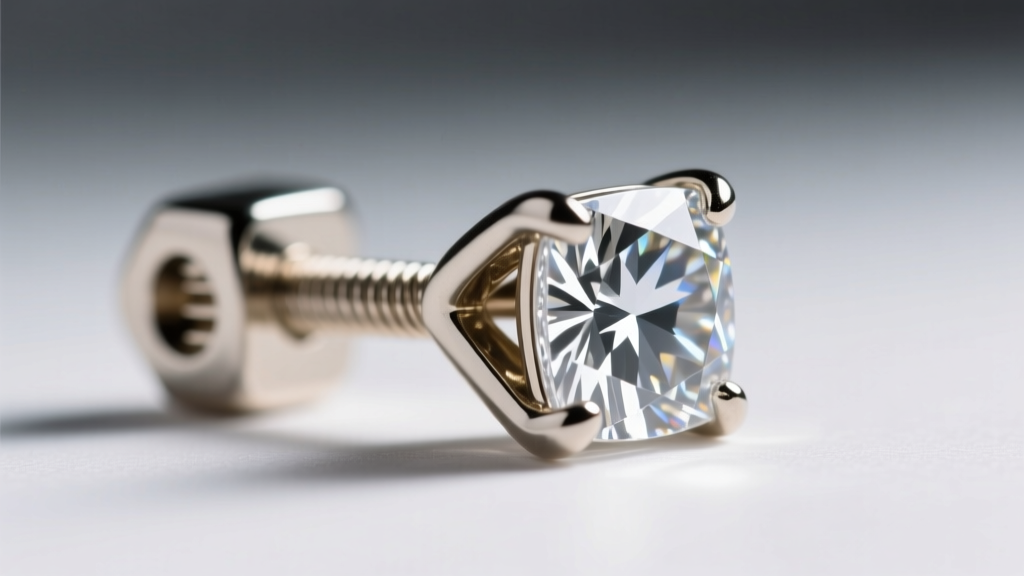
Never set a sharp-cornered square diamond in a standard four-prong setting where the prongs rest flat against the edges. You must insist on V-prongs (also known as chevron prongs) that wrap around and encase the pointed corners in a protective metal shield.
Basket vs. Martini Settings
Martini settings (a three-prong design that tapers down to the post) are popular because they allow maximum light entry and sit low against the earlobe. However, for square stones, a four-prong basket setting with V-prongs offers superior structural integrity and ensures the geometric shape is visually reinforced. If you lead an active lifestyle, a full bezel setting is the ultimate protective choice, though it will reduce the diamond's visible face-up spread by about 0.2mm.
Metal Choices and Post Mechanics
The hardware of your earrings is just as important as the diamonds themselves. Square shapes have a tendency to catch on hair and sweater threads more frequently than round shapes due to their angular profile.
Screw-Backs vs. Push-Backs
Because square studs are prone to snagging, standard friction push-backs are a liability. The twisting motion required to remove a sweater can easily pull a push-back off, resulting in a lost diamond. Always invest in threaded screw-back posts or secure silicone locking backs for any square diamond stud earrings weighing over 0.25 carats per ear.
Platinum vs. Gold
Platinum is the superior choice for V-prongs because its tensile strength and durability ensure the delicate metal wrapping the diamond's corner will not snap or wear away over decades of use. If you prefer 14k or 18k gold for budget or color reasons, ensure the prongs are checked by a jeweler annually.
Pricing Expectations and Final Checklist
In 2026, the pricing for high-quality square diamond stud earrings reflects the broader diamond market. A matched pair of 1.00-carat total weight (0.50ct each) Princess cut studs in 14k white gold, featuring H color and SI1 clarity, typically ranges from $1,800 to $2,600. Upgrading to an Asscher cut of the same weight and VS2 clarity will push the price closer to $2,800 to $3,500 due to the higher rarity of well-cut step-cuts and the stricter clarity requirements.
Before finalizing your purchase, run through this expert checklist:
- Verify the L/W ratio is between 1.00 and 1.05 for perfect symmetry.
- Confirm the presence of V-prongs on all sharp corners.
- Ensure the posts are threaded for screw-backs to prevent snag-loss.
- Review the GIA or AGS grading reports for both stones to ensure they are closely matched in color and clarity.
By prioritizing structural protection and precise geometric proportions, your square diamond stud earrings will remain a striking, secure, and brilliant staple in your jewelry wardrobe for a lifetime.


