Beginner Guide to Flat Gold Earrings: Sizing, Karats, and Fit
Master flat gold earrings with our beginner guide. Learn exact gauge sizes, post lengths, 14k vs 18k karats, and threading types for perfect comfort.

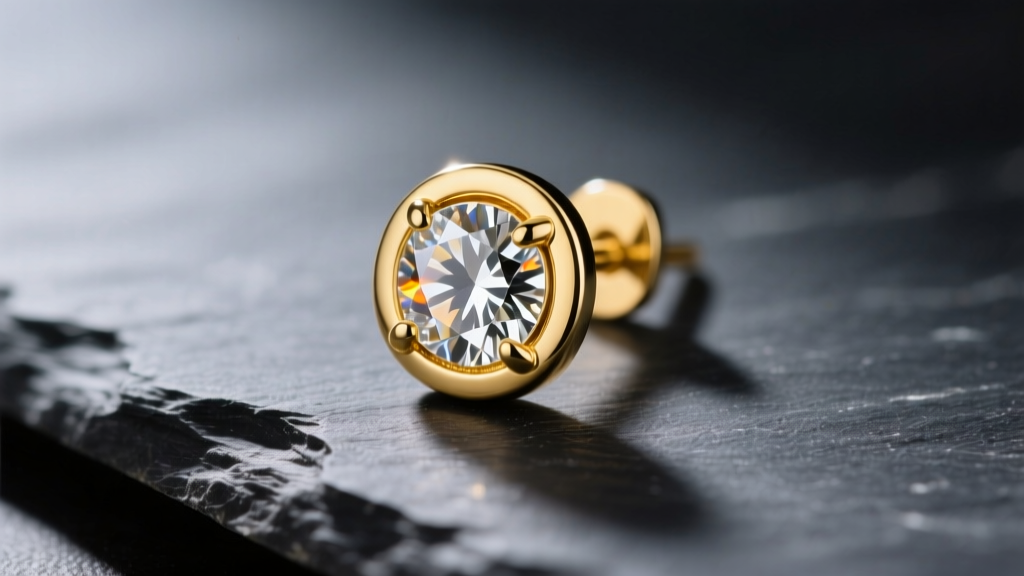
If you have ever woken up with a sore earlobe or a scratched neck from traditional butterfly-back studs, you are already discovering the primary reason professionals recommend flat gold earrings. Often referred to as labret studs, flat back earrings, or comet earrings, these pieces feature a smooth, flat disc that rests flush against the back of the ear. Unlike friction backs that harbor bacteria and poke the skin, flat backs offer unparalleled comfort, making them the gold standard for both fresh piercings and healed cartilage or lobe jewelry.
However, buying your first pair of flat gold earrings can be overwhelming. Between gauge thicknesses, post lengths, threading styles, and gold purities, a simple purchase can quickly turn into a confusing puzzle. This beginner-friendly explainer breaks down the exact specifications you need to know to buy flat back gold earrings that fit perfectly, heal safely, and last a lifetime.
Decoding Gold Purity: 14k vs. 18k for Piercings
When shopping for solid gold body jewelry, you will primarily encounter 14k and 18k options. Pure 24k gold is entirely unsuitable for body jewelry because it is far too soft; it will easily bend, scratch, and lose its shape. According to the Gemological Institute of America (GIA), gold must be alloyed with other metals to achieve the durability required for daily wear.
- 14k Gold (58.5% Pure Gold): This is the most highly recommended karat for daily-wear cartilage and lobe piercings. The higher alloy content makes it exceptionally durable, resistant to scratching, and capable of holding gemstone settings securely.
- 18k Gold (75% Pure Gold): Offering a richer, deeper yellow hue, 18k gold is highly biocompatible and favored by luxury body jewelry brands. While slightly softer than 14k, it is still perfectly safe and durable for healed piercings.
A Critical Warning on White Gold: If you prefer the look of silver or platinum, be cautious with white gold. Many jewelers alloy white gold with nickel to achieve its bright white color. Nickel is the most common contact allergen in the world and can cause severe irritation, weeping, and rejection in piercings. Always verify that your flat gold earrings are explicitly labeled as nickel-free or alloyed with palladium instead.
The Sizing Matrix: Gauge and Post Length
The most common mistake beginners make is guessing their sizing. Flat back earrings are measured in two dimensions: gauge (the thickness of the post) and length (the distance from the flat back to the base of the decorative end). Wearing a post that is too long will cause the earring to snag on hair and pillows, leading to irritation bumps. Wearing a post that is too tight will restrict blood flow and trap lymph fluid.
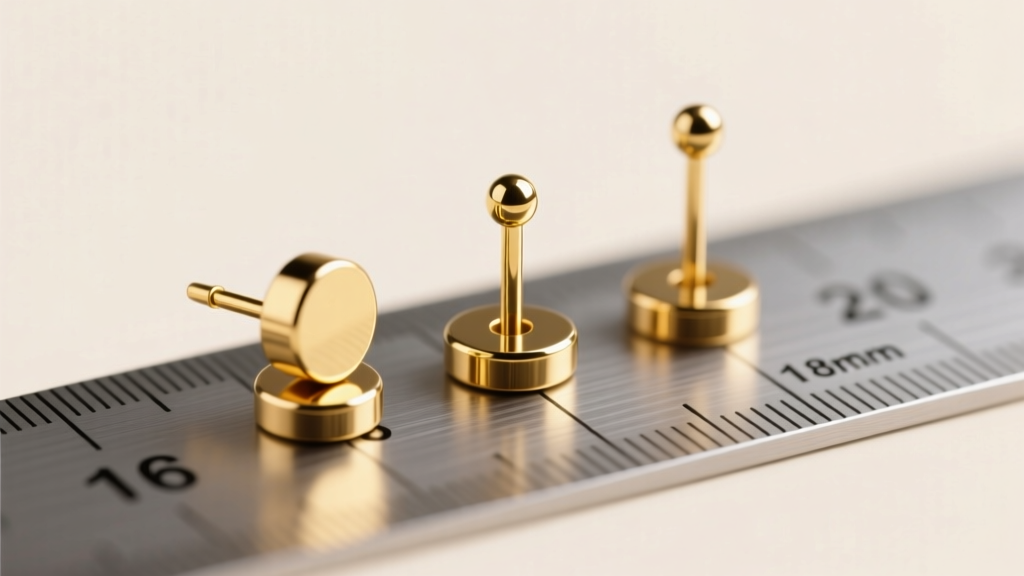
Below is a quick-reference matrix to help you identify the standard sizing for the most common piercing locations. Note that fresh piercings require longer posts to accommodate swelling, and must be "downsized" by a professional piercer after 4 to 8 weeks.
| Piercing Location | Standard Gauge | Healed Post Length | Millimeter Equivalent |
|---|---|---|---|
| Standard Earlobe | 20G or 18G | 5mm to 6mm | 0.81mm / 1.02mm post |
| Helix / Outer Cartilage | 16G | 6mm to 8mm | 1.29mm post |
| Tragus | 16G | 5mm to 6mm | 1.29mm post |
| Conch | 16G or 14G | 6mm to 8mm | 1.29mm / 1.63mm post |
If you are unsure of your exact healed length, 6mm (often referred to as 1/4 inch) is the most universally accommodating size for standard healed cartilage and lobe piercings.
Threadless vs. Internally Threaded: A Beginner's Trap
How the decorative end attaches to the flat back post is just as important as the gold itself. The Association of Professional Piercers (APP) strictly advises against externally threaded jewelry for any piercing. External threads feature a spiral groove on the post itself, which acts like a microscopic file, tearing through the delicate fistula (the skin tube inside your piercing) every time you change the jewelry.
When buying high-quality flat gold earrings, you will encounter two safe, professional-grade options:
1. Threadless (Push-Pin) Jewelry
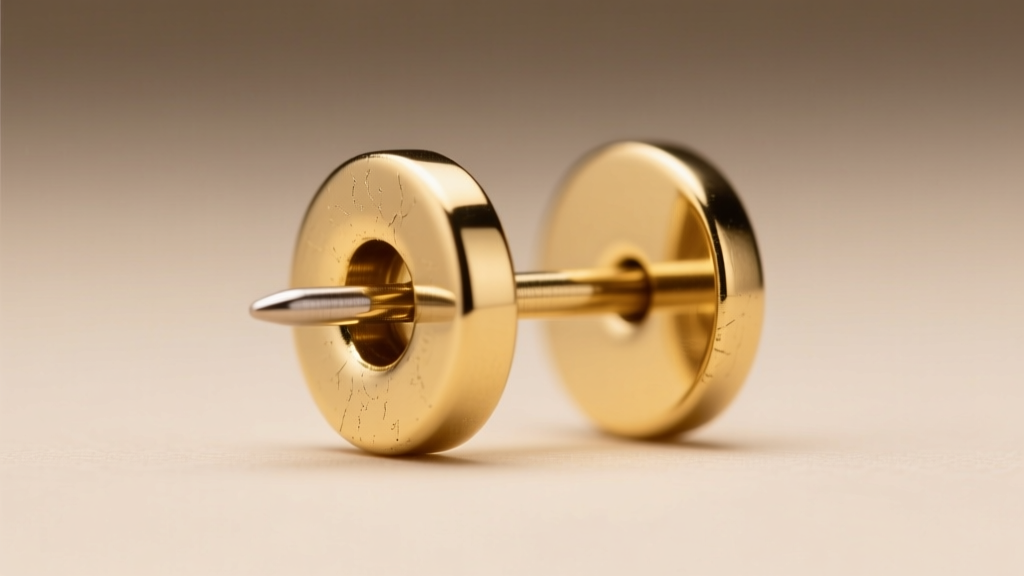
Threadless jewelry relies on tension. The decorative end has a slightly bent pin that slides into the hollow post. When you push it in, the bent pin presses against the inner wall of the post, creating a secure, custom fit. Threadless flat backs are widely considered the easiest for beginners to insert and remove, and they offer the smoothest possible transition between the gem and the post.
2. Internally Threaded Jewelry
With internal threading, the spiral groove is located on the inside of the decorative end, while the post remains perfectly smooth. The post screws seamlessly into the gem. This is highly secure and excellent for those who prefer a screw-fit, though it requires a bit more dexterity to align the threads without cross-threading.
Common Beginner Mistakes and How to Avoid Them
Even when you choose solid gold, a few common pitfalls can ruin your piercing experience. Keep these failure modes in mind when building your collection:
- The "Cheese-Cutter" Effect: If you wear a heavy, oversized decorative end on a very thin 20-gauge post, the weight and leverage can cause the thin metal to slice slowly through your earlobe tissue over time. Always match heavy ends with thicker 18G or 16G flat back posts.
- Buying Gold-Plated or Gold-Filled: While budget-friendly, plated and filled metals feature a microscopic layer of gold over a base metal like brass or copper. Once that layer wears off—which happens quickly in the moist, acidic environment of a piercing—the base metal will oxidize, turn your skin green, and likely trigger an infection or allergic reaction. Always invest in solid 14k or 18k gold for pieces you intend to wear 24/7.
- Ignoring the Flat Back Diameter: Flat back discs typically come in 3mm, 4mm, and 5mm widths. A 3mm disc is perfect for delicate cartilage piercings, but if used in a standard lobe piercing, it can easily slip through a slightly stretched hole. Stick to 4mm or 5mm discs for standard earlobes.
Final Verdict: Building Your Starter Collection
Transitioning to flat gold earrings is one of the best upgrades you can make for your ear health and daily comfort. For your first purchase, opt for a 14k yellow gold, threadless flat back earring in a 16-gauge thickness with a 6mm post length and a 4mm back disc. This specific configuration is the ultimate "universal fit" for the vast majority of healed helix, tragus, and flat piercings. By prioritizing solid metals, precise millimeter sizing, and smooth threading mechanics, you will eliminate irritation and enjoy a seamless, comfortable jewelry experience.


