How to Style and Clean Octagon Hoop Earrings Step-by-Step
Master the art of wearing octagon hoop earrings. Learn step-by-step styling, gauge selection, hinge care, and cleaning protocols.

The Rise of Geometric Ear Styling
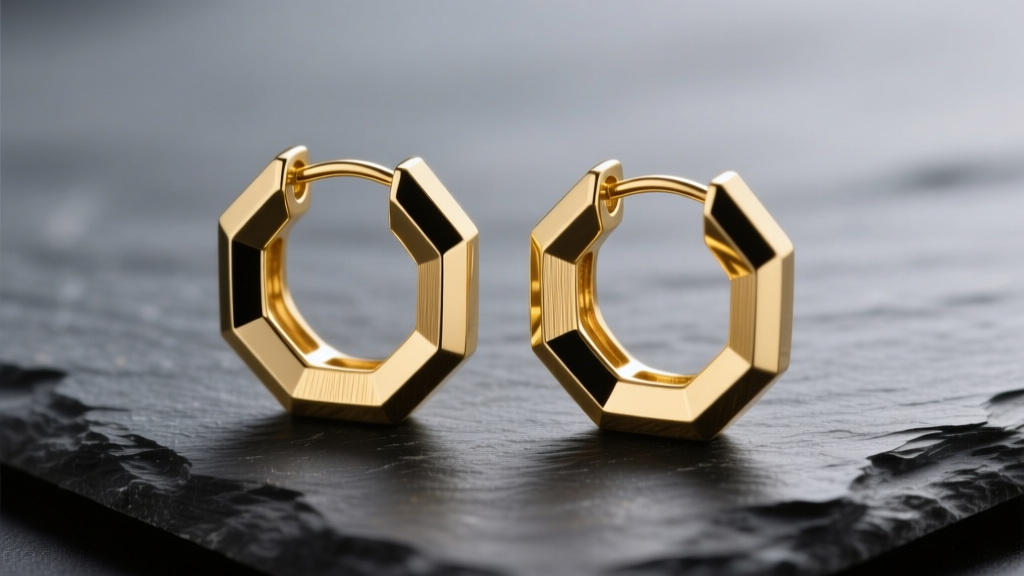
Geometric jewelry has firmly cemented its place in contemporary accessorizing, with octagon hoop earrings emerging as a definitive staple for those seeking structured elegance. Unlike traditional circular hoops, the eight-sided architecture of an octagon hoop introduces deliberate angles, flat planes, and unique structural stress points. This means that selecting, wearing, and maintaining them requires a specialized approach. Whether you are navigating gauge sizes for a fresh helix piercing or troubleshooting a stiff hinge on a vintage pair, this step-by-step guide provides the exact technical specifications and care protocols you need.
Step 1: Selecting the Correct Gauge and Material
The flat edges of an octagon hoop interact with the piercing fistula differently than a round wire. A standard 20-gauge (0.81mm) round wire distributes pressure evenly, but a 20-gauge octagonal wire can create pressure points against the delicate interior of the earlobe or cartilage. For optimal comfort and to prevent the "cheese-cutter effect," we recommend sizing up slightly.
| Material Grade | Best For | Recommended Gauge | Price Range (USD) |
|---|---|---|---|
| ASTM F-136 Titanium | Fresh piercings, sensitive skin | 16g (1.2mm) or 14g (1.6mm) | $45 - $85 |
| 14k / 18k Solid Gold | Healed lobes, everyday wear | 18g (1.0mm) or 16g (1.2mm) | $150 - $400 |
| 925 Sterling Silver | Occasional wear, healed lobes | 18g (1.0mm) | $30 - $75 |
As noted by the Association of Professional Piercers, implant-grade titanium (ASTM F-136) remains the gold standard for any unhealed tissue. If your octagon hoops are intended for a new cartilage piercing, avoid gold-plated brass or sterling silver, as the porous nature of the flat geometric planes can harbor bacteria during the healing phase.
Step 2: Matching Octagon Angles to Face Shapes
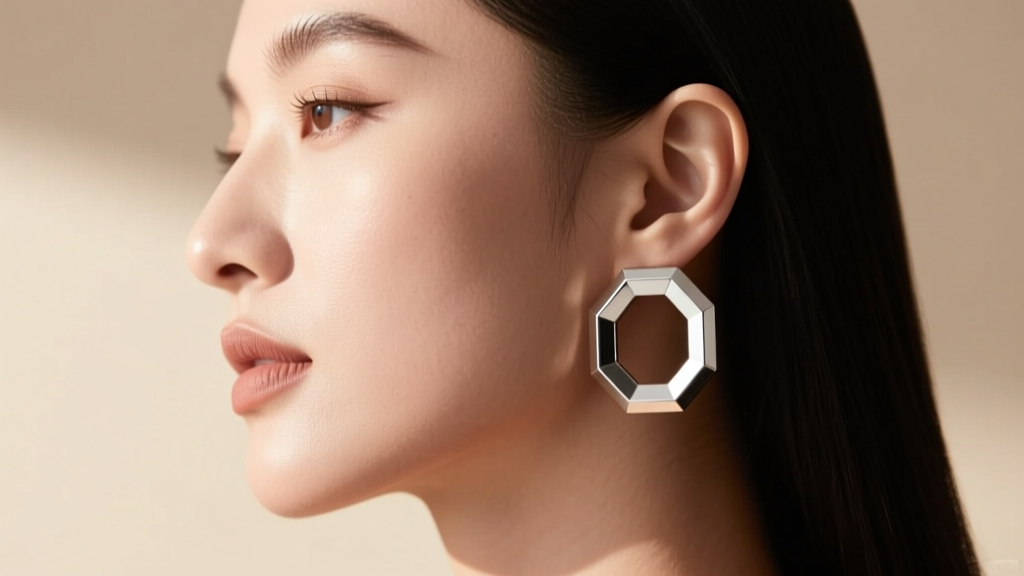
The visual weight of an octagon hoop is concentrated at its vertices (the corners). Styling them effectively requires understanding how these angles interact with your natural facial geometry.
- Round Faces: Opt for larger octagon hoops (25mm to 35mm in diameter). The sharp 135-degree interior angles will introduce structural contrast, elongating the jawline and adding deliberate architectural lines to soft features.
- Square Faces: Choose smaller "huggie" style octagon hoops (12mm to 15mm) with slightly beveled or rounded corners. This provides a hint of geometry without overwhelming or duplicating the strong angles of your jaw.
- Oval Faces: You have the versatility to wear any size. A medium 20mm octagon hoop in a high-polish 18k gold will perfectly frame the face without throwing off your natural proportions.
Step 3: Proper Insertion and Hinge Maintenance
Because octagon hoops cannot be bent into a continuous circle without permanently warping their geometric shape, they almost universally rely on hinge-and-clicker mechanisms or post-and-clutch closures. The most common failure mode for geometric hoops is hinge misalignment caused by improper insertion.
The "Twist and Align" Method
- Clean your hands and hold the earring by the flat top edge, avoiding pressure on the delicate hinge pin.
- Open the clicker by gently pushing the hinged segment upward. Never pull it downward or outward, as this will bend the microscopic steel pin inside the hinge.
- Thread the earring through the fistula from front to back.
- Align the closure by bringing the two flat ends together. You should feel a subtle magnetic-like snap when the internal tension wire engages. If it requires force, the hinge is misaligned—stop and readjust.
Expert Warning: Never use pliers to force a stuck geometric clicker shut. The flat planes of an octagon hoop lack the torsional flexibility of a round hoop, meaning applied torque will snap the solder joint at the hinge base.
Step 4: The 3-Step Cleaning Protocol
The 135-degree corners of an octagon hoop are natural traps for sebum, dead skin cells, and cosmetic residue. Furthermore, if your hoops feature pave diamonds set along the flat bezel, ultrasonic cleaners can vibrate the stones loose over time. The Gemological Institute of America (GIA) recommends gentle, targeted cleaning for intricate jewelry settings.
Your Weekly Maintenance Routine
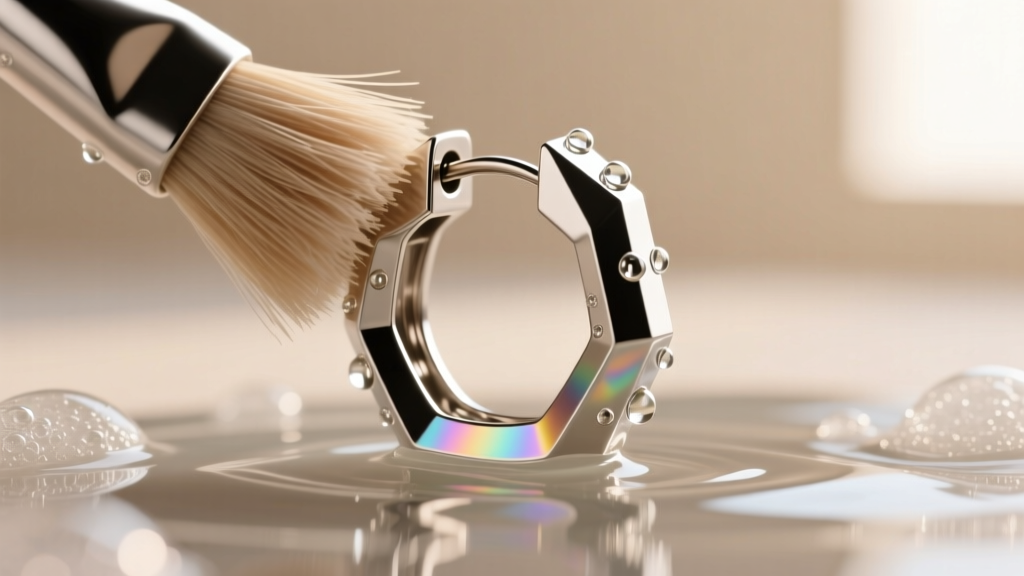
- The Soak: Mix three drops of mild, phosphate-free dish soap into a bowl of warm (not hot) distilled water. Submerge the earrings for exactly 5 minutes to soften debris lodged in the corners.
- The Agitation: Using an extra-soft baby toothbrush, gently brush the interior angles and the hinge mechanism. Brush parallel to the flat edges to avoid scratching the high-polish finish.
- The Dry: Rinse under lukewarm running water. Pat dry with a lint-free microfiber cloth. Crucial: Use a can of compressed air or a hair dryer on the "cool" setting to blow water out of the hinge barrel. Trapped moisture in the hinge will cause the clicker mechanism to stiffen and eventually corrode.
Step 5: Storage Solutions for Geometric Shapes
Storing octagon hoops requires more consideration than standard circular hoops. The protruding vertices can easily snag on other jewelry, causing micro-scratches across the flat polished planes or bending the delicate hinge pins. Never toss geometric hoops into a communal jewelry box.
- Compartmentalized Trays: Use a velvet-lined tray with individual square compartments. The square compartments naturally accommodate the eight-sided footprint of the earrings without forcing them into curved slots.
- Silica Gel Packets: Sterling silver octagon hoops are highly susceptible to tarnishing, particularly in the deep 135-degree corners where polishing cloths cannot easily reach. Always store silver geometric pieces in sealed ziplock bags with a fresh silica gel packet to control ambient humidity.
- Travel Cases: When traveling, utilize a hard-shell EVA jewelry case. Soft pouches allow the octagon hoops to be crushed under the weight of other items, which can warp the geometric alignment and cause the clicker mechanism to fail.
Troubleshooting Common Octagon Hoop Issues
| Issue | Root Cause | Actionable Fix |
|---|---|---|
| Clicker won't snap shut | Sebum buildup in the catch groove | Soak in warm soapy water and use a wooden toothpick to gently clear the catch groove. |
| Earring spins in the ear | Gauge is too thin for the piercing | Upgrade to a thicker gauge (e.g., from 18g to 16g) or use a silicone O-ring backing. |
| Dullness on flat planes | Micro-scratches from improper storage | Store in individual anti-tarnish pouches; use a jeweler's polishing cloth for light buffing. |
Final Thoughts on Geometric Elegance
Octagon hoop earrings offer a brilliant intersection of mathematical precision and wearable art. By respecting their structural limitations—specifically regarding hinge tension and corner debris—you ensure that these striking pieces remain a flawless component of your jewelry rotation for years to come. Treat the geometry with care, and the angles will always catch the light perfectly.