How to Choose, Style, and Clean Opal Leverback Earrings
Learn how to select, secure, and safely clean opal leverback earrings. Expert tips on mechanism tension, opal grades, and avoiding damage.

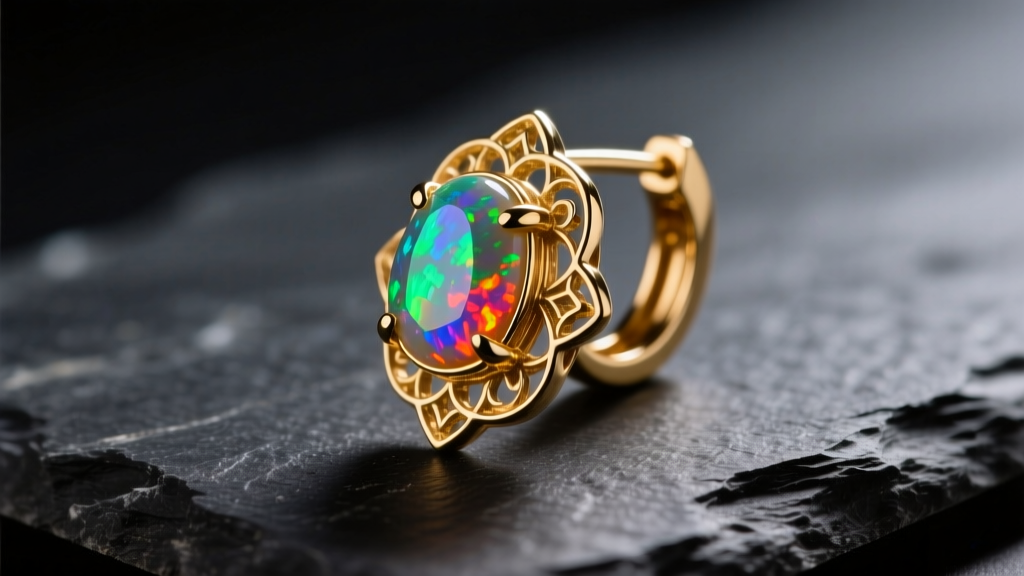
Opal leverback earrings represent the perfect intersection of mechanical security and organic beauty. Unlike standard friction posts or simple fishhook wires, the leverback mechanism provides a secondary locking latch that prevents loss—a critical feature when you are wearing gemstones as delicate and valuable as opals. However, opals require highly specific care due to their unique internal water content and relatively low Mohs hardness. In this comprehensive guide, we will walk you through the exact steps to verify your opal's grade, adjust the tension of your leverback setting, and safely clean your earrings without risking catastrophic damage to the stone.
Why the Leverback is the Superior Setting for Opals
Opals rank between 5.5 and 6.5 on the Mohs scale of mineral hardness, making them significantly softer than diamonds, sapphires, or even quartz. If an opal earring falls from your ear and strikes a hard surface like tile or concrete, the risk of chipping or shattering the cabochon is exceptionally high. The leverback earring solves this vulnerability through its mechanical design.
A standard leverback utilizes a hinged wire—typically crafted in 20-gauge (0.81mm) or 21-gauge (0.72mm) thickness—that passes through the ear piercing and snaps securely into a front-facing latch. This creates a closed loop that cannot be accidentally pulled off by hair, scarves, or gravity. When shopping for high-quality opal jewelry, always inspect the hinge. A well-machined leverback will have a seamless hinge with no lateral wobble, ensuring the wire aligns perfectly with the catch every time you close it.
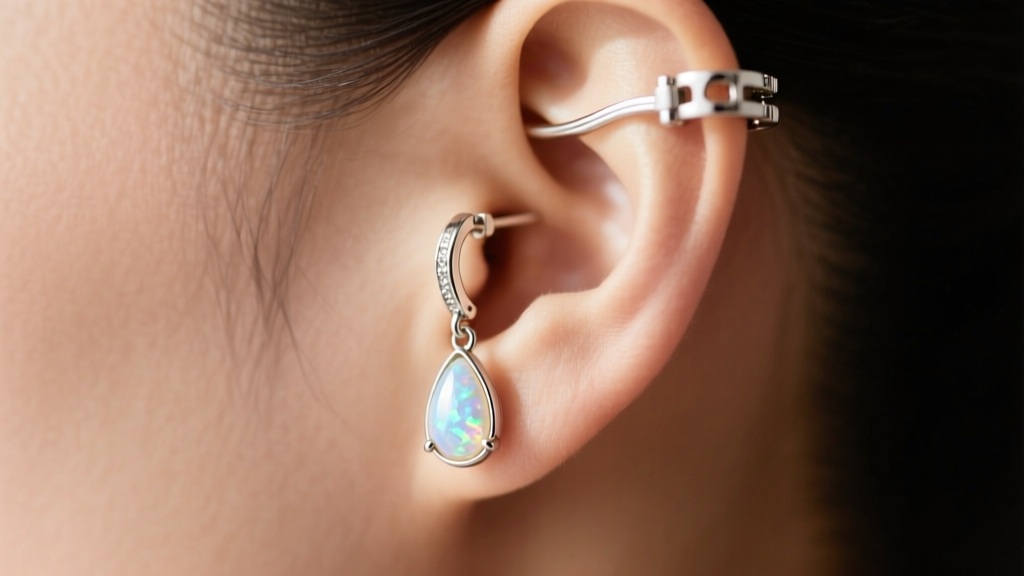
Step 1: Identifying Your Opal Type and Durability
Before you can properly clean or wear your opal leverback earrings, you must identify the exact type of opal you own. The structural composition of the stone dictates its water sensitivity and cleaning protocol. According to the Gemological Institute of America (GIA), opals contain anywhere from 3% to 21% water trapped within their silica spheres. Improper cleaning can cause "crazing," a network of fine, permanent cracks that ruins the stone's structural integrity and play-of-color.
| Opal Type | Structure | Water Sensitivity | Ultrasonic Safe? | Avg. Price Range |
|---|---|---|---|---|
| Solid Natural | 100% natural opal | High (Prone to crazing) | Never | $50 - $10,000+/ct |
| Doublet | Opal slice glued to black backing | Extreme (Glue dissolves) | Never | $15 - $150/ct |
| Triplet | Opal slice + backing + quartz cap | Extreme (Layers separate) | Never | $10 - $75/ct |
| Synthetic (Gilson) | Lab-grown silica spheres | Low (Stable structure) | No (Risk to setting) | $20 - $100/ct |
Actionable Advice: If your leverback earrings feature doublet or triplet opals, you must never submerge them in water. The adhesive bonding the layers will degrade, causing the clear quartz cap to fog or peel away entirely.
Step 2: Testing and Adjusting the Leverback Tension
Over time, the repetitive motion of opening and closing the leverback wire can cause the metal to fatigue and bend slightly outward. When this happens, the wire no longer snaps firmly into the front latch, leaving your opal vulnerable to falling out. Here is how to safely restore the tension without snapping the hinge.
- Inspect the Alignment: Hold the earring under a jeweler's loupe (10x magnification). Close the wire and observe if it sits flush inside the V-notch of the front latch. If it sits to the left or right, the wire is bent.
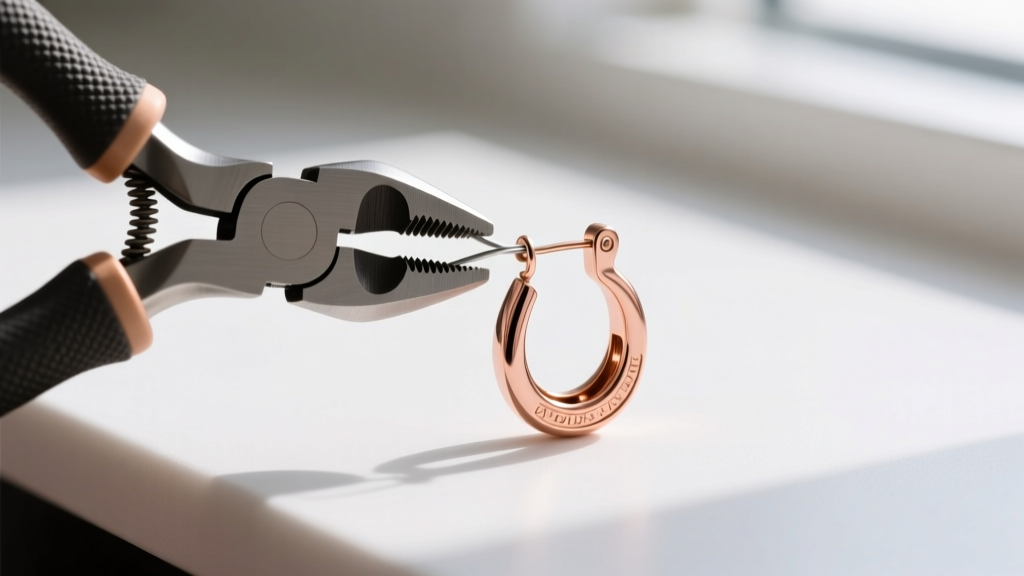
- Use the Right Tools: Never use standard steel pliers, as they will mar the gold or silver finish. You must use nylon jaw pliers or wrap the tips of your chain-nose pliers in painter's tape.
- Apply Micro-Pressure: Grip the base of the wire (just above the hinge) with your padded pliers. Apply incredibly gentle pressure to bend the wire back toward the center. Test the closure. Repeat in millimeter increments until you hear a definitive "click" when the latch closes.
- Check the Hinge Pin: If the wire feels loose laterally (wiggling side to side), the hinge pin itself is worn. This cannot be fixed at home and requires a jeweler to re-pin or laser-weld the hinge.
Step 3: The Safe Cleaning Protocol for Opal Leverbacks
Because ultrasonic cleaners use high-frequency sound waves that create microscopic cavitation bubbles, they will instantly shatter solid opals and delaminate doublets. Steam cleaners will flash-boil the internal water inside the opal, causing immediate crazing. You must rely on a gentle, manual cleaning process to remove sebum, hairspray, and dead skin cells from the leverback mechanism and the stone.
The 4-Step Manual Cleaning Method
- Step 1: Dry Dusting. Use a clean, ultra-soft makeup brush or a specialized jewelry dusting brush to gently sweep away loose particulate matter from the back of the opal cabochon and the leverback hinge. This prevents scratching during the wet wash.
- Step 2: Mild Surfactant Wash. Mix three drops of pH-neutral, phosphate-free dish soap (like Dawn) into a bowl of lukewarm distilled water. Note: Use distilled water to avoid hard water mineral deposits spotting the opal.
- Step 3: Targeted Agitation. Dip a baby toothbrush (which has the softest bristles available) into the solution. Gently brush the metal leverback wire, the hinge, and the latch. For solid opals, you may lightly brush the surface of the stone. For doublets/triplets, avoid getting the sides of the stone wet; only wipe the top dome with a damp microfiber cloth.
- Step 4: Drying and Polishing. Rinse the metal parts under a gentle stream of lukewarm water (shielding doublets/triplets from the stream). Pat completely dry with a lint-free cotton cloth. Use a treated silver or gold polishing cloth only on the metal wire and latch, never on the opal itself, as polishing compounds can dull the stone's finish.
Step 4: Styling Opal Leverbacks for Your Face Shape
Beyond the mechanics of the setting, opal leverbacks are incredibly versatile styling tools. Because opals exhibit "play-of-color"—flashes of spectral light that shift with movement—they naturally draw the eye. Here is how to leverage that optical effect based on your facial structure:
- Round Faces: Opt for elongated leverback drop earrings featuring teardrop or marquise-cut opals. The vertical line created by the dangling wire and elongated stone helps visually lengthen the face, counteracting the width of the cheekbones.
- Square Faces: Choose leverbacks with rounded, cabochon opals set in curved or organic metal halos. The soft, domed shape of the opal softens a strong, angular jawline. Avoid geometric or square-cut opals.
- Heart-Shaped Faces: Look for chandelier or wide-bottomed leverback dangles where the opal is set at the very bottom of the design. This adds visual weight to the lower half of the face, balancing a wider forehead and narrower chin.
- Oval Faces: You have the most flexibility. Stud-style leverbacks (where the opal sits directly on the lobe with a short, non-dangling wire) or large, bold statement opals will both work beautifully without distorting your natural proportions.
Step 5: Daily Wear and Storage Best Practices
To ensure your opal leverback earrings last for generations, you must manage their environmental exposure. Opals are highly sensitive to sudden temperature changes and extreme dryness. If you live in a low-humidity climate or frequently fly on commercial airplanes (where cabin humidity drops below 15%), your solid opals are at risk of drying out and crazing.
Storage Protocol: When not wearing your earrings, store them in a sealed plastic bag with a lightly damp (not wet) piece of cotton ball or a specialized jewelry humidity tab. Keep them in a dark, temperature-stable drawer away from direct sunlight or heating vents. Furthermore, always put your opal earrings on after applying cosmetics, perfumes, and hairsprays, as the chemicals in these products can degrade the polish of the opal and tarnish the leverback wire over time.
By understanding the metallurgical nuances of the leverback clasp and the delicate hydration needs of the opal, you can confidently wear, maintain, and style these stunning pieces without fear of damage or loss.


