Sailboat Earrings Buying Guide: Metals, Enamel & Fit
Discover how to choose the perfect sailboat earrings. Our expert guide covers metal grades, enamel types, weight distribution, and lobe-friendly fits.

The Unique Challenge of Nautical Jewelry
Sailboat earrings are a staple of coastal and nautical fashion, but their distinct silhouette presents unique structural challenges that generic jewelry guides often overlook. Unlike symmetrical hoops or simple geometric studs, a sailboat features a tall, thin mast and a wide, heavy hull. This asymmetrical center of gravity means that poorly designed pieces will constantly flip backward, hang face-down, or drag the earlobe downward. When shopping for sailboat earrings in 2026, buyers must look beyond the aesthetic and evaluate the physics of the bail placement, the metallurgy of the post, and the durability of the enamel work. This comprehensive guide breaks down exactly what to look for to ensure your nautical jewelry is both beautiful and biomechanically sound.
The Physics of the Sailboat Silhouette: Bail Placement
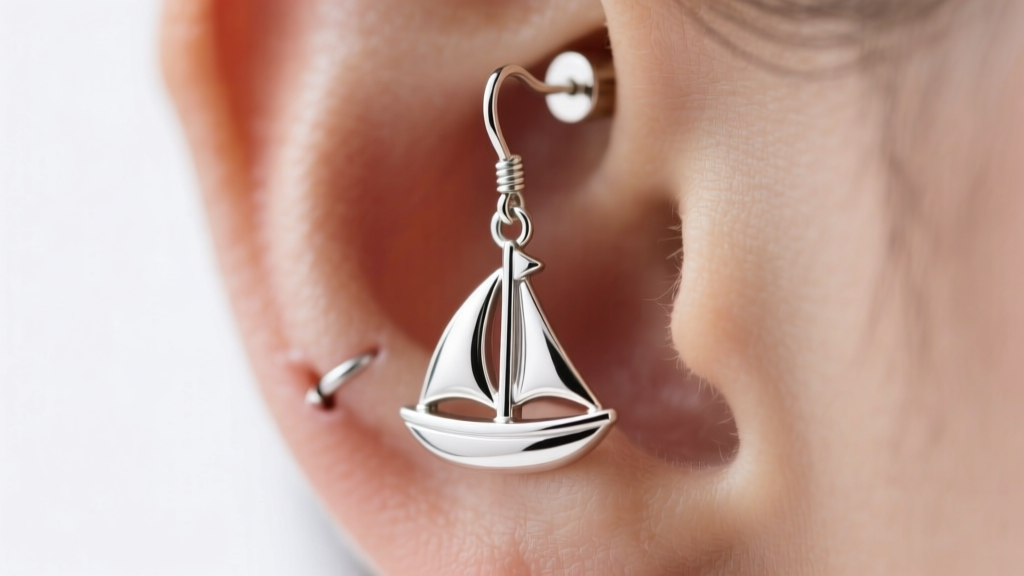
The most common failure mode in sailboat dangle earrings is improper bail placement. The bail is the loop or jump ring that connects the earring charm to the ear wire or post. If a manufacturer simply attaches the bail to the very top of the mast, the heavy hull will act as a pendulum, causing the earring to swing wildly and frequently flip backward, showing the flat, unpolished rear to the world.
What to Look For:
- Center-Mass Bails: High-quality designs place the bail slightly lower, near the mainmast or the deck line, aligning the connection point with the charm's exact center of mass. This allows the sailboat to hang perfectly upright and face forward.
- Dual-Bail Systems: Some premium artisan pieces use two tiny jump rings connecting the hull and the mast to a single central ring, distributing the weight evenly and preventing the 'flip' effect entirely.
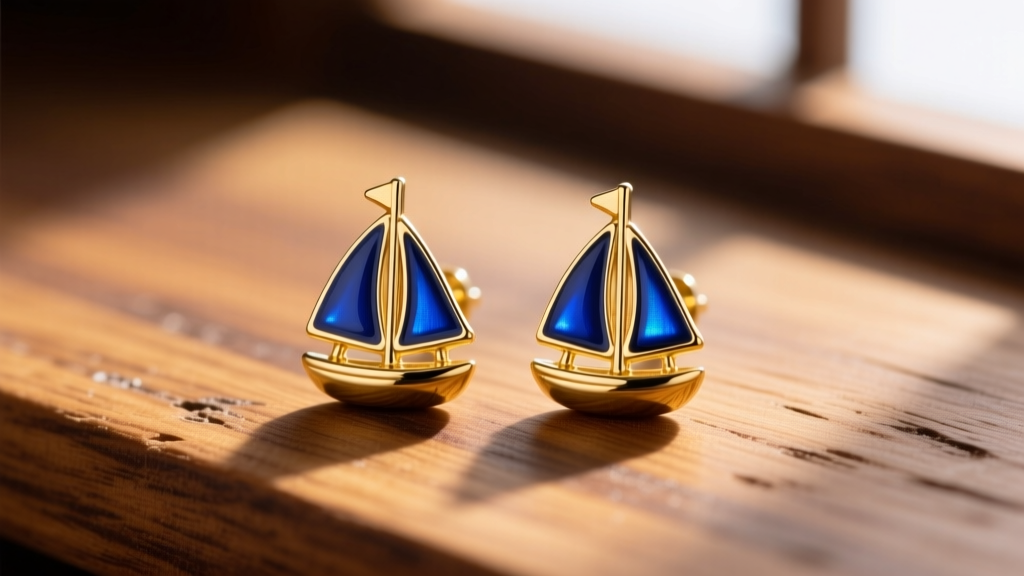
- Fixed Bails for Studs: If you are buying sailboat studs, ensure the charm is soldered directly to the post or sits on a flat, wide backing plate. A stud that relies on a tiny glued connection at the top of the mast will inevitably snap off under the tension of daily wear.
Metallurgy & Piercing Health: Avoiding the Cheese-Cutter Effect
Because sailboat charms can be unexpectedly heavy—especially when cast in solid metals—the gauge (thickness) of the ear wire or post is critical. The Association of Professional Piercers frequently warns against the 'cheese-cutter effect,' a phenomenon where a thin, heavy wire slowly migrates through the earlobe tissue over time, causing permanent slitting and scarring.
Metal Grades & Gauge Specifications
- 14k or 18k Solid Gold: The gold standard for sensitive ears. It is nickel-free and hypoallergenic. For solid gold sailboat dangles, insist on an 18-gauge (1.02mm) ear wire. While 20-gauge (0.81mm) is standard for lightweight fashion jewelry, the density of gold requires the extra thickness to protect your lobe.
- Sterling Silver (925): A budget-friendly option, but silver is prone to tarnishing when exposed to sea salt and humidity. Look for pieces that are rhodium-plated to seal the silver. Stick to 20-gauge posts for silver, as it is lighter than gold.
- 316L Surgical Steel: Excellent for durability and highly resistant to saltwater corrosion. However, steel is heavy. If buying steel sailboat hoops or dangles, ensure the design is hollow-cast or features cut-out sails to reduce the overall gram weight.
For those with known metal sensitivities, the Gemological Institute of America notes that nickel is the most common culprit in jewelry allergies. Always verify that white gold or silver alloys are explicitly labeled as nickel-free.
Enamel Work: Vitreous vs. Cold Enamel
Many sailboat earrings feature vibrant blue or white sails achieved through enameling. Not all enamel is created equal, and the manufacturing process dictates the lifespan of the color.
Vitreous (Kiln-Fired) Enamel
Vitreous enamel is essentially crushed glass that is fused to the metal base at temperatures exceeding 1400°F. It is incredibly durable, scratch-resistant, and will never yellow or fade. You can identify vitreous enamel by its glass-like luster and the fact that it feels cool to the touch, much like a ceramic tile. This is the hallmark of fine jewelry and justifies a higher price point.
Cold Enamel (Epoxy Resin)
Cold enamel is actually a painted or poured epoxy resin. While it allows for intricate, multi-colored gradients (like a sunset over a sailboat hull), it is essentially hardened plastic. It will scratch easily, can chip if dropped on a hard floor, and may yellow after a few years of UV exposure. Cold enamel feels like plastic and warms to your body temperature quickly. It is perfectly acceptable for fashion jewelry under $50, but should never be present in fine jewelry investments.
Style Breakdown & Sizing Matrix
Choosing the right style of sailboat earring depends heavily on your activity level and piercing placement. Below is a structural matrix to help you match the earring type to your specific needs.
| Earring Style | Ideal Gauge | Max Weight per Lobe | Best Clasp/Back | Use Case |
|---|---|---|---|---|
| Sailboat Studs | 20g (0.81mm) | 3.5 grams | Flat-back labret or Butterfly | Daily wear, sleeping, active sports |
| Sailboat Dangles | 18g (1.02mm) | 5.0 grams | Leverback or Secure Latch | Evening wear, sailing, office attire |
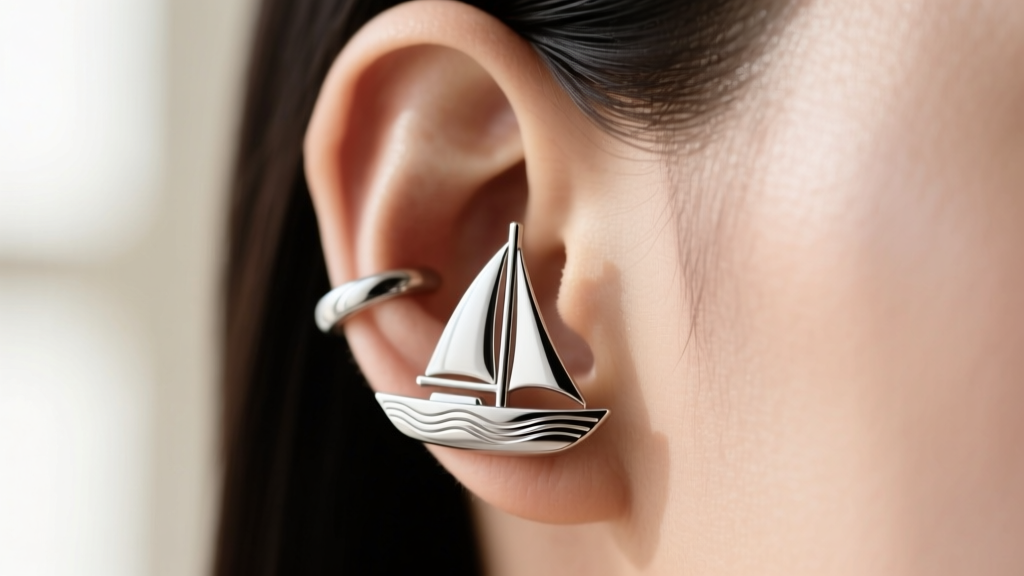
| Sailboat Ear Cuffs | N/A (Tension) | 2.5 grams | Adjustable Cuff Band | Cartilage styling, non-pierced ears |
| Sailboat Huggies | 18g (1.02mm) | 4.0 grams | Clicker Hinge | Helix piercings, second-lobe holes |
Clasp Mechanics & Security
When wearing nautical jewelry near water or in high-wind environments, clasp security is paramount. Standard 'butterfly' friction backs are notorious for loosening due to hair brushing or towel drying. If you are purchasing sailboat studs, upgrade to flat-back labret posts with internally threaded ends. These screw together securely and sit flush against the back of the ear, eliminating the risk of losing your earring in the ocean or catching it on a sweater.
For dangles, avoid simple fish-hook wires. Opt for leverback ear wires, which feature a hinged clasp that snaps securely shut behind the earlobe. This mechanical lock ensures that even if the sailboat charm catches on a scarf or a boat rigging line, the earring will not pull open and fall out.
Maintenance: Protecting Your Nautical Investment
Sailboat earrings require specific care, especially if worn in coastal environments. Salt air accelerates the oxidation of sterling silver and can degrade the finish of lower-karat gold alloys.
- Rinsing: After a day at the beach or on the water, rinse your earrings in fresh, lukewarm water to remove salt crystals. Salt trapped in the crevices of the hull or mast will cause localized pitting over time.
- Polishing: Use a microfiber jewelry cloth to buff the metal. Never use liquid silver dips or ultrasonic cleaners on enameled sailboat earrings. The harsh chemicals in dips will strip the rhodium plating and can cloud both cold and vitreous enamel finishes.
- Storage: Store dangles hanging in a jewelry box to prevent the chains or jump rings from kinking. Studs should be kept in a lined box to prevent the masts from scratching the enamel sails of adjacent pieces.
Final Verdict: What to Buy
When investing in sailboat earrings, prioritize structural integrity over sheer size. A smaller, well-cast 14k gold sailboat stud with vitreous enamel will outlast and outperform a massive, hollow-plated dangle that drags on your earlobe. Always verify the gauge thickness, check the bail placement for proper weight distribution, and choose leverbacks or threaded backs for ultimate security. By focusing on these technical details, your nautical jewelry will remain a timeless, comfortable staple in your collection for years to come.


