Biggest Hoop Earrings in the World: Cost & Value Guide
Discover the true cost, engineering, and hidden expenses behind the biggest hoop earrings in the world. A 2026 budget and value assessment guide.

The Pursuit of Scale: Defining the Biggest Hoop Earrings in the World
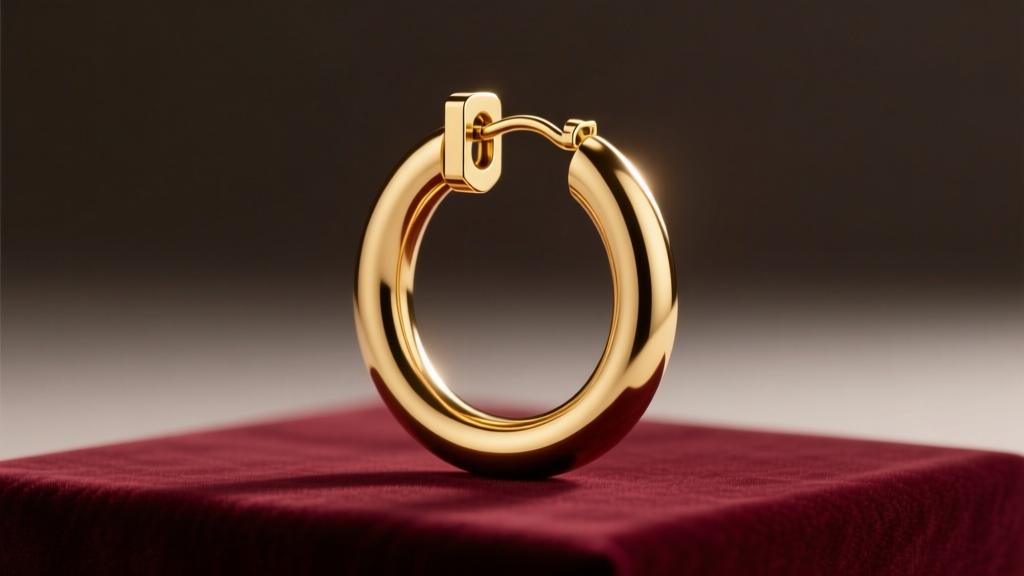
When collectors, avant-garde fashion enthusiasts, and record-seekers search for the biggest hoop earrings in the world, they are venturing into a highly specialized niche of bespoke jewelry fabrication. While standard statement hoops typically max out at 4 to 5 inches in diameter, the realm of extreme earwear begins at 8 inches and extends to literal world-record sizes exceeding 30 inches. However, scaling up a hoop earring is not simply a matter of bending more wire; it introduces severe structural, anatomical, and financial challenges. From a budget and value assessment perspective, acquiring or commissioning massive hoops requires a deep understanding of material science, custom engineering, and the hidden costs of wearable architecture.
In this comprehensive guide, we break down the true costs of extreme-scale hoops, examining why traditional jewelry manufacturing fails at these sizes and how master jewelers engineer pieces that are both monumental and financially viable.
Material Engineering: Why Solid Gold Fails at Extreme Sizes
To understand the budget required for the biggest hoop earrings in the world, one must first understand the physics of a pendulum. An earring hanging from the earlobe acts as a physical pendulum. The torque exerted on the piercing fistula is calculated by the weight of the distal end of the hoop multiplied by its radius.
Consider a standard solid 18k gold wire hoop. According to data on precious metal densities verified by the Gemological Institute of America (GIA), 18k gold has a density of approximately 15.6 g/cm³. A solid 10-inch diameter hoop made from a modest 3mm wire would weigh nearly 1.4 lbs (635 grams) per earring. The human earlobe fistula will begin to stretch and eventually tear under dynamic loads as low as 0.25 lbs. Therefore, solid precious metals are physically unviable for extreme-scale wearable hoops.
The Electroforming Solution
To achieve massive visual volume without catastrophic weight, high-end jewelers utilize electroforming. This process involves creating a wax mandrel in the shape of the desired hoop, coating it in a conductive layer, and submerging it in an electrolyte bath. Gold is deposited atom by atom onto the mandrel, which is later melted out, leaving a hollow, seamless tube of 18k or 22k gold. This technique reduces the weight of a 12-inch hoop by up to 85%, bringing it down to a wearable 4 to 6 ounces, while maintaining the rigid, voluminous aesthetic required for record-breaking pieces.
Aerospace-Grade Titanium Alternatives
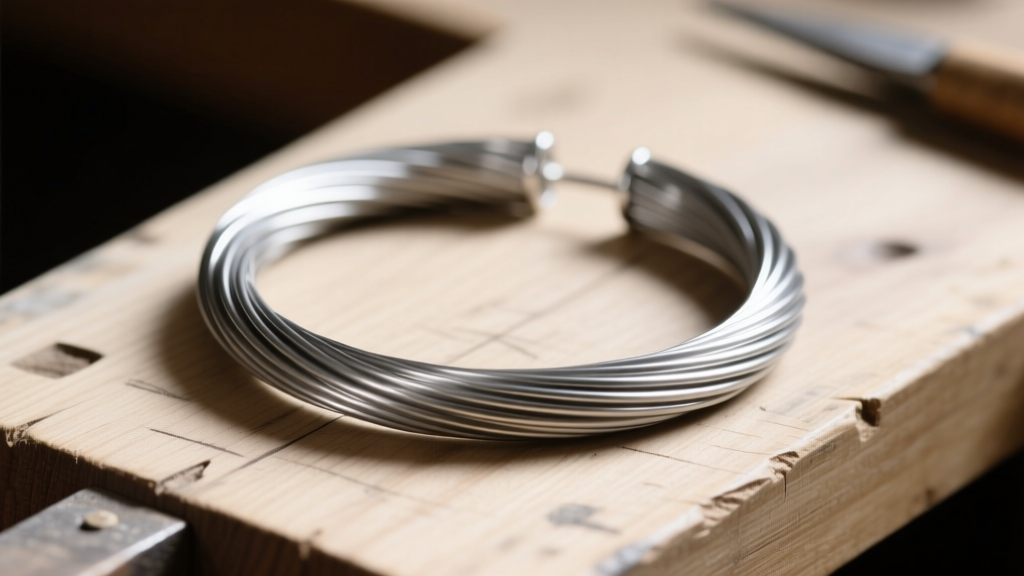
For buyers prioritizing durability and a lower entry price point over precious metal value, Grade 5 Titanium (Ti-6Al-4V) is the industry standard for oversized structural hoops. Titanium possesses a yield strength roughly four times that of 18k gold, meaning an 8-inch titanium hoop will not warp into an oval shape if dropped or snagged on clothing. While it lacks the intrinsic resale value of gold, titanium allows for intricate CNC-milled patterns and anodized color finishes at a fraction of the cost.
Budget Breakdown: Commissioning Extreme Statement Hoops
The pricing for the biggest hoop earrings in the world is rarely based on the spot price of gold alone. Instead, you are paying for bespoke engineering, specialized tooling, and structural reinforcement. Below is a comparative budget assessment for commissioning extreme-scale hoops in 2026.
| Size Category | Diameter | Material & Technique | Estimated Cost (Per Pair) | Structural Requirement |
|---|---|---|---|---|
| Extreme Statement | 6 - 8 Inches | Solid 14k Gold (2mm wire) | $2,800 - $4,500 | Reinforced Omega-back clasp |
| Record-Seeker Wearable | 10 - 14 Inches | Hollow Electroformed 18k Gold | $6,500 - $12,000 | Saddle-back clasp with silicone sleeve |
| Titanium Lightweight | 10 - 14 Inches | Grade 5 Titanium (Hollow core) | $1,200 - $2,500 | Locking hinge with secondary O-ring |
| Guinness-Style Prop | 24 - 36 Inches | Carbon Fiber / Aluminum Core | $3,500 - $8,000 | Harness-assisted ear cuff (Non-piercing) |
As noted by Guinness World Records, the absolute largest wearable earrings often require non-traditional support systems. For hoops exceeding 20 inches, the weight and wind-resistance (the "sail effect") make standard lobe piercings entirely obsolete, necessitating over-the-ear harness cuffs that distribute the load across the auricular cartilage and the side of the head.
The Hidden Costs: Anatomy, Gauges, and Surgical Reinforcement
When budgeting for massive hoops, the cost of the jewelry is only half the equation. The anatomical toll and required modifications represent a significant hidden financial commitment.
Gauge Sizing and Clasp Engineering
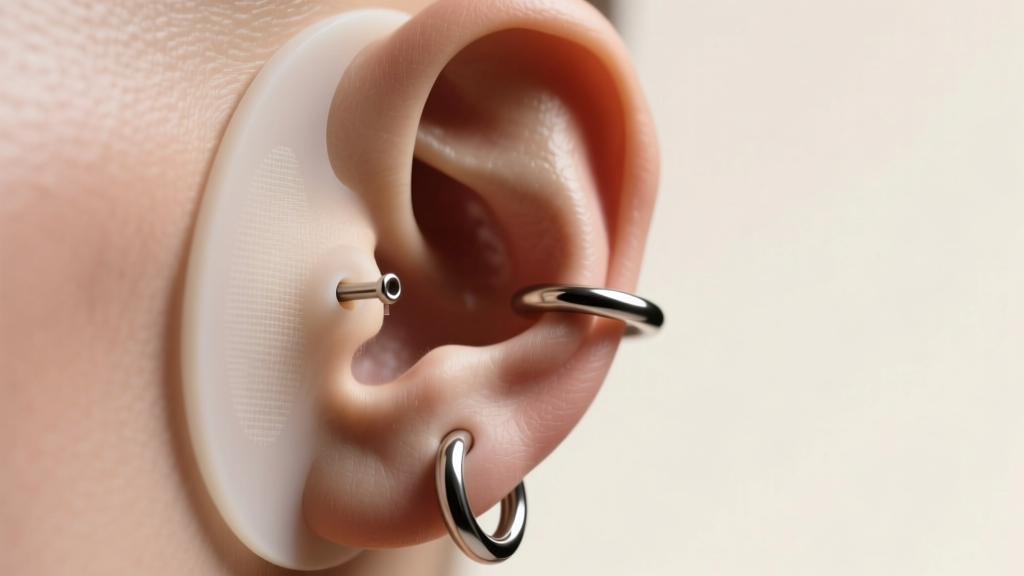
A standard ear piercing is 20-gauge or 18-gauge (0.8mm to 1.0mm thick). A 12-inch hollow gold hoop requires a minimum of 8-gauge (3.2mm) or 6-gauge (4.1mm) wire at the insertion point to prevent the wire from slicing through the lobe like a cheese wire under dynamic movement. This means the buyer must either stretch their existing piercings to 6-gauge or undergo a professional dermal punch procedure.
Furthermore, standard friction posts and butterfly backs are useless at this scale. You must invest in custom saddle-back clasps or locking hinge mechanisms. These clasps feature a wide, curved plate that sits behind the earlobe, distributing the pendulum's torque across a 15mm surface area rather than a single puncture point. Custom clasp fabrication typically adds $400 to $900 to the final jewelry bill.
Surgical Maintenance and Earlobe Repair
Even with perfect weight distribution, wearing 10-inch hoops for extended periods causes micro-trauma to the fistula. According to the American Society of Plastic Surgeons, earlobe reconstruction and repair (lobuloplasty) is a common procedure for individuals who have experienced stretching or splitting from heavy jewelry. Budgeting for extreme earwear must include a contingency for surgical maintenance:
- Preventative Silicone Pads: $25 - $50 (Ongoing consumable cost for weight distribution).
- Fistula Repair (Minor Tearing): $600 - $1,200 per lobe.
- Full Lobuloplasty (Complete Split): $1,500 - $2,500 per lobe.
Value Assessment: Investment vs. Novelty
Are the biggest hoop earrings in the world a sound financial investment? The answer requires separating the intrinsic metal value from the bespoke art premium.
If you commission a pair of 12-inch hollow electroformed 18k gold hoops for $10,000, the actual melt value of the gold may only be $2,500 due to the hollow nature of the tubing. You are paying a massive premium for the labor, the wax mandrel creation, and the specialized engineering. On the secondary market, extreme bespoke jewelry rarely recoups its fabrication costs unless it is tied to a famous celebrity or a verified world record event.
However, if you opt for solid, lower-karat gold (like 10k or 14k) in the 6-to-8-inch range, the pieces retain their value much closer to the spot price of gold, functioning as a wearable hedge against inflation while still providing a massive, boundary-pushing aesthetic. For collectors, the true value lies in the exclusivity; owning a structurally sound, 14-inch wearable gold hoop places you in a microscopic tier of global jewelry collectors who refuse to compromise on scale or engineering.