Corn Earrings Material Guide: Resin vs Enamel vs Clay
Discover the best materials for corn earrings. We compare polymer clay, epoxy resin, and enamel for weight, durability, and skin safety.

The Material Science of Botanical Jewelry
As of 2026, botanical and agricultural-themed jewelry has transitioned from niche novelty to a staple of contemporary fashion. Among these, corn earrings—ranging from minimalist gold-plated maize silhouettes to hyper-realistic, multi-colored cobs—require a deep understanding of material properties. Because the earlobe is a highly vascular and sensitive tissue, the specific gravity, chemical stability, and hypoallergenic profile of the materials used are paramount. Whether you are a collector of quirky fashion pieces or a jeweler designing botanical collections, understanding the physical properties of polymer clay, epoxy resin, and vitreous enamel is essential for creating pieces that are both beautiful and safe for long-term wear.
Core Materials Used in Corn Earrings
Polymer Clay: Lightweight & Textured
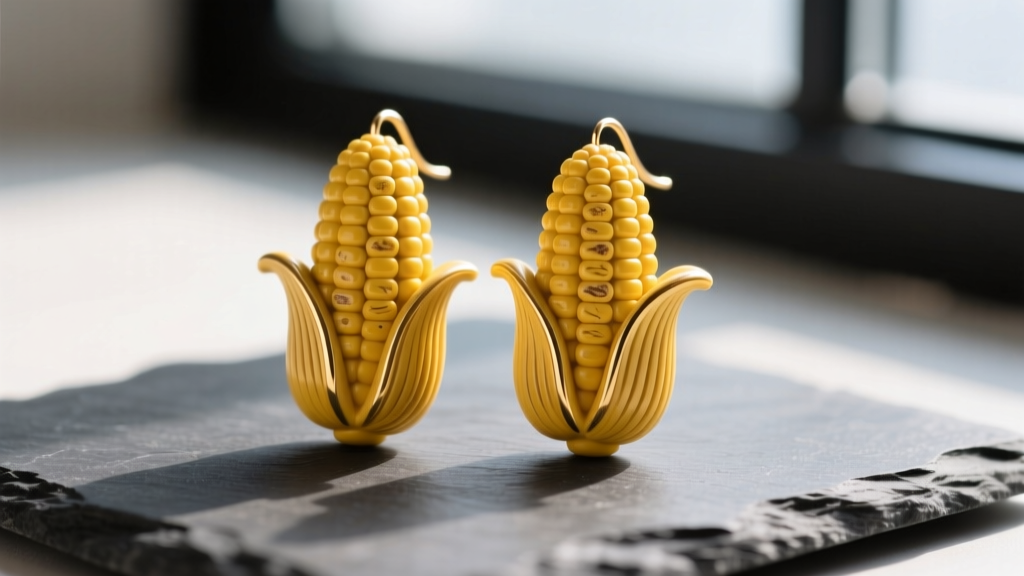
Polymer clay (a PVC-based modeling compound) is the dominant material for handcrafted, hyper-realistic corn earrings. Brands like Sculpey Premo and Fimo Professional are favored for their ability to hold microscopic textures, such as the intricate dimpling of corn kernels. From a material science perspective, polymer clay is remarkably lightweight, boasting a specific gravity of approximately 1.2 to 1.4 g/cm³, which is further reduced when the clay is aerated during the conditioning process. A standard 1-inch polymer clay corn cob earring typically weighs between 2 and 4 grams, making it exceptionally comfortable for standard 20-gauge (0.81mm) lobe piercings.
However, raw polymer clay is porous and fragile. It requires a multi-step sealing process. Professional artisans use water-based polyurethane sealants or UV-cured resin topcoats to protect the surface from sebum and environmental oils, which can degrade the plasticizers in the PVC over time.
Epoxy Resin: Glossy & Encapsulated
Epoxy resin offers a glass-like, high-gloss finish that mimics the dewy look of fresh sweet corn. Resin allows for the encapsulation of real dried corn husks, gold leaf, or microscopic air bubbles to simulate morning dew. The primary challenge with epoxy resin in jewelry is its density. With a specific gravity around 1.1 to 1.2 g/cm³, solid resin cobs are deceptively heavy, often weighing 6 to 12 grams per earring. This weight necessitates structural reinforcement and heavier hardware to prevent earlobe stretching.
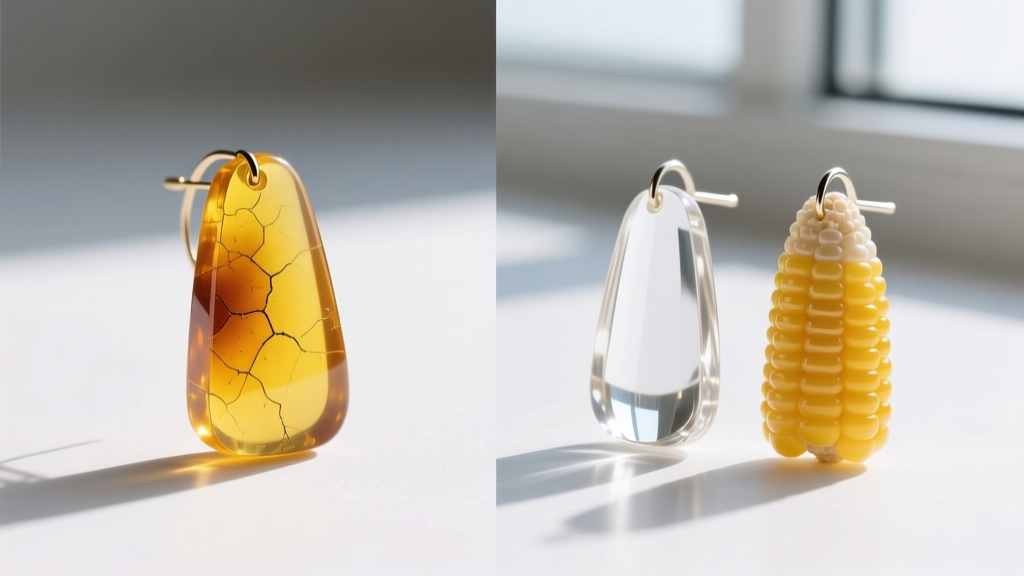
Furthermore, UV degradation is a critical failure mode for resin. Early-generation epoxies would yellow significantly within six months of sun exposure. Modern 2026 formulations incorporate advanced HALS (Hindered Amine Light Stabilizers) and UV absorbers, but buyers must still verify that the manufacturer uses jewelry-grade, non-yellowing resins like ArtResin or Epoxy Resin Art.
Vitreous vs. Cold Enamel: The Metallic Approach
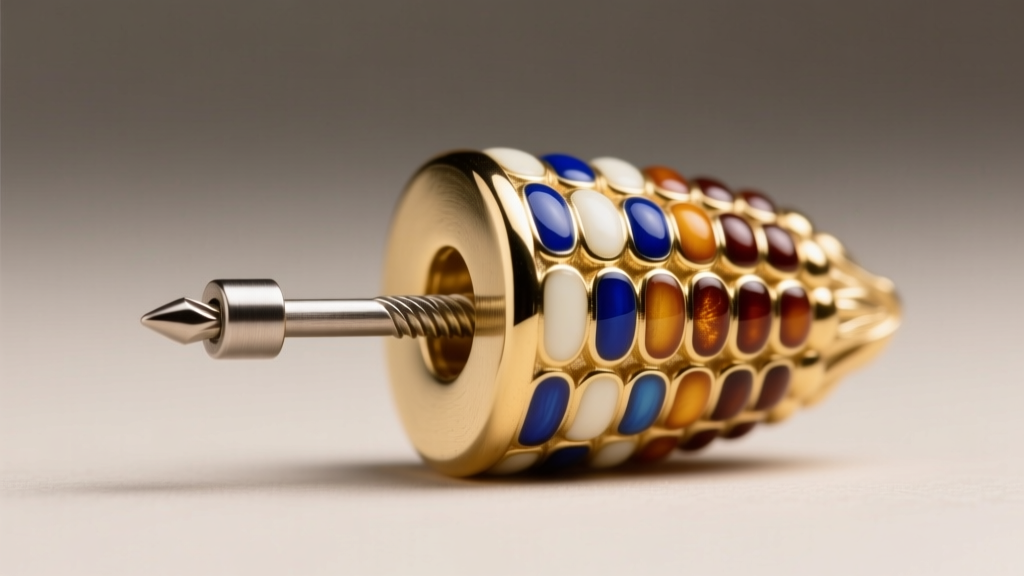
For high-end, luxury corn earrings, jewelers turn to enamel. It is vital to distinguish between vitreous enamel and cold enamel. Vitreous enamel is essentially powdered glass fused to a metal base (usually sterling silver or copper) in a kiln at temperatures exceeding 1400°F (760°C). It scores a 5 to 6 on the Mohs hardness scale, making it highly resistant to scratching. Cold enamel, conversely, is merely a pigmented epoxy resin poured into metal bezels. While cold enamel is cheaper and allows for vibrant, translucent corn-kernel colors, it lacks the thermal and chemical durability of its kiln-fired counterpart.
Material Comparison Matrix
The following table breaks down the physical and chemical properties of the three primary materials used in maize-themed earrings, helping you make an informed decision based on your lifestyle and sensitivity needs.
| Material | Avg. Weight (per pair) | Mohs Hardness | UV Stability | Base Metal Risk | Price Range |
|---|---|---|---|---|---|
| Polymer Clay | 4 - 8 grams | 2.0 (Soft) | High (if sealed) | Low (depends on post) | $25 - $65 |
| Epoxy Resin | 12 - 24 grams | 2.5 - 3.0 | Moderate | Moderate | $40 - $120 |
| Vitreous Enamel | 6 - 10 grams | 5.0 - 6.0 | Exceptional | Low (if Silver/Gold) | $150 - $400+ |
| Cold Enamel | 8 - 14 grams | 2.0 - 2.5 | Low | High (often Brass) | $30 - $80 |
Hardware, Gauge Sizes, and Contact Dermatitis
The most exquisite corn cob design will fail if the hardware causes contact dermatitis. The earlobe is highly susceptible to nickel allergies, a condition affecting nearly 18% of the global population, according to the Mayo Clinic. Many mass-produced novelty earrings use base metal alloys containing high levels of nickel to keep costs down.
Choosing the Right Post Material
- ASTM F136 Titanium: The gold standard for body jewelry. This specific grade of ELI (Extra Low Interstitial) titanium is completely nickel-free and biocompatible. It is the only recommended post material for heavy resin corn earrings worn in fresh or sensitive piercings.
- 316L Surgical Steel: Contains trace amounts of nickel, but the alloy's crystalline structure traps it, preventing leaching. Safe for most, but not for those with severe hypersensitivity.
- Gold-Plated Brass: Highly problematic. Once the microscopic gold layer wears away from friction, the underlying brass (an alloy of copper and zinc, often with nickel impurities) will oxidize and cause severe allergic reactions.
Gauge Thickness and Weight Distribution
Standard fashion earrings use 20-gauge (0.81mm) or 22-gauge (0.64mm) posts. However, if you are wearing solid epoxy resin corn earrings that weigh over 10 grams per ear, a 20G post will act like a cheese wire, slowly migrating through the earlobe tissue and causing a blowout. For heavy botanical pieces, always opt for 18-gauge (1.02mm) or 16-gauge (1.29mm) posts, or utilize a flat-back labret style that distributes the weight across a wider surface area of the inner earlobe.
Failure Modes & Troubleshooting
Understanding how these materials fail allows you to troubleshoot issues and extend the lifespan of your jewelry.
'The most common failure in handcrafted clay jewelry is not the clay itself breaking, but the delamination of the sealant due to improper surface preparation and the natural acidity of human skin oils.' — Master Jeweler & Material Scientist
Resin: Amine Blush and Sticky Spots
If your resin corn earrings feel tacky or have a cloudy, waxy film on the surface, this is known as 'amine blush.' It occurs when the hardener reacts with moisture and carbon dioxide in the air during the curing process, or when the resin is mixed in an incorrect ratio. Unlike surface dirt, amine blush cannot be wiped off; it requires sanding and a fresh flood coat of resin.
Polymer Clay: Thermal Degradation
Polymer clay must be baked at precise temperatures (usually 265°F to 275°F). Under-baked clay will remain brittle and crumble under the mechanical stress of being pushed through an earlobe. Over-baked clay releases toxic hydrogen chloride gas and turns black. Always purchase from artisans who use dedicated jewelry ovens with independent thermometers rather than relying on built-in oven dials.
Enamel: Crazing and Thermal Shock
Vitreous enamel is glass fused to metal. Because glass and metal expand and contract at different rates when exposed to temperature changes, dropping your enamel corn earrings into a sink of hot water or leaving them on a car dashboard in the summer can cause 'crazing'—a network of microscopic cracks that compromises the structural integrity and dulls the vibrant yellow and green pigments.
Care, Maintenance, and Storage
To maintain the structural and aesthetic integrity of your corn earrings, specific care protocols must be followed based on their material composition.
- For Polymer Clay: Clean only with a damp microfiber cloth. Never use alcohol, hand sanitizer, or harsh soaps, as these will strip the polyurethane sealant and leave the clay vulnerable to oil absorption and staining.
- For Epoxy Resin: Store in a dark, UV-protected jewelry box when not in use. Even with modern UV inhibitors, prolonged direct sunlight will eventually cause the resin matrix to yellow, turning bright sweet-corn yellows into a muddy mustard hue.
- For Vitreous Enamel: Avoid all ultrasonic cleaners. The high-frequency vibrations can shatter the glass enamel right off the metal backing. Polish only the metal bezels with a soft jeweler's cloth.
By matching the material properties to your lifestyle and anatomical needs, you can ensure that your botanical jewelry remains a safe, comfortable, and vibrant addition to your collection for years to come. For more insights on hypoallergenic metals, refer to the American Academy of Dermatology's guidelines on nickel allergies and always verify the ASTM F136 standards for titanium body jewelry before making a purchase.


