How to Style Rain Drop Earrings for Your Face Shape
Learn how to style rain drop earrings for your face shape. This step-by-step guide covers lobe vs cartilage placement, metals, and length ratios.


Rain drop earrings—characterized by their tapered, elongated silhouette that mimics a falling droplet—are a masterclass in kinetic jewelry design. Unlike standard hoops or studs, the pendulum-like swing of a rain drop earring draws the eye vertically, making them a powerful tool for facial contouring. However, styling them requires more than just slipping them through a lobe. The interplay of weight, gauge size, and facial geometry dictates how these pieces move and sit. This step-by-step guide will walk you through the precise metallurgy, structural support, and styling frameworks needed to wear rain drop earrings flawlessly.
Step 1: Calibrate Drop Length to Your Facial Geometry
The primary function of a dangle earring is to manipulate visual weight. Rain drop earrings are inherently bottom-heavy, meaning they pull the observer's gaze downward. To use this to your advantage, you must map the drop length against your natural jawline and cheekbone structure. In 2026, the trend has shifted away from one-size-fits-all sizing toward bespoke proportional styling.
| Face Shape | Ideal Drop Length | Silhouette Recommendation | Visual Effect |
|---|---|---|---|
| Round | 2.5 - 3.5 inches | Angular, tapered wire drops | Elongates the jawline and neck |
| Square | 1.5 - 2.0 inches | Curved, bulbous teardrops | Softens a prominent mandible |
| Heart | 2.0 - 2.5 inches | Bottom-heavy, wide-base drops | Balances a narrow chin |
| Oval | Any length | Sleek, minimalist rain drops | Maintains natural symmetry |
Pro Tip: To find your exact ideal length, measure the distance from the bottom of your earlobe to the edge of your jaw. Your rain drop earring should ideally terminate just above or exactly at this line to create a seamless visual bridge.
Step 2: Select Biocompatible Metals for Prolonged Wear
Because rain drop earrings act as pendulums, the post or fishhook experiences constant lateral friction against the fistula (the piercing channel). This makes metal biocompatibility non-negotiable. Many commercial brands use 316L surgical steel, which contains 8-10.5% nickel. While fine for short wear, the friction of a swinging drop can trigger contact dermatitis in sensitized individuals.
The Hierarchy of Earring Metals
- ASTM F136 Titanium: The absolute gold standard for kinetic jewelry. It is 100% nickel-free, highly polished to reduce fistula friction, and lightweight, which reduces the overall torque on the earlobe.
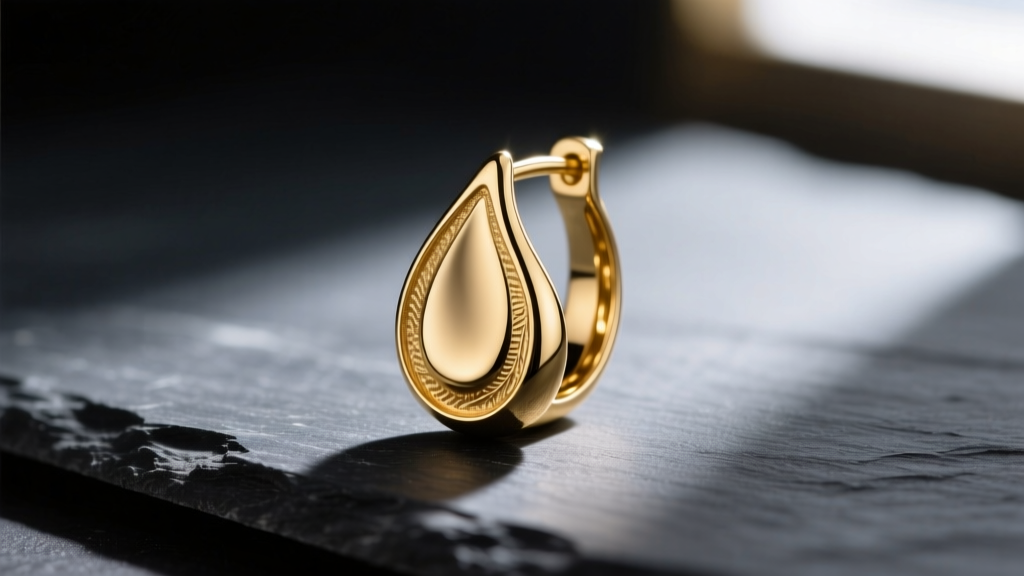
- 14k Solid Gold (Nickel-Free): Ensure the alloy is mixed with silver or copper, not nickel. 14k provides the necessary structural rigidity so the thin hooks of rain drop earrings do not bend out of shape.
- Niobium: An excellent, highly reactive anodized metal that is hypoallergenic, though slightly heavier than titanium.
For a deep dive into safe jewelry materials, the Association of Professional Piercers provides comprehensive guidelines on implant-grade metals that prevent allergic reactions and tissue irritation.
Step 3: Adapt Gauge Sizes for Cartilage and Lobe Placements
Traditionally, rain drop earrings are designed for standard earlobe piercings, which are typically pierced at 20-gauge (0.8mm) or 18-gauge (1.0mm). However, modern styling frequently incorporates these dangles into cartilage setups, such as a flat or helix piercing.
How to Adapt Rain Drops for Cartilage
- Identify Your Gauge: Cartilage piercings are usually 16-gauge (1.2mm) or 14-gauge (1.6mm). Forcing a standard 20g rain drop hook into a 16g piercing can cause the hook to bend or snap.
- Use Step-Down Jump Rings: Purchase a 16g to 18g step-down adapter ring. This allows you to securely attach a delicate 18g rain drop charm to a thicker 16g cartilage post without compromising the structural integrity of the jewelry.
- Threadless Ends: For a seamless look, have a professional jeweler laser-weld your favorite rain drop silhouette onto a 16g threadless pin, allowing it to snap securely into a flat piercing labret.
Step 4: Counterbalance Necklines and Hair Architecture
Styling rain drop earrings is an exercise in negative space. Because the earring creates a strong vertical line, your neckline and hair must either frame or yield to that line.
"When wearing elongated kinetic jewelry, the goal is to prevent visual clutter around the clavicle. The earring should be the undisputed focal point of the lateral neck space."
- Crew Necks and Turtlenecks: Avoid rain drop earrings longer than 1.5 inches. The fabric will catch the tapered ends, causing the earring to flip awkwardly and potentially snag the fishhook.
- Deep V-Necks and Scoops: This is the ideal canvas for 3-inch dramatic rain drops. The bare skin of the décolletage allows the earring to swing freely without textile interference.
- Hair Architecture: If wearing hair down, opt for blunt-cut rain drops that contrast with the organic waves of the hair. If wearing an updo, choose textured or hammered rain drops to introduce visual complexity to the exposed neck.
Step 5: Mitigate Drop Fatigue and Lobe Migration
The most common failure mode of rain drop earrings is "drop fatigue"—the gradual stretching and thinning of the earlobe tissue due to the pendulum effect. A solid brass or steel rain drop earring measuring 3 inches can easily weigh 15 to 18 grams. The American Academy of Dermatology notes that prolonged mechanical stress from heavy jewelry can lead to permanent tissue stretching, sometimes requiring surgical repair.
Engineering Solutions for Heavy Drops
To wear dramatic lengths safely, you must manipulate the earring's center of gravity and distribute the weight:
- Hollow Electroforming: Look for rain drops made via electroforming. This process builds a microscopic layer of copper or silver over a wax mold, which is later melted out. The result is a massive, 3-inch earring that weighs less than 4 grams.
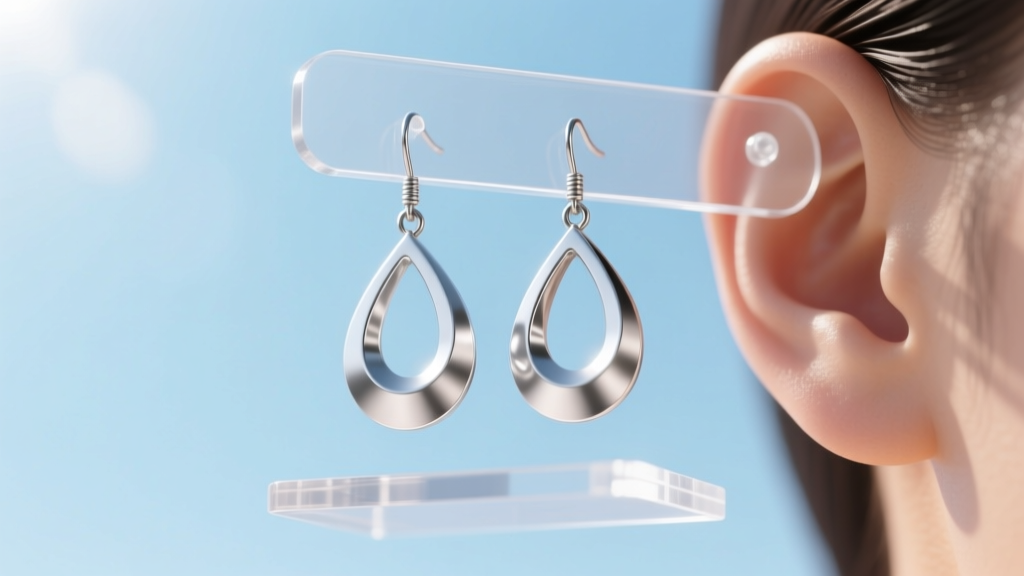
- Silicone Support Patches: Products like LobeWonder or generic silicone earlobe support patches adhere to the back of the ear. They feature a secondary slit that shares the load of the earring post across a wider surface area of the ear's posterior, effectively neutralizing the downward torque.
- Omega Backs vs. Fishhooks: If the design permits, swap standard fishhooks for Omega backs. The wider, hinged paddle rests flush against the earlobe, distributing the weight of the rain drop across the entire lower lobe rather than concentrating it solely on the fistula.
Final Thoughts on Kinetic Jewelry
Rain drop earrings are not merely accessories; they are dynamic architectural elements that interact with your movement, light, and facial structure. By respecting the physics of the pendulum, selecting implant-grade metals, and calibrating the length to your unique geometry, you can transform a simple piece of metal into a masterful styling tool. Whether you are adapting a delicate 18-gauge drop for a cartilage flat piercing or balancing a 3-inch hollow-forged statement piece against a structured blazer, precision is the key to effortless elegance.


